


Key Takeaways for Homeowners
| Spring deep cleaning after water damage requires IICRC S500/S520 certified professional assessment before DIY efforts begin. |
| Greenfield and greater Indianapolis homes face unique moisture risks from Indiana’s humid continental climate and spring snowmelt. |
| Mold colonization can begin within 24 to 48 hours on wet porous materials, making rapid response critical. |
| Structural drying using psychrometrics, dehumidification, and air movement is essential to prevent secondary damage. |
| PuroClean Disaster Restoration serves Greenfield and surrounding communities. Call (317) 467-4436 for immediate help. |
Why Spring Deep Cleaning Is Critical for Water-Damaged Homes in Greenfield, Indianapolis
Spring arrives with beauty in Greenfield, Indiana, but for homeowners who experienced water damage during the winter months, the season also brings a hidden threat. As temperatures rise and ground moisture increases across Marion and Hancock Counties, previously saturated building materials can release stored moisture, triggering microbial growth and structural deterioration.
Indiana’s humid continental climate means that freeze-thaw cycles throughout winter often force water into foundation walls, crawl spaces, and basement floors. When spring arrives, that trapped moisture has nowhere to go but inward, creating ideal conditions for mold spore activation, wood rot, and compromised indoor air quality.
This is not a simple cleaning task. Water damage restoration follows rigorous science defined by the IICRC S500 Standard for Professional Water Damage Restoration and the IICRC S520 Standard for Professional Mold Remediation. These documents establish the protocols that certified technicians must follow to properly dry, clean, and restore water-damaged structures.
Whether your home in Greenfield, Fortville, McCordsville, or the eastside neighborhoods of Indianapolis experienced a burst pipe, roof leak, sump pump failure, or basement flooding, the following seven-step checklist will guide your spring recovery.
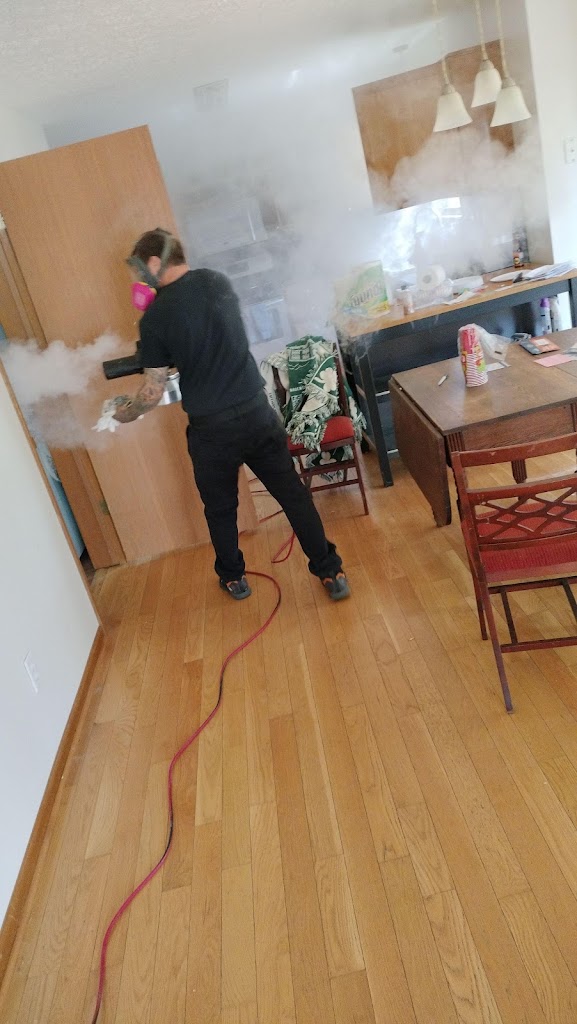
Step 1: Conduct a Thorough Moisture Mapping Assessment
Before any physical cleaning begins, moisture mapping must be performed throughout the affected structure. Moisture mapping uses thermal imaging cameras and calibrated moisture meters to identify all zones of elevated moisture content, including hidden pockets inside wall cavities, under flooring systems, and above ceiling assemblies.
In Greenfield-area homes, many of which feature brick ranch construction from the 1960s and 1970s or newer vinyl-sided colonials in developments like Meadowbrook or Sugar Creek, moisture frequently hides inside wall systems and is missed by visual inspection alone.
What to look for during moisture mapping:
- Moisture readings above 16 percent in wood framing materials
- Thermal anomalies indicating evaporative cooling in wet wall assemblies
- Elevated relative humidity in enclosed spaces above 55 percent
- Discoloration or tide lines on drywall, concrete block, or wood paneling
- Musty odors indicating active microbial volatile organic compound (MVOC) production
Step 2: Remove Saturated Materials Using IICRC S500 Category Classification
Not all water is equal. The IICRC S500 standard classifies water intrusion into three categories that determine the scope of material removal required.
Category 1 water, also called clean water, originates from sanitary sources such as broken supply lines or overflowing sinks. Category 2, or gray water, carries significant biological or chemical contamination from sources like washing machine discharge or toilet overflow without solid waste. Category 3, known as black water, is grossly contaminated and includes sewage backups, floodwater from rivers, and any water that has been standing long enough to degrade in quality.
Greenfield homeowners near Brandywine Creek or in low-lying neighborhoods along State Road 9 may experience Category 3 intrusion during spring flood events. All porous materials including drywall, insulation, carpeting, and subfloor materials that have contacted Category 2 or 3 water must be removed and properly disposed of.
Spring deep cleaning material removal checklist:
- Remove all wet carpet and carpet padding immediately
- Cut and bag drywall at least 12 inches above the visible water line
- Remove fiberglass or cellulose insulation from all wet wall cavities
- Discard any contaminated wood or particle board cabinetry
- Document all removed materials with photos for insurance claims
Step 3: Apply Antimicrobial Biocide Treatment to All Affected Surfaces
Once saturated materials are removed, all remaining structural surfaces must be treated with an EPA-registered antimicrobial biocide. This step is required under IICRC S520 protocols to eliminate mold spores, bacteria, and biofilm that have colonized wood framing, concrete, and masonry surfaces.
Common antimicrobial biocide treatments used in professional water damage restoration include quaternary ammonium compounds and sodium hypochlorite solutions, though the specific product choice depends on the surface material and category of water involved. Professionals ensure proper dwell time and coverage to achieve log reduction in microbial populations.
Importantly, biocide treatment is not a substitute for physical removal of contaminated materials. Applying antimicrobial sprays over saturated drywall or insulation without first removing those materials does not achieve remediation under IICRC standards.
Step 4: Establish Structural Drying Using Psychrometric Principles
Structural drying is the science-driven process of removing moisture from building materials using controlled airflow, dehumidification, and temperature management. This process is governed by psychrometrics, the branch of thermodynamics that studies the properties of moist air and its interaction with materials.
Professional restoration teams deploy axial and centrifugal air movers to create laminar airflow across wet surfaces, driving evaporation. Refrigerant-based or desiccant dehumidifiers then capture water vapor from the air before it can be reabsorbed into nearby materials. Negative air pressure containment zones using HEPA filtration prevent cross-contamination to unaffected areas of the home.
In Greenfield and Indianapolis, spring drying conditions are complicated by outdoor relative humidity levels that often exceed 65 to 75 percent during April and May. This means that simply opening windows is counterproductive. Sealed drying environments with mechanical dehumidification are required to achieve drying goals within the IICRC-recommended timeframes.
Key psychrometric targets for structural drying:
- Achieve indoor relative humidity below 50 percent in drying zones
- Maintain structural wood moisture content below 16 percent
- Monitor specific humidity levels daily using calibrated thermo-hygrometers
- Adjust equipment placement to ensure all wet cavities receive adequate air movement
Step 5: Address Mold Growth with IICRC S520 Remediation Protocols
If mold colonization is discovered during your spring deep cleaning, work must immediately shift to IICRC S520-compliant mold remediation. Visible mold growth, which may appear as black, green, gray, or white discoloration on structural surfaces, indicates that conditions were favorable for spore germination and hyphal growth, typically within 24 to 72 hours of initial saturation.
Indiana homes, particularly older structures in the Greenfield Historic District and post-war neighborhoods near State Road 40, often contain older wood species and building materials that are highly susceptible to Stachybotrys chartarum (black mold), Aspergillus, Cladosporium, and Penicillium growth.
These mold species produce mycotoxins, biologically active compounds that can cause respiratory illness, neurological symptoms, and allergic reactions in sensitive individuals. Disturbing mold colonies without proper containment scatters spores throughout the home, dramatically worsening air quality.
Professional IICRC S520 mold remediation includes:
- Critical barriers and negative air pressure containment to isolate work zones
- Personal protective equipment including N95 or P100 respirators for all workers
- HEPA vacuum removal of visible mold before wet treatment
- Antimicrobial biocide application followed by HEPA air scrubbing
- Clearance testing by an independent industrial hygienist after remediation
Step 6: Inspect and Restore HVAC Systems and Ductwork
Spring deep cleaning must include a comprehensive inspection of your HVAC system and all ductwork. Water-damaged air handlers, evaporator coils, and flex duct are common sources of ongoing mold contamination in Indiana homes. Flooded furnaces and air conditioning units can spread mold spores throughout every room each time the system cycles on.
In Greenfield and the greater Indianapolis metro area, many homes use forced-air gas furnaces paired with central air conditioning. Both the furnace heat exchanger and air conditioning coil should be professionally inspected for visible microbial growth, scale buildup, and moisture accumulation before the spring cooling season begins.
HVAC inspection checklist for water-damaged homes:
- Inspect and replace air filters, using MERV 13 or higher rated filters if mold is present
- Visually inspect accessible ductwork for discoloration or visible mold growth
- Test indoor air quality for elevated total volatile organic compounds and particulate matter
- Service condensate drain lines and drain pans to prevent standing water
- Consider professional duct cleaning if contamination is confirmed by air quality testing
Step 7: Protect Your Home Against Future Water Intrusion
After completing remediation and drying, the final step in your spring deep cleaning checklist is implementing protective measures to prevent recurrence. Greenfield and Indianapolis area homes face ongoing water intrusion risks from spring storms, snowmelt, and the region’s clay-heavy soils that retain moisture and direct water toward foundation walls.
Preventive measures for Indiana homeowners:
- Regrade soil around the foundation to slope away from the structure at a minimum 6-inch drop over 10 feet
- Clean and extend downspouts at least 4 to 6 feet from the foundation
- Inspect and test sump pump operation before peak spring rainfall season
- Apply waterproof sealant to interior basement walls after complete structural drying
- Install a battery backup sump pump system to maintain operation during power outages
- Consider a whole-home dehumidification system to maintain indoor relative humidity below 50 percent year-round

Frequently Asked Questions: Water Damage and Spring Cleaning in Greenfield, Indianapolis
Does home insurance cover mold caused by high humidity in Greenfield, Indianapolis?
Most standard homeowner’s insurance policies in Indiana cover mold remediation only when it results directly from a sudden and accidental covered water loss such as a burst pipe or appliance malfunction. Mold caused by long-term elevated humidity, condensation, or deferred maintenance is typically excluded. Review your policy carefully and contact your adjuster immediately after any water event to document the damage and establish the loss date.
How long does structural drying take in Indianapolis-area homes?
Structural drying typically requires 3 to 5 days for Category 1 water losses with limited material saturation and up to 10 to 14 days for more extensive losses involving Category 2 or 3 water. Spring conditions in central Indiana, including elevated outdoor humidity and cool temperatures, can extend drying times. Professional restoration teams monitor psychrometric data daily to adjust equipment and confirm when drying goals are met.
Can I clean up water damage myself in Greenfield, Indiana?
Limited Category 1 losses affecting small areas of hard, non-porous surfaces may be safely addressed by homeowners using consumer-grade wet-dry vacuums and fans. However, any loss involving Category 2 or 3 water, mold growth, or saturation of structural materials requires IICRC-certified professional intervention. Improper DIY remediation can spread contamination, void insurance claims, and fail to meet Indiana building code requirements for structural drying verification.
What are the signs that my Greenfield home has hidden mold after water damage?
Warning signs include persistent musty odors that intensify when the HVAC system operates, unexplained allergic symptoms or respiratory irritation among household members, visible discoloration on walls or ceilings that recurs after cleaning, and humidity readings above 55 percent in any interior space. Professional moisture mapping and air quality testing can definitively identify hidden mold colonies before they affect structural integrity or occupant health.
How do I find an IICRC-certified water damage restoration company in Greenfield?
Look for companies holding the Water Damage Restoration Technician (WRT) certification and Applied Microbial Remediation Technician (AMRT) certification from the IICRC. These credentials confirm that technicians are trained in the S500 and S520 standards governing professional water damage and mold remediation. PuroClean Disaster Restoration serves Greenfield and the greater Indianapolis area with fully certified technicians available 24 hours a day, 7 days a week.
Call PuroClean Disaster Restoration for Spring Water Damage Recovery
If your home in Greenfield, Fortville, McCordsville, Lawrence, or anywhere in the greater Indianapolis area has experienced water damage this season, do not wait. Every hour that saturated building materials remain wet increases the risk of mold colonization, structural deterioration, and costly secondary damage.
PuroClean Disaster Restoration brings IICRC-certified expertise, professional-grade drying equipment, and a compassionate team to every water damage restoration project in central Indiana. We work directly with all major insurance carriers and provide detailed documentation to support your claim.
Call PuroClean Disaster Restoration at (317) 467-4436 today for immediate assessment, emergency water extraction, and complete spring restoration services for your Greenfield and Indianapolis area home.