Reviewed for technical accuracy by PuroClean Disaster Restoration’s IICRC-certified restoration team.
A washing machine or dishwasher overflow looks like a small mess, but the water rarely stays where you see it. It runs under cabinets, soaks into subfloors, and drips into ceilings below. The IICRC S500 Standard for Professional Water Damage Restoration is the industry reference that defines how water losses are categorized, classified, and dried, and it guides the advice here. In Greenfield, laundry rooms and kitchens are often built over basements or crawl spaces, so appliance water can travel a long way before anyone notices. This guide explains what to do right away and how to catch hidden damage early.
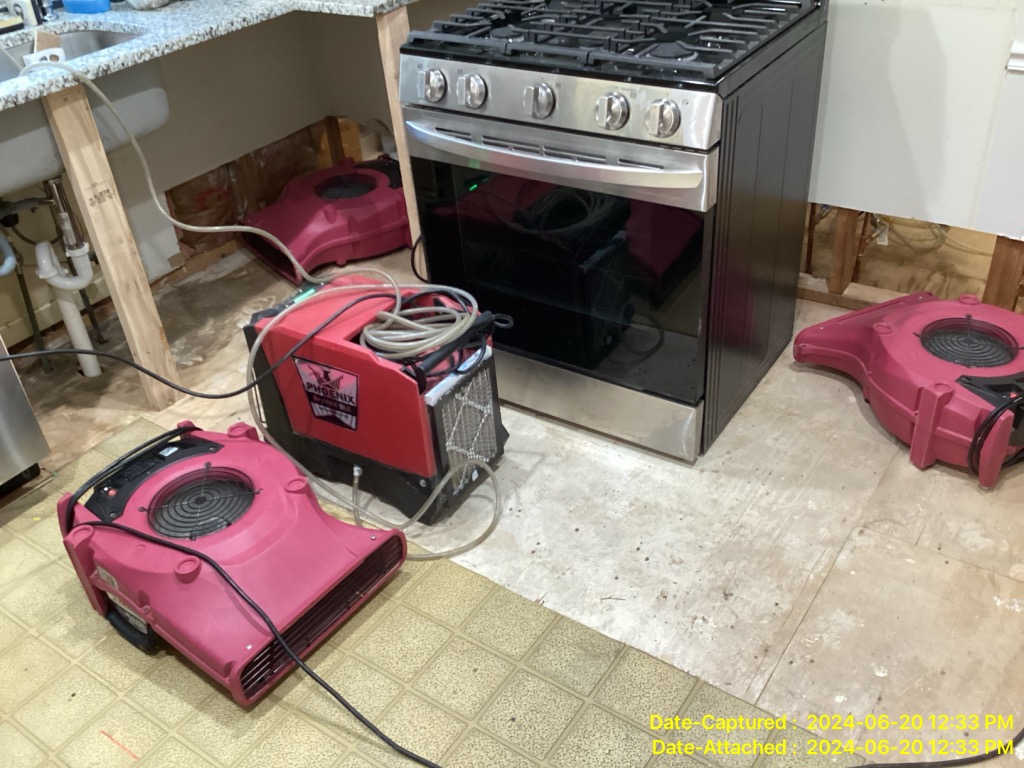
Key Takeaways for Homeowners
- Stop the water first: unplug the appliance or switch off its breaker, then close the supply valves, as long as you can do so without standing in water.
- Water from a dishwasher or washing machine drain is typically treated as Category 2 (gray water) under S500, while a burst supply hose is Category 1 until it sits.
- EPA mold guidance says wet materials should be dried within 24 to 48 hours, so surface cleanup alone is not enough.
- Overflow water often hides under flooring, inside cabinet bases, behind baseboards, and in the ceiling below.
- A musty smell, cupped flooring, or a stain that appears days later can mean moisture is still trapped.
- In Greenfield, spring groundwater and storms can add water to a basement laundry area, so check for outside water before blaming the appliance alone.
What should you do first when a washing machine or dishwasher overflows?
Stop the water source, cut power to the appliance, and keep clear of electrical hazards. Then remove standing water, lift belongings, and look for where the water traveled. Quick action within the first hour limits how deeply water soaks into flooring, cabinets, and walls.
8 steps to take right away
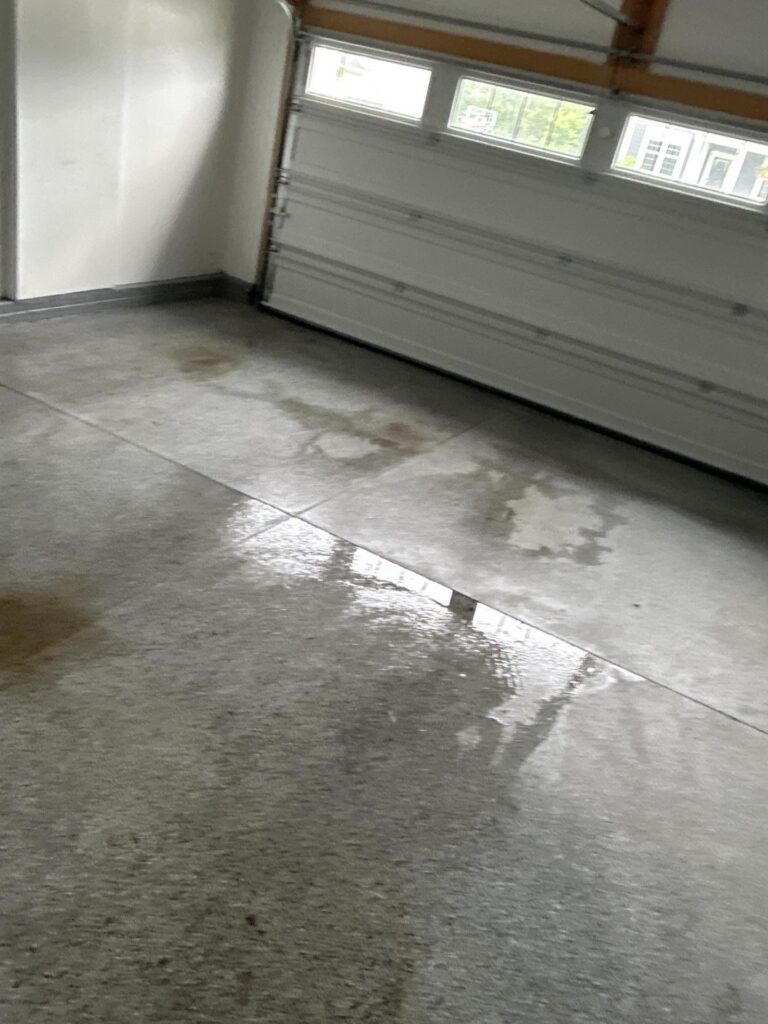
- Shut off power. Unplug the appliance, or switch off its breaker, but only if you can reach it without stepping in water. If the outlet or panel is wet, stay back and call an electrician.
- Stop the water supply. Close the hot and cold supply valves behind the washing machine, or the shutoff valve under the kitchen sink for the dishwasher. If a valve is stuck, close the main water valve.
- Remove standing water. Use towels, a mop, or a wet/dry vacuum plugged into a safe outlet away from the water. Work from the center of the puddle outward.
- Lift contents and pull back rugs. Move boxes, laundry baskets, and floor mats to dry ground, since they hold moisture against the floor.
- Find the cause. Check the drain hose for kinks or clogs, the standpipe, the door gasket, the supply hoses, and the inlet valve. For a dishwasher, check the air gap, the high loop in the drain hose, and the garbage disposal knockout plug. Do not run the appliance again until it is fixed.
- Look where you cannot see. Check the ceiling below, the basement beneath the room, the toe kick under cabinets, and baseboards. Feel for soft or cool spots on drywall.
- Document everything. Photograph the water, the appliance model label, and any damaged items before you move them.
- Call a restoration professional and your insurer. A moisture inspection will show whether water is trapped under flooring or inside walls, and drying equipment should start within 24 to 48 hours.
Actionable takeaway: Learn where your washer and dishwasher shutoff valves are today, and label them so anyone in the home can find them quickly.
Why do washing machines and dishwashers overflow?
Most overflows come from clogged drain hoses, blocked standpipes, failed inlet valves, worn door gaskets, burst supply hoses, or overloading. A dishwasher may overflow if its drain hose is kinked, its air gap is clogged, or the garbage disposal plug was not removed during installation. A washing machine may overflow when lint or a sock blocks the drain, or when the drain pipe cannot keep up. Rubber hoses crack with age, and a split hose can release gallons while the home is empty.
Actionable takeaway: Replace rubber supply hoses with braided stainless steel hoses, and check them every year for bulges or cracks.
How does hidden water damage spread from an appliance leak?
Water follows gravity and moves along any gap. From a kitchen or laundry room, it can slide under laminate or vinyl, wick into the particleboard of cabinet bases, enter wall cavities behind baseboards, and drip through the ceiling below. Hidden moisture can cause subfloor delamination, where plywood or OSB layers separate, and can soak insulation, which is slow to dry. Because water from a drain line is Category 2, it can also carry bacteria, so time matters. After about 48 hours, Category 2 water can degrade, and materials may need removal rather than drying.
Actionable takeaway: If you notice a smell, stain, or buckling floor a few days after an overflow, treat it as active moisture and request an inspection.
Why are Greenfield homes at risk beyond the appliance itself?
Greenfield’s main flood mechanism is a rising water table. Each spring, snowmelt and rain raise groundwater and build hydrostatic pressure against basement floors and walls. Many washing machines in Greenfield homes sit in basements, and that is where groundwater, a sump pump problem, or a sewer backup can mix with appliance water. Overflowing gutters, downspouts that drain near the foundation, poorly graded soil, foundation cracks, and sump pump overload during storms add to the risk.
Housing stock matters. Postwar ranch and split-level homes across Hancock County subdivisions often have poured concrete or block foundations, and water that reaches the basement collects at the wall base and wicks upward. Older brick homes near the historic downtown may have fieldstone or aging block basements with original mortar joints that seep. If the sewer system is overloaded, wastewater can back up through floor drains, and that is Category 3 (black water). IDEM guidance on sewer overflows treats sewage contamination as a public health concern, so a bubbling drain changes the cleanup entirely.
Actionable takeaway: Before spring, test your sump pump and clear the floor drain near your laundry area.
What does professional drying look like after an appliance overflow?
Professionals follow the IICRC S500 sequence: assess, categorize, extract, dry, and verify. They first identify the water category and the damage class. A kitchen or laundry overflow that saturates flooring and cabinet bases is often Class 2, and wet plaster, hardwood, or concrete can push a loss toward Class 4 water damage, which needs specialty drying.
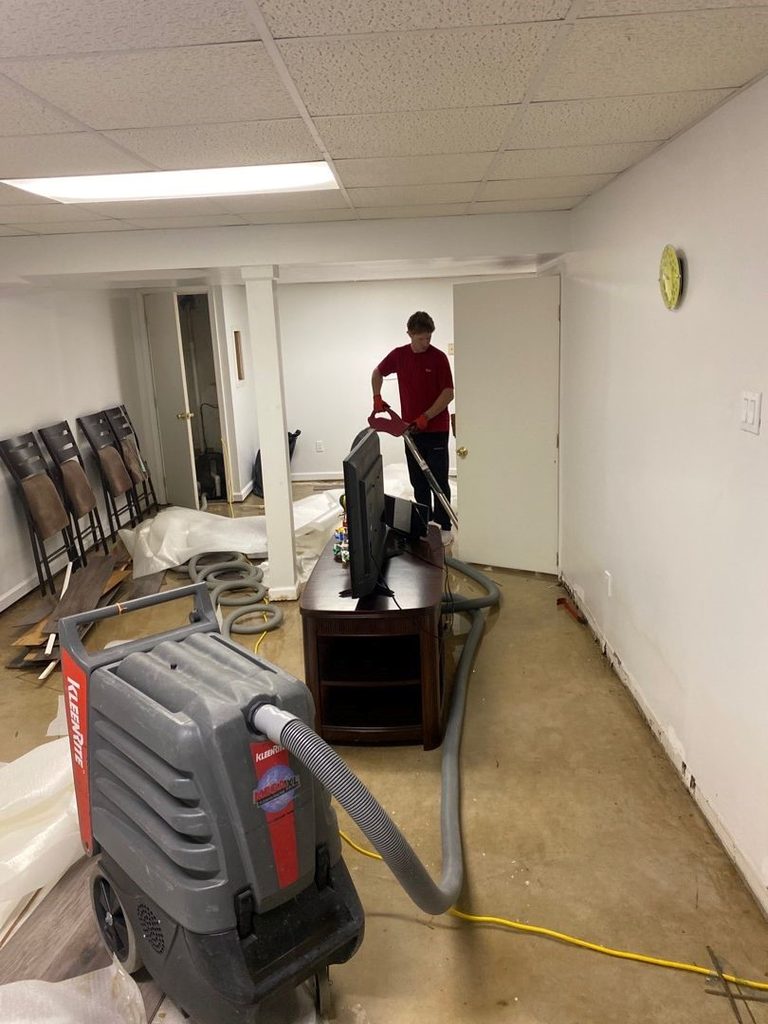
- Moisture mapping. Moisture meters and thermal imaging cameras locate hidden water under flooring, behind cabinets, and in walls and ceilings.
- Extraction. Portable extractors and specialty tools remove water from flooring and carpet, and injection drying can reach water trapped under hard surfaces.
- Selective removal and containment. Toe kicks are pulled, baseboards removed, and unsalvageable materials taken out. A containment barrier of poly sheeting prevents cross-contamination of dry rooms.
- Structural drying. Air movers and LGR dehumidifiers dry the structure. Technicians track psychrometrics, meaning temperature, humidity, and grains per pound, and log hygrometer readings daily.
- Cleaning and air quality. Antimicrobial biocide is applied, and air scrubbers with HEPA filtration clean the air. If mold has begun, negative air pressure keeps spores contained during work under IICRC S520. Some molds can release mycotoxins.
- Dry verification. Equipment leaves only when readings reach the dry standard.
Unlike a generic cleanup service, PuroClean Disaster Restoration offers 24/7 emergency dispatch, IICRC-certified technicians, and direct insurance billing for Greenfield and Hancock County homeowners.
Actionable takeaway: Ask for daily moisture readings in writing, since a dry-feeling floor may still hold water underneath.
Frequently Asked Questions
Does homeowners insurance cover a washing machine or dishwasher overflow in Indiana?
Most Indiana homeowners policies cover sudden and accidental water damage from an appliance, such as a burst hose or overflow, but often exclude slow leaks and neglected maintenance, and the appliance itself is usually not covered. Coverage varies. Report the loss quickly and contact the Indiana Department of Insurance with questions about your rights.
How much does cleanup after an appliance overflow cost in Greenfield?
Cost depends on how much water escaped, the water category and class, which materials are affected, and how many days of drying are needed. A small, caught-early overflow costs far less than water that reached cabinets and ceilings. A professional inspection gives you a written scope, and many insurers work with restoration companies directly.
How long does it take to dry after a dishwasher or washer overflow?
Structural drying often takes about three to five days, depending on materials, humidity, and equipment placement. Technicians check moisture readings daily and remove equipment when materials reach the dry standard. Cabinets, hardwood, and plaster can take longer, and mold remediation adds time if growth has started.
Can I dry up an appliance overflow myself?
Yes, if it is a small amount on a sealed floor and you dry it within hours. Call a professional if water reached cabinets, walls, a ceiling below, or carpet, or if it sat more than 24 hours. Fans cannot dry water trapped under flooring or inside wall cavities.
Is water from a dishwasher or washing machine a health risk?
Drain water is Category 2, meaning it can contain bacteria, and it can worsen if it sits. EPA guidance notes mold can grow on damp materials within 24 to 48 hours. People with asthma or allergies are most sensitive. Dry the area quickly, and avoid contact with sewage if a drain backs up.
How can I tell if water is hidden under my flooring?
Signs include cupped or buckled boards, soft spots, a musty smell, stains that spread, and baseboards that pull away. A moisture meter and thermal imaging camera can confirm trapped water without removing flooring. If you suspect it, schedule an inspection before covering or refinishing the floor.