


Key Takeaways
- Water damage is sorted into three categories by contamination level, based on the IICRC S500 standard: Category 1 (clean water), Category 2 (gray water) and Category 3 (black water).
- Category 1 comes from clean sources such as a broken supply line. Category 2 carries significant contamination, such as dishwasher discharge. Category 3 is grossly contaminated, such as sewage or rising floodwater.
- The category can get worse with time. Clean water left sitting can turn gray, and gray water can turn black.
- The category decides what can be saved, what protective gear is needed and how much work the job takes.
- If the water came from a sewer, a floor drain, a toilet beyond the trap or outdoor flooding, treat it as Category 3 and call a professional. In Greenfield, Hancock County or the Indianapolis area, call PuroClean Disaster Restoration at (317) 467-4436.
Reviewed by the restoration team at PuroClean Disaster Restoration, Greenfield, IN. Updated October 2026.
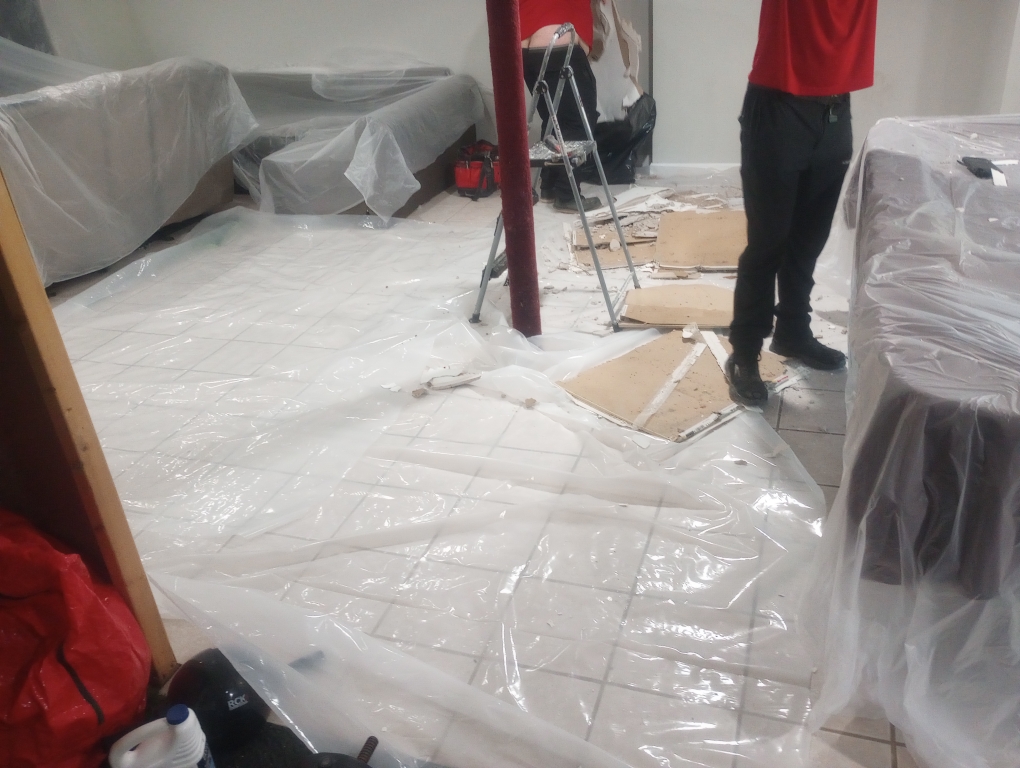
What Are Water Damage Categories?
Water damage categories are a three-level system from the IICRC S500 Standard for Professional Water Damage Restoration. They rank water by how contaminated it is and how much risk it poses to people. Restoration crews identify the category first, because it decides how they protect themselves, which materials they remove and how they clean and dry the space.
| Category | Common name | Contamination | Typical sources |
|---|---|---|---|
| Category 1 | Clean water | Low risk to skin contact, swallowing or breathing | Broken supply lines, sink or tub overflow with clean water, appliance supply line failures |
| Category 2 | Gray water | Significant contamination, can cause illness or discomfort | Dishwasher or washing machine discharge, toilet bowl overflow with urine only, seepage from hydrostatic pressure |
| Category 3 | Black water | Grossly contaminated, may carry pathogens | Sewage, toilet backflow beyond the trap, ground surface water, rising water from streams and rivers |
The source tells you where the water started. The category also depends on what the water has touched and how long it has been sitting.
What Is Category 1 Water Damage?
Category 1 water damage comes from a sanitary source and does not pose a substantial risk to people. Think of a pipe that supplies clean water to a faucet, a toilet tank, or an appliance supply line that fails.
What to do
- Stop the source. Shut off the water at the fixture or the main valve.
- Cut power to wet areas if you can reach the breaker safely and the floor around it is dry.
- Remove small amounts of standing water and move belongings out of the wet area.
- Call a restoration company quickly. Wet materials are commonly recommended to be dried within 24 to 48 hours to help prevent mold, and Category 1 can lose its “clean” status as time passes.
Category 1 is the easiest category to save materials from, but only when the drying starts fast.
What Is Category 2 Water Damage?
Category 2 water contains significant contamination and can cause discomfort or sickness. It often comes from a dishwasher or washing machine discharge, a toilet bowl overflow that contains urine but no feces, a broken aquarium, a punctured waterbed or seepage from hydrostatic pressure. Hydrostatic seepage is water pushed through a basement floor or wall by wet soil outside.
Sump pump failures often land in this category too, depending on what the water has touched.
What to do
- Wear waterproof boots and gloves if you must enter the area, and keep children and pets out.
- Do not use a household vacuum on wet areas.
- Ventilate the space and avoid spreading water to dry rooms.
- Call a professional. Carpet pad and other porous materials that soaked up gray water are usually removed rather than saved.
What Is Category 3 Water Damage?
Category 3 water is grossly contaminated and can carry bacteria, viruses and other harmful agents. Sewage, toilet backflow beyond the trap, ground surface water and rising water from streams and rivers all fall here. Standing water that has sat long enough to grow microbes can also be treated as Category 3.
What to do
- Stay out of the water and the affected area. Do not touch it with bare skin.
- Do not run the HVAC system or fans in a way that moves air from the affected area through the home.
- Keep people and pets away, especially young children, older adults and anyone with a weakened immune system.
- Call a restoration company right away. Porous materials that touched Category 3 water, such as carpet, pad, insulation and drywall, are removed. Hard surfaces are cleaned and sanitized under controlled conditions.
Do not try to clean up Category 3 water on your own. The health risk and the chance of spreading contamination are too high.
Can One Water Loss Change Categories?
Yes. A Category 1 loss can slide to Category 2 or 3 when water sits in warm, humid conditions, passes through dirty materials or soaks into porous materials. A Category 2 loss can become Category 3 the same way. This is the main reason a quick response matters. A crew that arrives early can often dry the space before the category worsens, which means fewer materials removed.
Water Damage Category vs. Class: What Is the Difference?
People often mix up the two systems, and your adjuster or restoration company may use both.
- Category describes how contaminated the water is (1, 2 or 3).
- Class describes how much water the materials absorbed and how fast it will evaporate (Class 1 to 4). Class 1 involves little moisture absorption, while Class 4 involves deeply held water in dense materials such as hardwood, concrete or plaster.
A single loss gets both labels. For example, a burst supply line that soaks a basement floor and walls could be Category 1, Class 3. A sewage backup affecting a small area could be Category 3, Class 1. The category sets the safety and removal plan, and the class sets the drying plan.
Which Materials Can Be Saved in Each Category?
The final decision is made on site with moisture readings and a close inspection. The table shows typical outcomes.
| Material | Category 1 | Category 2 | Category 3 |
|---|---|---|---|
| Carpet | Often dried in place | Often cleaned or replaced, depending on exposure | Removed |
| Carpet pad | Often dried or replaced | Usually removed | Removed |
| Drywall | Dried if caught quickly | Wet sections often cut out | Removed where contacted |
| Insulation | Sometimes dried | Usually removed | Removed |
| Hardwood and laminate | May be saved if dried fast | At risk, often removed | Removed |
| Concrete, tile and sealed surfaces | Dried in place | Cleaned and disinfected | Cleaned and sanitized with controls |
Need help figuring out what your water is? Call PuroClean Disaster Restoration at (317) 467-4436 or send a request online. A technician can identify the category and class on site.
What Protective Equipment Do You Need?
For a small Category 1 spill, gloves and basic caution may be enough. For Category 2, boots, gloves and eye protection are the minimum, and you should keep the work area contained. For Category 3, restoration crews use full protective gear, containment barriers and air control. That equipment is a large part of why a professional is the safer choice for gray and black water.
How Do Water Damage Categories Affect Restoration Cost?
The same square footage can cost very different amounts depending on the category. Category 1 usually costs the least because most materials can be dried in place. Category 2 and 3 usually add:
- protective equipment and containment
- demolition and removal of porous materials
- disposal of contaminated materials
- cleaning, disinfecting and antimicrobial treatment
- extra drying time and equipment
A fast response keeps the category lower and the bill smaller. Delays can move a Category 1 loss up a level.
Does Insurance Cover Each Category?
Coverage depends on your policy and the cause of the loss, not only the category. A sudden, accidental event such as a burst pipe is often treated differently from a slow leak or outdoor flooding. Sewer or drain backup often needs a separate endorsement. Read your policy, document the damage with photos and ask your agent before work begins. The Indiana Department of Insurance can answer general questions about claims and coverage.
Water Damage Categories in Greenfield and Hancock County
Heavy rain, saturated soil and aging plumbing create all three categories in homes around Greenfield, Cumberland, New Palestine, McCordsville, Fortville and the greater Indianapolis area. A failed sump pump or seepage through a basement wall is often Category 2. A floor drain that backs up after a storm is usually Category 3. A broken supply line in a kitchen or bathroom usually starts as Category 1.
PuroClean Disaster Restoration in Greenfield handles water damage, mold, fire and smoke, and biohazard cleanup, so one team can respond to a loss whatever its category and keep a Category 1 loss from becoming a bigger one. Emergency response is available 24/7.
FAQs About Water Damage Categories
What are the three categories of water damage?
Category 1 is clean water from a sanitary source, Category 2 is gray water with significant contamination, and Category 3 is black water that is grossly contaminated and may carry pathogens. The IICRC S500 standard defines them.
Is a burst pipe Category 1 water damage?
A burst supply line usually starts as Category 1 because the water is clean. If it soaks dirty materials or sits too long, it can become Category 2 or 3, so call a professional quickly.
Can Category 1 water damage become Category 3?
Yes. Time, warm temperatures and contact with contaminated materials can move water to a higher category. Fast drying is the best way to prevent that.
Is it safe to clean up Category 3 water myself?
No. Category 3 water can carry harmful microbes. Stay out of the area and call a restoration company that uses protective gear and containment.
What is the difference between water damage category and class?
Category measures contamination, from 1 to 3. Class measures how much water the materials absorbed and how fast it will evaporate, from 1 to 4. A loss has both, and they guide different parts of the restoration plan.
Does insurance cover Category 2 and Category 3 water damage?
It depends on your policy and the cause. Sudden accidental damage is often covered, while sewer backup and flooding may need separate coverage. Check with your agent or the Indiana Department of Insurance.
Not Sure Which Category You Have? Treat It as the Higher One
When you cannot tell where the water came from or how long it has been sitting, assume the higher category and keep people out until a professional looks at it. A quick assessment costs far less than a missed contamination problem.
Ready for help? Call PuroClean Disaster Restoration in Greenfield at (317) 467-4436 or contact us online for emergency water damage response, day or night.