


Reviewed for technical accuracy by PuroClean Disaster Restoration’s IICRC-certified restoration team.
Wet drywall is not automatically ruined, but the window to save it closes fast. Under the IICRC S500 Standard for Professional Water Damage Restoration, the decision to dry, repair, or remove drywall depends on the water’s contamination category, how long the material stayed wet, and whether the wall cavity itself trapped moisture. For homeowners in Greenfield and the surrounding Hancock County neighborhoods, that decision often has to be made within hours, not days, because groundwater and sewer intrusion here carry a higher contamination risk than a simple supply line leak.
This guide walks through the seven questions homeowners ask most, using the same moisture mapping and psychrometric principles a certified restoration technician would apply on site.
Key Takeaways for Homeowners
- Clean water (Category 1) drywall can often be dried and saved if drying begins within 24 to 48 hours.
- Water contaminated by sewage or floodwater (Category 3, also called black water) requires removal of affected drywall, no exceptions.
- Drywall that stayed wet more than 48 hours is at high risk for mold colonization behind the surface, even if the face looks dry.
- Greenfield’s spring water table rise and sump pump overload are common local triggers, not just heavy rainfall.
- Sagging, bubbling, or a persistent musty smell mean the wall assembly has already failed structurally or biologically.
- A licensed restoration company should confirm moisture content with a hygrometer before any wall is closed back up.
If your basement or first floor has standing water right now, do not wait to see if it dries on its own. Every hour of delay increases the odds that clean water becomes a mold problem. PuroClean Disaster Restoration offers 24/7 emergency dispatch for Greenfield and Hancock County homeowners, and can usually have a technician on site the same day to begin moisture mapping and containment.
1. What Determines Whether Wet Drywall Can Be Saved?
The single biggest factor is water category, followed closely by dwell time. Category 1 water, like a burst clean supply line, gives drywall a real chance at survival if drying starts quickly. Category 3 water, which includes sewage backups and rising groundwater that has picked up soil contaminants, means the drywall’s paper facing has almost certainly absorbed bacteria and organic material that no amount of drying will fully remove.
Greenfield sits in a humid continental climate, and Hancock County basements are particularly exposed to a specific seasonal pattern: as snow melts each spring and combines with rain accumulation, the water table rises and pushes hydrostatic pressure against basement floors and walls. That pressure can force water through even a hairline foundation crack, and depending on soil conditions, that intruding water may qualify as Category 2 or 3 rather than the clean water most homeowners assume.
Takeaway: Before deciding to dry or replace, identify the water source. A sewer backup or groundwater intrusion event changes the entire protocol.
2. How Long Can Drywall Stay Wet Before It Needs to Be Replaced?
Drywall exposed to clean water for less than 24 to 48 hours can usually be dried in place using structural drying equipment. Beyond that window, the paper backing becomes a food source for mold spores that are already present in normal indoor air, and colonization can begin even without visible growth.
Restoration technicians confirm this with a hygrometer, taking baseline moisture readings in unaffected drywall elsewhere in the home, then comparing those numbers to readings in the affected wall over several days of drying. If moisture content is not trending down toward that baseline within 72 hours, the drywall is typically removed rather than dried further, since continued drying attempts risk subfloor delamination and hidden mold growth inside the wall cavity.
Takeaway: Track drying progress with actual moisture readings, not guesswork or how the wall looks from the outside.
3. What Are the Warning Signs That Drywall Must Be Removed, Not Dried?
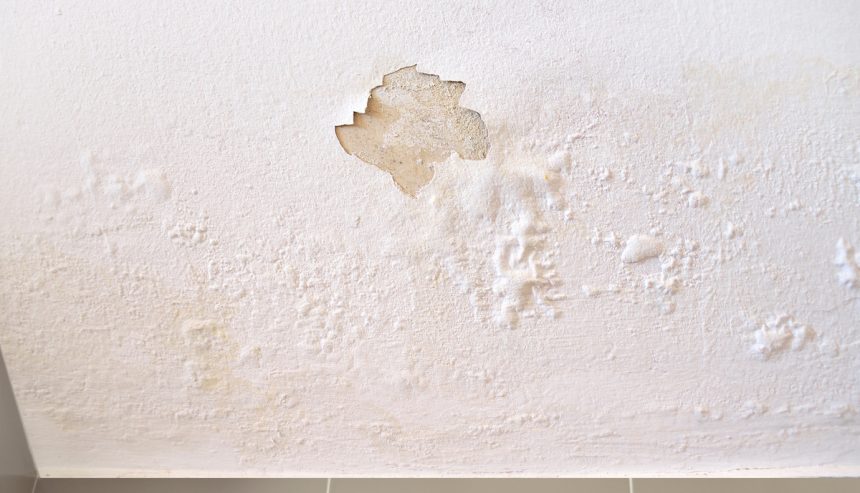
Sagging or bulging drywall, visible bubbling paint, a musty odor that persists after surface drying, and any staining that spreads rather than shrinks are all signs the wall assembly has failed. At that point, drying in place is not a realistic option.
If you notice any of these signs, particularly a musty smell that won’t go away even with fans running, stop trying to manage the situation yourself and call a licensed restoration professional. That smell usually means mycotoxins are already being produced inside the wall cavity, which is a health consideration, not just a cosmetic one.
Takeaway: Visible sagging or persistent odor is your signal to stop DIY efforts and bring in a professional assessment.
4. Does the Type of Foundation in My Greenfield Home Matter?
Yes. Hancock County’s housing stock breaks into two general categories, and each has a different flood risk profile. Postwar ranch and split-level homes built on poured concrete or block foundations, common throughout Greenfield subdivisions, are generally more resistant to seepage but still vulnerable to hydrostatic pressure and sump pump failure during heavy spring runoff. Older brick homes near Greenfield’s historic downtown often sit on fieldstone or aging block basements, where original mortar joints have had decades to deteriorate, making them more prone to gradual seepage even without a dramatic storm event.
Knowing which category your home falls into helps a restoration team anticipate where water is most likely entering and whether the intrusion is a one-time event or an ongoing structural issue that will recur every spring.
Takeaway: Older Greenfield homes with original masonry basements should have mortar joints inspected annually, not just after a flood.
5. What Does Professional Drywall Water Restoration Actually Involve?
A proper restoration follows a defined sequence rather than simply running fans and hoping for the best.
- Moisture mapping — technicians use thermal imaging and moisture meters to identify the full extent of water intrusion, including areas hidden behind walls or under flooring.
- Containment barrier setup — plastic sheeting and negative air pressure machines isolate the affected area to prevent cross-contamination to unaffected rooms.
- Water extraction — standing water is removed with truck-mounted or portable extraction equipment.
- Structural drying — low-grain refrigerant (LGR) dehumidifiers paired with air movers reduce ambient humidity while pulling residual moisture from wall cavities and subfloor materials.
- Antimicrobial application — an antimicrobial biocide is applied to studs and remaining structural materials to inhibit mold growth during the drying process.
- Air scrubbing — HEPA filtration air scrubbers run continuously in Category 2 or 3 situations to capture airborne particulates and reduce cross-contamination risk.
- Verification — final hygrometer readings confirm the structure has returned to a normal moisture range before any rebuild begins.
This is meaningfully different from what most general contractors offer, and it’s why PuroClean Disaster Restoration bills insurance carriers directly for Greenfield homeowners, removing one more obstacle during an already stressful event.
Takeaway: Structural drying is a monitored, multi-step process, not just placing a few box fans in the basement.
6. Is It Ever Safe to Handle Wet Drywall Removal Myself?
For small, clean water incidents, such as a minor supply line drip caught within hours, a homeowner can often cut out and replace a small section of drywall safely. Wear gloves and an N95 respirator, cut back at least 12 inches beyond visible damage, and bag the material before disposal.
For anything involving standing water, sewage odor, a large affected area, or Class 4 water damage, meaning moisture trapped in low-permeance materials like plaster or hardwood, professional equipment and Category 3 protocols are necessary. Attempting DIY removal in these situations risks spreading contamination through the rest of the home.
Takeaway: Small, clean, recent leaks may be a reasonable DIY project. Anything involving sewage, standing water, or a large area is not.
7. What About Mold Risk After the Drywall Is Removed or Dried?
Even after wet drywall is removed or successfully dried, the framing behind it, insulation, and subfloor need to be checked. The EPA’s mold guidance notes that mold can begin developing within 24 to 48 hours in the right conditions, which is why restoration technicians don’t consider a job finished until moisture readings in the studs and subfloor confirm the space is fully dry, not just the visible surface.
If a sewer backup was involved, the IDEM (Indiana Department of Environmental Management) treats that intrusion as a contamination event requiring more rigorous decontamination than a standard water loss, since sewage-affected materials fall under Category 3 protocols regardless of how quickly they’re addressed.
Takeaway: A drywall replacement job isn’t complete until the framing and subfloor behind it are independently verified dry.
A Word on Timing
If your basement has water in it right now, the most important decision you’ll make is how quickly you act. A wall that could have been saved with drying started this afternoon may need full removal if drying doesn’t start until next week.
Frequently Asked Questions
Does homeowners insurance cover wet drywall replacement in Greenfield? It depends on the water source. Sudden and accidental events, like a burst pipe, are typically covered under standard policies. Groundwater flooding and sewer backups often require separate flood insurance or a sewer backup rider. Check your policy’s specific exclusions, and ask your restoration company to document the source clearly for your claim.
How much does drywall water damage restoration typically cost? Costs vary widely based on square footage, contamination category, and whether mold remediation is also needed. A small clean water repair may run a few hundred dollars, while a Category 3 basement loss involving multiple rooms can run into the thousands. A restoration company can provide a specific estimate after moisture mapping.
How long does the drying and repair process usually take? Structural drying typically takes three to five days once equipment is in place, followed by additional time for drywall replacement and finishing. Category 3 losses involving contamination take longer due to required antimicrobial treatment and verification steps before rebuild can begin.
Can I just paint over water stains instead of replacing the drywall? Painting over water-stained drywall without confirming the material is fully dry and free of contamination risks trapping moisture and mold behind a sealed surface. A moisture reading should confirm the wall is dry before any cosmetic repair is applied.
Is wet drywall a health risk for my family? Category 1 water that’s dried quickly poses minimal health risk. Category 3 water, including sewer backups and groundwater intrusion, can introduce bacteria and, if mold develops, mycotoxins that affect indoor air quality. Anyone with respiratory sensitivities should avoid the affected area until professional remediation is complete.
Why does Greenfield seem to get more spring basement flooding than other times of year? Snowmelt combined with spring rain raises the local water table faster than the ground can absorb it, creating hydrostatic pressure against basement walls and floors. This is a documented seasonal pattern in Hancock County, distinct from summer storm flooding, and it’s why sump pump maintenance each February is worth the effort.
Get Help Now
If you’re dealing with wet drywall anywhere in Greenfield or the surrounding Indianapolis-metro area, PuroClean Disaster Restoration is available 24/7 for emergency response. Our IICRC-certified technicians will assess the water category, map the moisture extent, and walk you through what can be saved and what needs to go, and we bill your insurance carrier directly so you’re not covering the cost upfront.
PuroClean Disaster Restoration 625 S. State St., Greenfield, IN 46140 (317) 467-4436