24/7 Emergency Ceiling Water Damage Cleanup Houston Services in Houston, TX
Water dripping through a ceiling is often the first visible sign of a larger problem above it. A roof leak, plumbing failure, overflowing fixture, appliance line, HVAC condensate problem, or water loss on an upper floor can soak insulation, framing, drywall, ceiling texture, wiring, flooring, and contents before a stain appears below.
PuroClean of Central Southwest Houston provides ceiling water damage cleanup in Houston for homes, apartments, offices, retail spaces, and other properties. Our work can include emergency water extraction, moisture mapping, controlled removal of unsafe materials, structural drying, cleaning, and preparation for repairs. The leaking roof, pipe, HVAC component, or appliance must be repaired by the appropriate qualified trade.
Stay out from under a bulging or sagging ceiling. Do not touch wet fixtures, switches, outlets, or equipment. If water is near electrical service or the ceiling appears unstable, keep people away and call the appropriate emergency or licensed professional. For resulting water damage, call (832) 850-5824.
Ceiling water can create electrical and collapse hazards. Treat the area as unsafe until the source and affected assembly are evaluated.
Houston properties face intense rain, wind-driven water, high indoor cooling demand, and year-round plumbing use. Those conditions do not identify the source by themselves, but they make several loss patterns common.
| Possible Source | Clues You May Notice | Who Addresses the Source |
|---|---|---|
| Roof, flashing, or storm opening | Staining after rain, wet attic insulation, or damage near an exterior wall or roof penetration | Qualified roofer or construction professional |
| Supply pipe or fitting | Continuous dripping, sudden staining, or active water when no fixture is being used | Licensed plumber |
| Tub, shower, toilet, or drain above | Water appears during fixture use or around the room below a bathroom | Plumber or appropriate repair trade |
| HVAC condensate pan or drain | Leak occurs during cooling, often near an attic unit, closet, or air handler | Licensed HVAC contractor |
| Upper-floor appliance | Leak follows washer, refrigerator, dishwasher, or water-heater operation | Appliance technician or plumber |
| Fire sprinkler discharge | Water spreads through ceiling grids or multiple rooms near sprinkler piping | Licensed sprinkler contractor for the system; restoration company for water damage |
The visible stain is not always directly below the source. Water can follow joists, pipes, ducts, fasteners, and the top of drywall before it finds an opening. Moisture mapping helps distinguish the visible symptom from the actual affected boundary.
Paint can hide staining, textured finishes can mask swelling, and surface airflow can dry the room side while the back of the drywall remains damp. Insulation above the ceiling may hold water against wood framing and drywall paper. Adjacent wall cavities, cabinets, flooring, and contents may also be affected.
Prompt assessment is especially important when a Houston property is air-conditioned while outdoor humidity remains high. Drying requires management of temperature, air movement, and water vapor—not simply waiting for the stain to fade.
Water dripping, staining, or sagging above a Houston room?
Call for moisture mapping, cleanup, and structural drying.
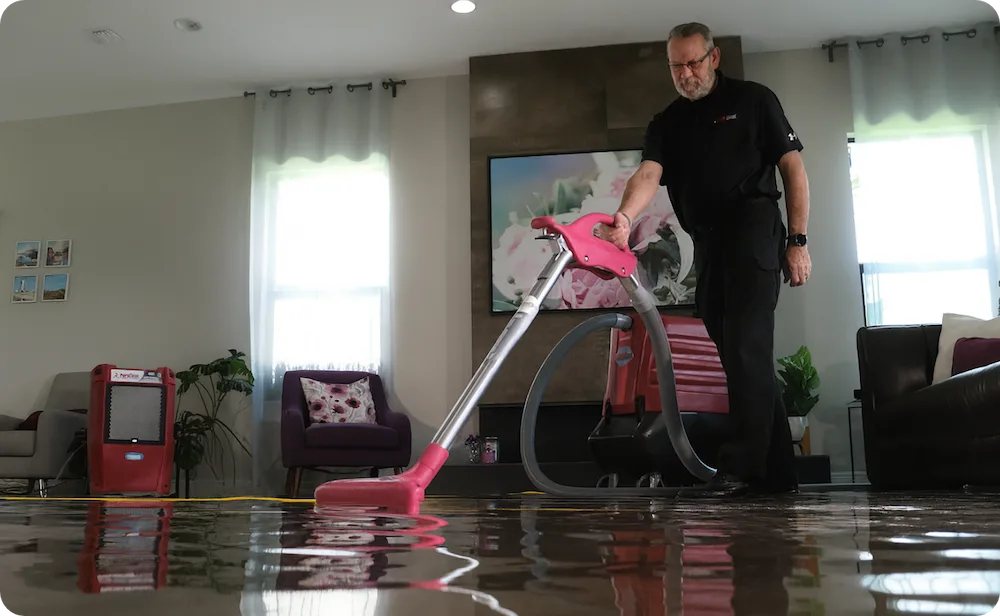
Standing water is removed from floors and accessible surfaces. Extracting water early reduces the amount that must later be removed through evaporation and dehumidification.
Technicians evaluate the ceiling, insulation, framing, walls, flooring, and nearby rooms. Moisture meters and thermal imaging, when appropriate, help identify patterns that are not visible from the occupied space.
Unsafe, contaminated, structurally compromised, or unsalvageable materials may require controlled removal. Openings are made as needed to access trapped water and support drying—not merely to remove a cosmetic stain.
Professional air movers and dehumidifiers are positioned according to the materials and layout. Progress is documented with follow-up readings so equipment is adjusted or removed based on actual conditions.
Salvageable surfaces are cleaned as appropriate. Once materials have reached suitable drying goals, drywall, insulation, texture, paint, trim, and other finish repairs can be coordinated.
For a larger or multi-room loss, see our Houston water damage restoration services. Commercial properties can also review commercial water damage restoration in Houston.
We identify known hazards and confirm that the water source is stopped or being controlled. Electrical, roofing, plumbing, HVAC, and structural issues are referred to the appropriate qualified professionals.
Visible conditions, moisture readings, affected contents, and possible paths of travel are documented. The assessment looks above, beside, and below the visible stain.
Accessible water is removed. Contents may be moved or protected, and unstable ceiling materials are handled using a controlled work plan.
Materials that cannot remain safely or cannot be effectively cleaned and dried are removed. Materials capable of restoration may be left in place and monitored.
Drying equipment is installed and readings are taken during the project. The drying plan changes as moisture levels improve and concealed areas become accessible.
Work areas are cleaned, restoration documentation is organized, and the property is prepared for reconstruction or finish replacement where required.
Wet drywall paper, insulation, dust, wood products, and contents can support microbial growth when moisture remains. There is no universal mold timetable; temperature, humidity, material type, prior conditions, and the amount of water all matter.
Removing visible water is only the beginning. The affected assembly should be evaluated and dried. If visible growth or musty odor is present, the scope may also require professional mold remediation in Houston.
Coverage depends on the policy, cause, timing, maintenance history, and exclusions. A sudden plumbing loss may be treated differently from long-term seepage or deferred roof maintenance. Notify the carrier promptly when the loss may be covered.
No. A swollen ceiling may contain substantial water and can fail suddenly. Keep people away and let trained professionals control access after electrical and structural hazards are considered.
Sometimes. The decision depends on material condition, water category, insulation, coatings, access, structural stability, and whether readings show that drying in place is practical.
Water can move slowly through insulation and framing before reaching the finished ceiling. A delayed stain does not mean the source is still active, but the roof and assembly should be inspected.
Drying time varies with the amount of water, material layers, humidity, airflow, and how quickly mitigation began. Moisture readings are more reliable than a fixed number of days.
PuroClean handles the resulting water damage. A licensed plumber, roofer, HVAC contractor, sprinkler contractor, or appliance specialist addresses the source according to the type of failure.
Only after the source is corrected, affected materials are dry, and damaged or contaminated materials have been addressed. Painting too soon can conceal moisture and lead to recurring damage.
If water contacted fixtures, outlets, wiring, panels, appliances, or equipment, a qualified electrician or equipment specialist should evaluate the affected components before normal use.
It may, but only the carrier can determine coverage. Preserve documentation and report the loss promptly.
Ceiling water damage is rarely limited to the spot you can see. A professional assessment can identify the source pathway, the full affected boundary, unsafe materials, and the drying work required.
Call (832) 850-5824 for ceiling water damage cleanup in Houston.
What Our Customers Say:
Find answers to common questions about our services
You can check the walls and ceilings for water stains, the floors for warping and buckling, and the pipes for corrosion, leaks, missing grout, and mold. Attics and basements may have damaged flooring, mildew or mold, dampness, and odors. Also, be sure to inspect the exterior of the home for cracked roof tiles, puddles, standing water, and whether the ground is sloping away from the house.
First, if safe, shut off the utilities in your home to avoid further damage. Don’t enter your home if it has suffered structural damage. Don’t walk through floodwater if electricity hasn’t been turned off, and avoid contaminants. Next, contact a water-damage restoration company, such as PuroClean of Central Southwest Houston , as soon as possible. Don’t wait, as water can cause mold and irremediable damage to the wood, walls, and carpet. Then, depending on the extent of the damage and the recommendation of the remediation company, contact your insurance provider to start the claim process.
There are many variables that determine whether a flooded property can be saved: the amount of water, and even more important, the amount of time the water was in/around the property. Every situation is different, and PuroClean of Central Southwest Houston expert restoration professionals can determine what can be salved once one site.
Property water damage can pose several dangers including structural instability, electrical hazards, mold and mildew growth leading to health issues, contamination from sewage or chemicals, and potential collapse of weakened structures.
Water flooding can cause extensive damage including structural damage to walls, floors, and foundations, damage to personal belongings, electrical hazards, and potential health risks from mold and bacteria growth. The longer water sits, the more severe the damage becomes.
Water damage can result from unexpected leaks, flooding from storms, plumbing failures, or appliance malfunctions. Our certified teams focus on rapid water removal, drying, and stabilization to help prevent further damage and mold growth.
 Explore Our Water Damage Mitigation Services
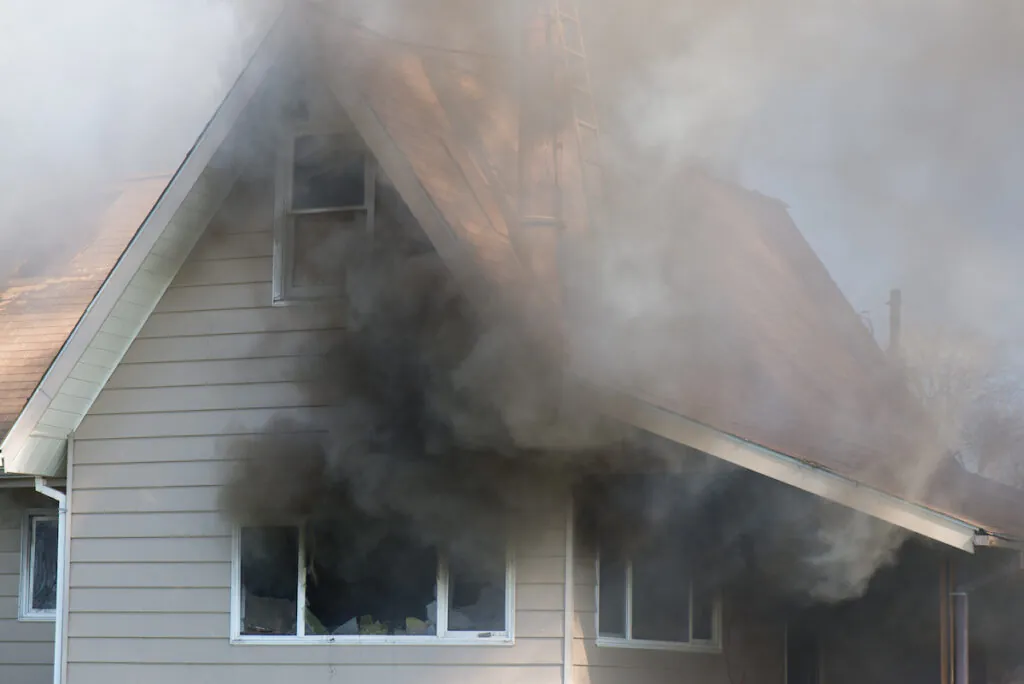
Even after a fire is extinguished, smoke, soot, and odor can continue to affect your home. Fire damage restoration services address visible damage while also helping reduce lingering effects that impact indoor air quality and surfaces.
Explore Our Fire and Smoke Damage Restoration Services
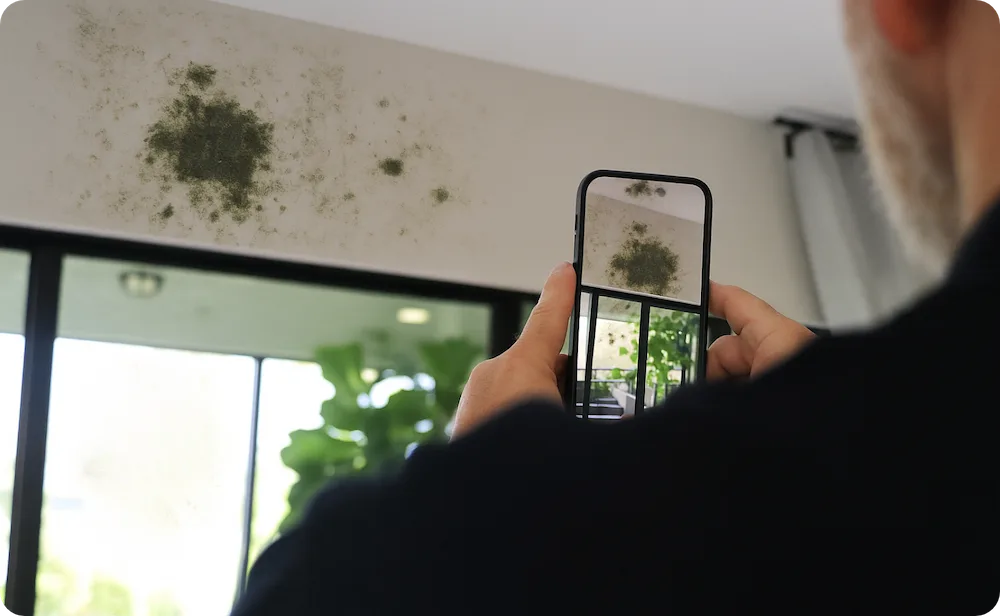
Mold often develops as a result of unresolved moisture or hidden water damage. Professional mold remediation helps identify affected areas, contain growth, and restore healthy indoor conditions.
Explore Our Mold Removal and Remediation Services
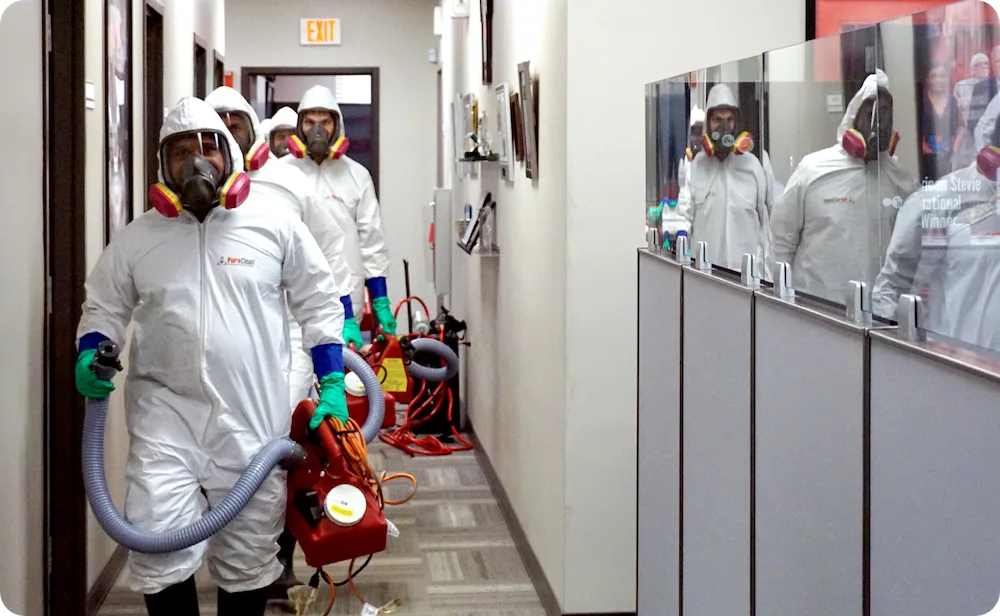
Biohazard situations, including crime scene cleanup and virus decontamination, require specialized cleaning and handling to protect health and safety. Biohazard cleanup services address contamination using proper protocols and professional care.
Explore Our Biohazard Cleanup Services
In some cases, property damage requires repairs beyond cleanup and mitigation. Reconstruction services help restore damaged areas of the home after water, fire, or other incidents, supporting a smoother transition from damage to recovery.
Explore Our Reconstruction Services Services
PuroClean provides 24/7 commercial property damage restoration services for businesses and facilities across the United States.
Explore Our Commercial Services
Water damage can result from unexpected leaks, flooding from storms, plumbing failures, or appliance malfunctions. Our certified teams focus on rapid water removal, drying, and stabilization to help prevent further damage and mold growth.
Explore Our Water Damage Mitigation Services

PuroClean of Central Southwest Houston
(832) 856-5900
3635 Willowbend Boulevard, Ste 318, Houston, TX 77054