


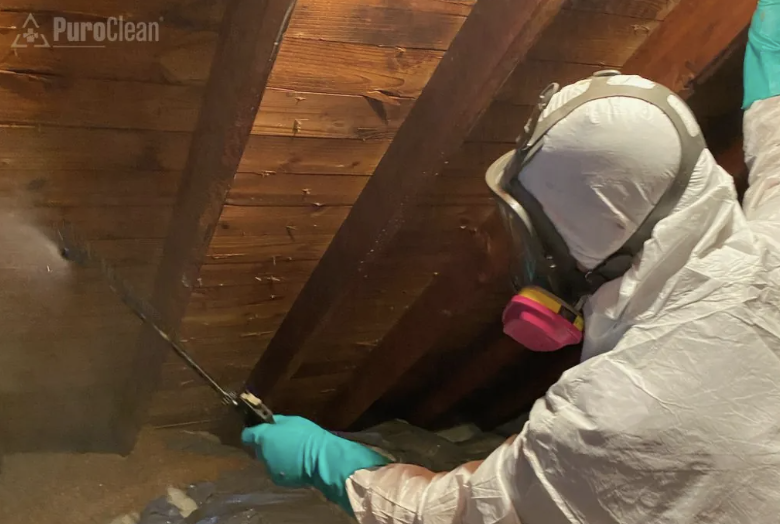
Common signs you may need attic mold removal in Houston include musty odors, dark staining on roof decking, visible mold growth, water stains on ceilings, elevated humidity levels, roof leaks, and condensation problems in the attic. Early detection can help prevent structural damage and more costly remediation.
Need Professional Attic Mold Removal?
Table of Contents
Why Attic Mold Is Common in Houston
Houston’s climate creates ideal conditions for mold growth. High humidity, frequent storms, heavy rainfall, and long cooling seasons often introduce moisture into attic spaces. Because most homeowners rarely enter their attics, mold problems can develop unnoticed for months or even years.
By the time mold becomes visible inside the home, contamination may already be widespread throughout the attic structure.
Musty Odors Inside the Home
One of the earliest warning signs of attic mold is a persistent musty smell. Mold releases microbial volatile organic compounds (MVOCs) that create the earthy odor many homeowners associate with mold contamination.
If you notice a musty smell that seems strongest near ceilings, hallways, upper floors, or HVAC vents, your attic may be the source.
Visible Mold Growth in the Attic
Visible mold is often the clearest indication that remediation may be needed. Mold can appear as black, gray, green, or white discoloration on:
- Roof decking
- Rafters
- Trusses
- Wood framing
- Insulation surfaces
- Ventilation components
Many homeowners discover attic mold while storing items, inspecting the roof, or preparing to sell their home.
Water Stains on Ceilings or Walls
Water stains are often a sign that moisture is entering the attic. Even if the leak appears minor, ongoing moisture exposure can support mold growth.
Common warning signs include:
- Yellow ceiling stains
- Brown water marks
- Peeling paint
- Bubbling drywall
- Discolored attic framing
Any evidence of water intrusion should be investigated promptly.
High Humidity and Condensation
Many Houston attic mold problems occur without an active roof leak. High humidity combined with poor ventilation can create condensation on roof decking and framing materials.
Warning signs include:
- Condensation on nails
- Damp insulation
- Moisture on attic surfaces
- Excessive attic heat and humidity
- Visible water droplets on wood framing
Over time, these conditions create an ideal environment for mold growth.
Roof Leaks and Moisture Intrusion
Roof leaks remain one of the leading causes of attic mold in Houston homes. Severe weather, aging roofing systems, damaged flashing, and hurricane-related damage can all allow water to enter the attic.
Even slow leaks may introduce enough moisture to support mold growth on wood surfaces.
If your home has experienced a recent roof leak, attic inspection is highly recommended.
When to Schedule an Inspection
Homeowners should consider a professional attic inspection if they notice:
- Persistent musty odors
- Visible mold growth
- Roof leak history
- Water stains on ceilings
- Condensation issues
- Elevated indoor humidity
- Recent storm damage
- HVAC moisture concerns
Early identification can help prevent structural damage and reduce remediation costs.
Related Mold Remediation Services
Attic mold often develops alongside other moisture and mold-related problems throughout the home.
- Attic Mold Removal Houston
- Crawl Space Mold Remediation Houston
- AC Leak Mold Cleanup Houston
- Humidity Damage Restoration Houston
Frequently Asked Questions
What are the first signs of attic mold?
Musty odors, dark staining on wood surfaces, elevated humidity, and visible discoloration are often among the earliest signs of attic mold growth.
Can attic mold exist without a roof leak?
Yes. Poor ventilation, high humidity, and condensation can create mold problems even when no active roof leak is present.
How do I know if attic mold is spreading?
Increasing visible growth, worsening odors, and expanding discoloration on roof decking or framing may indicate that mold is spreading.
Can attic mold affect indoor air quality?
Yes. Mold spores may circulate throughout the home through air movement, HVAC systems, and ceiling penetrations.
Should attic mold be inspected professionally?
Professional inspections can help determine the extent of contamination, identify moisture sources, and recommend appropriate remediation solutions.