


Table of Contents
Emergency Water Damage Restoration
Water damage is one of the most destructive and costly hazards a property owner can face. Whether it happens from a burst pipe, roof leak, storm surge, or appliance malfunction, water spreads fast destroying flooring, walls, electrical systems, and personal belongings within minutes. That’s why emergency water damage restoration is not just a service; it’s an absolute necessity to prevent escalating structural damage, mold growth, and long-term repair expenses.
The faster trained professionals respond, the more of your home and possessions can be saved. This guide breaks down everything homeowners need to know about emergency water damage restoration, including the dangers of untreated water, the step-by-step restoration process, prevention strategies, and why choosing the right restoration team makes all the difference.
Understanding the Critical Need for Emergency Water Damage Restoration
When water enters your property, the damage begins immediately but the type of damage varies depending on the source. Many homeowners underestimate how quickly water penetrates porous building materials, weakening structural integrity and fostering mold growth.
How Fast Water Damage Happens
- Within minutes: Water begins saturating walls, floors, subflooring, and belongings.
- Within hours: Drywall swells, wood flooring warps, carpets become fully soaked, and odors develop.
- Within 24–48 hours: Mold begins growing rapidly, posing serious health risks.
- Within days: Structural components, wiring, insulation, and HVAC systems may become compromised.
This timeline highlights why emergency water damage restoration is essential; it reduces long-term damage by stopping water infiltration, extracting moisture, and restoring affected areas promptly.
Types of Water That Affect Damage Severity
Professionals categorize water into three classes:
- Clean Water – From broken pipes, rainwater, supply lines
- Gray Water – From washing machines, dishwashers, showers
- Black Water – Sewage, floodwater, contaminated groundwater
Black water always requires immediate professional intervention because of bacteria, pathogens, and toxins.
For more detailed information on water contamination categories, the Environmental Protection Agency (EPA) provides excellent guidelines.
Emergency Water Damage Restoration: Key Steps Professionals Take to Save Your Property
A reputable restoration company follows strict industry protocols to mitigate damage efficiently and safely. These steps ensure that water is removed thoroughly and that the property is restored to pre-loss condition.
Step 1: Rapid Assessment and Damage Inspection
The first phase of emergency water damage restoration involves a detailed inspection using:
- Moisture meters
- Infrared thermal imaging
- Hygrometers
This identifies:
- How far the water has spread
- Which materials are salvageable
- Potential safety hazards (electrical risks, structural instability, contamination)
A customized restoration plan is created based on the extent and type of water damage.
Step 2: Immediate Water Extraction
High-powered pumps and industrial-grade wet vacuums remove standing water quickly. Fast extraction is critical because every hour water remains stagnant increases the risk of:
- Mold growth
- Structural damage
- Damage to personal belongings
- Secondary water migration
Emergency extraction sets the stage for effective drying.
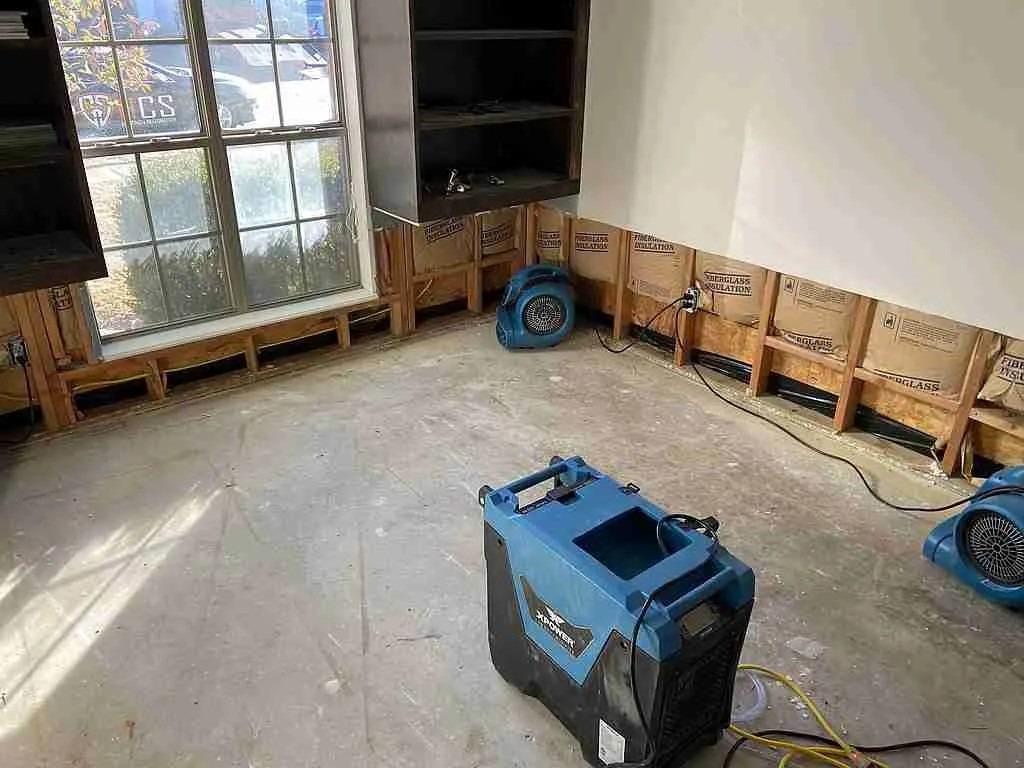
Step 3: Structural Drying and Dehumidification
After visible water is removed, hidden moisture can still saturate the home. Professionals use advanced drying techniques including:
- Air movers
- HEPA dehumidifiers
- Drying mats for hardwood floors
- Wall cavity drying systems
This phase of emergency water damage restoration is essential to prevent mold and microbial growth from taking hold.
Restoration experts document the drying process daily to ensure moisture levels reach safe standards before reconstruction begins.
Step 4: Sanitization, Odor Removal & Mold Prevention
Water intrusion can leave behind:
- Bacteria
- Odors
- Mold spores
- Contaminants
To ensure your home is safe and hygienic, technicians apply:
- EPA-approved antimicrobial treatments
- HEPA air filtration
- Deodorization methods (thermal fogging or ozone treatments)
Mold prevention begins during the drying phase, but these additional steps ensure no hidden spores remain.
Step 5: Repairs and Property Restoration
Once your home is completely dry and sanitized, the restoration stage begins. Depending on the severity of damage, repairs may include:
- Drywall replacement
- Flooring restoration or replacement
- Cabinetry or trim repair
- Painting
- Structural repairs
The goal is to return the property to its pre-loss condition, or even better.
Emergency Water Damage Restoration: Common Causes Homeowners Should Watch For
Understanding the common reasons behind water damage can help you stay alert and prevent disasters. Even a small leak can escalate into a massive problem without fast action.
Frequent Causes of Water Emergencies
- Burst pipes (especially during winter)
- Leaking roofs
- Faulty appliances (dishwashers, washing machines, water heaters)
- Clogged gutters or downspouts
- HVAC condensation problems
- Sewage backups
- Basement flooding
- Foundation cracks
- Storm-related flooding
By recognizing these risks early, homeowners can respond faster and reduce damage severity.
Emergency Water Damage Restoration: Major Risks of Delaying Action
Ignoring or postponing water damage restoration can lead to disastrous and expensive consequences.
1. Mold Growth and Health Hazards
Mold can begin forming within 24–48 hours, creating potential respiratory issues, allergies, and structural deterioration.
2. Structural Instability
Water weakens:
- Foundations
- Subflooring
- Wall studs
- Support beams
The damage may not be visible immediately, making professional inspection crucial.
3. Electrical Dangers
Water intrusion into wiring can cause:
- Electrical shorts
- Fires
- Shock hazards
Emergency restoration teams are trained to identify and mitigate these risks safely.
4. Permanent Damage to Belongings
Furniture, electronics, documents, and personal items deteriorate rapidly when saturated. Fast restoration improves the chances of successful recovery.
5. Increased Repair Costs
The longer water sits, the more costly the eventual repairs will be; insurance claims increase significantly when delays occur.
Emergency Water Damage Restoration: Prevention Tips Every Homeowner Should Use
While not all water emergencies can be prevented, proactive steps greatly reduce your risk.
1. Inspect Plumbing Regularly
Check for:
- Corrosion
- Slow leaks
- Drips
- Unexpected moisture around appliances
2. Install Smart Water Sensors
Modern leak detectors alert you in real time when water is detected saving thousands in potential damage.
3. Maintain Gutters and Downspouts
Clog-free gutters prevent water from pooling near your foundation.
4. Service Your Water Heater Annually
Tank failures are one of the leading causes of household water damage.
5. Seal Cracks in Your Foundation
Water naturally seeks weak points to protect them early.
6. Protect Your Basement
Use sump pumps, backflow valves, and dehumidifiers.
7. Know Where Your Main Water Shutoff Valve Is
Stopping water flow during an emergency can dramatically reduce destruction before professionals arrive.
Emergency Water Damage Restoration: Why Choose Industry Professionals Over DIY
Some homeowners attempt DIY water removal to save money, but water damage is more complex and dangerous than it seems.
Risks of DIY Water Damage Cleanup
- Hidden moisture goes undetected
- Mold develops silently behind walls
- Structural deterioration continues unnoticed
- Contaminated water exposure poses health risks
- Incomplete drying leads to repeated issues
Professional teams use:
- Commercial-grade equipment
- Scientific drying methods
- Advanced moisture detection tools
- Certified sanitization solutions
This ensures your property is thoroughly restored and safe to live in.
Your Trusted Partner for Emergency Water Damage Restoration
When disaster strikes, you need a team that responds fast with precision, compassion, and expertise. That’s where PuroClean of Jericho stands apart.
With industry-leading training, state-of-the-art equipment, and a commitment to restoring your home as quickly and safely as possible, PuroClean has become the trusted name for families and businesses across the region.
Why Homeowners Choose PuroClean of Jericho
- Rapid 24/7 emergency response
- Certified and insured technicians
- Advanced water extraction and structural drying technology
- Mold prevention and sanitization
- Complete property restoration
- Transparent communication and documentation
- Assistance with insurance claims
No matter the size or severity of the water emergency, PuroClean of Jericho delivers reliable, efficient, and professional restoration solutions when you need them most.
Call PuroClean of Jericho Today: Your Emergency Water Damage Restoration Experts
Water damage won’t wait—and neither should you. Protect your home, your family, and your peace of mind with the fast, dependable response that only PuroClean of Jericho can provide.
📞 Call Now: (516) 421-6400
Your property deserves expert protection. Your restoration begins the moment you call.