


A flooded basement in Apple Valley usually happens at the worst time: during a spring thaw, in the middle of a summer storm, or on the coldest night of the winter when a pipe gives way. What you do in the first hour matters. This guide walks through the safe first steps, the most common causes in Minnesota basements, how professional drying works, and how to lower the odds of it happening again.

First Steps for a Flooded Basement in Apple Valley
Safety comes before cleanup. Then work through these steps in order:
- Stay out of the water if power is on. If water is near outlets, cords, the furnace or the water heater, do not walk into it. Shut off power to the basement only if you can reach the panel from a dry spot. If not, call your utility or an electrician.
- Find and stop the source. For a burst pipe or a failed supply line, shut off the main water valve, usually near the water meter. For a sump pump, check whether it lost power or the float is stuck.
- Check whether the water is clean. Water coming up through a floor drain or toilet may contain sewage. Keep kids and pets away and do not try to clean it with household tools.
- Take photos and video of the water, walls, flooring and damaged items before you move anything.
- Move what you can safely carry to a dry floor, starting with documents, photos and electronics.
- Call for help early. The EPA advises drying wet materials within 24 to 48 hours to help prevent mold growth.
Ready.gov’s flood safety guidance covers what to do if water is rising quickly or roads nearby are flooded.
Why Minnesota Basements Take On Water
Most cases of a flooded basement in Apple Valley, and across Dakota County, trace back to a handful of causes:
- Spring snowmelt and heavy rain. When the ground is still frozen or already soaked, water collects against the foundation and finds its way in through cracks, window wells and floor joints.
- Sump pump failure. Storms can knock out power right when the pump is needed most. Pumps also fail from age, a stuck float switch or a frozen discharge line.
- Frozen and burst pipes. Long stretches below zero can freeze pipes in exterior walls, unheated spaces and crawl spaces. The leak often starts when the pipe thaws.
- Sewer backups. Heavy rain can overload sewer lines and push water up through floor drains. Our article on the causes of sewage backup explains why.

Clean Water, Gray Water or Sewage: Why It Matters
Restoration professionals sort water into three categories, based on industry standards from the IICRC:
- Clean water from a supply line or a burst pipe. Many materials can be dried in place if drying starts quickly.
- Gray water from a washing machine, dishwasher or sump overflow. It may contain contaminants and needs more cleaning.
- Black water from sewage or outside flooding. Porous materials it touches, like carpet pad and drywall, usually have to be removed.
Clean water does not stay clean for long. As it sits and picks up dirt from floors and walls, it can move into a worse category, which is another reason not to wait when you have a flooded basement in Apple Valley.
How Professional Basement Drying Works
Here is what a typical job looks like when you call PuroClean of Lakeville about a flooded basement in Apple Valley:
- Inspection. Our IICRC-certified technicians find the source and use moisture meters and thermal imaging to map how far the water has spread, including behind baseboards and under flooring.
- Water extraction. Pumps and extractors remove standing water and pull water out of carpet and pad.
- Protecting your belongings. Our crews move furniture off wet floors so it does not wick up water or stain the carpet.
- Removing what cannot be dried. Wet carpet pad, soaked insulation or the bottom of drywall may need to come out, and we explain why before we remove anything.
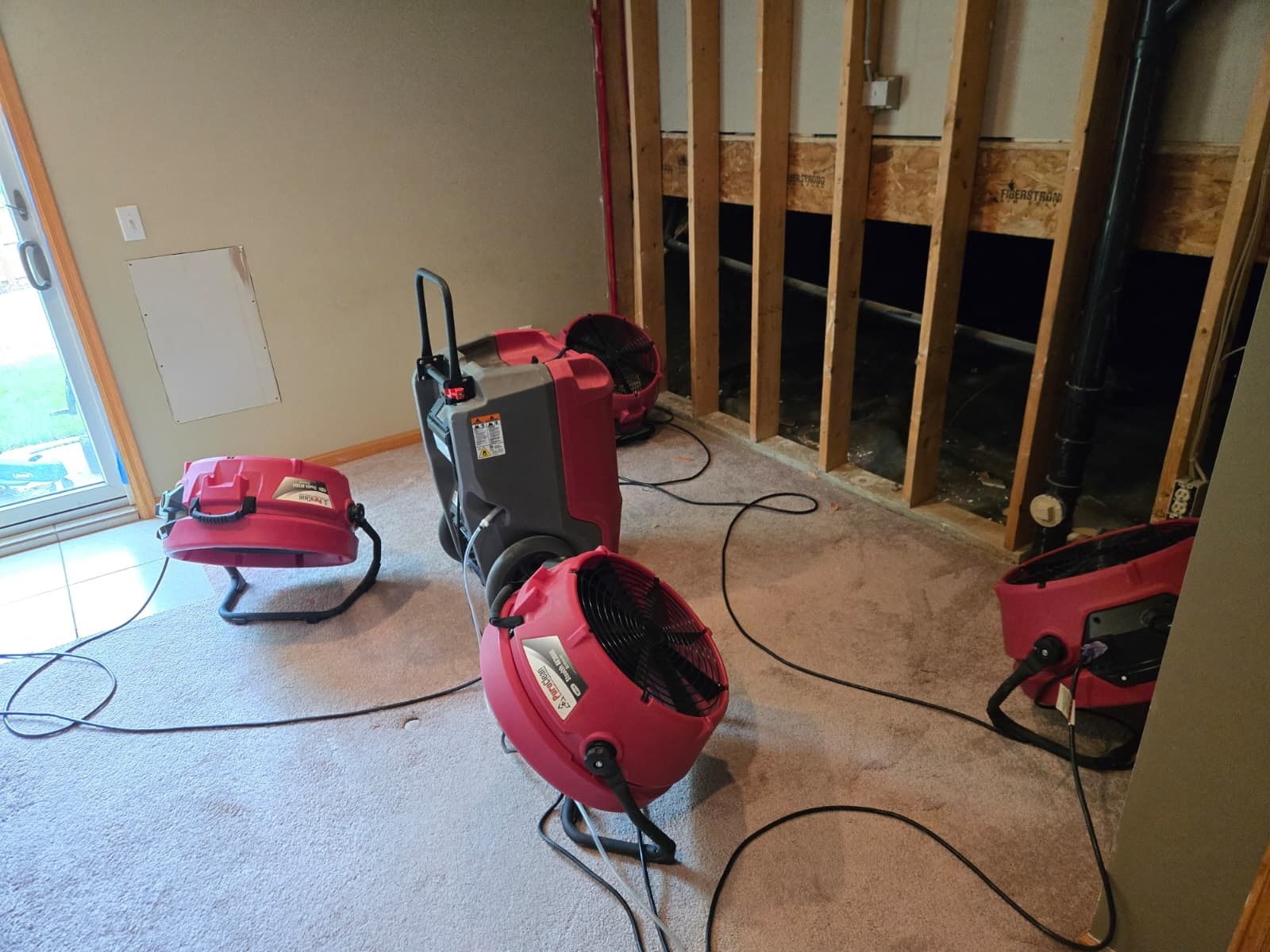
- Drying and monitoring. Air movers and dehumidifiers run until the structure is dry. We make follow-up visits to check moisture levels and adjust equipment.
- Cleaning and repairs. Once everything is dry, surfaces are cleaned and we talk through repairs.
Insurance and Documentation
We work with insurance companies on many basement water jobs. Your policy and your insurer decide what is covered. Water from a burst pipe, a sump pump failure, a sewer backup and outside flooding are often treated differently, and some require a separate endorsement or a flood policy. If you have a flooded basement in Apple Valley, call your agent early, keep receipts for anything you buy and do not throw out damaged items until your adjuster says it is okay. Our photos, moisture readings and drying records can be shared with your adjuster. For more, see our article on restoration insurance claims.
Preventing a Flooded Basement in Apple Valley
A few checks each season go a long way toward avoiding another flooded basement in Apple Valley:
- Test the sump pump each spring and fall by pouring a bucket of water into the pit. Ask a plumber about a battery backup pump.
- Keep the discharge line clear of ice and snow in winter, and make sure it empties well away from the house.
- Extend downspouts and clean gutters so roof water lands several feet from the foundation.
- Cover window wells and clear out leaves.
- Insulate pipes in exterior walls and keep the heat on when you travel in winter.
- Replace old washing machine hoses and watch the water heater for rust or drips, since appliances are common basement leak sources too.
Our guide to basement flooding in Minnesota covers more prevention steps.
Frequently Asked Questions
Can I dry a wet basement myself?
A small amount of clean water on bare concrete can often be handled with a wet/dry vacuum and fans. If water soaked carpet, drywall or insulation, or came from a drain, professional drying is the safer choice for a flooded basement in Apple Valley.
How long does basement drying take?
Drying time for a flooded basement in Apple Valley depends on how much water there was, what materials got wet and how quickly drying started. Our follow-up moisture checks show when the structure is dry, so you are not guessing.
Will wet carpet have to be replaced?
Not always. Carpet soaked by clean water can sometimes be saved if drying starts quickly. Carpet soaked by sewage usually has to go.
Get Help With a Flooded Basement in Apple Valley
PuroClean of Lakeville answers calls 24/7 for a flooded basement in Apple Valley, Lakeville, Burnsville, Eagan, Rosemount and nearby south metro communities. Call (952) 377-8477. To learn more about our local services, visit our page on water damage restoration in Apple Valley or our water damage restoration service page. Lakeville homeowners can also read our guide to a flooded basement after heavy rain.
If a flooded basement in Apple Valley stayed wet for more than a day or two, watch for a musty smell. Our mold removal in Apple Valley page explains what to look for, and neighbors in Eagan and Rosemount can see their own water damage pages.

