


Table of Contents
When a fire sprinkler system freezes and bursts, it can release a large volume of water quickly and damage multiple rooms at once. That is what happened in this Silver Spring, MD townhouse after extreme winter temperatures affected a sprinkler line located in the attic. PuroClean Restoration Services responded quickly, removed non-restorable materials, dried the structure, and helped prevent secondary mold damage.
What Caused the Sprinkler System Water Damage?
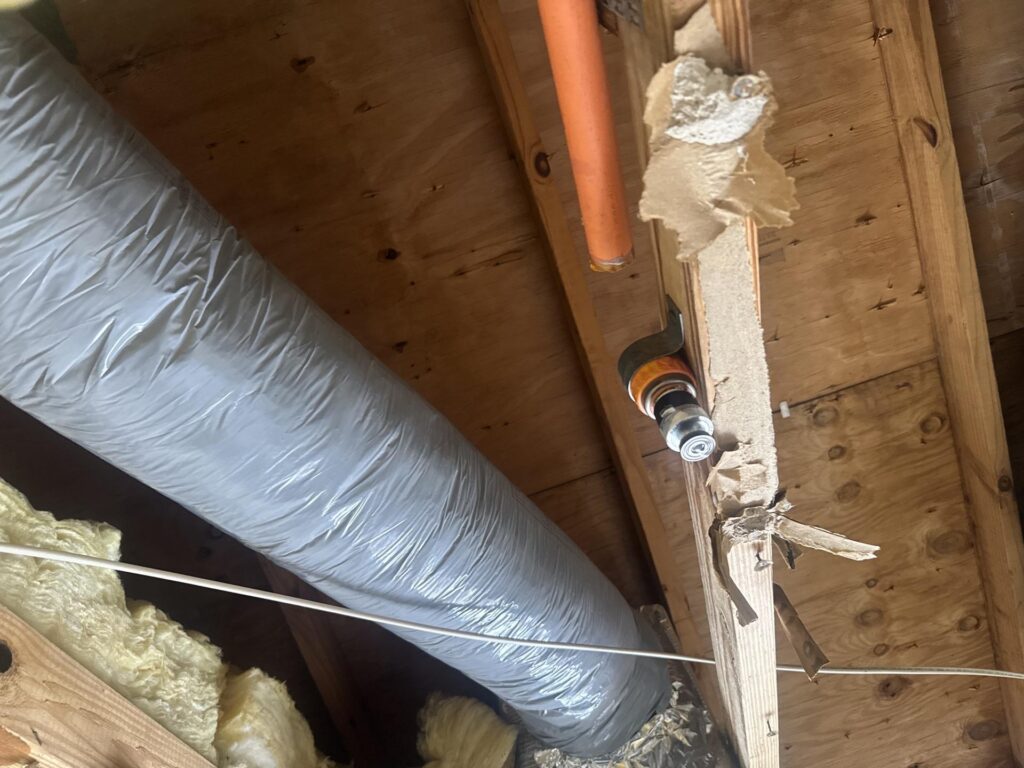
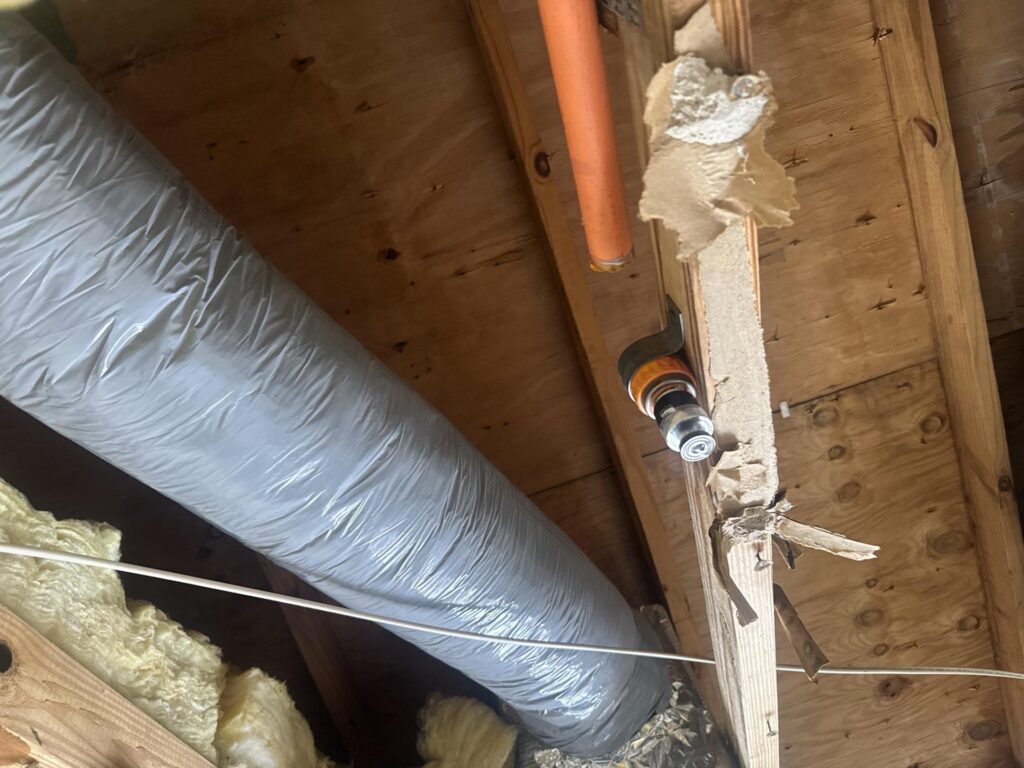
The sprinkler system was installed mainly in the attic, which is common in many townhomes. However, attic spaces are often unconditioned, meaning they are not heated or protected the same way as the living areas of the home.
During the coldest weather of the winter, the fire suppression system froze and burst on February 10. Once the line failed, water moved rapidly throughout the townhouse, affecting every room to varying degrees.
Definition: Sprinkler system water damage happens when a fire suppression line leaks, bursts, or discharges water into a property, often causing damage to ceilings, walls, floors, insulation, and personal belongings.
Why Fire Sprinkler Leaks Can Cause Serious Damage
Fire sprinklers are designed to help control fire conditions and give occupants time to escape. They are not primarily meant to fully extinguish a fire.
Because these systems can release a significant amount of water in a short time, a burst sprinkler line can create widespread damage fast. In this case, the water traveled from the attic down through the townhouse, affecting finishes, structural materials, and indoor moisture levels.
Common damage after a sprinkler system burst may include:
- Wet ceilings and drywall
- Saturated insulation
- Damaged flooring
- Moisture inside wall cavities
- Water stains and bubbling paint
- Elevated humidity
- Increased mold risk if drying is delayed
Sprinkler System Water Damage in Silver Spring, MD: Our Response
PuroClean Restoration Services responded quickly after the customer contacted us through the recommendation of their insurance company. Fast action was important because prolonged moisture can lead to more damage and increase the risk of mold growth.
Our mitigation work focused on stabilizing the property, removing materials that could not be restored, and drying the affected structure.
Step 1: Inspection and Moisture Assessment
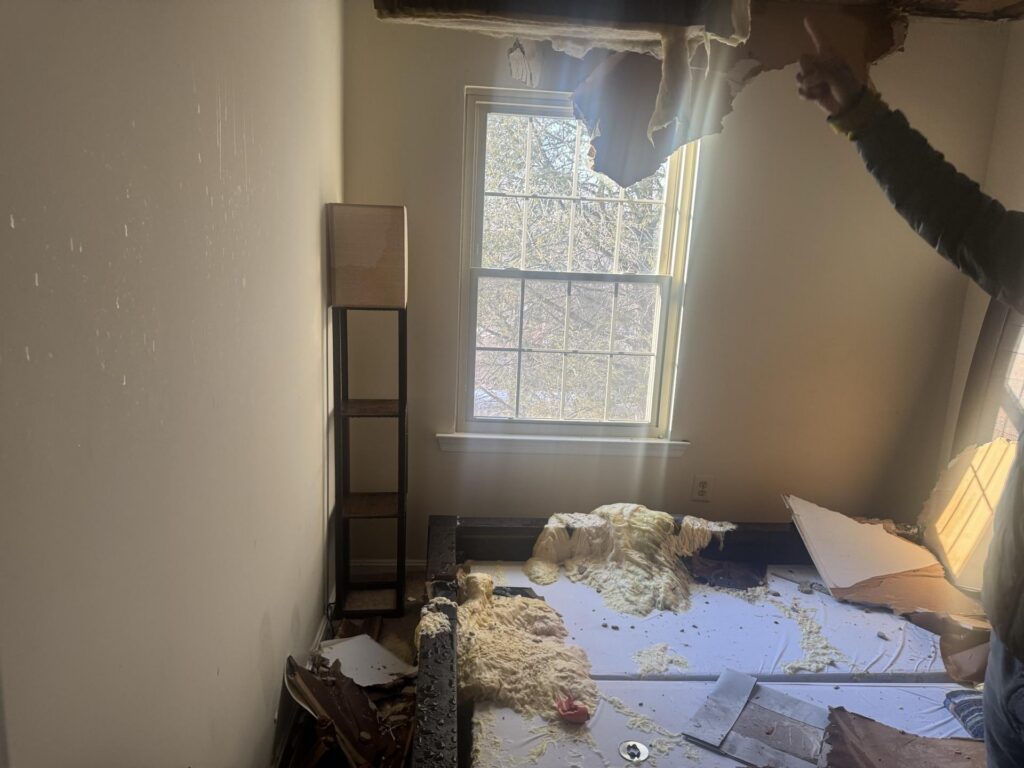
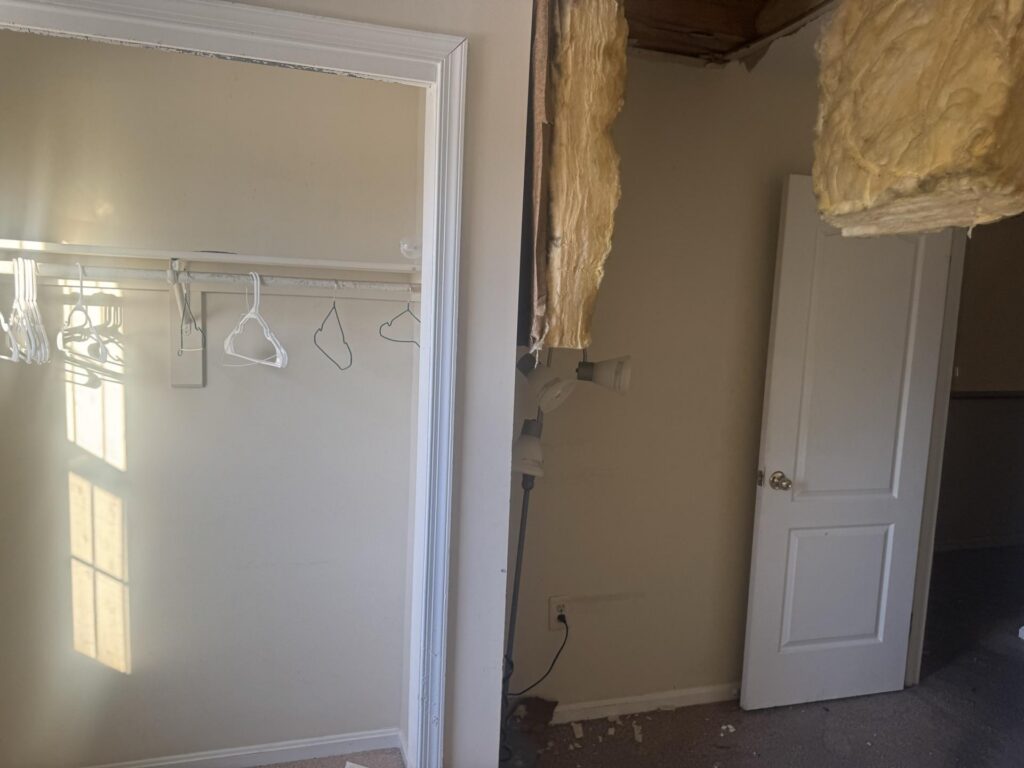
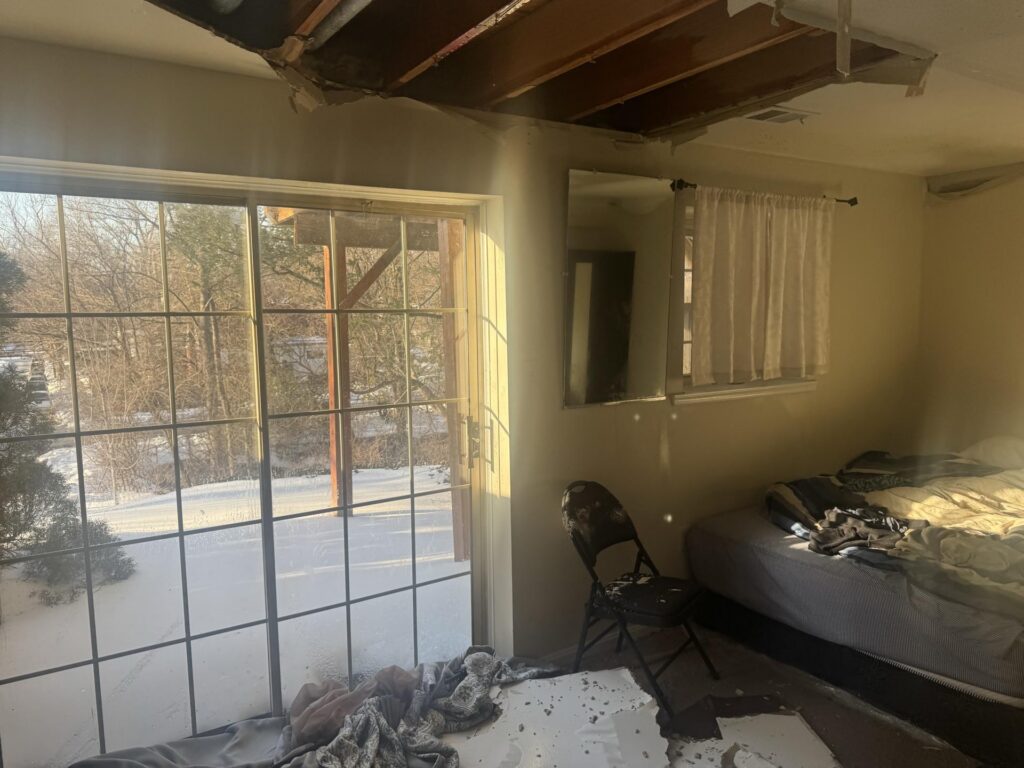
The first step was to inspect the affected townhouse and identify where the water had traveled. Water from an attic-level sprinkler system can move behind walls, through ceilings, and into rooms that may not appear severely damaged at first.
Our team assessed visible damage and looked for hidden moisture in affected materials.
Step 2: Removal of Non-Restorable Finishes
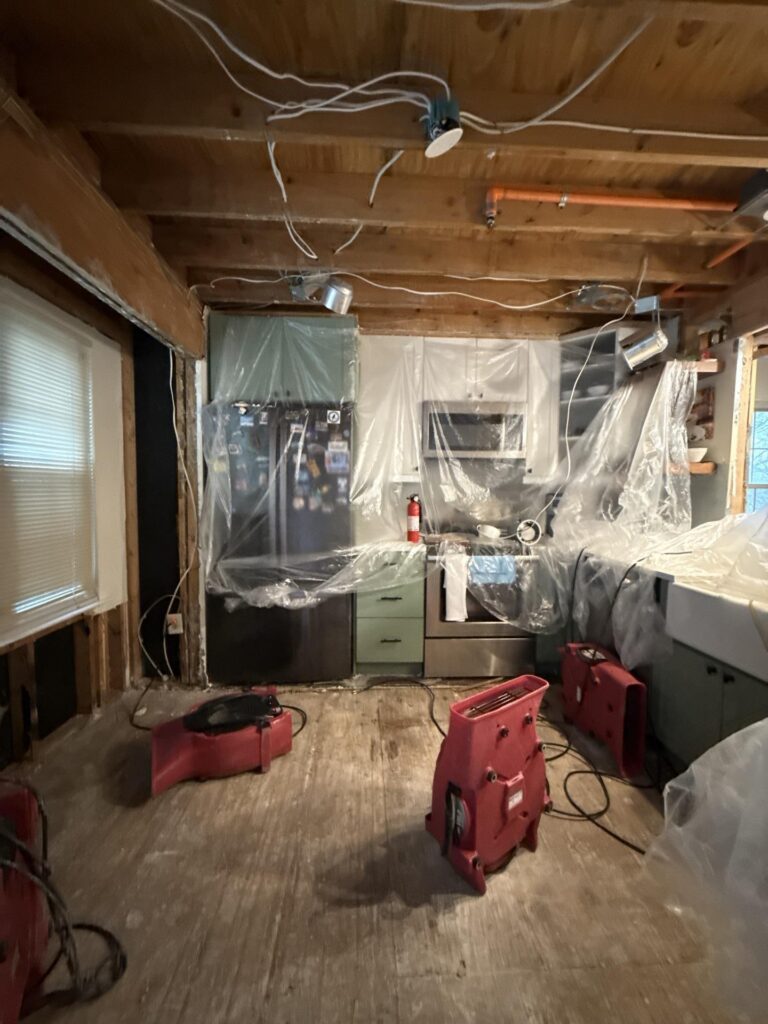
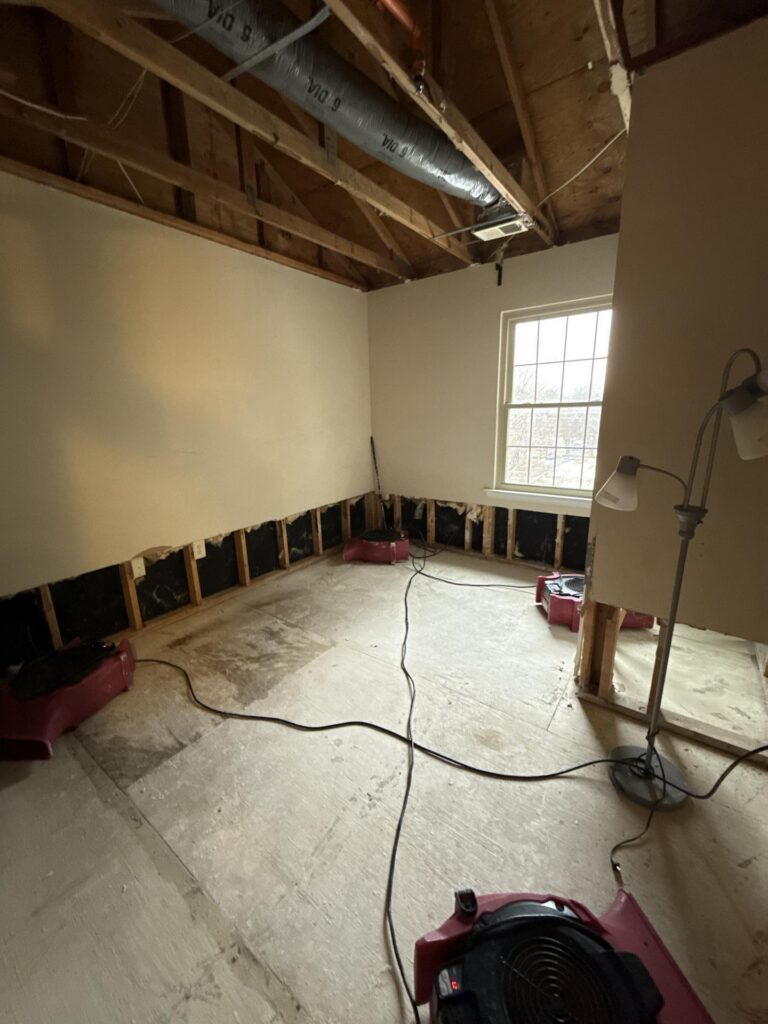
Some building materials cannot be safely or effectively dried once they are heavily saturated. In those cases, removal is necessary to expose wet structural areas and support the drying process.
This may include materials such as damaged drywall, insulation, flooring, trim, or other finishes depending on the level of water exposure.


studs
Step 3: Structural Drying
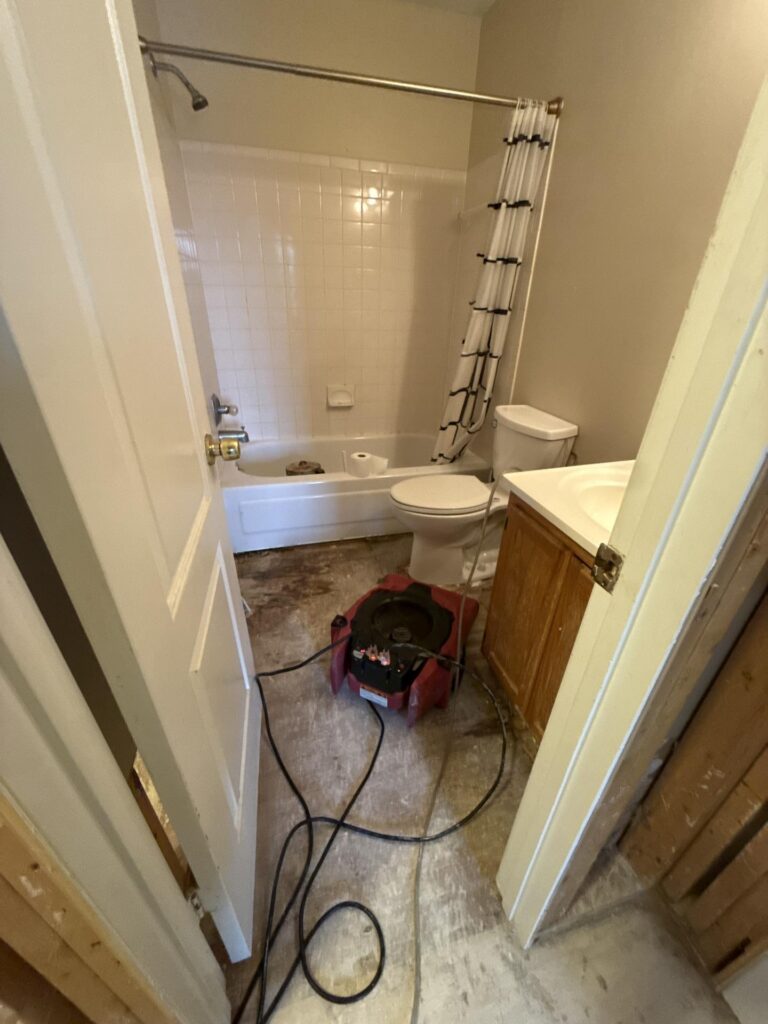
After the affected materials were opened or removed, the drying process began. Professional drying helps reduce moisture in framing, subfloors, wall cavities, and other structural components.
This step is important because surfaces may look dry before the structure is actually dry.

opening
Step 4: Mold Prevention
Water damage mitigation is not only about removing visible water. It is also about preventing secondary damage.
The EPA notes that moisture control is one of the most important factors in mold prevention. By drying the structure quickly and properly, the risk of mold growth can be reduced.
Mitigation vs. Restoration: What Happened Next?
In this project, PuroClean Restoration Services completed the mitigation phase. After our work was finished, the neighboring franchise, PuroClean of Laurel, was awarded the restoration contract and began completing the rebuild.
| Phase | Main Goal | What It Includes |
|---|---|---|
| Mitigation | Stop further damage | Water removal, material removal, drying, moisture control |
| Restoration | Rebuild the property | Repairs, reconstruction, finishes, painting, flooring |
Both phases are important, but mitigation must happen first. Without proper drying and moisture control, reconstruction may cover up damp materials and lead to future problems.
Why Fast Water Damage Mitigation Matters
After a sprinkler system burst, waiting too long can make the damage worse. Water can continue moving through porous materials, and trapped moisture may remain behind walls or under flooring.
Fast mitigation helps:
- Limit structural damage
- Reduce mold risk
- Protect salvageable materials
- Support the insurance documentation process
- Prepare the property for proper restoration
- Help the homeowner move forward sooner
FAQs About Sprinkler System Water Damage
What should I do if my sprinkler system bursts?
Shut off the water if it is safe to do so, avoid affected electrical areas, and call a water damage restoration company immediately. Quick response helps reduce damage and prevents moisture from spreading further.
Can a fire sprinkler system freeze in an attic?
Yes. Sprinkler lines located in unconditioned attic spaces may be vulnerable during extreme cold, especially if the area is not properly insulated or protected from temperature drops.
Does sprinkler system water damage cause mold?
It can if wet materials are not dried quickly and correctly. Mold risk increases when moisture remains in drywall, insulation, wood, or flooring for an extended period.
Will insurance cover sprinkler system water damage?
Coverage depends on the policy, cause of loss, and documentation. Many homeowners start by contacting their insurance company and then working with a restoration provider that can document the damage and mitigation work.
What is the difference between water mitigation and reconstruction?
Water mitigation stops further damage by removing water, opening affected areas, and drying the structure. Reconstruction restores the property with repairs, finishes, and rebuilding after the structure is dry.
Call PuroClean Restoration Services for Water Damage Help in Silver Spring, MD
If your home has sprinkler system water damage in Silver Spring, MD, fast action matters. PuroClean Restoration Services can respond quickly, assess the damage, remove affected materials, dry the structure, and help prevent mold-related complications.
For emergency water damage restoration and mitigation, call PuroClean Restoration Services at (301) 277-2755.
Final Summary
- A frozen attic sprinkler line caused major water damage in a Silver Spring, MD townhouse.
- Fire sprinkler systems can release a large amount of water quickly.
- PuroClean Restoration Services removed non-restorable finishes and dried the structure.
- Fast mitigation helped reduce the risk of mold and secondary damage.
- Mitigation comes before reconstruction and prepares the property for repairs.
- PuroClean of Laurel later handled the restoration contract.
- Homeowners should act quickly after sprinkler system water damage to limit further loss.
Read also about: