While spring is when everything wakes up, fall is also a season of change. The weather cools down, the leaves begin to turn orange and red, and before long, yards are covered in fall leaves. While they are a normal part of the season, leaves can become a problem for your home when they begin to collect in gutters, drains and other areas where rainwater needs to flow.
A few minutes of fall cleanup can go a long way toward protecting your home from water damage. Taking care of leaves and other debris now can help keep rainwater moving away from your property instead of allowing it to collect where it shouldn’t.
What to Do in the Face of Fall Leaves and Water Damage
1. Check Your Downspouts
Cleaning your gutters is only part of the job. Leaves and other debris can also clog downspouts, preventing water from being carried away from your home.
After cleaning them, make sure water can flow freely through your downspouts and that it is being directed away from your foundation. If water repeatedly collects next to your home after rainfall, it may eventually find a way inside.
2. Clear Your Gutters
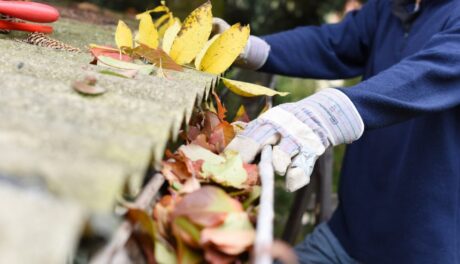
Clean out your gutters and downspouts before heavy rain arrives. Leaves and other fall debris can quickly build up, preventing rainwater from draining properly. When water cannot flow away from your roof, it can back up and contribute to leaks or water intrusion.
3. Keep Leaves Away From Your Foundation
Fall leaves can accumulate along the sides of your home, particularly after windy weather. While a few leaves are not necessarily a problem, thick layers of wet organic material can hold moisture against your siding and foundation.
Take some time to rake leaves away from your home’s exterior and keep drainage areas clear. This is particularly important before periods of heavier rainfall.
4. Don’t Forget Ground-Level Drains
Leaves don’t only collect in gutters. They can also cover ground-level drains and other areas designed to move water away from your property. A blocked drain can leave water standing in your yard or near your home.
Before a heavy rain, take a walk around your property and look for leaves covering drains, grates or other drainage points.
5. Keep an Eye on Your Roof
Trees are a common sight throughout Rowan County, including in and around China Grove. If your property has trees close to the house, falling leaves and small branches can collect on the roof and around drainage areas.
You don’t need to remove every leaf the moment it falls, but keeping an eye on areas where debris tends to accumulate can help you catch a drainage problem before it becomes a water problem.
If You Experience Property Damage, We’re Here to Help
Even with regular maintenance, water damage can happen. A clogged gutter, blocked drain or heavy rainfall can sometimes allow water to enter your home before you have an opportunity to address the problem.
That’s where PuroClean Emergency Property Restoration comes in. Our water damage restoration team can respond to water damage and work to dry and mitigate affected areas while helping prevent further damage and mold growth.
Our restoration services extend beyond water damage, too. We provide fire and smoke damage restoration, mold remediation, and biohazard and crime scene cleanup. Our IICRC certified and trained technicians are prepared to help residential and commercial property owners when unexpected damage occurs.
Our local team has served the surrounding communities since 2008. We also have deep connections to emergency response, including an owner who has served and continues to serve as a volunteer firefighter. That experience has helped shape our commitment to being ready when local property owners need assistance.

From China Grove, Salisbury and Kannapolis to communities throughout Rowan, Davidson, Forsyth and Davie counties, PuroClean Emergency Property Restoration is here to help when property damage occurs.
A little fall maintenance can help keep leaves from becoming a bigger problem. But if water does make its way into your home or business, we’ll be ready to help get your property back to normal.