Washing machine mold, which is typically found on the rubber gasket of front-loading machines, is a common household problem. This kind of mold is caused by neglecting to clean the machine and/or using it improperly. But don’t worry. In this article, you’re going to learn how to remove mold from washing machines.
Just because a washing machine cleans laundry, this doesn’t mean it cleans itself. Mold feeds on the moisture and detergent residue that the machine produces. With this in mind, here’s how to remove mold from washing machines and how to prevent it.

How to Remove Mold from Washing Machines
- First, consult the washer manual and use only an approved cleaning product at the specified dose. Do not mix cleaners or follow homemade chemical recipes:
- Use a manufacturer-approved washer cleaner for the designated cleaning cycle.
- For gasket cleaning, follow the appliance instructions for the product, contact time, and rinsing.
- Do not combine vinegar or other acids with bleach.
- If the manual allows bleach, use the specified product and dose; never mix it with another cleaner.
- Follow the product’s protective-equipment and ventilation instructions. Clean accessible gasket surfaces as the washer manual directs, avoiding unnecessary spraying and disturbance of mold. Seek professional help for extensive growth or recurring contamination.
- After cleaning accessible seals, run the manufacturer’s cleaning cycle using the recommended product. This does not guarantee removal of mold hidden inside components; persistent odor needs service assessment.
- If a musty smell persists, there may be mold growing behind the washer drum. Call the manufacturer (if your machine is under warranty) or a qualified repair person. They can diagnose your washer and fix the mold problem.
How to Prevent Mold in Washing Machines
- Use only the right detergent. If you have a High-Efficiency (HE) washer, use High-Efficiency detergent. Non-HE detergent leaves behind too many suds that promote mold growth. Use only the recommended amount of detergent for the same reason.
- If safe for children and pets and permitted by the manual, leave the door ajar after each wash to allow moisture inside the machine to escape. Doing so prevents the formation of a damp environment in which mold can grow.
- Remove wet clothes immediately after a wash. Not only does this prevent moisture and mold buildup, but it also prevents your clothes from smelling musty.
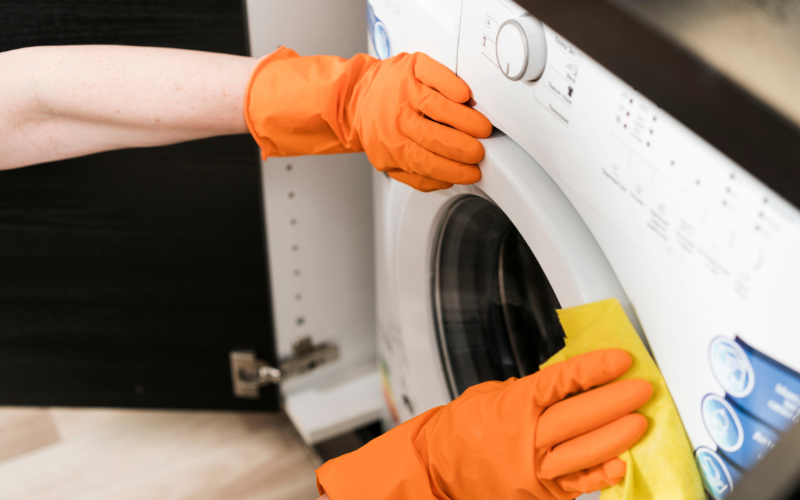
- Wipe the door gasket with your mildew cleaner regularly. Do so at least once a week to eliminate moisture and detergent residue that promotes mold growth.
- Use a dehumidifier where you keep the washer if the area is humid. Humidity from outside the machine may contribute to the mold inside it, so make sure to fix the water or humidity problem. Set up a dehumidifier in the room.
For water damage restoration, contact the PuroClean experts!
Follow these tips on how to remove mold from washing machines to reduce moisture and residue that can support mold. But, besides mold growth, washing machines are prone to other problems like overflowing. Learn what to do if your washing machine overflows. Take a look at how to prevent water damage from other appliances as well.
Even with all measures in place, water damage from washing machines can still occur. If that happens to you, know that PuroClean is ready to come to your property’s rescue. For flood water damage repair and water removal services, contact our IICRC certified restoration professionals at (336)776-3630.