 PuroClean of McLean and West Falls Church
Handling dangerous materials is not something that leaves room for mistakes. Every situation involving contaminated spaces carries serious health risks, making strict safety procedures essential from start to finish.
Strong biohazard cleanup safety practices protect workers, property owners, and anyone who may come into contact with the affected area. Without clear protocols, even a small oversight can lead to long-term consequences.
Understanding the Importance of Safety in Biohazard Cleanup
Biohazard cleanup involves exposure to blood, bodily fluids, chemicals, and infectious materials. These substances can carry pathogens that spread quickly if not handled properly.
Clear procedures help ensure every step is controlled, from assessment to disposal. Following established OSHA biohazard standards is one of the most effective ways to maintain safe working conditions and prevent contamination.
Why Proper Safety Protocols Matter in Biohazard Cleanup
Every cleanup scene is different, but the risks remain serious. Consistent safety practices create a reliable system that workers can follow under pressure.
- Prevents exposure to harmful pathogens and infectious materials
- Reduces the risk of cross-contamination between areas
- Protects cleanup workers and building occupants
- Ensures legal compliance with industry regulations
- Builds trust with clients during sensitive situations
Proper planning and discipline make each job safer and more efficient. This foundation supports every other step in the cleanup process.
Key OSHA Regulations Every Company Must Follow
Regulations provide a clear framework for handling hazardous materials safely. Companies that follow them closely reduce risks and avoid penalties.
- Bloodborne Pathogens Standard for handling infectious materials
- Hazard Communication rules for labeling and chemical awareness
- Personal Protective Equipment requirements for worker safety
- Proper waste disposal guidelines for hazardous materials
- Training mandates for employees working in high-risk environments
Adhering to OSHA biohazard standards ensures consistent safety across all job sites. It also keeps companies prepared for inspections and audits. For additional guidance on handling regulated medical waste, refer to CDC recommendations.
Essential Personal Protective Equipment (PPE) for Cleanup Crews
Protective gear forms the first line of defense during cleanup operations. Without it, exposure risks increase significantly. Using the right equipment is a core part of biohazard cleanup safety and must never be overlooked.
Types of PPE Required for Different Situations
Different scenarios call for different levels of protection. Crews must assess the situation before selecting equipment.
- Disposable gloves to prevent direct contact with contaminants
- Full-body suits to shield skin and clothing
- Face shields and goggles for splash protection
- Respirators to filter airborne pathogens
- Shoe covers to prevent tracking contamination
Choosing the correct PPE helps maintain safety throughout the cleanup process. It also ensures workers remain protected from hidden hazards.
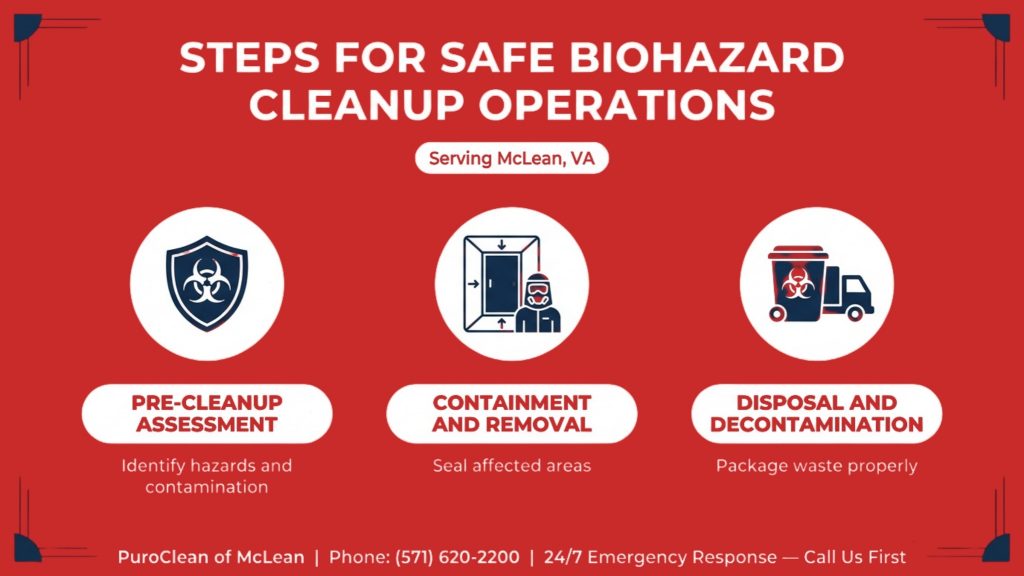
Steps for Safe Biohazard Cleanup Operations
A structured process helps teams stay organized and minimize risk. Each stage builds on the previous one. Following consistent steps reinforces biohazard cleanup safety at every level of the operation.
Pre-Cleanup Assessment:
- Inspect the site to identify hazards and contamination levels
- Determine required PPE and equipment
- Establish containment zones to limit exposure
Containment and Removal:
- Seal affected areas to prevent spread
- Safely remove contaminated materials
- Use approved disinfectants to treat surfaces
Disposal and Decontamination:
- Package waste according to regulations
- Transport materials to approved disposal facilities
- Decontaminate tools and equipment after use
A clear workflow reduces confusion and ensures nothing is missed. It also helps teams handle unexpected challenges more effectively.
Common Risks and Hazards in Biohazard Cleanup
Biohazard cleanup environments present multiple dangers that can affect both health and safety. Recognizing these risks early helps prevent accidents.
- Exposure to bloodborne pathogens and infectious diseases
- Airborne contaminants that can be inhaled
- Chemical hazards from cleaning agents
- Sharp objects like needles or broken glass
- Slippery surfaces that increase fall risk
Understanding these hazards supports stronger biohazard cleanup safety practices. In cases involving hidden contamination like mold, early detection is critical. You can learn more about how professionals identify risks in attics in our blog on toxic black mold detection.
Best Practices for Training and Certification
Proper training ensures that workers understand both the risks and the procedures required to manage them. Knowledge is a key part of staying safe. Regular instruction aligned with OSHA biohazard standards keeps teams updated on current requirements and techniques.
- Provide hands-on training for real-world scenarios
- Conduct regular refresher courses
- Maintain certification records for all employees
- Educate staff on emergency response procedures
- Train workers on proper use of PPE and tools
Well-trained teams are more confident and capable in high-pressure situations. This leads to safer outcomes and better results.
Tools and Equipment Needed for Safe Cleanup
Using the right tools ensures that hazardous materials are handled efficiently and safely. Equipment must be reliable and suited to the task.
- Industrial-grade disinfectants for thorough sanitation
- Biohazard waste bags for secure disposal
- HEPA vacuums to capture fine particles
- Sharps containers for safe needle disposal
- Fogging machines for large-area disinfection
Having the proper tools supports effective biohazard cleanup safety procedures. It also improves the overall quality of the cleanup.
How to Maintain Compliance and Documentation
Keeping accurate records is essential for both safety and accountability. Documentation helps track each step of the cleanup process. Companies that follow OSHA biohazard standards must maintain clear records of training, waste disposal, and incident reports.
- Log all cleanup activities and procedures
- Keep records of employee training and certifications
- Document waste handling and disposal methods
- Maintain inspection and audit reports
- Store incident and exposure records securely
Consistent documentation supports compliance and protects the company in case of inspections. It also ensures transparency across all operations.
Conclusion
Safety in biohazard cleanup is built on preparation, consistency, and attention to detail. Every step, from assessment to disposal, must follow clear procedures to reduce risk. By prioritizing biohazard cleanup safety and staying aligned with industry standards, companies can protect their teams and deliver reliable service in even the most challenging situations.
FAQs
Q1. What is the most important part of biohazard cleanup safety?
A: The most important part is proper protection and planning. Using the right equipment and following clear procedures helps prevent exposure and accidents.
Q2. Are OSHA guidelines mandatory for cleanup companies?
A: Yes, companies must follow OSHA regulations to operate safely and legally. These rules are designed to protect workers and the public.
Q3. How often should cleanup teams receive training?
A: Training should happen regularly, with refresher sessions at least once a year. Additional training is needed when new risks or equipment are introduced.


 PuroClean of McLean and West Falls Church