


Introduction
A home can become contaminated after an injury, sewage backup, animal intrusion, unattended death, or improper disposal of sharp medical items. These events may leave behind blood, bodily fluids, feces, urine, or other materials that can carry harmful microorganisms.
The health outcome depends on the material involved, how long it remains present, and whether it reaches broken skin, the eyes, nose, mouth, or lungs. Understanding biohazard health risks helps households respond quickly without spreading contamination through rooms, clothing, or personal items.
Not every stain or unpleasant odor is a biohazard emergency. However, visible blood, sewage, used needles, rodent waste, and bodily fluids should be treated carefully until the source and contamination level are known.
What Counts As A Biohazard At Home
A biohazard is biological material that may contain organisms capable of causing illness. In a household setting, it often involves human blood, bodily fluids, sewage, animal waste, or used medical materials.
The greatest concern is material that can enter the body through a cut, puncture, mucous membrane, or inhalation. A dried stain can still present a concern if it contains infectious material and becomes disturbed during cleaning.
Common household situations include a bleeding injury, a toilet overflow involving sewage, a deceased pet, rodent infestation, or a discarded syringe found outdoors. The correct response depends on the source, area affected, and whether anyone had direct contact.
Common Types Of Household Biohazards
Different materials carry different hazards, so identifying the source guides safe cleanup and medical decisions.
– Blood can carry bloodborne infections when it reaches broken skin, eyes, mouth, or a puncture wound.
– Sewage may contain bacteria, viruses, parasites, and chemicals from household or municipal waste.
– Feces and vomit can spread gastrointestinal infections through contaminated hands, surfaces, food, or objects.
– Rodent droppings and urine may carry pathogens, especially when dried waste is disturbed and becomes airborne.
– Used needles can cause puncture injuries and may expose a person to bloodborne pathogens.
– Animal remains and waste can attract insects, contaminate surfaces, and expose people to bacteria or parasites.
Knowing the material involved prevents both unnecessary alarm and unsafe assumptions.
How Contamination Reaches People
Skin contact alone does not always lead to infection. Intact skin provides a useful barrier, but cuts, abrasions, eczema, and puncture wounds create a direct entry point for contaminants.
Mucous membranes are another major route. Blood or fluid splashed into the eyes, nose, or mouth can create a more serious exposure than contact with an unbroken hand. This is why household cleaning without gloves or eye protection can become risky during a large spill.
Contamination also spreads indirectly. A person may step in sewage, walk through the home, touch a door handle, prepare food, and transfer microorganisms to others. Towels, rugs, shoes, phones, and cleaning tools often become overlooked carriers.
Inhalation can matter when dried rodent waste, sewage residue, or other contaminated debris is swept, vacuumed, or disturbed. Dry methods can move particles into the air instead of containing them.
Health Effects Depend On Dose And Route
Exposure does not guarantee illness. The chance of infection depends on the organism present, the amount of contaminated material, the route of contact, and the person’s health status.
Blood exposure may create concern for hepatitis B, hepatitis C, or HIV if blood enters a puncture wound, open cut, or mucous membrane. These infections are not spread through casual contact with intact skin. A needlestick injury or splash to the eye needs prompt medical assessment because preventive treatment can be time-sensitive.
Sewage and fecal contamination more often cause gastrointestinal illness. Symptoms may include nausea, vomiting, diarrhea, stomach cramps, fever, or dehydration. Young children can become ill after touching contaminated surfaces and then placing hands or objects in their mouths.
Rodent waste can create respiratory concerns in certain circumstances. The risk is greater in enclosed, poorly ventilated spaces with heavy accumulations of droppings or nesting materials. Sweeping or vacuuming dry waste can increase exposure by sending fine particles into the air.
Some effects are immediate, while others develop days later. A person may have no early symptoms after blood exposure, which is why medical guidance should be based on the event itself rather than waiting for symptoms to appear.
People Who Need Extra Protection
Children are more likely to touch contaminated surfaces and then touch their faces. They may also be unable to explain what they contacted, making close observation useful after a household incident.
Older adults, pregnant people, and people with weakened immune systems may face greater consequences from gastrointestinal or respiratory infections. Anyone with chronic skin conditions or open wounds should avoid cleanup work involving bodily fluids or sewage.
Pets can also spread contamination after walking through an affected area. Keep animals away from the scene until it has been cleaned, disinfected, and fully dried. Wash paws only if they entered the material, using gloves and a controlled cleanup area.
Steps To Take After A Possible Exposure
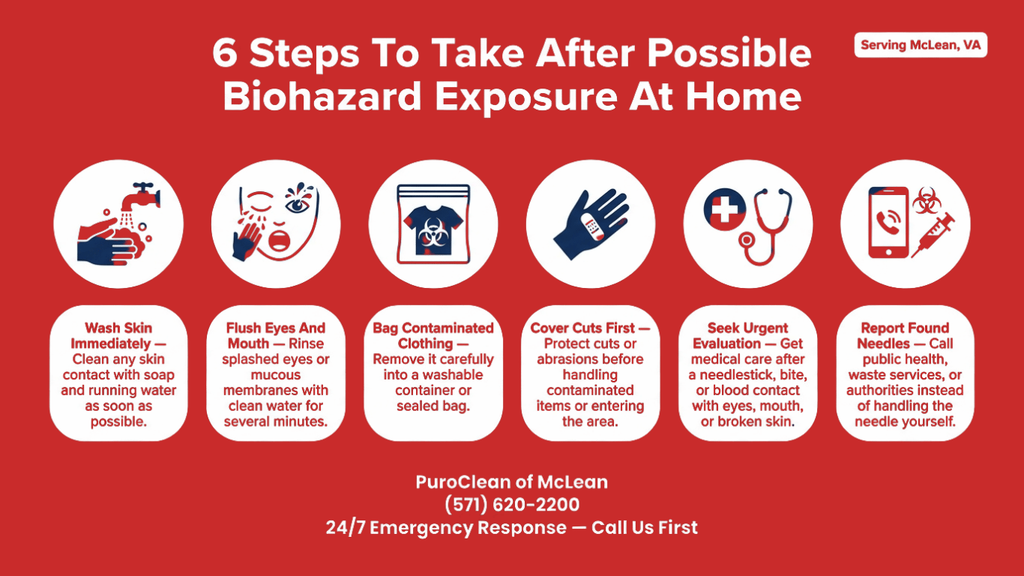
Quick action can reduce the chance of infection and prevent contaminated material from reaching other areas of the home.
– Wash skin in contact with soap and running water as soon as possible.
– Flush eyes or mucous membranes with clean water for several minutes after a splash.
– Remove contaminated clothing carefully and place it in a washable container or sealed bag.
– Cover cuts or abrasions before handling contaminated items or entering the cleanup area.
– Seek urgent medical evaluation after a needlestick, a bite, or blood contact with eyes, mouth, or broken skin.
– Report a found needle to local public health, waste services, or emergency authorities instead of handling it directly.
Prompt cleaning and medical assessment are most effective when they happen soon after the incident.
Cleaning Affected Areas Without Spreading Contamination
First, restrict access to the area. Keep children, pets, and unnecessary household members away until cleanup is complete. Open windows if safe to do so, especially after a sewage backup or rodent contamination event.
Wear disposable gloves and use eye protection if there is a splash risk. Avoid eating, drinking, touching your face, or using your phone while cleaning. Use disposable towels or absorbent material to contain liquid before applying an appropriate disinfectant to hard, nonporous surfaces.
Porous materials require more care. Carpet padding, unfinished wood, mattresses, upholstered furniture, and heavily soaked drywall may retain contamination that surface wiping cannot remove. Sewage-affected porous materials often need removal rather than simple disinfection.
Never mix cleaning products. Combining bleach with ammonia, acids, or some drain cleaners can create dangerous fumes. Follow the product label for dilution, surface compatibility, and required contact time.
Mistakes That Increase Exposure
Well-intentioned cleanup can create more contamination if the process is rushed or uses the wrong tools.
– Do not sweep or vacuum dry rodent droppings, as this can release contaminated particles into the air.
– Do not use bare hands to pick up broken glass, sharp items, or used needles.
– Do not place contaminated clothing directly into a shared laundry basket.
– Do not reuse disposable gloves, towels, or paper materials used to absorb bodily fluids.
– Do not use household fans to dry sewage-contaminated rooms before affected materials are removed.
– Do not assume a strong fragrance means an area is clean or disinfected.
Careful containment is safer than trying to finish cleanup as quickly as possible.
Signs That Require Urgent Medical Evaluation
Some exposures require immediate professional care even if the person feels well at first.
– A used needle punctures the skin, or blood enters an open wound.
– Blood or bodily fluid splashes into the eyes, nose, or mouth.
– A deep cut occurs while cleaning contaminated debris or broken items.
– Fever, persistent vomiting, severe diarrhea, breathing trouble, confusion, or marked weakness develops after exposure.
– A child or pet may have swallowed contaminated material or contacted an unknown substance.
– A person with a weakened immune system contacts sewage, animal waste, or bodily fluids.
Fast medical advice helps clinicians decide whether testing, vaccination, preventive medication, or monitoring is needed.
When Professional Cleanup Is The Safer Choice
Small, contained spills on hard surfaces may be manageable with proper protective equipment and disinfection. Larger scenes need more than household cleaning supplies. Extensive blood, decomposition, sewage flooding, sharps, heavy rodent contamination, or contamination inside walls and flooring can require specialized equipment and disposal methods.
Professional biohazard remediation teams can contain the area, remove affected materials, disinfect hard surfaces, and handle regulated waste correctly. Their work also reduces the chance that contaminated items will be moved through clean areas of the home.
If the source is unknown, the affected area is large, or cleanup would involve direct contact with bodily fluids or sharps, arrange for qualified biohazard cleanup rather than attempting the work without proper protection.
Conclusion
Household contamination incidents require calm, practical decisions. Limit access, avoid direct contact, clean only manageable areas, and seek prompt medical care after blood exposure, punctures, or significant symptoms.
Knowing the biohazard exposure dangers associated with sewage, blood, animal waste, and sharp medical items helps protect everyone in the home. Early containment and proper cleanup can stop a small incident from becoming a wider health concern.
FAQs
Q: Can I get sick from touching dried blood?
A: Dried blood is less likely to spread through intact skin, but it can still be a concern if it contacts an open cut, puncture wound, eyes, nose, or mouth. Wear gloves and disinfect the surface without disturbing the material unnecessarily.
Q: Should I clean up a used needle found at home?
A: Do not handle a used needle with bare hands. Keep people and pets away, then contact local public health, waste disposal services, or local authorities for instructions on safe collection and disposal.
Q: How long can sewage contamination affect a home?
A: Sewage can continue to create health concerns until contaminated materials are removed, hard surfaces are disinfected, and the affected area is dried. Soaked carpet, padding, drywall, and insulation may need professional removal.