

Moisture behind drywall can be difficult to detect because the problem may develop inside your walls long before you see obvious water damage. A faint stain, musty smell, peeling paint, or swollen baseboard could be your first warning that water is getting where it should not.
For homeowners in Coral Gables and the greater Miami area, knowing the signs is especially important. Heavy rainfall, storms, plumbing leaks, roof damage, air conditioning condensation, and Florida’s humid climate can all contribute to moisture problems inside a home.
If you notice signs of moisture behind drywall, don’t simply paint over the affected area. Finding and addressing the source of the moisture early can help limit damage and reduce the chance of mold growth.
PuroClean of Coral Gables provides 24/7 water damage restoration and mold remediation services for homeowners and businesses throughout Coral Gables and surrounding Miami communities. For professional help, call (305) 894-4343.
What Is Moisture Behind Drywall?
Moisture behind drywall means water or excess dampness has entered the space between the visible drywall surface and the wall structure behind it.
That space can contain wood framing, insulation, plumbing, electrical components, and other materials. A leak does not always produce a puddle or immediately soak through the wall.
For example, a small plumbing leak inside a wall can continue for days without being noticed. A roof leak can allow rainwater to travel along framing before appearing somewhere else. An air conditioning problem can also introduce excess moisture into an area.
The U.S. Environmental Protection Agency recommends addressing moisture problems promptly because controlling moisture is one of the most important ways to prevent indoor mold growth. U.S. EPA: A Brief Guide to Mold, Moisture and Your Home
7 Signs of Moisture Behind Drywall
1. Water Stains or Discoloration
One of the most recognizable signs of moisture behind drywall is an unusual mark on the wall or ceiling.
Water stains may appear yellow, brown, tan, or darker than the surrounding paint. They can also look like irregular patches that gradually become larger.
The location of the stain may provide a clue about where the water is coming from. A mark near a bathroom could be related to plumbing, while staining near a window may point to water intrusion from outside.
Keep in mind that a stain does not necessarily mean water is actively leaking at that exact moment. Previous water damage can leave discoloration even after the original leak has stopped.
However, if the stain is new, growing, or accompanied by other warning signs, it deserves further investigation.
2. Bubbling, Peeling, or Cracking Paint
Have you noticed paint that suddenly looks swollen or begins separating from the wall?
This can be another sign of moisture behind drywall. Water can interfere with the bond between paint and drywall, causing the surface to bubble, blister, crack, or peel.
Wallpaper can react similarly. You may notice wrinkles, loose sections, or areas that begin pulling away from the wall.
Painting over the problem may make the wall look better temporarily, but it does not solve the source of the moisture. The EPA recommends fixing moisture problems and drying affected materials before repainting.
3. A Musty or Damp Smell
Sometimes your nose detects moisture behind drywall before your eyes do.
A persistent musty or earthy odor can indicate damp materials or hidden mold. If the smell is strongest in one room, near a particular wall, inside a closet, or around a bathroom, it may be worth investigating.
Air fresheners can cover the smell temporarily, but they do not remove the underlying source.
If your home suddenly develops a persistent musty odor after a leak, storm, or plumbing problem, don’t assume it will disappear on its own.
4. Soft, Swollen, or Warped Drywall
Drywall should generally feel firm and maintain a relatively even surface.
If a section suddenly feels soft, swollen, spongy, or distorted, water may have affected the material.
You might also notice the wall bowing outward or becoming uneven when viewed from an angle.
This is one of the more obvious signs of moisture behind drywall, particularly when it appears after a plumbing leak or water intrusion event.
Avoid repeatedly pressing or poking a damaged section. Water-damaged drywall can become fragile, and unnecessary disturbance may make the situation worse.
5. Damaged Baseboards
Baseboards can reveal moisture behind drywall because water can travel downward through a wall cavity and affect materials near the floor.
Look for:
- Swelling
- Discoloration
- Peeling paint
- Warping
- Separation from the wall
- Soft or damaged sections
If the flooring near the baseboard is also warped, stained, or unusually damp, that provides another reason to investigate.
Sometimes the source is a plumbing leak. In other cases, moisture may have entered from a damaged exterior wall, window, roof, or nearby flooring.
6. Mold or Recurring Mold Growth
Visible mold is an obvious warning sign, but recurring mold may tell you something more important.
If you clean a small patch and it keeps coming back, there may be an unresolved moisture source nearby.
This is where moisture behind drywall becomes particularly important. Water trapped inside a wall can keep surrounding materials damp even when the visible surface appears relatively clean.
The EPA explains that mold grows when spores land on wet or damp surfaces and emphasizes the importance of correcting moisture problems to prevent recurring growth.
Simply cleaning visible mold without addressing the moisture source may not resolve the underlying problem.
7. Persistent Condensation or Dampness
Condensation is another sign worth paying attention to.
You may notice moisture around windows, pipes, vents, air conditioning equipment, or other cool surfaces.
For homeowners in Coral Gables and the wider Miami area, humidity deserves particular attention. South Florida’s warm, humid environment can make moisture management more challenging.
The EPA recommends keeping indoor relative humidity below 60%, with 30% to 50% considered an ideal range where possible.
If condensation keeps returning, the goal should be to understand why it is happening rather than repeatedly wiping it away.
What Causes Moisture Behind Drywall?
There are several possible sources of moisture behind drywall, including:
- Leaking plumbing pipes
- Burst pipes
- Roof leaks
- Damaged windows
- Stormwater intrusion
- Air conditioning condensation
- Appliance leaks
- Bathroom plumbing problems
- Overflowing sinks, tubs, or toilets
- Poor ventilation
- Excess indoor humidity
In Coral Gables, heavy rain and severe weather can create additional opportunities for water intrusion. A damaged roof, poorly sealed window, or vulnerable exterior wall can allow rainwater to enter the property.
Plumbing problems are another common cause. A small leak inside a wall may go unnoticed because there is no visible water on the floor.
Why Is Moisture Behind Drywall a Problem?
The biggest issue is that water can remain hidden.
Moisture behind drywall can affect drywall, insulation, wood framing, flooring, and other building materials. If those materials remain damp, mold can develop.
The EPA notes that mold can damage building materials such as drywall and wood when moisture problems are left unaddressed.
There is also the possibility that the visible damage represents only part of the problem.
A small stain on a wall might be where moisture finally became visible, rather than where the leak originally occurred.
Water can travel through wall cavities, making it difficult to determine the full extent of the problem through a basic visual inspection alone.
How Can You Check for Moisture Behind Drywall?
Start with a visual inspection.
Check the area around:
- Water stains
- Peeling paint
- Damaged baseboards
- Warped flooring
- Windows
- Plumbing fixtures
- Air conditioning equipment
- Areas affected by previous leaks
You can also use a household humidity meter to monitor indoor relative humidity.
However, finding moisture behind drywall can require more than simply looking at the wall. A surface may appear dry even when moisture remains inside the wall cavity.
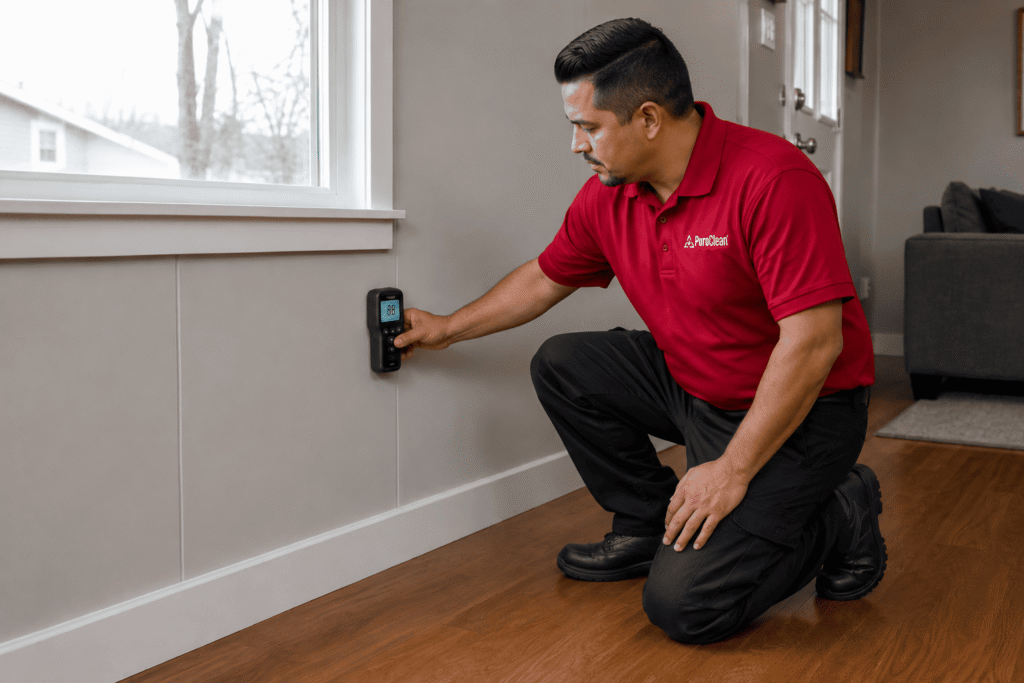
Professional restoration technicians can use moisture detection equipment to identify affected areas and determine where drying may be necessary.
PuroClean of Coral Gables uses moisture detection and drying procedures as part of its water damage restoration process. PuroClean of Coral Gables Water Damage Restoration
What Should You Do If You Find Moisture Behind Drywall?
If you suspect moisture behind drywall, start by identifying the source.
If there is an active plumbing leak, have it stopped as soon as possible. If water is entering through a roof, window, or exterior wall, the source needs to be addressed.
Next, avoid simply painting over stains or covering damaged drywall.
Drying the affected area promptly is important. The EPA recommends drying wet or damp materials within 24 to 48 hours when possible to help prevent mold growth.
If the damage is extensive, the source is unclear, or mold is present, professional assessment can help determine what needs to happen next.
When Should You Call a Restoration Professional?
Consider professional help if:
- A wall feels soft or swollen
- Water has entered inside a wall
- There is a persistent musty odor
- Mold keeps returning
- A major plumbing leak has occurred
- Your property has experienced storm damage
- Multiple rooms are affected
- You cannot identify the source
- Drywall or insulation has been saturated
Professional restoration can help identify affected areas, remove excess water, dry materials, and address mold when appropriate.
For Coral Gables homeowners, PuroClean of Coral Gables provides 24/7 water damage restoration and mold remediation services for residential and commercial properties.
Frequently Asked Questions
How do I know if there is Moisture Behind Drywall?
Look for water stains, bubbling paint, peeling wallpaper, warped or soft drywall, damaged baseboards, musty odors, condensation, or recurring mold. These signs can indicate a moisture problem, although further inspection may be needed to determine the source.
Can Moisture Behind Drywall cause mold?
Yes. When drywall, insulation, or other materials remain damp, they can provide conditions where mold can grow. Addressing the moisture source is an important part of preventing recurring mold.
Can there be Moisture Behind Drywall without visible water?
Yes. A slow plumbing leak, condensation, or water intrusion can leave materials damp inside a wall without producing visible standing water.
How quickly can mold develop after water damage?
There is no single timeframe because conditions vary. However, the EPA recommends drying wet or damp materials within 24 to 48 hours after a leak or spill when possible to help prevent mold growth.
Should I paint over a water stain?
Not before finding and addressing the source. Painting may hide the appearance temporarily, but it will not resolve an ongoing leak or hidden moisture problem.
Can high humidity cause Moisture Behind Drywall?
High humidity can contribute to condensation and create conditions that support mold growth. It is not necessarily the direct cause of water inside a wall, but persistent humidity and condensation can contribute to moisture-related problems.
Who can inspect water damage behind walls in Coral Gables?
A professional water damage restoration company can assess affected areas using moisture detection equipment and determine whether drying or additional restoration is needed. PuroClean of Coral Gables provides 24/7 water damage restoration services in Coral Gables and surrounding Miami communities.
Don’t Ignore the Warning Signs
The signs of moisture behind drywall can start small. Maybe you notice a yellow stain near the ceiling. Perhaps the paint suddenly begins bubbling. Maybe one room smells musty even though you cannot see anything unusual.
These clues should not automatically be treated as a major emergency, but they should not be ignored either.
For homeowners in Coral Gables, identifying the source early can be especially valuable when dealing with plumbing leaks, heavy rain, storm damage, air conditioning condensation, and Florida’s humid conditions.
The key takeaway is simple: look beyond the surface. If you see signs of water damage, find out where the moisture is coming from, stop the source when possible, and make sure affected materials are properly dried.
If you are dealing with moisture behind drywall, water damage, or mold in Coral Gables or the surrounding Miami area, PuroClean of Coral Gables can help.
Our team provides 24/7 water damage restoration and mold remediation services to help homeowners and businesses respond to property damage and begin the restoration process.
Call PuroClean of Coral Gables today at (305) 894-4343.