


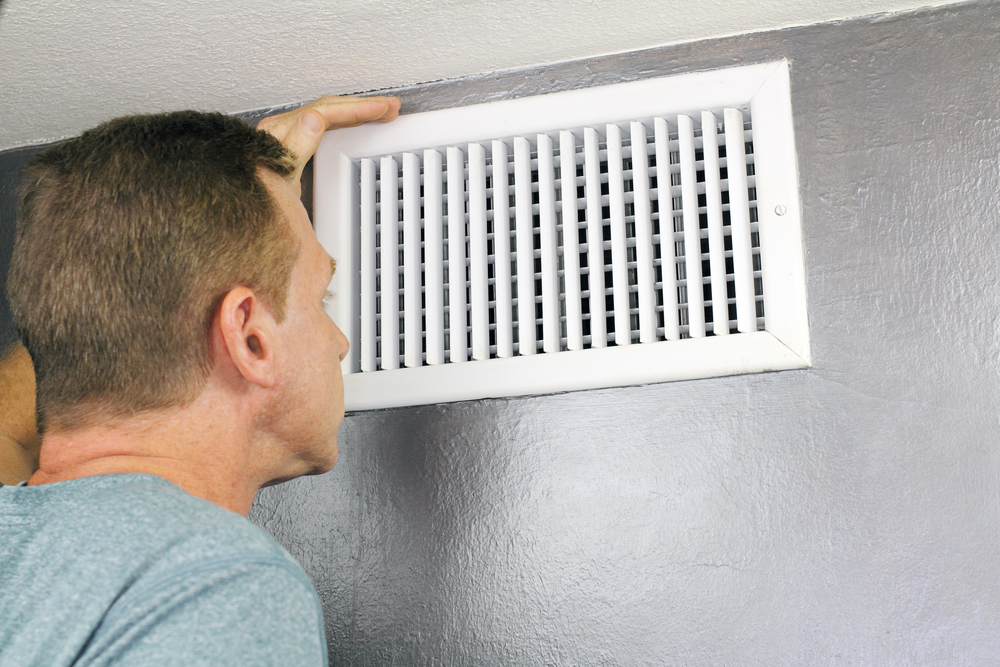
If you notice dark spots around an air conditioning vent, a musty smell when your AC starts, or recurring discoloration on the ceiling around a register, don’t simply wipe it away and forget about it. Mold in AC Vents can be a sign of a larger moisture or HVAC problem that needs attention.
For homeowners in Coral Gables, this deserves particular attention. South Florida’s warm, humid climate means air conditioning systems work hard for much of the year. When condensation, poor drainage, high indoor humidity, or ductwork problems are involved, the conditions can become favorable for mold growth.
If you suspect a mold problem in your home, PuroClean of Coral Gables can help identify the source and provide professional mold remediation services. Call (305) 894-4343 for assistance.
The short answer: If you only see a small amount of surface growth on a removable vent cover, cleaning may be possible. But if the growth keeps returning, extends into the ductwork, is accompanied by a persistent musty odor, or appears to be connected to an HVAC moisture problem, it’s time to call a professional.
What Causes Mold in AC Vents?
Mold needs moisture and an appropriate surface on which to grow. Your air conditioning system can unfortunately provide both.
When warm, humid air comes into contact with cold components of an HVAC system, condensation can form. Dust and other particles can accumulate on damp surfaces, creating conditions that support mold growth.
The EPA explains that controlling moisture is one of the most important ways to control indoor mold. It recommends keeping indoor humidity between 30% and 50% where possible.
Several problems can contribute to mold growth around or inside AC vents:
- High indoor humidity
- Condensation around cold vents or ductwork
- Clogged condensate drain lines
- A full or improperly draining condensate pan
- Leaking or poorly insulated ducts
- Water damage
- Dirty HVAC components
- Air leaks around duct connections
- Poor ventilation
- Moisture entering from an attic or roof leak
In Coral Gables, humidity is an important part of the equation. Your AC isn’t simply cooling your home. It also plays an important role in removing moisture from indoor air. If something prevents the system from managing humidity properly, moisture can accumulate in places you may never see.
7 Signs You May Have Mold in AC Vents
Sometimes the first clue isn’t something you can see.
Here are signs worth paying attention to.
1. Dark Spots Around the Vent
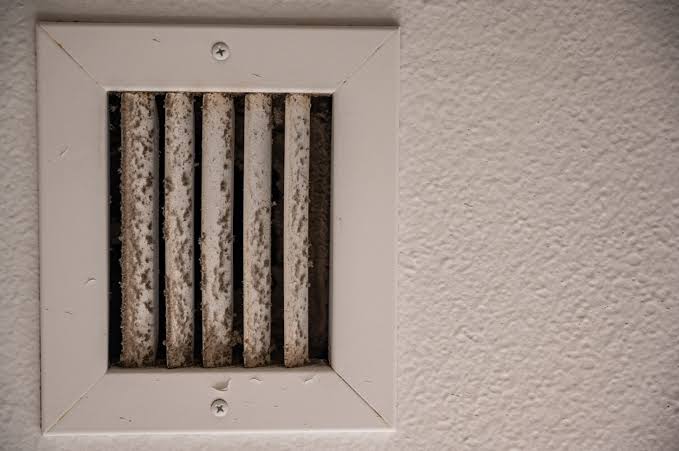
Black, green, gray, or other unusual discoloration around an air register may indicate mold growth.
However, don’t assume that every dark spot is automatically mold. Dust, soot, and other materials can look similar. Proper assessment is the best way to determine what you’re dealing with.
2. A Musty Smell When the AC Runs
Does your home smell musty shortly after the air conditioner turns on?
That smell may be coming from damp materials, the HVAC system, or another hidden moisture source.
A persistent odor deserves investigation, particularly if it returns after cleaning.
3. Mold Keeps Coming Back
You clean the vent.
It looks fine for a few days or weeks.
Then the spots return.
That’s a major clue that the visible growth isn’t the whole problem. The moisture source may still be present.
The CDC recommends removing visible mold while also fixing the underlying moisture problem.
4. Moisture or Condensation Around the Vent
If you notice water droplets, dampness, peeling paint, or bubbling drywall around an AC register, don’t ignore it.
The moisture may be creating the conditions that allow mold to grow.
5. Multiple Vents Show Similar Problems
One dirty vent may be an isolated issue.
But when several vents throughout the house show discoloration or you notice the same musty odor in multiple rooms, it may point to a broader HVAC or indoor moisture problem.
6. The Problem Started After Water Damage
Did your home recently experience a plumbing leak, roof leak, flooding, or significant water intrusion?
Mold can develop when damp materials aren’t properly dried.
That makes an HVAC inspection particularly worthwhile if the affected area is near ductwork or air-handling equipment.
7. The Airflow or Indoor Comfort Seems Different
Changes in airflow don’t automatically mean mold. However, unusual airflow combined with musty odors, moisture, or visible growth should not be dismissed.
A professional can help determine whether the issue involves the HVAC system, ductwork, insulation, or another source.
Why Coral Gables Homes Need Special Attention
Living in Coral Gables means dealing with a climate where moisture is a normal part of everyday life.
Your air conditioner may run frequently to keep indoor temperatures comfortable and control humidity. During periods of heavy rain, storms, and prolonged humid weather, additional moisture can enter or accumulate around a property.
That makes moisture management especially important.
A small problem with a condensate drain, duct insulation, roof leak, plumbing system, or HVAC component can create a damp environment that isn’t obvious from the living area.
And that’s one reason simply wiping a vent isn’t always enough.
Is Mold Around an AC Vent Always Coming From the Duct?
Not necessarily.
This is an important distinction.
You may see mold-like growth around an AC register while the actual moisture source is somewhere nearby.
For example, condensation could be occurring around the vent because humid air is reaching a cold surface. Alternatively, moisture could be coming from the surrounding ceiling, attic, duct insulation, or another building component.
In other cases, the HVAC system itself may be involved.
That’s why a professional assessment should look beyond the vent cover.
The EPA specifically notes that HVAC systems can require specialized remediation and that professionals experienced with HVAC systems should handle contaminated systems.
Can You Clean Mold in AC Vents Yourself?
It depends on what you’re actually dealing with.
If you’re looking at a small amount of suspected surface growth on a removable, hard-surface register, basic cleaning may be appropriate.
The EPA recommends cleaning mold from hard surfaces with water and detergent and drying the surface completely.
But don’t confuse cleaning a removable vent cover with cleaning an entire HVAC system.
If the growth extends into the ductwork, air handler, insulation, or other HVAC components, attempting to clean it yourself can make the situation worse.
You may disturb contaminated material and potentially distribute particles through the home.
And if the underlying moisture problem remains, the growth can return.
When Should You Call a Professional for Mold in AC Vents?
Consider professional help if:
- The growth keeps returning after cleaning.
- You see suspected mold inside ductwork.
- Multiple AC vents are affected.
- There is a persistent musty smell.
- You notice water or condensation around vents.
- Your home recently experienced water damage.
- You suspect mold inside the air handler.
- Duct insulation appears wet or damaged.
- You cannot identify the source of the moisture.
- The affected area is larger than you can safely manage.
The EPA advises that a mold-contaminated HVAC system should be turned off and professionally remediated because operating it can spread mold through a building.
If you believe the HVAC system itself may be contaminated, don’t start taking components apart on your own.
Why Cleaning the Vent May Not Solve the Problem
Imagine cleaning a vent and making it look brand new.
Then imagine the same vent becoming discolored again a month later.
What happened?
The moisture problem was never addressed.
This is one of the biggest mistakes homeowners make with mold. They focus on the visible spot instead of asking why the spot appeared in the first place.
The CDC and EPA both emphasize the importance of addressing moisture when dealing with indoor mold.
Professional mold remediation is therefore about more than making a surface look clean.
The goal is to identify the extent of the problem, address affected materials appropriately, and correct the moisture conditions contributing to growth.
How to Help Prevent Mold Around AC Vents
You can’t eliminate every mold spore from your home, but you can make your home less favorable to mold growth.
Keep Indoor Humidity Under Control
The EPA recommends maintaining indoor humidity around 30% to 50%. A simple humidity meter can help you monitor conditions.
Keep Your HVAC System Maintained
Regular HVAC maintenance can help identify drainage, condensation, filtration, and equipment issues before they become larger problems.
Replace Air Filters Regularly
A dirty filter can restrict airflow and allow more dust to accumulate in the system. Follow your HVAC manufacturer’s recommendations for filter replacement.
Check for Water Leaks
Don’t overlook small leaks around plumbing, ceilings, roofs, or HVAC equipment.
Pay Attention to Condensation
If an AC vent repeatedly becomes wet, don’t simply dry it and move on. Find out why it’s happening.
Act Quickly After Water Damage
Wet materials should be dried as soon as possible. EPA guidance emphasizes prompt drying because moisture creates favorable conditions for mold growth.
Why Professional Mold Remediation Makes Sense
Mold problems involving HVAC systems can be difficult to assess from the living area alone.
You may see a small amount of growth around one register while the actual moisture problem is somewhere behind the scenes.
That’s where professional experience becomes valuable.
PuroClean of Coral Gables provides professional mold remediation services for homeowners dealing with mold and moisture problems.
The team can help assess the situation, identify affected areas, address the source of moisture, and determine the appropriate remediation approach.
Most importantly, the goal isn’t simply to make the visible mold disappear.
It’s to address the problem properly so you aren’t dealing with the same issue again.
If you notice suspicious growth around an AC vent, don’t wait until the problem spreads.
Call PuroClean of Coral Gables at (305) 894-4343.
Frequently Asked Questions About Mold in AC Vents
Is mold in AC vents dangerous?
Mold exposure can affect people differently. According to the CDC, some people may experience symptoms such as stuffy nose, coughing, wheezing, irritated eyes, or skin irritation, while people with allergies or asthma may be more sensitive.
If you see or smell mold, it’s best to address the moisture source and the mold rather than allowing the problem to continue.
What does mold in AC vents look like?
It may appear as dark spots, discoloration, streaks, or fuzzy growth around a vent or register. However, visual appearance alone cannot reliably identify a specific type of mold.
Why does my AC vent keep getting mold?
Recurring growth often indicates that moisture or condensation is still present. High humidity, duct leaks, insulation problems, drainage issues, or another water source may be contributing to the problem.
Can I just spray bleach on mold in ac vents?
Simply spraying a chemical on visible growth doesn’t address the underlying moisture problem. For hard surfaces, EPA guidance recommends cleaning with water and detergent and drying thoroughly.
If the suspected mold extends into HVAC components or ductwork, professional assessment is a better approach.
Should I turn off my AC if I suspect mold in AC vents?
If you suspect that the HVAC system itself is contaminated, EPA guidance recommends turning the system off until it can be properly remediated, because operation can spread mold through the building.
If you’re unsure whether the system is contaminated, seek professional guidance rather than guessing.
Can mold return after remediation?
Yes, if the moisture problem that caused the growth isn’t corrected. Effective mold control requires addressing both the mold and the conditions allowing it to grow.
When should I call PuroClean of Coral Gables?
Call when you see recurring mold around vents, notice persistent musty odors, find moisture around HVAC components, experience water damage, or suspect mold inside your ductwork or HVAC system.
The Bottom Line: Don’t Ignore Mold in AC Vents
Mold in AC Vents isn’t something you should automatically panic about, but it isn’t something you should ignore either.
A small amount of surface growth may have a simple explanation. But recurring growth, musty odors, moisture, multiple affected vents, or suspected contamination inside the HVAC system can point to a larger problem.
For Coral Gables homeowners, controlling humidity and moisture is particularly important. If you’re unsure where the mold is coming from, professional assessment can help you move beyond guesswork.
Do you see mold in AC vents? Don’t just clean the spot and hope for the best. Find the moisture source and address the problem properly.
For professional mold remediation in Coral Gables, contact PuroClean of Coral Gables at (305) 894-4343.