


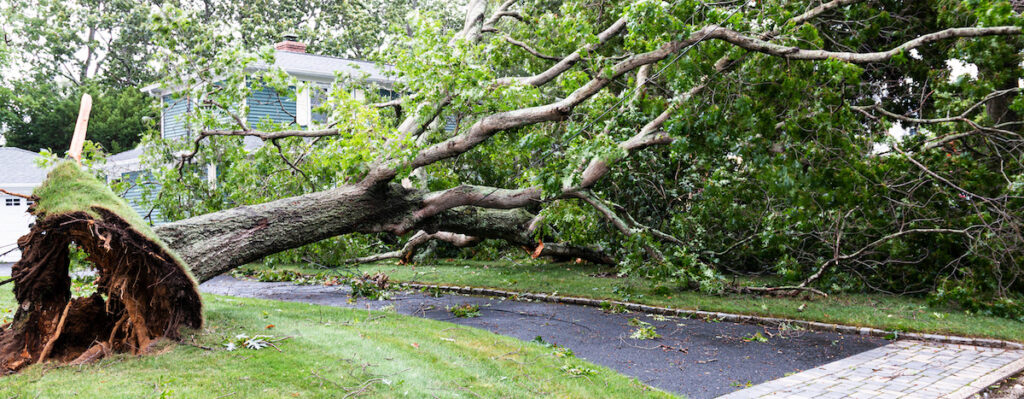
“April showers” are sometimes much more than just a bit of rain. Spring weather can include a wide range of weather activity, such as severe storms with powerful winds that can cause serious damage. Or — heavy rainfall that leads to over-the-ground flooding, or even flooding from streams and rivers.
Severe spring weather can thus result in costly storm damage repair. So, when the storm is over, it’s important to know what to do, as well as what NOT to do. If you’ve experienced storm damage of any size, follow these key storm damage restoration tips.
Insurance
- Take photos of the damage and show them to your insurance agent as soon as possible.
- Homeowners insurance generally covers sudden, accidental damage.
- Let’s say there was a thunderstorm with high winds, and your roof suffered damage and is now leaking. Or, a tree falls onto your house and damages your roof. In these cases, your homeowners policy will typically cover the expenses.
- However, some homeowners policies may have windstorm and hail exclusions. That means your policy will not cover damage caused by those perils. To learn about any exclusions in your coverage, read your policy or talk with your agent.
- Also, flooding from natural disasters is generally not covered. For that, you will need separate flood insurance that you can get from The National Flood Insurance Program.
Getting Storm Damage Restoration Help for your home
First of all, ensure your safety when checking for house damage. Watch out for fallen power lines, standing water that may be electrically charged, and wild animals.
Plumbing
- Check pipes inside and outside your home (i.e., irrigation systems).
- Close the water valves to toilets and sinks. If necessary, shut off all water to your home.
- If sewage is backing up in the shower or under the toilet, your main sewer line might be clogged or broken. So, don’t make the problem worse by using other sinks or toilets. Call a professional for assistance.
Roofing
- Check your roof for missing shingles, but don’t risk life and limb by going onto your roof, even if only a few shingles are lost.
- Call a professional contractor. They have the skills, tools, and equipment to do the job safely and correctly following a storm damage restoration plan.
- Have them do a temporary “fix” to stop rain coming in until a permanent solution can be arranged.
Electrical
- Appliances exposed to water should be disconnected from their power source and serviced before being used.
- Check for frayed wires and watch for sparks.
- If you have structural damage or see exposed wires, call an electrician. Keep the power off as there’s the possibility of electrocution if you turn the power on yourself.
- Exterior breaker boxes are typically rain-tight but may not withstand a major storm. If you suspect water has infiltrated the box, call an electrician before turning on the power.
- Avoid metal fences. They may carry a charge from fallen or dangling utility wires.
- If a limb or tree has fallen on a power line near your house, turn off the power and call the utility company. Do not attempt to cut or clear fallen trees that are around power lines yourself!
Flooding
- For flooding problems, the best plan is to call a professional restoration company. We have the necessary tools, qualified technicians, and knowledge to deal with flooding damage.
- If you decide to do it yourself, take precautions and wear boots, gloves, eye protection, and a respirator.
- Minimize the damage by removing standing water.
- Use a pump or squeegee the standing water.
- Use a vacuum only if it’s a true wet-dry vacuum.
- Remove everything absorbent that has been contaminated by floodwater (carpeting, carpet padding, furniture, drapes, etc.).
- Use air movers and dehumidifiers to dry out the area.
- Throw away all medicines, cosmetics, and foods, even canned goods, if they have been submerged in floodwaters.
- Check for hidden moisture behind wallboards, and take out damaged portions to avoid mold.
- Clean floors and cabinets by washing them with detergent, then disinfect with a disinfectant from the grocery or hardware store.
- Remember, keep a photographic (or video) inventory of anything you must throw out.
Automobiles
- Automobiles can easily be damaged by floodwaters, tree limbs, or falling debris.
- If an automobile is damaged, always notify your insurance agent.
- Cover broken windows if the car appears salvageable.
- List valuables in your car that have been lost or damaged.
Scam alert
Unfortunately, storms and natural disasters bring out those who take advantage of the situation. But by following a few practical guidelines, you can help protect yourself from an additional loss:
- Try to work with local or known contractors for storm damage restoration.
- Don’t pay for work until it’s finished and you are satisfied. Pay with a check or a credit card.
- Beware of a contractor who tries to pressure you. If an offer is only good “now or never,” find someone else.
- Obtain written estimates for all proposed work that include proposed scopes and prices.
- Also, beware of charity scams that might use a storm to make their pleas for donations more plausible. Only give to organizations you know and recognize.
For Professional Storm Damage Restoration Services, Contact PuroClean
Regardless of the circumstances — damage from storms or floods, fire, smoke, or mold, call PuroClean. Our mitigation experts are standing by to provide storm damage restoration to return the property to a pre-loss condition. They are well-trained and use the latest state-of-the-art science. We can help you determine the full extent of the damage and perform services following industry standards and best practices. Visit our website or call 800-775-7876 24/7 to get connected with your local PuroClean office today!



