

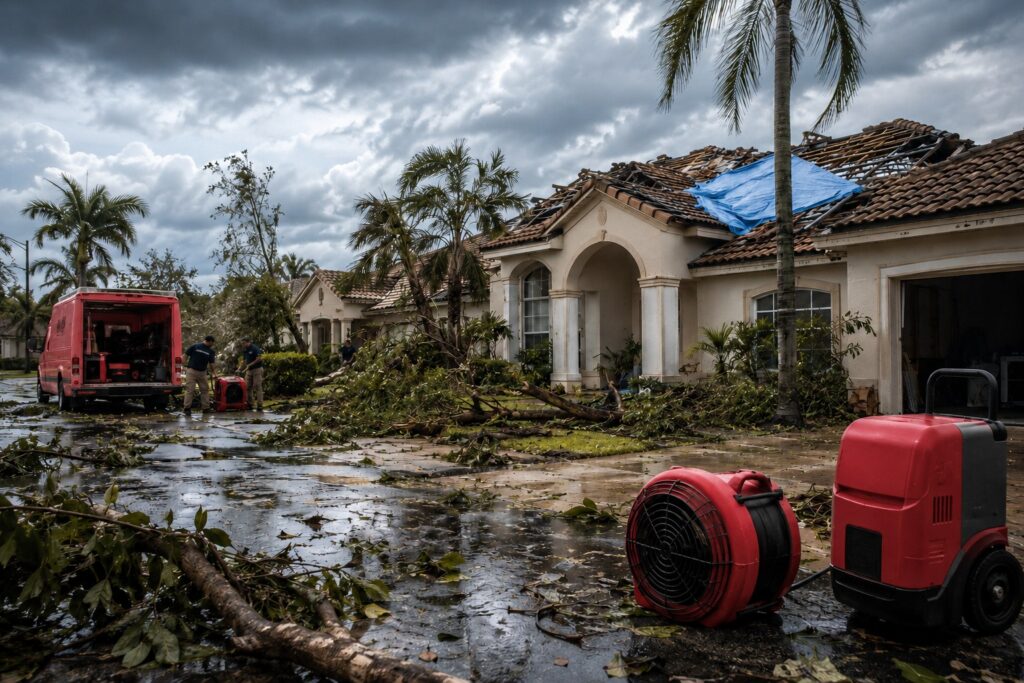
The storm damage restoration process is a structured system used to restore homes and businesses after hurricanes, storms, and flooding. It includes inspection, emergency protection, water removal, drying, cleaning, repairs, and reconstruction.
In Coral Gables, where storms and heavy rainfall are common, this process is essential to prevent mold, structural damage, and long-term property loss. Working with a trusted local company like PuroClean of Coral Gables ensures fast response, proper restoration, and smooth insurance handling. If done correctly, the storm damage restoration process reduces costs and restores safety quickly.
When a storm hits Coral Gables, the damage is often deeper than what is visible. Water spreads behind walls, wind weakens roofing systems, and humidity accelerates mold growth. That is why the storm damage restoration process is not just cleanup, it is a controlled recovery system designed to stabilize the property and fully restore it step by step.
Step 1: Emergency Inspection and Damage Assessment
The storm damage restoration process begins with a detailed inspection to understand the full extent of the damage. Technicians examine roofs, ceilings, walls, flooring, and foundations to identify visible and hidden issues. They also check for electrical risks and structural instability.
In Coral Gables, this step is critical because water often travels through hidden spaces in condos and multi-level homes. Moisture meters and thermal imaging help detect damage that cannot be seen with the eye. The goal is to create a full picture of the property’s condition before any restoration begins.
Step 2: Emergency Board-Up and Property Protection
After inspection, the next step in the storm damage restoration process is protecting the property from further damage. If windows are broken or roofs are exposed, additional rain or wind can worsen the situation quickly. Technicians board up broken openings, tarp damaged roofs, and secure entry points. In Coral Gables, where sudden rainstorms can occur even after a hurricane passes, this step prevents secondary damage and reduces repair costs significantly.
Step 3: Water Extraction and Emergency Removal
Water removal is one of the most urgent stages of the storm damage restoration process because standing water can cause rapid deterioration. Within hours, water can damage floors, drywall, and furniture. In Florida’s humidity, mold can begin developing in less than 48 hours.
Professionals use industrial pumps, vacuums, and extraction equipment to remove all standing water quickly. In Coral Gables homes and condos, water often spreads into hidden areas, making professional extraction essential for complete removal.
Step 4: Drying and Dehumidification
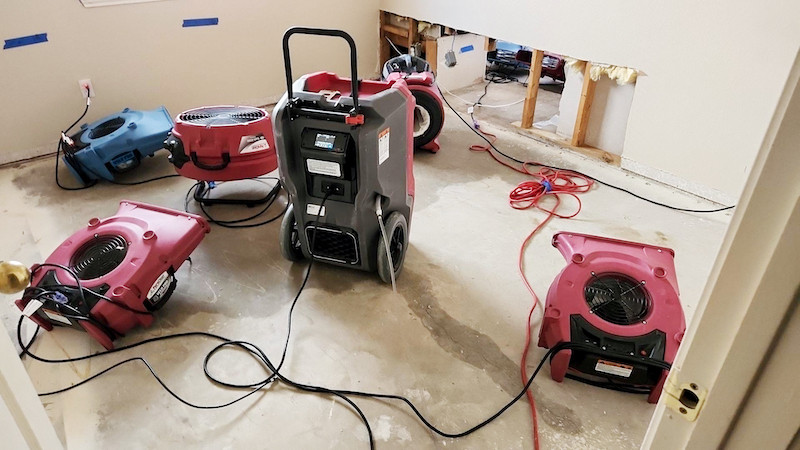
After visible water is removed, the property still contains hidden moisture. The storm damage restoration process continues with drying and dehumidification to eliminate moisture trapped in walls, wood, and insulation. Air movers and commercial dehumidifiers are used continuously while technicians monitor moisture levels daily.
This step usually takes several days depending on the severity of the damage. In South Florida’s humid climate, proper drying is critical because incomplete drying leads to mold growth and structural weakening.
Step 5: Cleaning, Sanitizing, and Odor Removal
Stormwater is often contaminated with debris, bacteria, or sewage depending on the severity of flooding. That is why cleaning and sanitizing are important parts of the storm damage restoration process.
Technicians disinfect all affected areas, remove contaminants, and eliminate odors caused by moisture and organic materials. Salvageable items such as furniture and personal belongings are cleaned when possible. This ensures the property is not only dry but also safe and healthy for re-entry.
Step 6: Repairs and Full Reconstruction
Once the property is fully dry and sanitized, the final stage of the storm damage restoration process begins: repairs and reconstruction. This includes drywall replacement, flooring repair, roof restoration, painting, and rebuilding structural components. In severe storm cases, entire sections of the home may need reconstruction. The goal is to restore the property to its original condition or better, ensuring long-term durability against future storms in Coral Gables.
Storm Damage in Coral Gables: Why Local Experience Matters
Storm damage in Coral Gables is often more complex than in other areas due to hurricanes, high humidity, and coastal exposure. Homes frequently experience roof leaks, wind damage, flooding, and mold growth at the same time. Many properties are condos, meaning water can spread between units. Because of this, the storm damage restoration process must be handled by professionals who understand local building systems, Florida codes, and hurricane-related risks.
Insurance Claims and Documentation Support
Insurance claims can be stressful after a storm, which is why documentation is a key part of the storm damage restoration process. Technicians provide photos, videos, moisture readings, and detailed repair estimates. This documentation helps speed up insurance approvals and reduces disputes between homeowners and insurance companies. In Coral Gables, where storm claims are common, proper documentation can significantly improve claim outcomes.
Prevention Tips for Future Storms
While storms cannot be prevented, damage can be reduced with preparation. Homeowners should inspect roofs regularly, clean gutters, install storm shutters, and ensure proper drainage around the property. Sealing windows and maintaining HVAC systems also helps reduce moisture buildup. These preventive steps make the storm damage restoration process easier and less costly in the future.
FAQs About Storm Damage Restoration Process
1. How long does the storm damage restoration process take?
It depends on severity. Minor damage may take a few days, while major hurricane damage can take several weeks.
2. What should I do immediately after storm damage?
Ensure safety first, avoid electrical hazards, and contact professionals immediately for inspection and water removal.
3. Does insurance cover storm damage in Coral Gables?
Most policies cover storm damage, but coverage depends on policy terms and proper documentation.
4. Why is drying important after water removal?
Because hidden moisture can cause mold growth and structural damage even after visible water is gone.
5. Can restoration companies help with insurance claims?
Yes, they provide documentation and estimates that support faster insurance approvals.
Final Summary
The storm damage restoration process is a structured system that restores homes after severe weather by stabilizing, drying, cleaning, repairing, and rebuilding the property. In Coral Gables, where storms can cause rapid and hidden damage, following each step properly is essential to avoid mold, structural issues, and rising repair costs. Working with PuroClean of Coral Gables ensures the entire storm damage restoration process is handled quickly, professionally, and with proper insurance support.
Need Immediate Help in Coral Gables?
When storms strike, fast action matters. PuroClean of Coral Gables provides emergency storm damage restoration services including water extraction, drying, mold prevention, and full reconstruction. Our team responds quickly, documents damage for insurance, and restores properties with care and precision.
Final Takeaway: The storm damage restoration process is not just repair work, it is a complete recovery system designed to protect your home, prevent further loss, and restore safety as quickly as possible.