


Table of Contents
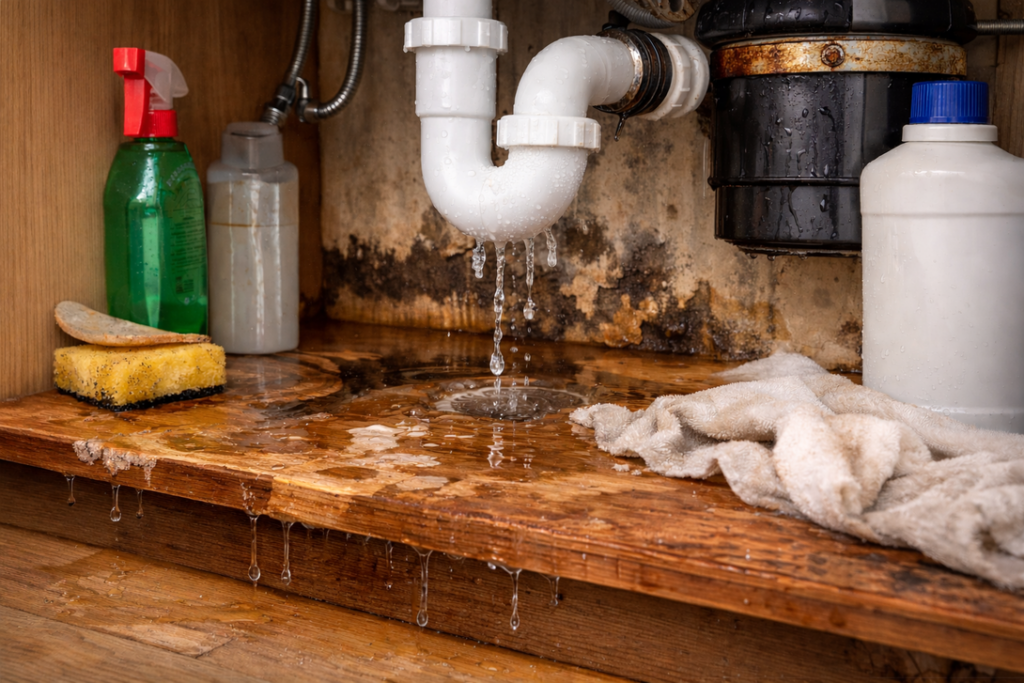
Water damage under sink problems can escalate quickly if not addressed right away. Even a small leak can soak cabinets, weaken wood, and create the perfect environment for mold growth. Acting fast can help reduce damage, protect your home, and save money on repairs.
If you discover water pooling under your kitchen or bathroom sink, the most important steps are to stop the leak, remove standing water, dry the area, and inspect for hidden damage. These emergency actions can slow the spread of moisture until professional restoration specialists arrive to fully assess and repair the problem.
In this guide, we’ll walk you through step-by-step actions to take immediately, common causes of leaks, and when it’s time to call professionals for water damage restoration.
What Causes Water Damage Under Sink Areas?
Before jumping into emergency steps, it helps to understand why leaks occur under sinks in the first place. This space contains multiple plumbing connections, making it one of the most common areas for household leaks.
Common causes include:
1. Loose Pipe Connections
Over time, pipe fittings can loosen due to vibrations, water pressure, or temperature changes.
2. Worn Out Seals or Gaskets
Rubber seals around plumbing fixtures can deteriorate and allow water to escape.
3. Damaged Drain Pipes
Cracked or corroded pipes often leak slowly, allowing moisture to build up unnoticed.
4. Faucet Supply Line Leaks
The hoses that connect water lines to the faucet may split or loosen.
5. Garbage Disposal Leaks
In kitchen sinks, disposals can develop cracks or faulty seals that release water into the cabinet.
Because this area is enclosed and rarely inspected, water damage under sink problems can develop for weeks before homeowners notice them.
Signs You May Have Water Damage Under Sink
Sometimes leaks are obvious, but often the signs appear gradually.
Watch for these warning indicators:
- Musty or damp odors inside cabinets
- Warped or swollen cabinet wood
- Water stains or discoloration
- Peeling laminate or bubbling surfaces
- Mold spots or mildew
- Pooled water or damp cleaning supplies
If you notice any of these signs, it’s important to investigate quickly.
7 Immediate Steps to Take After Discovering Water Damage Under Sink
Taking the right steps immediately can help prevent serious structural damage.
1. Turn Off the Water Supply
The very first step when you find water damage under sink areas is to stop the water source.
Look for the small shut-off valves under the sink and turn them clockwise. This stops water from flowing through the faucet and prevents further leaking.
If you can’t locate the leak or valves are stuck, you may need to shut off your home’s main water supply temporarily.
2. Remove Everything From the Cabinet
Take everything out from under the sink so you can fully inspect the area.
Items often stored there include:
- Cleaning supplies
- Trash bags
- Sponges and cloths
- Storage containers
Removing these items helps prevent them from absorbing moisture and also makes it easier to see the extent of the damage.
3. Soak Up Standing Water
Standing water should be removed as quickly as possible.
You can use:
- Towels
- Paper towels
- Sponges
- A wet/dry vacuum
The faster you remove moisture, the lower the chance of mold growth and cabinet deterioration.
4. Identify the Source of the Leak
After removing water, inspect the plumbing carefully.
Check these areas:
- Pipe joints
- P-trap connections
- Faucet supply lines
- Garbage disposal connections
- Drain pipe seals
Sometimes water damage under sink issues are caused by slow drips rather than large leaks. Even small drops over time can cause major cabinet damage.
If you find a loose fitting, tightening it may temporarily stop the leak until professional repairs can be made.
5. Dry the Area Thoroughly
Drying is critical to prevent further damage.
Open cabinet doors and use:
- Fans
- Dehumidifiers
- Dry towels
Air circulation helps moisture evaporate quickly.
Hidden moisture inside wood cabinets can lead to swelling and structural weakening if left untreated.
6. Check for Mold or Mildew
Because sink cabinets are dark and humid spaces, mold can start growing within 24–48 hours after moisture exposure.
Inspect for:
- Black or green spots
- Fuzzy growth on wood
- Strong musty odors
If you notice any mold, the area may require professional mold remediation. Mold spores can spread quickly and affect indoor air quality.
7. Monitor the Area for Recurring Moisture
Even after the immediate leak is stopped, it’s important to monitor the area over the next few days.
Check for:
- New water stains
- Damp cabinet surfaces
- Continued dripping
Recurring moisture usually means the underlying plumbing problem has not been fully resolved.
Why Water Damage Under Sink Can Become a Serious Problem
Many homeowners underestimate the severity of sink cabinet leaks. However, water damage under sink areas can cause several costly issues if ignored.
1. Cabinet Rot
Wood cabinets absorb water easily. Over time, this can lead to soft, crumbling wood that requires full cabinet replacement.
2. Mold Growth
Moisture trapped in enclosed spaces creates the perfect environment for mold.
3. Structural Damage
Water can seep into nearby flooring and walls, leading to hidden structural deterioration.
4. Pest Attraction
Damp environments attract pests such as cockroaches and termites. This is why early action is critical.
Preventing Future Water Damage Under Sink
Once repairs are complete, taking preventive steps can help protect your home.
1. Inspect Pipes Regularly
Make it a habit to check under sinks every few months for signs of moisture.
2. Install Leak Detectors
Small battery-powered leak sensors can alert you when water is detected.
3. Use Waterproof Cabinet Liners
Protective liners help prevent cabinet surfaces from absorbing water.
4. Replace Old Supply Lines
Flexible supply hoses should be replaced every 5–10 years.
5. Avoid Overloading the Cabinet
Heavy items can shift plumbing connections and create leaks.
These simple measures can reduce the risk of future problems.
When to Call a Professional Restoration Company
While small leaks can sometimes be managed temporarily, many situations require professional help.
You should contact water damage specialists if:
- Water has soaked cabinet walls or flooring
- Mold growth is visible
- The leak has been ongoing for several days
- Cabinets are swollen or warped
- Moisture has spread beyond the sink area
Professional restoration teams use specialized tools to detect hidden moisture and ensure thorough drying.
FAQs about Water Damage Under Sink
How serious is water damage under sink areas?
It can become very serious if ignored. Moisture trapped inside cabinets can cause wood rot, mold growth, and structural damage to nearby walls or flooring.
Can water damage under sink cause mold?
Yes. Mold can start growing within 24–48 hours in damp, dark environments like sink cabinets.
How long does it take to dry water damage under sink areas?
Minor moisture may dry within a day, but deeper damage inside cabinets or walls may take several days with professional drying equipment.
Should I replace cabinets after water damage?
It depends on the severity. If the wood has swollen, softened, or developed mold, replacement may be necessary.
Does homeowners insurance cover sink leaks?
Coverage varies by policy. Sudden leaks are often covered, while long-term neglect may not be.
Professional Help for Water Damage Restoration
Even small leaks can lead to hidden damage that homeowners cannot easily see.
Professional restoration companies use advanced tools such as moisture meters, infrared cameras, and industrial drying equipment to ensure the area is fully restored.
If you discover water damage under sink cabinets in your home, quick action can prevent costly repairs and protect your property.
Homeowners in South Florida can rely on PuroClean of Coral Gables for fast and professional water damage restoration services. Their trained technicians respond quickly to assess the damage, remove moisture, and restore affected areas safely and efficiently.
Conclusion
Water damage under sink problems should never be ignored. What starts as a small leak can quickly turn into cabinet damage, mold growth, and expensive repairs.
The most important steps are to shut off the water, remove standing moisture, dry the area, and identify the leak source. These actions can significantly reduce damage while you arrange for professional repairs.
If the moisture has spread or cabinets show signs of deterioration, contacting experienced restoration professionals is the best way to ensure your home is fully protected.
By acting quickly and staying vigilant with regular inspections, you can keep your kitchen and bathroom cabinets safe from future water damage.