Many homeowners assume that mold is primarily a warm-weather problem. However, mold can grow during winter, even when outdoor temperatures fall below freezing. In fact, heated homes, excess indoor humidity, condensation, and hidden water leaks can create favorable conditions for mold growth throughout the colder months.
For homeowners in Nanuet, Pearl River, New City, Spring Valley, Tappan, and surrounding Rockland County communities, winter moisture problems can develop in basements, attics, bathrooms, and other poorly ventilated spaces.
If you’re noticing musty odors, condensation on windows, or unexplained moisture, understanding the warning signs can help you address problems before they become more serious.
PuroClean of Nanuet provides professional mold remediation services in Nanuet, NY, and surrounding Rockland County communities, helping property owners identify and address mold contamination and moisture-related damage.
Key Takeaways: Winter Mold Growth in Rockland County
- Mold can grow during winter. Indoor heating keeps many surfaces warm enough for mold growth, even when temperatures outside are freezing.
- Condensation is a major winter moisture concern. Warm, humid indoor air can condense on cold windows, walls, and other surfaces.
- Basements and attics are particularly vulnerable. Poor ventilation, moisture intrusion, and inadequate insulation can create favorable conditions for mold.
- Musty odors, visible discoloration, and persistent dampness are common warning signs of possible mold contamination.
- Controlling indoor humidity and repairing leaks are essential for preventing recurring mold problems.
- Professional mold remediation may be necessary when contamination is extensive, recurring, hidden inside building materials, or associated with significant water damage.
Can Mold Really Grow During Cold Winter Weather?
Yes. Mold does not require hot summer temperatures to grow. It needs moisture, a suitable food source, and environmental conditions that support growth.
Many common household materials, including drywall, wood, carpeting, insulation facing, and dust, can provide nutrients for mold.
Although freezing outdoor temperatures may slow mold activity in some environments, indoor spaces are often warm enough for growth.
During a typical Rockland County winter, homeowners keep their heating systems running for extended periods. While this maintains comfortable indoor temperatures, it can also contribute to moisture problems when humid indoor air encounters cold surfaces.
Why Winter Homes Can Develop Mold
Several winter conditions contribute to mold growth:
- Indoor heating creates temperature differences. Warm indoor air can contact cold windows, exterior walls, or attic surfaces, allowing condensation to form.
- Homes are often closed tightly. Windows remain shut, potentially reducing fresh-air exchange and allowing moisture to accumulate.
- Bathrooms and kitchens generate humidity. Showers, cooking, and laundry introduce moisture into indoor air.
- Snow and ice can cause water intrusion. Ice dams, roof leaks, and melting snow may introduce water into attics and wall cavities.
- Basements remain vulnerable to moisture. Groundwater intrusion, foundation seepage, and inadequate dehumidification can contribute to damp conditions.
The combination of moisture and indoor warmth can create an environment where mold develops unnoticed.
5 Common Places Winter Mold Develops in Rockland County Homes
Mold growth often begins in areas where moisture accumulates or ventilation is limited.
1. Basements: Winter Moisture and Hidden Mold
Basements are among the most common locations for moisture-related problems in Rockland County homes.
Even during winter, basements may experience water intrusion through foundation cracks, plumbing leaks, or moisture entering from surrounding soil.
In finished basements, moisture may become trapped behind drywall, beneath carpeting, or around insulation.
Warning signs of winter basement mold include:
- Persistent musty odors
- Damp basement walls or floors
- Dark or discolored patches on building materials
- Peeling paint or deteriorating drywall
- Condensation on pipes or cold surfaces
- Recurring moisture after snowmelt or rain
Homeowners searching for winter basement mold removal in Rockland County, NY, should understand that removing visible mold without correcting the underlying moisture source may allow contamination to return.
Professional assessment can help identify hidden moisture and determine whether remediation is necessary.
2. Attics: Condensation, Ice Dams, and Roof Leaks
Attics can develop moisture problems during winter when warm indoor air escapes through ceiling gaps and reaches colder roof surfaces.
This temperature difference may cause condensation on roof sheathing, rafters, and other attic materials.
Inadequate insulation, air leakage, and ventilation problems can increase the likelihood of moisture accumulation.
Ice dams may also allow melting snow to enter beneath roofing materials, introducing additional moisture into attic insulation and framing.
Signs of possible attic mold include:
- Dark staining on roof sheathing
- Damp or compressed insulation
- Musty odors near attic access points
- Water stains on upstairs ceilings
- Visible condensation or frost on attic surfaces
- Recurring moisture following snowstorms
Not all dark staining is mold, and a professional evaluation may be needed to determine the cause.
If you notice these conditions, addressing the moisture source is essential before or alongside mold remediation.
3. Bathrooms: Excess Humidity and Poor Ventilation
Bathrooms generate substantial moisture through showers, baths, and other daily activities.
During winter, homeowners may keep windows closed and rely heavily on exhaust fans to remove humidity.
When ventilation is inadequate, condensation can accumulate on walls, ceilings, grout, and window frames.
Common problem areas include:
- Shower walls and tile grout
- Ceiling corners
- Areas around exhaust fans
- Window frames and sills
- Behind bathroom cabinets
- Walls near plumbing fixtures
Small amounts of surface mildew may sometimes be managed through appropriate cleaning and improved ventilation.
However, recurring growth, damaged drywall, or contamination extending beyond surface materials may require professional evaluation.
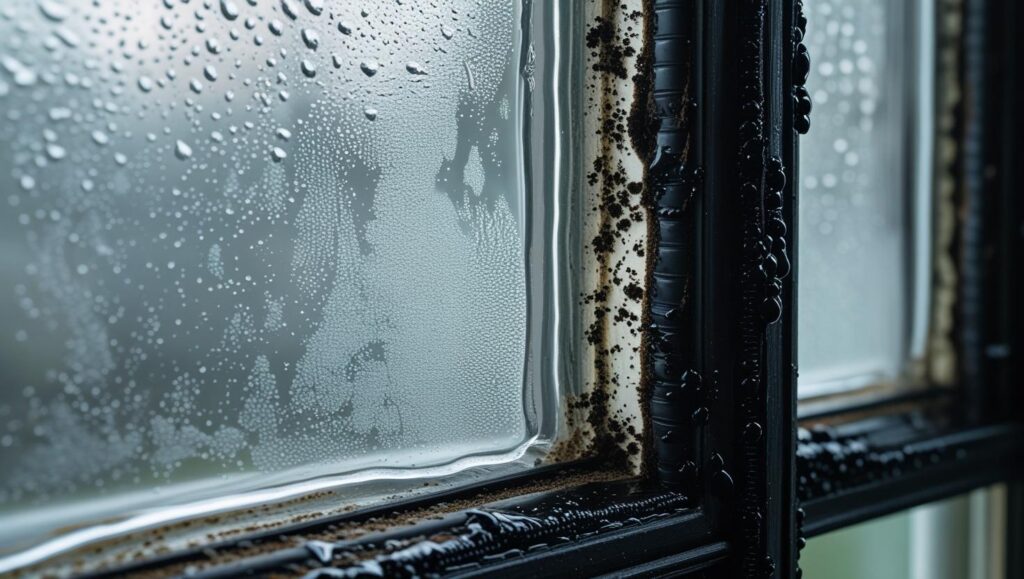
4. Windows and Exterior Walls: Condensation Problems
Condensation on windows is a frequent winter issue in Northeast homes.
When warm, humid indoor air contacts a cold windowpane or frame, moisture can collect on the surface.
Repeated condensation may damage window trim, drywall, and nearby wood materials.
Over time, persistent moisture can create conditions that support mold growth.
Homeowners may notice:
- Water droplets along window edges
- Discolored window trim
- Peeling paint
- Damp drywall beneath windows
- Musty odors near exterior walls
Condensation mold prevention begins with controlling indoor humidity, improving airflow, and addressing cold surfaces or insulation problems.
5. Closets, Crawl Spaces, and Poorly Ventilated Areas
Mold can also develop in areas that receive limited airflow.
Closets along exterior walls, crawl spaces, storage rooms, and spaces behind large furniture may remain cooler than surrounding rooms.
When moisture becomes trapped, mold can grow on walls, stored belongings, or other susceptible materials.
Keeping stored items away from damp walls and monitoring humidity can help reduce moisture accumulation.
Warning Signs Your Rockland County Home May Have Winter Mold
Winter mold problems are not always immediately visible.
Some contamination develops behind walls, above ceilings, or beneath flooring.
Watch for these warning signs:
Persistent Musty Odors
A damp or earthy smell that does not disappear may indicate a moisture problem or concealed microbial growth.
Visible Discoloration
Mold may appear as black, green, gray, white, or other discolored patches.
However, appearance alone cannot reliably identify mold species or determine the extent of contamination.
Peeling Paint or Damaged Drywall
Bubbling paint, soft drywall, or water stains may indicate moisture intrusion that could support mold growth.
Recurring Condensation
Excessive condensation on windows, walls, or attic surfaces may signal elevated humidity or inadequate ventilation.
Previous Water Damage
Homes that have experienced basement flooding, burst pipes, ice dam leaks, or plumbing failures may have moisture trapped in building materials.
If affected materials were not dried thoroughly, mold growth may develop later.
Important: Mold cannot be reliably identified by color alone, and suspected contamination should not be disturbed unnecessarily.

How Quickly Can Mold Grow During Winter?
Mold growth depends on several factors, including moisture availability, temperature, the material involved, and how long the material remains wet.
Under favorable conditions, mold may begin growing on damp building materials within approximately 24 to 48 hours.
This does not mean every wet surface will develop mold within that timeframe. Colder temperatures and other environmental conditions can slow growth.
However, indoor spaces heated throughout the winter may provide conditions suitable for mold growth when moisture is present.
This is why prompt water removal and drying are important following:
- Burst or frozen pipes
- Ice dam roof leaks
- Basement water intrusion
- Plumbing leaks
- Appliance failures
- Significant condensation problems
Addressing water damage promptly can reduce the likelihood of mold developing inside walls, ceilings, insulation, and flooring.
How to Prevent Mold Growth During Rockland County Winters
Homeowners can take several practical steps to reduce winter moisture problems.
1. Monitor Indoor Humidity
Use a hygrometer to measure indoor relative humidity.
The U.S. Environmental Protection Agency recommends keeping indoor humidity below 60%, ideally between 30% and 50%.
During very cold weather, humidity may need to be kept toward the lower end of that range to prevent condensation on cold surfaces.
2. Use Bathroom and Kitchen Exhaust Fans
Run bathroom exhaust fans during showers and afterward to remove excess moisture.
Use kitchen ventilation when cooking, especially when boiling water or generating steam.
Ensure exhaust fans vent outdoors rather than into attics or other enclosed spaces.
3. Inspect Basements for Moisture
Check basement walls, floors, plumbing connections, and stored belongings for dampness.
Use a dehumidifier when needed, provided the equipment is suitable for the basement’s temperature and conditions.
Investigate recurring water intrusion rather than relying solely on dehumidification.
4. Check Attic Insulation and Ventilation
Proper attic insulation, air sealing, and ventilation help reduce conditions that contribute to condensation.
If you notice attic frost, wet insulation, or recurring roof leaks, consider having the attic evaluated by a qualified professional.
5. Address Plumbing and Roof Leaks Promptly
Even small leaks can introduce moisture into concealed building materials.
Repairing the source and drying affected areas promptly can help prevent larger restoration problems.
6. Improve Air Circulation
Allow air to circulate around furniture and exterior walls.
Avoid storing boxes or other belongings directly against damp basement walls.
7. Investigate Recurring Mold Growth
If mold returns after cleaning, the underlying moisture problem may not have been corrected.
Recurring contamination may indicate hidden leaks, condensation problems, or moisture trapped inside building materials.
When Is Professional Mold Remediation Necessary?
Not every small area of surface mold requires professional remediation.
According to EPA guidance, homeowners may be able to clean certain small mold-affected areas, generally less than approximately 10 square feet, when the contamination is limited and no complicating conditions exist.
However, professional mold remediation should be considered when:
- Mold affects a large area
- Growth repeatedly returns after cleaning
- Contamination is suspected behind walls or above ceilings
- Mold is associated with significant water damage
- Porous materials such as drywall or insulation are heavily affected
- HVAC systems may be contaminated
- The moisture source cannot be identified
- Occupants have health concerns that warrant additional precautions
Individuals with asthma, allergies, immune suppression, or other health concerns should consult an appropriate healthcare professional about exposure risks.
Why Painting Over Mold Is Not a Solution
Painting over visible mold does not remove the contamination or correct the moisture problem.
Affected surfaces must be properly evaluated, cleaned or removed when necessary, and dried before repairs or refinishing.
Why Moisture Control Is Essential
Successful mold remediation requires more than removing visible growth.
If the original moisture source remains, mold may return.
A comprehensive approach addresses both contamination and the conditions that allowed it to develop.
Professional Winter Mold Remediation in Nanuet, NY
When mold develops in basements, attics, bathrooms, or other areas of a home, professional remediation can help address contamination and moisture-related damage.
PuroClean of Nanuet provides mold remediation services for residential and commercial properties throughout Rockland County.
Depending on the conditions and extent of contamination, professional mold remediation may involve the following steps.
1. Mold and Moisture Assessment
Restoration professionals evaluate affected areas and look for moisture conditions that may be contributing to mold growth.
2. Containment of Affected Areas
When appropriate, containment methods help limit the spread of mold-contaminated dust and debris during remediation.
3. Air Filtration
HEPA filtration equipment may be used to capture airborne particles during remediation activities.
4. Removal of Contaminated Materials
Certain porous materials, such as heavily contaminated drywall or insulation, may require careful removal and disposal.
5. Cleaning of Affected Surfaces
Appropriate professional cleaning methods are used on materials that can be safely and effectively remediated.
6. Drying and Moisture Control
Affected areas are dried as necessary, and the underlying moisture source must be addressed to help prevent recurrence.
The specific remediation approach depends on the building materials, extent of contamination, moisture conditions, and applicable professional standards.
Does Homeowners Insurance Cover Winter Mold Removal in New York?
Homeowners insurance coverage for mold remediation varies by policy and the cause of the damage.
Some policies may provide limited coverage when mold results from a covered event, such as certain sudden and accidental plumbing failures.
Other situations, including long-term moisture intrusion, maintenance problems, or gradual leaks, may be excluded.
Homeowners should review their policies and speak with their insurance provider about coverage, deductibles, limitations, and documentation requirements.
Professional restoration documentation may help homeowners communicate the extent of damage and remediation work performed.
Coverage decisions are made by the insurance company according to the applicable policy.
Frequently Asked Questions About Winter Mold in Rockland County
Can mold grow in a cold basement during winter?
Yes. Mold can grow in basements during winter when moisture is present and temperatures are suitable. Plumbing leaks, foundation seepage, condensation, and poor ventilation may contribute to basement mold problems.
Why does mold appear around windows in winter?
Warm, humid indoor air can condense on cold windows and surrounding materials. Repeated moisture accumulation may create conditions that support mold growth on window trim, drywall, and other nearby surfaces.
Can an ice dam cause attic mold?
Yes. Ice dams can allow melting snow to enter beneath roofing materials. Water may wet insulation, roof decking, and wood framing, creating conditions favorable for mold growth if the materials remain damp.
What indoor humidity level helps prevent winter mold?
The EPA recommends keeping indoor relative humidity below 60%, ideally between 30% and 50%. During cold weather, lower humidity may be necessary to prevent condensation on windows and other cold surfaces.
Is black mold more dangerous than other types of mold?
Mold color alone does not determine whether a particular growth is hazardous. Different mold species can have similar appearances, and visible mold should be addressed regardless of color. Individuals experiencing health concerns should consult a healthcare professional.
Should I remove winter mold myself or hire a professional?
Small, limited areas may sometimes be cleaned by homeowners using appropriate precautions. Professional remediation is advisable for extensive, recurring, concealed, or complicated contamination, particularly when significant water damage is involved.
Who provides winter mold removal in Rockland County, NY?
PuroClean of Nanuet provides professional mold remediation services for homeowners and businesses in Nanuet and surrounding Rockland County communities.
Protect Your Rockland County Home From Winter Mold Damage
Winter weather can create hidden moisture problems that go unnoticed until mold becomes visible or musty odors develop.
From damp basements and condensation-covered windows to attic moisture caused by ice dams, winter conditions can create environments where mold grows inside homes and businesses.
Recognizing warning signs early and addressing moisture problems promptly can help reduce damage to building materials and prevent recurring contamination.
If you suspect mold growth in your home, professional evaluation can help determine the appropriate next steps.
Contact PuroClean of Nanuet for Professional Mold Remediation
PuroClean of Nanuet serves residential and commercial property owners throughout Nanuet, Pearl River, New City, Spring Valley, Tappan, and surrounding Rockland County communities.
Whether you’re dealing with visible mold, recurring musty odors, or moisture damage following a winter leak, our restoration team can help.
PuroClean of Nanuet
Phone: (845) 570-5060
Website: PuroClean of Nanuet
Call PuroClean of Nanuet today to discuss professional mold remediation and winter moisture damage restoration.