


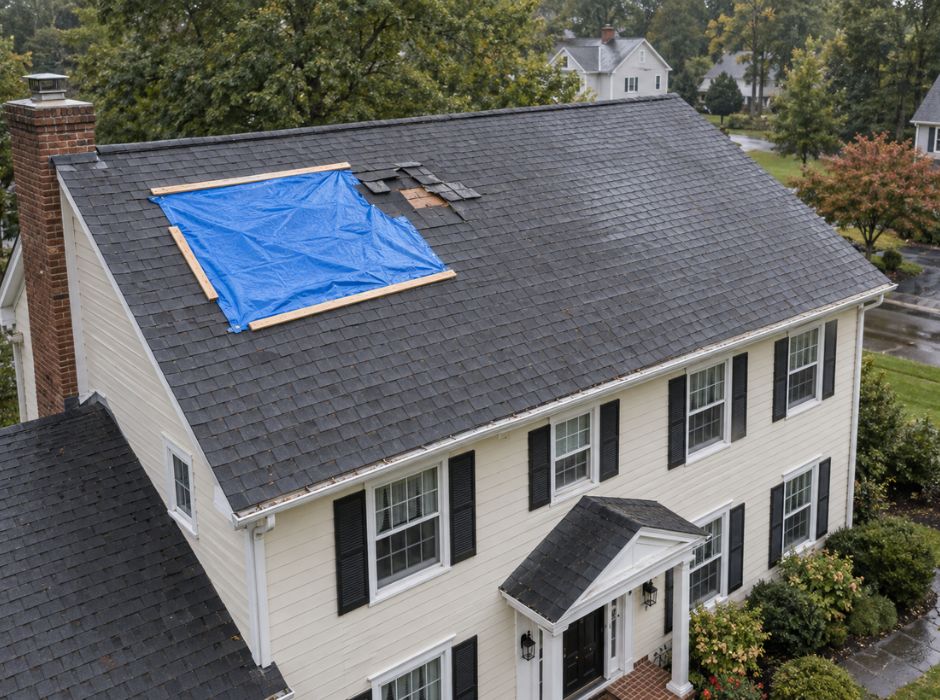
The storm has passed. The dripping has stopped. A roofer is scheduled to make repairs. But what happened to the water that already entered your home or building?
That question is easy to overlook, especially when the only visible damage is a ceiling stain. Yet stopping a roof leak and restoring the damage it caused are two different jobs. Moisture may remain inside insulation, above ceilings or behind walls long after the surface appears dry.
For homeowners, business owners and property managers in Northern New Jersey, understanding that distinction can help prevent an isolated roof leak from becoming a larger repair project. PuroClean of Newark provides professional water damage restoration to address the damage left behind, including water removal, hidden moisture detection and structural drying.
Why a Ceiling Stain May Not Tell the Whole Story
Water does not necessarily drip straight down from the opening in a roof. It can travel along framing before appearing elsewhere inside the building. The spot on your ceiling may reveal where water finally emerged, not where it entered or everything it affected along the way.
Damaged roofing, deteriorated flashing around roof penetrations and drainage problems can all contribute to leaks. A professional roof inspection helps identify the source, while an interior moisture assessment helps establish the extent of the resulting damage.
PuroClean’s roof leak guidance explains why the entry point and visible leak may be in different locations.
The practical takeaway: do not use the size of a stain as your only measure of the problem. A small mark deserves attention if it appeared after a storm, is growing or returns whenever it rains.
Roof Repair and Water Damage Restoration Serve Different Purposes
A roofing contractor addresses the exterior problem that allowed water inside. A restoration professional evaluates and treats affected interior materials.
Depending on the loss, both may be needed.
Think of a roof leak above an upstairs office. Repairing the roof can stop additional rainwater from entering, but it does not remove moisture from wet insulation or determine whether the ceiling below is safe to retain. Painting the stain would improve the appearance without answering either question.
PuroClean of Newark assesses the interior damage and determines the appropriate steps for drying and restoration. That may involve treating concealed moisture, removing materials that cannot be saved and preparing affected areas for repairs.
The goal is to address the moisture before new paint, drywall or flooring conceals it.
When Should You Call a Restoration Professional for a Roof Leak?
Not every roof leak requires extensive demolition or a major restoration project. However, a professional assessment is especially worthwhile when:
- Water has entered enclosed spaces. You cannot readily inspect or dry the affected insulation, ceiling assembly or wall cavity.
- Materials have changed shape or condition. Swelling, softening, sagging or separating seams need more than cosmetic attention.
- The extent or timing is unclear. A leak discovered today may have started during an earlier storm.
- Multiple areas are affected. A wet ceiling, wall and floor should be evaluated together rather than treated as unrelated surface problems.
- Musty odors or visible mold are present. Drying alone may not address an established mold problem.
There is also a useful question to ask yourself: How will I confirm that the concealed materials are dry? If the answer is simply “wait until the stain fades,” it is time to seek a more reliable assessment.
Why Prompt Drying Matters
The EPA recommends drying water-damaged materials within 24 to 48 hours to help prevent mold growth. That is a prompt-action guideline, not a guarantee that mold begins at a precise hour or that every material can be saved within that window. EPA guidance on moisture and mold emphasizes correcting the water problem as well as addressing affected materials.
Waiting for visible mold is not a good decision point. By then, the work may involve more than drying.
Likewise, a room that feels comfortable is not proof that the building materials are dry. Air conditioning or a household dehumidifier may reduce room humidity without adequately drying an enclosed cavity.
Early assessment gives property owners a clearer understanding of what is wet, what needs attention and what can reasonably be preserved.
What to Do When You Discover a Roof Leak
Your first priority is keeping people away from hazards, not investigating the roof yourself.
- Keep the affected area clear. Stay away from sagging or bulging ceilings. Do not puncture them or stand underneath to investigate.
- Treat electrical involvement as a hazard. If water is near light fixtures, wiring, outlets or electrical equipment, keep away and obtain qualified assistance. Never enter water to reach an electrical panel.
- Protect belongings only when it is safe. Move portable items out of the affected area without entering beneath unstable materials.
- Document what you can safely see. Photograph affected rooms and belongings, and record when you first noticed the leak.
- Arrange professional help. Contact a roofer for the source and a restoration company for interior water damage. Leave roof access and temporary exterior protection to qualified professionals.
- Notify your insurer promptly if you intend to make a claim. Ask what documentation it requires and retain invoices and receipts.
IMPORTANT SAFETY NOTICE: Do not climb onto a wet roof, open damaged ceilings or attempt to operate water-affected electrical equipment.
Advanced Equipment. Informed Decisions. Measurable Progress.
Effective water damage restoration starts with understanding where the moisture is, how far it has spread and which materials are affected. It also requires knowing whether the drying process is working.
PuroClean of Newark combines advanced moisture detection and drying equipment with the technical expertise to interpret the findings and determine the appropriate treatment.
Finding Moisture Beyond the Visible Damage
A ceiling stain shows only part of the picture. Moisture meters help technicians assess moisture in building materials, while thermal imaging helps identify temperature patterns that may indicate concealed wet areas. Those patterns guide further investigation and moisture readings, helping the team evaluate damage beyond what is visible.
This information supports more targeted decisions about where drying is needed, which areas require additional access and which materials may be candidates for restoration.
Matching the Drying Approach to the Property
Different materials and spaces present different drying challenges. Moisture trapped beneath flooring requires a different approach from moisture inside a wall cavity.
PuroClean of Newark uses professional water extraction equipment, high-velocity air movers, dehumidification and specialized drying systems as appropriate for the affected materials. Equipment selection and placement matter: effective drying requires managing both moisture leaving the materials and humidity in the surrounding air.
Monitoring Progress and Adjusting the Plan
Restoration after a roof leak or any other water instrusion involves more than setting up equipment and waiting. Tracking moisture readings and drying conditions helps technicians evaluate progress and determine whether adjustments are needed.
Repeated measurements help answer practical questions: Are affected materials drying as expected? Does an area need additional attention? Is moisture remaining where a surface appears dry?
This measured approach supports decisions about continuing drying, changing the treatment or removing materials that cannot be effectively restored.
Giving Property Owners Clearer Answers
For homeowners and property managers, the value of advanced equipment is the information it provides. Measurements help explain the scope of the damage, support the recommended work and document progress toward drying goals.
PuroClean of Newark brings together the tools and expertise to turn those findings into a restoration plan tailored to your property, helping preserve salvageable materials and address hidden moisture before repairs move forward.
A Note for Property Managers and Business Owners
In an occupied building, responding to a roof leak involves more than the damaged room.
Establish who will restrict access, communicate with tenants or staff, document affected contents and coordinate the roofing and restoration work. Ask occupants to report new stains or dripping promptly, including in adjacent spaces.
Keep a single record of the incident: dates, photographs, reported locations, contractor findings and completed work. This helps keep everyone working from the same information and reduces the chance that an affected area is overlooked.
When coordinating repairs, make sure the schedule allows for appropriate drying and verification before affected areas are closed up or refinished. The pressure to reopen an office or restore a tenant’s space should not leave unresolved moisture hidden behind new finishes.
Get Help With the Damage the Storm Left Behind
A repaired roof is an important step. Knowing that the water damage inside has been addressed is the next one.
PuroClean of Newark serves residential and commercial properties throughout Northern New Jersey, with 24/7 emergency assistance. The team can also help document damage and support the insurance claims process.
If a storm has left water inside your home or building, call PuroClean of Newark at 973-791-5404 or contact the team online.
We’ll help you get a clearer picture of the damage and address it before repairs cover up what the storm left behind.