 PuroClean of North McKinney
Table of Contents
A leaking HVAC system can cause major property damage before you even notice it. In one recent case in Allen, Texas, a homeowner discovered her HVAC system water leak only after her laminate flooring began to warp. Our PuroClean of North McKinney team responded quickly to identify the problem, stop the leak, and restore her home to a safe, dry condition.
If left untreated, an HVAC system water leak can lead to mold, structural deterioration, and costly repairs. Below, we’ll explain how this type of leak occurs, what damage it causes, and how our certified technicians handle cleanup and restoration.
What Is an HVAC System Water Leak?
An HVAC system water leak occurs when condensation or drainage from your air conditioning unit escapes into your home instead of draining outside. According to the U.S. Environmental Protection Agency (EPA), HVAC systems help maintain good indoor air quality and control humidity — but if moisture isn’t managed properly, it can become a hidden hazard.
Common causes of HVAC water leaks include:
- Clogged or cracked condensate lines: Blocked or broken drain lines prevent proper water flow, causing backups that leak into your home.
- Rust or damage to the drain pan: Corrosion or cracks in the pan allow condensation to escape before it can drain.
- Improper installation or insulation: Poorly fitted components or missing insulation can lead to condensation buildup and leaks.
- Excess humidity and temperature fluctuations: High indoor humidity or sudden temperature changes create excess condensation around the HVAC unit.
- Frozen evaporator coils melting rapidly: When coils freeze and then thaw, the melting water can overflow the drain pan and spill onto floors or walls.
Even a small drip can soak subflooring, drywall, and insulation over time. That’s why early detection and professional intervention are key.
Case Study: An HVAC Condensate Line Leak in Allen, TX
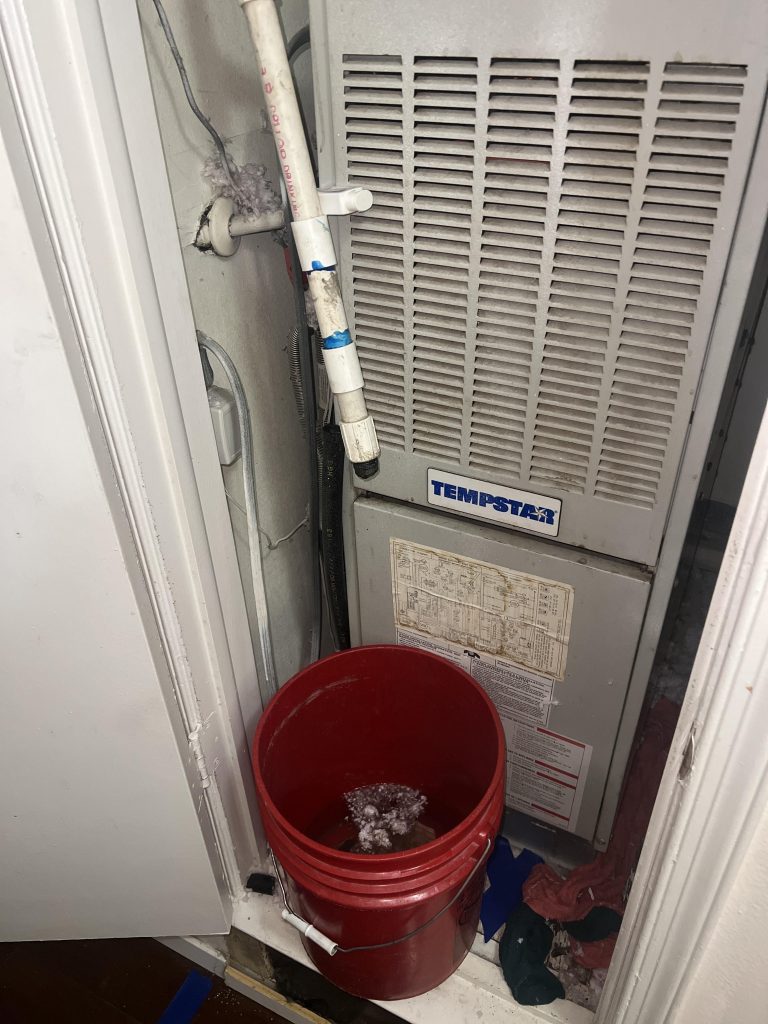
Our recent restoration project in Allen, Texas, shows just how quickly an unnoticed HVAC system water leak can escalate and cause extensive property damage. What started as a slow drip from a condensate line eventually spread beneath the flooring and into nearby rooms, damaging drywall, baseboards, and carpet. It’s a clear reminder that even minor HVAC leaks, if left unchecked, can silently compromise your home’s structure and air quality over time.
The Initial Discovery
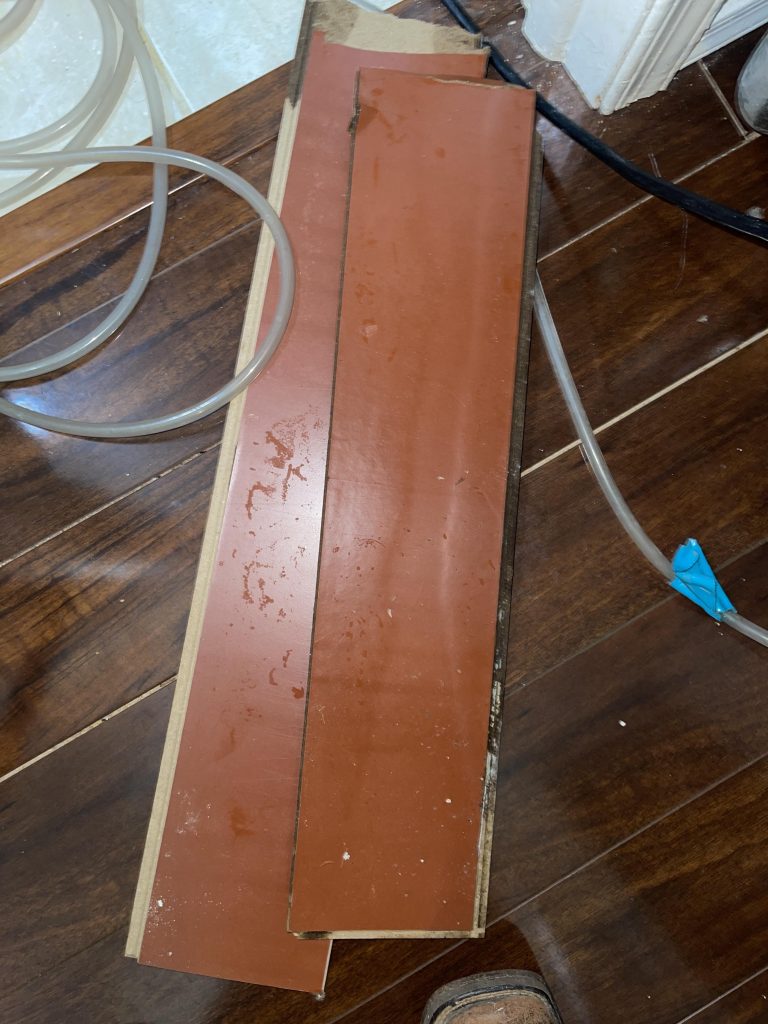
Our client, a homeowner who worked long hours, didn’t realize her HVAC condensate line was leaking until her laminate flooring began to buckle. When she looked inside the HVAC closet, she found water pooling beneath the unit and quickly placed a bucket to collect the dripping water.
By the time she contacted us, the flooring and baseboards were already showing visible signs of water damage.
Assessing the Extent of the Water Damage
When our certified restoration technicians arrived, they used professional moisture meters to trace how far the water had spread. The inspection revealed:
- Moisture trapped beneath the laminate flooring
- Water intrusion extending into the adjacent bedroom
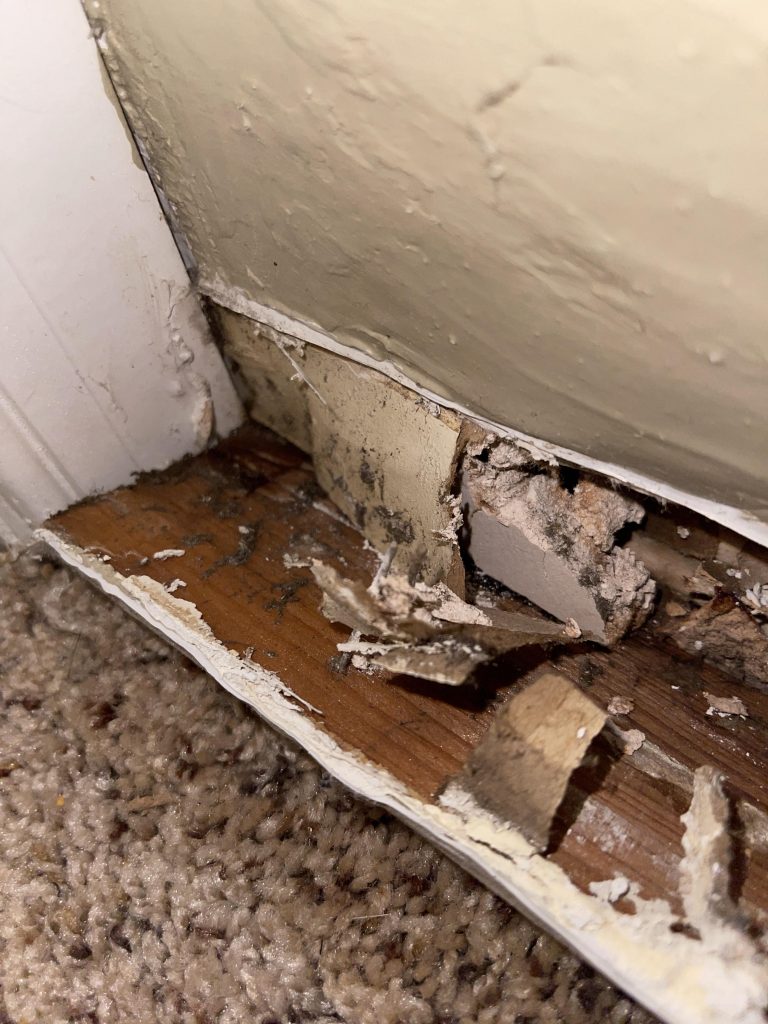
- Swollen drywall and compromised baseboards
These findings indicated that the HVAC system water leak had been active for some time.
Removing Damaged Flooring and Hidden Layers
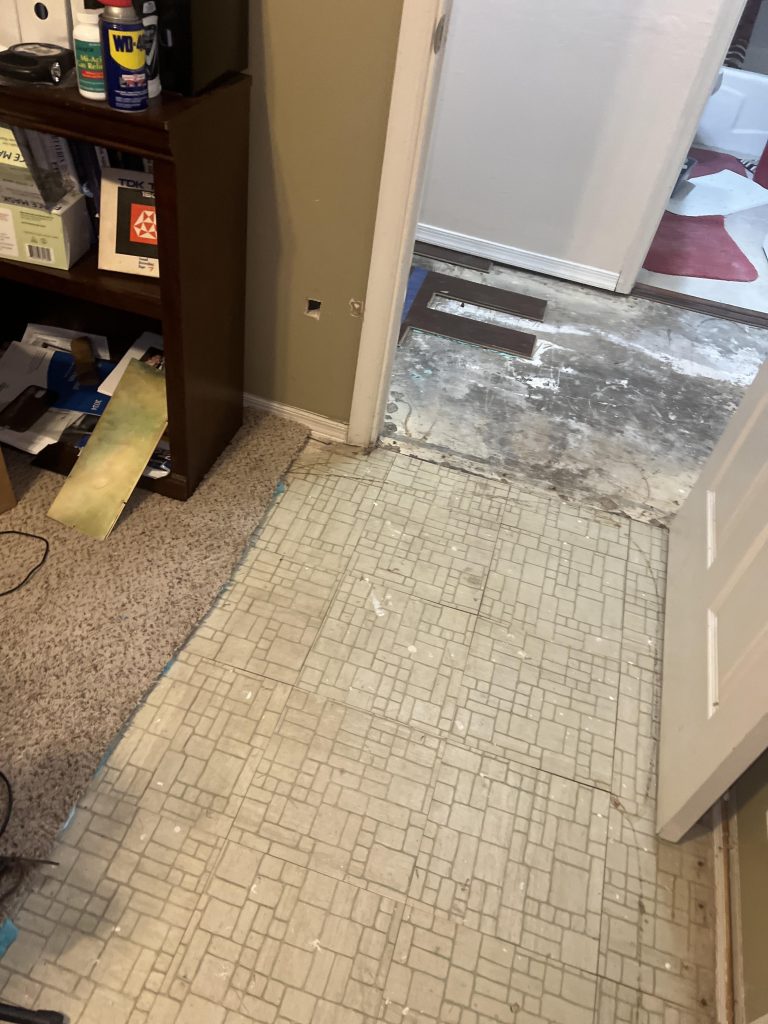
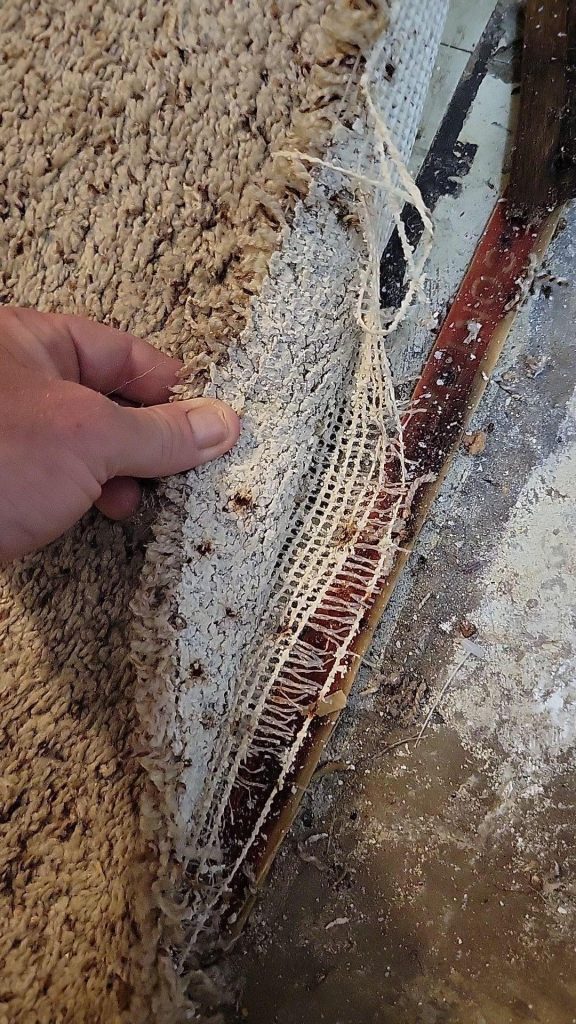
As we removed the damaged laminate flooring, we discovered moisture had seeped into the carpet in the next room. When lifted, the carpet showed clear delamination—where the backing separates from the fibers. Unfortunately, once delamination occurs, the carpet cannot be repaired.
Beneath the carpet, we also uncovered an older layer of vinyl squares. This was a surprise to both us and the homeowner, but fortunately, the vinyl was largely unaffected and could remain in place after drying.
Addressing Drywall and Baseboard Damage
Water from an HVAC leak often wicks up walls and baseboards. Upon removing the damaged baseboards, one drywall section collapsed due to moisture exposure and material age. We cut out and disposed of the affected drywall to ensure complete drying and to prevent mold growth.
This step is crucial in restoration: even if a wall looks dry on the surface, trapped moisture can feed mold within days. Our technicians always verify dryness levels using precision instruments before sealing or rebuilding.
The Role of Dehumidification in HVAC Water Leak Restoration
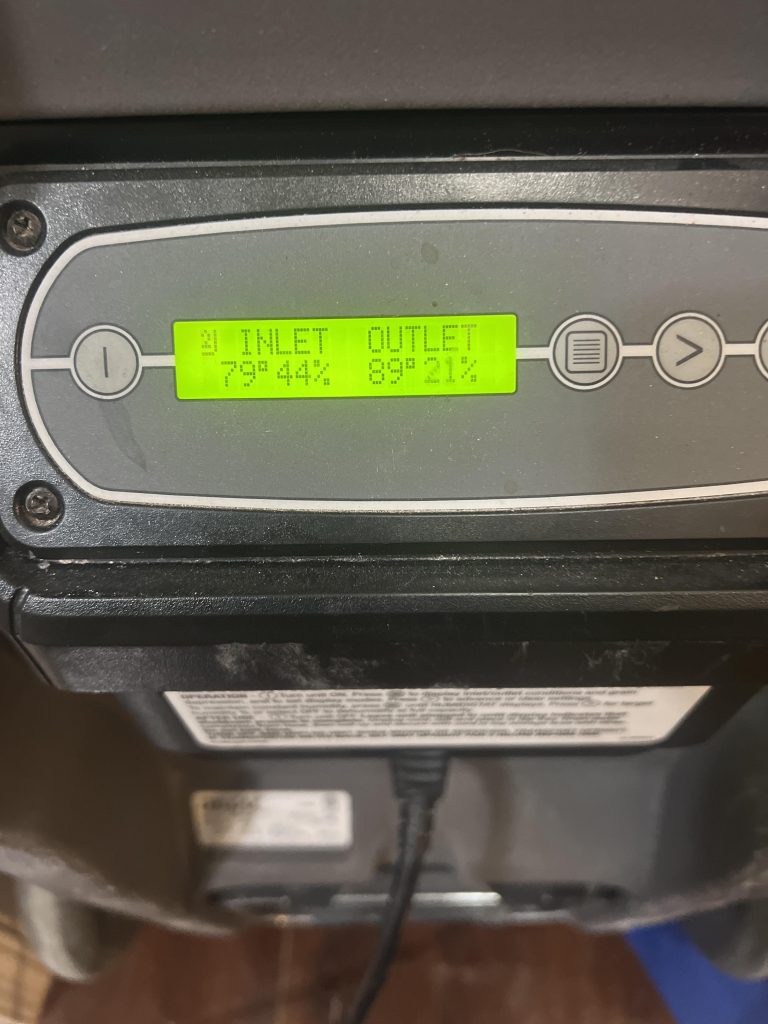
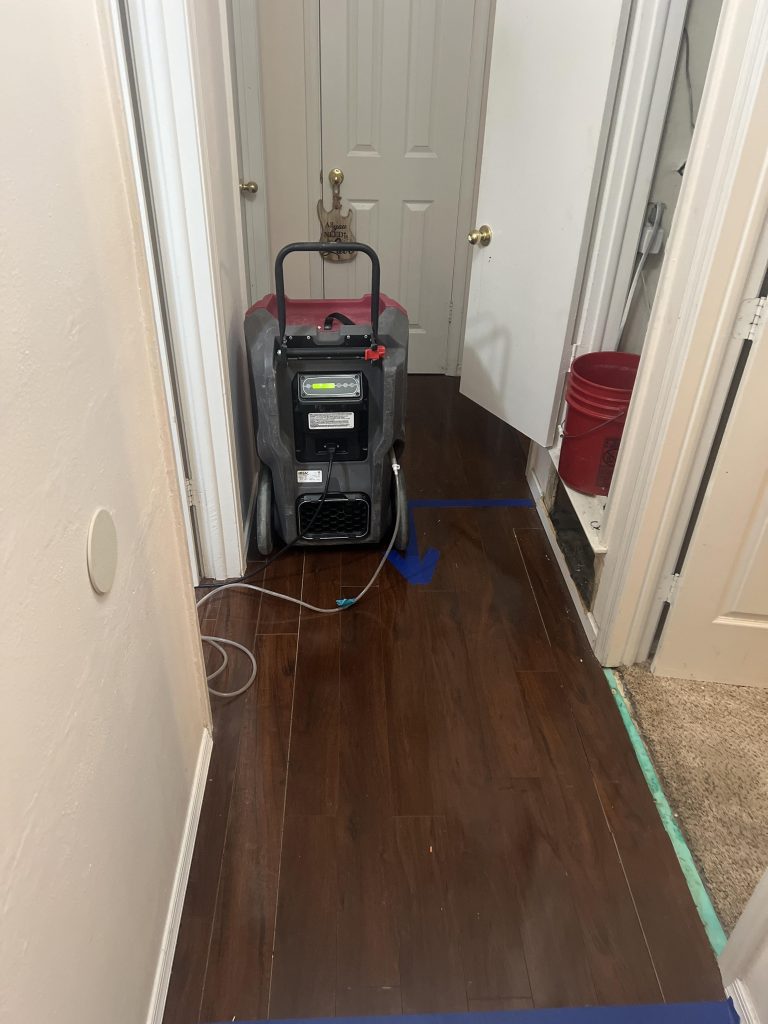
After removing wet materials, we set up industrial dehumidifiers to pull excess moisture from the air. This phase of the restoration process:
- Prevents secondary damage such as mold and odor
- Reduces indoor humidity to safe levels
- Ensures structural materials dry evenly and thoroughly
We monitored the dehumidifier’s readings daily—tracking room temperature, humidity percentage, and extraction rates—to confirm that the environment reached a safe moisture equilibrium before moving forward.
Real Results: A Job Well Done
After removing all affected materials, dehumidifying the area, and verifying safe moisture levels, we left the Allen home ready for renovation. The homeowner appreciated how our team explained every step of the process and worked efficiently to protect her property.
She shared that she felt “relieved and confident” knowing the source of the HVAC system water leak was resolved and her home was safe from mold or further damage.
Why Professional Restoration Matters
A homeowner might dry visible water after an HVAC system water leak, but unseen moisture can linger in subfloors, insulation, and framing. That’s where professional restoration makes the difference.
At PuroClean of North McKinney, our technicians are trained and certified by the Institute of Inspection, Cleaning and Restoration Certification (IICRC) to identify hidden damage and use industry-standard drying techniques. We combine infrared imaging, containment barriers, and commercial dehumidification to return your property to its pre-loss condition safely and efficiently.
Preventing Future HVAC Water Leaks
Preventing another HVAC system water leak involves routine maintenance and awareness of common warning signs. Homeowners can reduce risk by:
- Scheduling seasonal HVAC inspections to ensure the condensate drain line and pan are clear.
- Replacing filters regularly to prevent system strain and ice buildup.
- Checking the drain pan for rust or overflow.
- Installing a float switch or leak detector, which automatically shuts off the system if water is detected.
- Maintaining proper insulation around ducts and lines to prevent condensation.
Even small changes in humidity or flooring texture near your HVAC unit can signal a hidden leak.
Quick Reference Table: Common Causes & Fixes
| Cause of Leak | Typical Sign | Professional Solution |
|---|---|---|
| Clogged condensate line | Water pooling near unit | Line cleaning and suction flush |
| Cracked drain pan | Persistent dripping | Pan replacement |
| Frozen coils | Sudden large puddle | Coil thawing, filter replacement |
| Faulty installation | Repeated leaks after repair | System re-leveling or resealing |
Frequently Asked Questions About HVAC System Water Leaks
1. Why is my HVAC system leaking water inside my house?
Most likely, the condensate drain line is clogged or the drain pan is cracked, allowing condensation to overflow. Regular maintenance helps prevent this.
2. Can an HVAC water leak cause mold?
Yes. Excess moisture trapped in drywall or flooring creates an ideal environment for mold growth within 24–48 hours. Professional drying is critical.
3. How do I know if my HVAC water leak is serious?
If you notice warped floors, bubbling paint, or a musty odor near your HVAC unit, call a restoration expert immediately for a moisture inspection.
4. Is it safe to run my AC if it’s leaking water?
No. Turn off the system to prevent electrical issues and further damage. Have a professional inspect and repair the source.
5. What should I do right after discovering an HVAC leak?
Shut off your HVAC unit, absorb visible water, and call a restoration company like PuroClean of North McKinney to prevent secondary damage.
Conclusion: Stop Water Damage Before It Spreads
An HVAC system water leak may start small but can lead to expensive repairs and health risks if ignored. Early action—combined with professional help—makes all the difference.
At PuroClean of North McKinney, our experienced restoration technicians are ready to respond 24/7. We diagnose the source, remove affected materials, dry your property, and restore your peace of mind.
Call us today at (945) 234-4566 or visit our website to schedule inspection and restoration services in McKinney, Allen, and surrounding Texas communities.


 PuroClean of North McKinney