 PuroClean of Northeast Sacramento
 Residential vs Commercial Restoration: Complete Guide
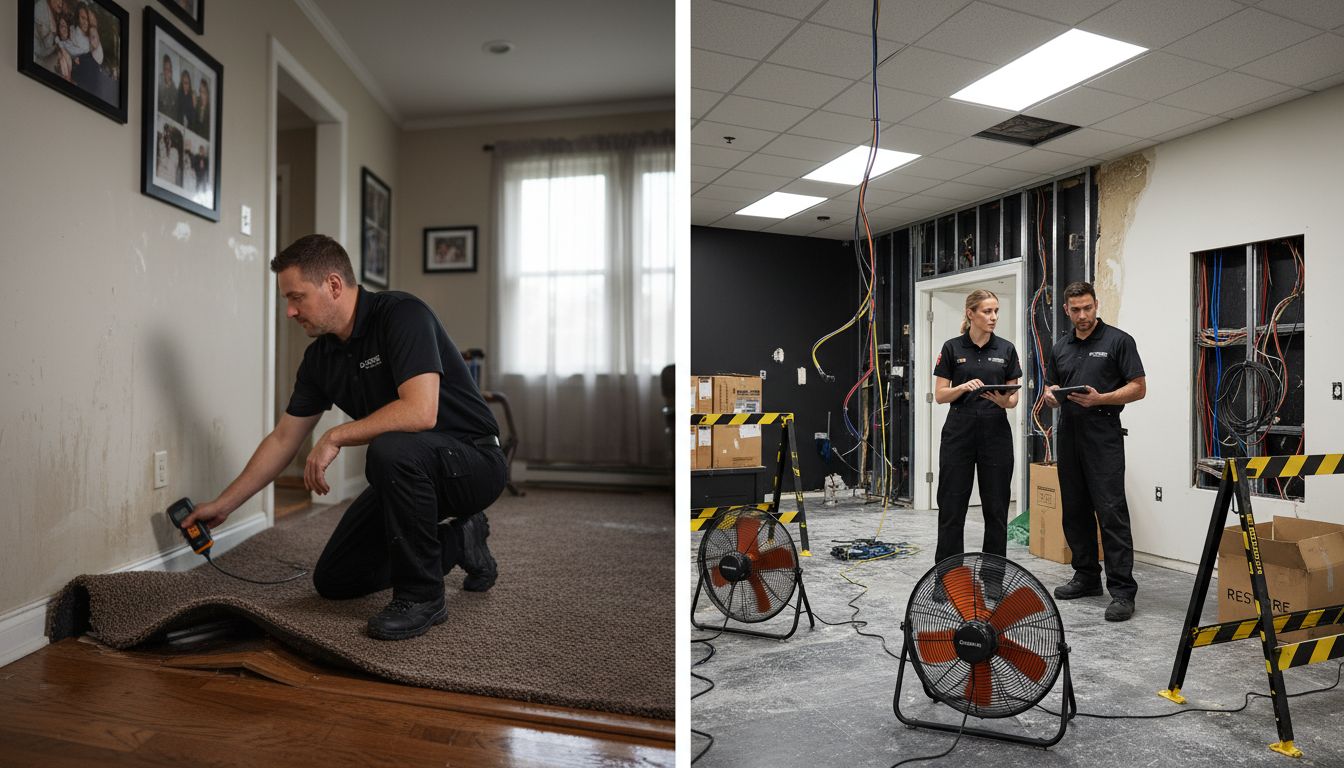
Did you know that property damage costs businesses and homeowners in the United States over $50 billion each year? After disasters strike, restoring buildings is about more than just repairs—it is about bringing spaces back to life while following unique rules for homes and businesses. Understanding the differences between residential and commercial restoration helps you make better choices, avoid costly mistakes, and get your property back on track as quickly as possible.
Table of Contents
- Defining Residential and Commercial Restoration
- Key Differences Between Service Types
- Restoration Process Steps and Timeline
- Costs, Insurance, and Regulatory Issues
- Common Challenges and Solutions
Key Takeaways
| Point | Details |
|---|---|
| Distinction between Residential and Commercial Restoration | Residential restoration focuses on individual homeowners and smaller-scale repairs, while commercial restoration involves larger facilities, requiring coordinated efforts and multiple stakeholders. |
| Regulatory and Insurance Complexity | Commercial restoration projects face stricter regulatory requirements and complex insurance protocols compared to the more straightforward processes in residential restoration. |
| Restoration Techniques | Residential projects typically use standard equipment for simpler repairs, while commercial projects often require advanced technology and specialized machinery for effective recovery. |
| Cost Implications | Residential restoration generally incurs lower costs and simpler insurance claims, while commercial restoration involves higher expenses and can impact business operations significantly due to potential downtime. |
Defining Residential and Commercial Restoration
Restoration is a specialized process of repairing and rehabilitating properties after damage, with distinct approaches for residential and commercial settings. Residential restoration focuses on returning homes to their pre-damage condition, addressing issues like water damage, fire damage, and mold remediation for individual homeowners. Commercial restoration, by contrast, involves larger-scale recovery efforts for business properties, office complexes, industrial facilities, and multi-unit buildings.
According to the National Park Service, restoration involves “accurately depicting a property’s form, features, and character” while removing elements that do not belong to a specific period. This definition applies broadly to both residential and commercial contexts, emphasizing the goal of returning a property to its original functional state. The key difference lies in the scale, complexity, and specific requirements of each restoration project.
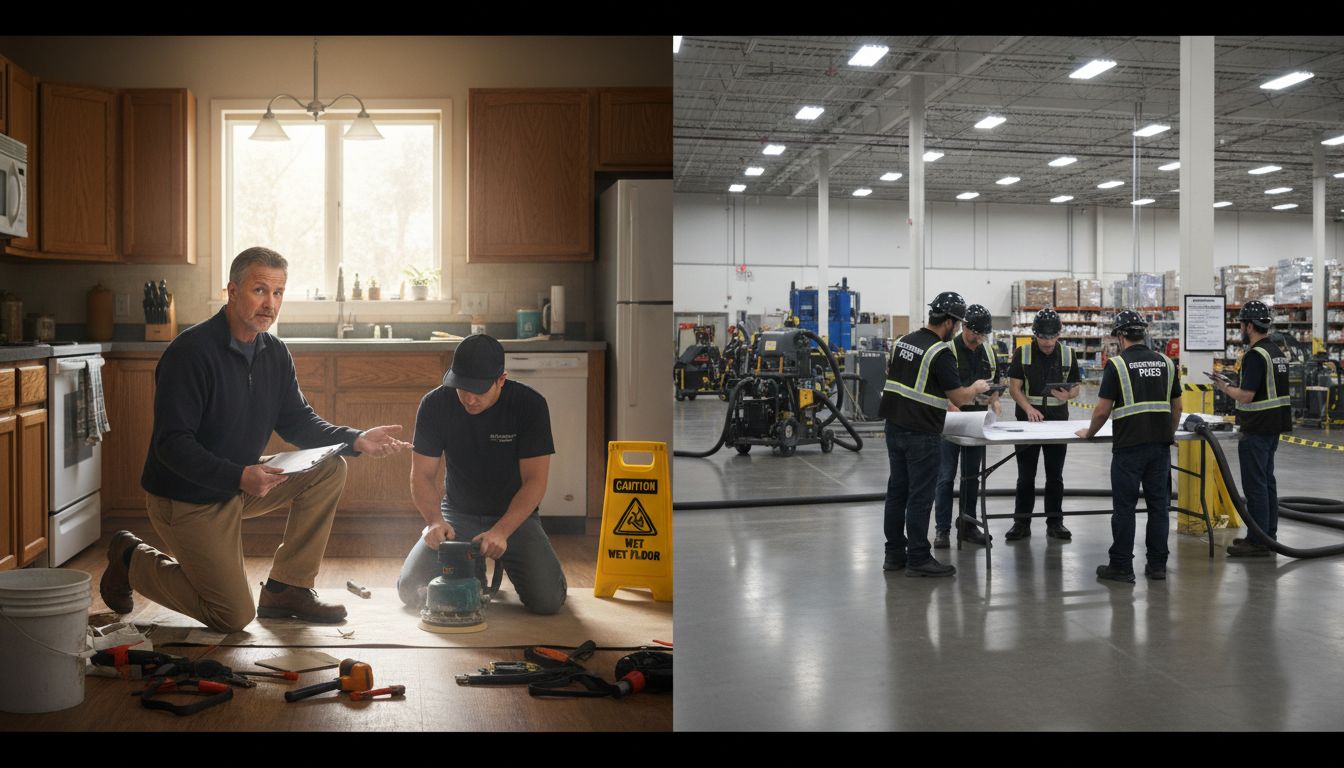
Here’s a side-by-side comparison of residential and commercial restoration:
| Aspect | Residential Restoration | Commercial Restoration |
|---|---|---|
| Typical Properties | Single-family homes | Business properties Office complexes Industrial sites |
| Project Scale | Smaller | Large, multi-unit |
| Restoration Approach | Personalized Homeowner engagement | Coordinated teams Multiple stakeholders |
| Regulatory Requirements | Standard codes Homeowner insurance | Stricter codes Multiple compliance needs |
| Equipment Needed | Basic tools Standard equipment | Advanced tech Specialized machinery |
| Cost and Insurance | Lower costs Simple claims | Higher costs Complex claims |
| Business Interruption Concern | Not a factor | Minimize downtime |
- Residential restoration typically involves: – Single-family home repairs – Smaller square footage – More personalized restoration approaches – Direct interaction with homeowners
- Commercial restoration generally includes: – Large-scale property recovery – Complex insurance and compliance requirements – Multiple stakeholder coordination – Minimizing business interruption
Call A Professional when facing significant property damage, as professional restoration experts understand the nuanced differences between residential and commercial restoration strategies and can provide targeted, efficient recovery solutions.
Key Differences Between Service Types
The restoration landscape dramatically shifts between residential and commercial service types, with each presenting unique challenges and requirements. Residential restoration primarily focuses on personal living spaces, while commercial restoration tackles complex business environments that demand more intricate recovery strategies.
According to the Whole Building Design Guide, restoration approaches vary significantly across different property types. Residential projects typically involve direct homeowner engagement and more personalized solutions, whereas commercial restoration requires extensive stakeholder coordination, complex insurance protocols, and minimal business interruption strategies.
Key Differentiators:
- Scope and Scale
- Residential: Single-family homes, smaller footprints
- Commercial: Large facilities, multiple-unit complexes, industrial spaces
- Regulatory Compliance
- Residential: Standard building codes, homeowner insurance
- Commercial: Stringent safety regulations, multiple compliance requirements
- Technical Complexity
- Residential: Standard equipment, straightforward restoration techniques
- Commercial: Advanced technological interventions, specialized machinery
As research from The Constructor indicates, project scale fundamentally determines equipment, materials, and approach. Commercial restoration demands more robust planning, broader risk management, and sophisticated recovery methodologies compared to residential projects.
Common Misconceptions about Mitigation and Restoration highlights the importance of understanding these nuanced differences to ensure effective property recovery across various contexts.
Restoration Process Steps and Timeline
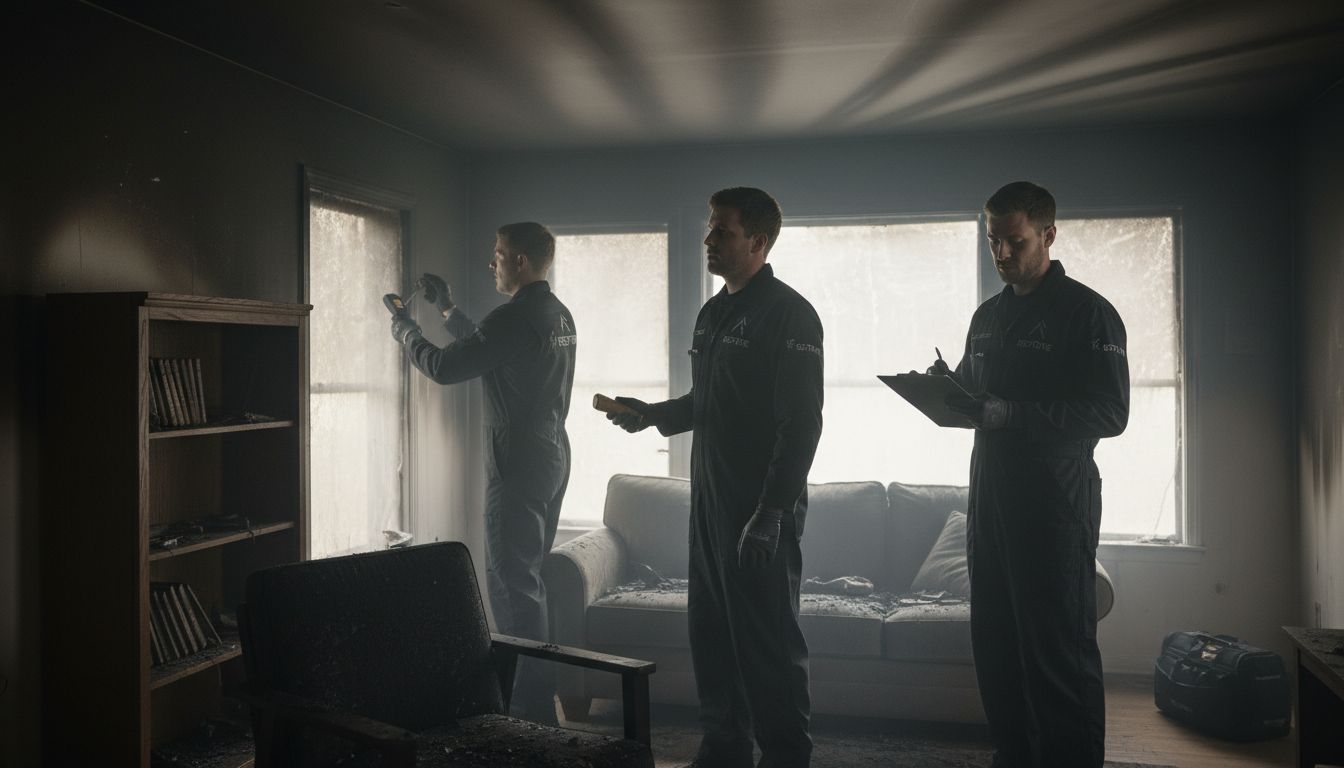
The restoration process is a structured and systematic approach to recovering properties after significant damage, with carefully defined steps that ensure comprehensive and effective recovery. Damage assessment serves as the critical first stage, where professionals evaluate the extent and nature of destruction, determining the most appropriate restoration strategy for both residential and commercial properties.
According to the Department of the Interior, restoration planning involves meticulously evaluating options, selecting preferred actions, and ensuring strict compliance with relevant regulations. This process requires thorough public review and strategic decision-making to guarantee the most effective recovery approach.
Typical Restoration Timeline:
- Initial Damage Assessment (0-24 hours)
- Comprehensive property inspection
- Damage documentation
- Immediate mitigation planning
- Emergency Mitigation (24-72 hours)
- Water extraction
- Structural stabilization
- Moisture control
- Detailed Restoration (3-14 days)
- Structural repairs
- Content restoration
- Cleaning and sanitization
- Final Reconstruction (2-4 weeks)
- Complete structural restoration
- Final quality checks
- Property readiness verification
The National Park Service emphasizes the importance of maintaining original features while sensitively upgrading systems during restoration. This principle applies across residential and commercial contexts, ensuring that the property’s fundamental character remains intact throughout the recovery process.
Water Damage Timeline Alexandria provides additional insights into the nuanced steps of managing property restoration efficiently and effectively.
Costs, Insurance, and Regulatory Issues
Restoration projects involve complex financial and regulatory landscapes that dramatically differ between residential and commercial settings. Insurance coverage and regulatory compliance emerge as critical factors that significantly impact the overall restoration process, determining both the scope and feasibility of recovery efforts.
According to the Whole Building Design Guide, preservation and restoration can be cost-effective and environmentally responsible when approached strategically. The National Park Service emphasizes that restoration work must include code-required modifications to ensure properties become fully functional and meet current safety standards.
Cost Considerations by Property Type:
- Residential Restoration
- Lower overall project costs
- Typically covered by homeowner’s insurance
- Smaller scale repairs
- More straightforward insurance claims process
- Commercial Restoration
- Significantly higher project expenses
- Multiple insurance policy interactions
- Complex regulatory compliance requirements
- Potential business interruption financial impacts
Key Regulatory Factors:
- Building code compliance
- Safety standard adherence
- Environmental regulation requirements
- Specialized permit acquisitions
The financial complexity increases exponentially with commercial restoration projects, where insurance negotiations involve multiple stakeholders and potential business interruption costs must be carefully calculated. Residential projects, while still challenging, typically follow more streamlined insurance and regulatory protocols.
Common Misconceptions about Mitigation and Restoration can help property owners understand the intricate details of navigating insurance and regulatory landscapes during restoration projects.
Common Challenges and Solutions
Restoration projects present unique obstacles that demand strategic approaches, with challenges varying significantly between residential and commercial environments. Understanding these potential roadblocks is crucial for successful property recovery, requiring proactive planning and specialized expertise to navigate complex restoration landscapes.
According to the Department of the Interior, effective disaster recovery involves comprehensive tools and techniques that address multifaceted challenges across different property types. The Fire Research and Management Exchange System highlights that restoration isn’t just about physical repair, but about creating comprehensive recovery strategies that address underlying systemic issues.
Key Challenges and Strategic Solutions:
- Moisture and Water Damage
- Challenge: Hidden structural deterioration
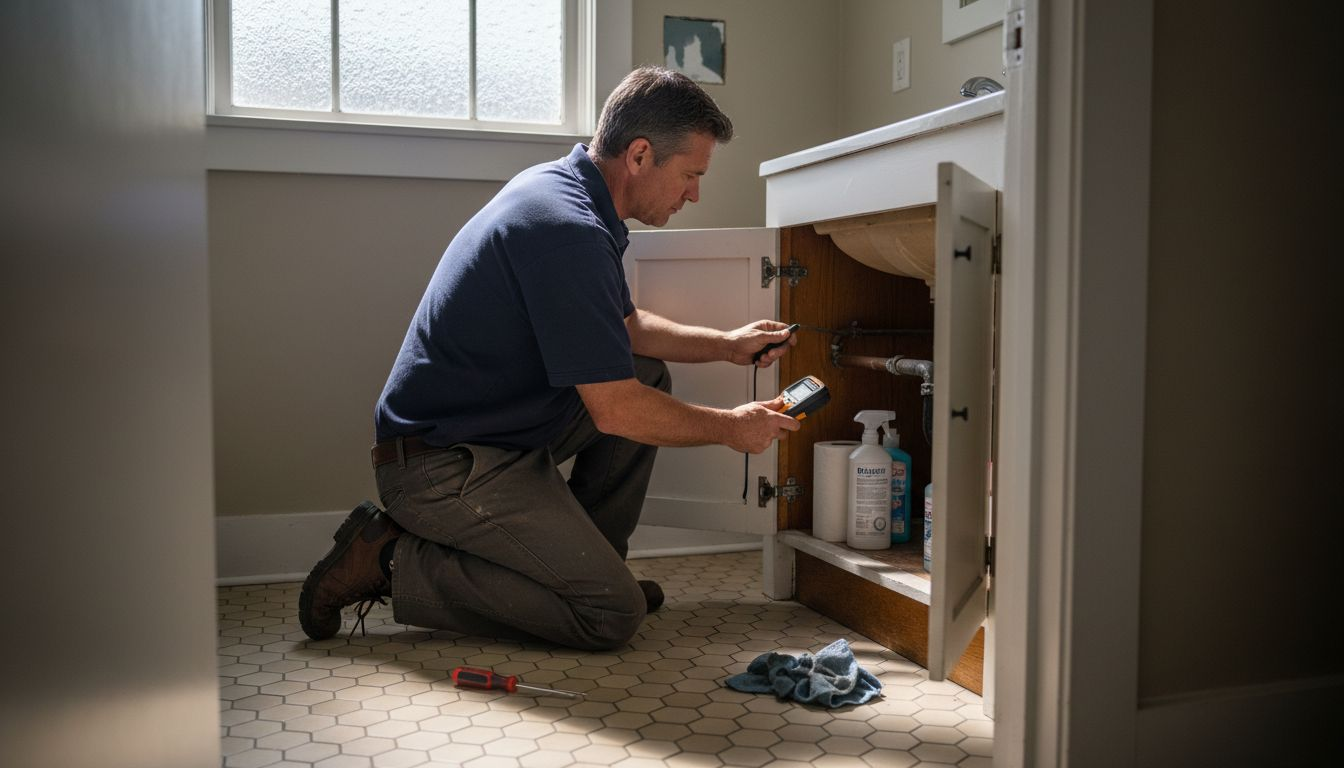
- Solution: Advanced moisture detection technology
- Preventive Measure: Immediate water extraction
- Structural Integrity Issues
- Challenge: Compromised building frameworks
- Solution: Comprehensive structural assessment
- Preventive Measure: Early intervention techniques
- Contamination Risks
- Challenge: Potential biological and chemical hazards
- Solution: Professional sanitization protocols
- Preventive Measure: Thorough decontamination processes
Restoration Resilience Strategies:
- Rapid damage assessment
- Sophisticated technological interventions
- Comprehensive documentation
- Proactive risk management
Commercial restoration frequently encounters more complex challenges, requiring multi-stakeholder coordination and advanced technological solutions. Residential projects, while typically smaller in scale, demand equally precise and sensitive restoration approaches to ensure complete property recovery.
Common Misconceptions about Mitigation and Restoration provides deeper insights into navigating the intricate landscape of property restoration challenges.
Expert Restoration Solutions Tailored to Your Property Needs
Facing property damage can bring overwhelming stress whether it is your home or your business. This guide highlights how residential and commercial restoration differ in scale, complexity, and regulations — making it critical to work with a team that understands these unique challenges. From managing water damage and mold removal to navigating complex insurance claims, the goal is to restore your property quickly while preserving its value and minimizing downtime.
At PuroClean of Northeast Sacramento, we specialize in delivering fast, professional restoration services designed specifically for both residential and commercial situations. Our certified technicians use advanced technology and follow proven restoration processes that address your property’s specific needs. We handle everything from emergency response to detailed reconstruction allowing you to focus on what matters most.
Take Control Now with Proven Restoration Expertise
Don’t let damage disrupt your life or business any longer. Contact PuroClean of Northeast Sacramento today to access reliable emergency response and comprehensive restoration services that are available 24/7. Learn why homeowners and businesses alike trust us to bring their properties back safely and efficiently. Your peace of mind is just a call or click away.
Frequently Asked Questions
What is the main difference between residential and commercial restoration?
Residential restoration focuses on individual homes, restoring them to their pre-damage condition with personalized approaches, while commercial restoration involves larger-scale projects for business properties that require more complex recovery strategies and stakeholder coordination.
What are the typical steps involved in the restoration process?
The restoration process typically includes four main steps: Initial Damage Assessment (0-24 hours), Emergency Mitigation (24-72 hours), Detailed Restoration (3-14 days), and Final Reconstruction (2-4 weeks), with each phase ensuring a comprehensive recovery.
How do insurance processes differ between residential and commercial restoration?
Residential restoration usually involves straightforward homeowner insurance claims, while commercial restoration deals with multiple insurance policies, complex regulatory compliance, and potential business interruption costs, making it a more intricate process.
What are common challenges faced in restoration projects?
Common challenges include moisture and water damage, structural integrity issues, and contamination risks. Effective solutions may involve advanced detection technology, thorough assessments, and professional sanitization protocols to ensure successful recovery.
Recommended
Call A Professional – PuroClean of Alexandria
Common Misconceptions about Mitigation and Restoration – PuroClean of Alexandria
The Fire Damage Restoration Process – PuroClean of Alexandria
Fire and Smoke Damage Restoration and Repair in Walnut Creek, CA
Carpet Cleaning: Complete Guide for U.S. Homes & Businesses – Professional Cleaning
 PuroClean of Northeast Sacramento