A roof leak may start with one small drip, but water damage from a leaking roof can spread much farther than the spot where you first notice water.
A ceiling stain, damp attic insulation, or dripping light fixture can be an early warning that rainwater has already moved into your home’s structure. If the moisture is left alone, it can damage ceilings, walls, insulation, flooring, and personal belongings. Persistent moisture can also create conditions that support mold growth.
The good news is that quick action can help limit the damage.
If you discover a leaking roof, you do not need to solve everything yourself. Your first priority should be keeping people safe, limiting additional water exposure, documenting the damage, and getting the right professionals involved.
Here are six important things Peoria homeowners should do before a roof leak turns into a much bigger restoration problem.
Table of Contents
1. Find the Signs of Water Entering Your Home
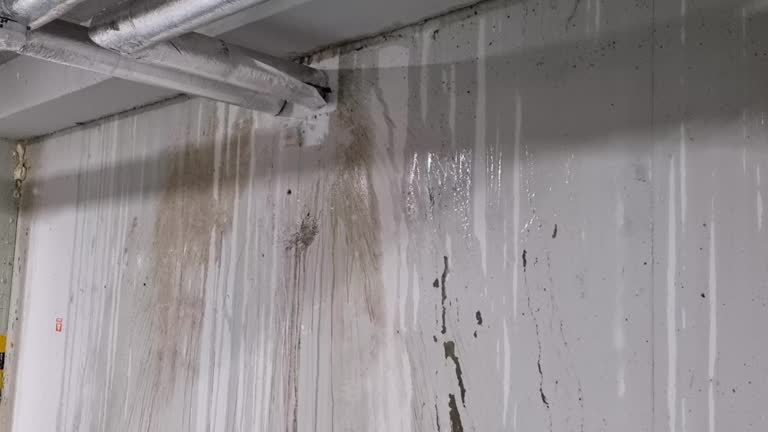
You may not always see the roof leak itself.
Water can travel along rafters, insulation, drywall, and other building materials before appearing somewhere inside your home. This means the ceiling stain you see in the bedroom may not be directly underneath the actual roof opening.
Look for signs such as:
- Brown or yellow ceiling stains.
- Dripping or damp ceilings.
- Peeling or bubbling paint.
- Wet attic insulation.
- Damp drywall.
- Water around windows or upper walls.
- Musty odors.
- Damp flooring near affected areas.
Pay special attention after heavy rain.
A small stain that becomes darker or larger after every storm could indicate an ongoing roofing problem.
Do not assume the problem has disappeared simply because the dripping stops when the rain stops.
The roof may still have an opening that allows water to enter during the next storm.
2. Protect Your Family From Electrical Hazards
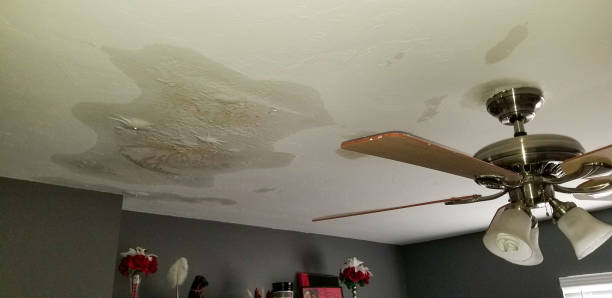
One of the most important steps after discovering water damage from a leaking roof is making sure everyone stays safe.
Water and electricity are a dangerous combination.
If water is dripping near:
- Light fixtures.
- Ceiling fans.
- Electrical outlets.
- Wiring.
- Appliances.
- Electrical panels.
avoid touching electrical equipment while standing in or near water.
Do not attempt to remove a light fixture or electrical component yourself.
If you can safely move furniture and belongings away from the affected area without entering an unsafe space, do so. Otherwise, leave the area alone until it can be assessed safely.
You should also watch for signs that the ceiling itself may be compromised.
A ceiling that is sagging, bulging, or holding a significant amount of water can become a safety concern.
If you see a severely damaged or sagging ceiling, keep people away from the area and seek professional assistance.
3. Stop Additional Water From Damaging Your Belongings
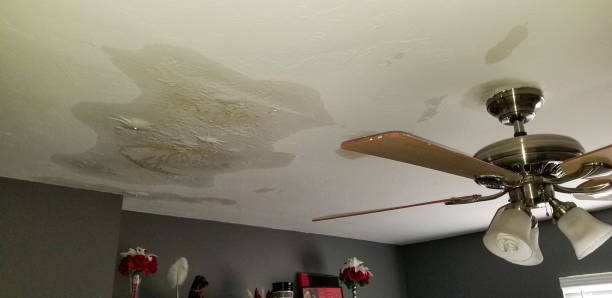
Once everyone is safe, focus on protecting your belongings.
Move furniture, electronics, rugs, boxes, and other valuables away from the affected area when it is safe to do so.
You can also place waterproof containers beneath active drips to catch water.
However, avoid climbing onto the roof yourself.
A wet roof can be extremely slippery, and trying to make emergency repairs during bad weather can create a serious fall hazard.
Instead, contact a qualified roofing professional to address the source of the leak.
Remember that stopping the roof leak is only one part of the problem.
If water has already entered your home, the affected interior materials may still need to be dried and restored.
This is especially important when water has entered insulation, drywall, flooring, or other porous materials.
4. Document the Damage Before Cleanup
If you have water damage from a leaking roof, document what you see before moving or removing damaged items whenever it is safe to do so.
Take clear photographs and videos of:
- Ceiling stains.
- Active leaks.
- Wet drywall.
- Damaged flooring.
- Wet insulation.
- Damaged furniture.
- Affected personal belongings.
- Areas where water appears to have traveled.
Try to capture both close-up images and wider photos showing the affected room.
If you have homeowners insurance, this documentation may be useful when discussing the loss with your insurance company.
Keep receipts for emergency expenses and restoration services as well.
Your insurance coverage depends on the terms of your individual policy, including the cause of the loss and any applicable exclusions.
Do not assume that every roof leak or resulting water loss is automatically covered.
Contact your insurance company if you believe the damage may qualify for a claim.
Does Home Insurance Cover Water Damage? Read To Find Out
5. Get the Moisture Out of the House
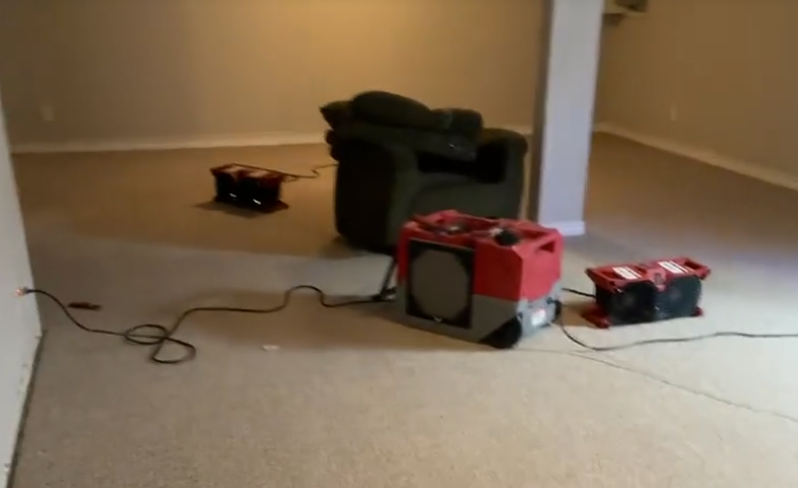
Stopping the leak does not automatically eliminate the water damage.
Once water enters your home, moisture can remain inside building materials even after the visible dripping stops.
This can happen with:
- Drywall.
- Insulation.
- Wood framing.
- Flooring.
- Carpet padding.
- Cabinets.
- Ceilings.
A towel can remove water from a floor.
It cannot remove moisture trapped inside a wall.
That is why professional water damage restoration may be necessary after a significant roof leak.
Restoration professionals can use moisture detection equipment to identify affected materials and determine where additional drying is needed.
Depending on the situation, drying may involve:
- Water extraction.
- Air movers.
- Dehumidification.
- Moisture monitoring.
- Removal of severely damaged materials.
- Cleaning and treatment.
If you’re already seeing signs of water damage from a leaking roof, call PuroClean of Peoria at (309) 431-4003 for a fast response.
6. Check for Problems That Develop After the Leak
A roof leak can create problems that are not immediately obvious.
Even after the roof has been repaired and the visible water is gone, you should continue watching the affected areas.
Look for:
- Returning stains.
- Musty odors.
- Peeling paint.
- Swollen drywall.
- Warped flooring.
- Damp insulation.
- Mold growth.
- Persistent humidity.
These signs can indicate that moisture remains somewhere in the structure.
Mold is another concern when materials stay damp.
The U.S. Environmental Protection Agency recommends drying wet or damp materials as quickly as possible, generally within 24 to 48 hours when possible, to help reduce the potential for mold growth.
That does not mean every roof leak will result in mold.
It means homeowners should not ignore moisture after water enters the home.
Why Roof Leaks Can Cause More Damage Than You Expect

A roof leak may look small from inside the house.
The damage underneath can be much larger.
Water can travel through a building before you ever notice it. For example, rainwater can enter through a damaged area of roofing, move through attic insulation, travel along framing, and eventually reach a ceiling.
By the time you see a stain, moisture may already be present in several materials.
This is one reason water damage from a leaking roof should be addressed as soon as possible.
A small ceiling stain does not necessarily mean you have a major restoration problem.
But it does mean you have a reason to investigate.
People also read: Water Damage Restoration in Peoria: What to Do in the First 24 Hours
What Causes Roof Leaks?
Understanding common causes can help homeowners recognize potential problems before major water damage occurs.
Roof leaks can result from:
Damaged or Missing Shingles
Strong winds and severe weather can loosen, crack, or remove shingles.
Even a small opening can allow rainwater to enter.
Damaged Flashing
Flashing helps direct water away from vulnerable areas around chimneys, vents, skylights, and other roof penetrations.
Damaged or improperly sealed flashing can create opportunities for water intrusion.
Clogged or Damaged Gutters
Gutters help direct rainwater away from the roof and foundation.
When gutters become clogged, water may not drain properly and can contribute to water intrusion around vulnerable areas.
Aging Roofing Materials
Roofing materials deteriorate over time.
Cracks, gaps, worn surfaces, and failed seals can eventually allow water to enter.
Storm Damage
Heavy rain, strong winds, hail, and fallen branches can damage roofing materials and create openings.
A roof may appear intact from the ground while still having areas that allow water inside.
How to Tell If Roof Water Damage Is Getting Worse
The progression of water damage from a leaking roof is not always dramatic.
Sometimes it happens gradually.
You may notice that:
- A ceiling stain is getting larger.
- New stains appear in nearby areas.
- The ceiling feels soft.
- Paint begins bubbling.
- A musty smell develops.
- Flooring starts to warp.
- Water appears in another room.
- The problem returns after each rainfall.
These changes suggest that moisture may still be entering the home or that previously absorbed moisture has not been properly removed.
Do not wait for a ceiling to collapse before taking action.
Early attention can help identify the problem while the affected area is still manageable.
Should You Try to Dry Roof Leak Damage Yourself?
For a very small amount of clean water on a hard, accessible surface, basic cleanup may be possible.
But larger roof leaks can be more complicated.
DIY cleanup becomes less appropriate when:
- Drywall has become wet.
- Insulation is saturated.
- Water has entered the ceiling.
- Multiple rooms are affected.
- Carpet padding is wet.
- Water has reached electrical components.
- You cannot locate the full extent of the moisture.
- The ceiling is sagging.
- The water has been present for an extended period.
Household fans may move air around a room, but they cannot necessarily dry moisture trapped inside walls or other materials.
Professional restoration teams can evaluate the affected areas and determine whether specialized drying equipment is needed.
Professional Water Damage Restoration After a Roof Leak
Fixing the roof addresses the source of the water.
It does not automatically repair the damage the water has already caused inside your home.
PuroClean of Peoria helps homeowners respond to water damage caused by roof leaks and other unexpected water events.
Our restoration process can include assessing affected areas, extracting water, locating hidden moisture, setting up professional drying equipment, and monitoring the affected materials.
This approach helps address both visible and hidden moisture.
Fast action also gives you a better opportunity to limit additional damage to your home and belongings.
If a storm damages your roof and water enters your Peoria home, call PuroClean of Peoria at (309) 431-4003 for professional water damage restoration assistance.
Frequently Asked Questions
1. What should I do first if my roof is leaking?
First, keep everyone away from unsafe areas, especially where water is near electrical components or a sagging ceiling. If it is safe, protect belongings from additional water, document the damage, and contact a qualified roofing professional and restoration company as needed.
2. Can a small roof leak cause major water damage?
Yes. Even a small opening can allow repeated water intrusion during rainfall. Water can travel through insulation, drywall, ceilings, and framing before becoming visible.
3. How long does it take for roof leak damage to dry?
Drying time varies depending on how much water entered the home, which materials were affected, indoor humidity, airflow, and how long the materials remained wet. Some situations may take several days or longer.
4. Can roof leak damage cause mold?
Yes. Persistent moisture can create conditions that support mold growth. Drying affected materials quickly can help reduce the potential for mold-related problems.
5. Does homeowners insurance cover water damage from a leaking roof?
Coverage depends on the cause of the leak and the terms of your individual policy. Some sudden and accidental losses may be covered, while long-term deterioration, maintenance issues, or certain other causes may be excluded. Contact your insurance company to determine how your policy applies.
Final Thoughts
Water damage from a leaking roof can start with something as simple as a small ceiling stain or a few drops of water.
But ignoring that warning can allow moisture to spread into areas you cannot see.
If you discover a roof leak, focus on safety first. Protect your belongings when possible, document the damage, address the roofing problem, and make sure any moisture inside the home is properly removed and dried.
Do not assume that the damage is over simply because the rain has stopped.
If your Peoria home has water damage after a roof leak, PuroClean of Peoria can help assess the affected areas and begin the restoration process.