 PuroClean of Plantation
Table of Contents
Emergency water extraction services are the essential first step in any professional water damage restoration process. The moment standing water is removed from your property, the less structural damage occurs and the lower your risk of mold growth. But extraction is only one part of a multi-stage process that most property owners do not fully understand until they are in the middle of a water emergency. This article explains in detail what emergency water extraction services involve, what to realistically expect from the process, what questions to ask before you hire anyone, and why the decisions you make in the first few hours after a water event define the outcome of your entire restoration.
What Emergency Water Extraction Services Actually Are
When most people picture water damage cleanup, they picture someone mopping up a puddle. The reality of professional emergency water extraction services is fundamentally different.
Emergency water extraction is a systematic, equipment-intensive process of removing standing water and surface moisture from a property using industrial-grade tools and trained technicians. It is the triage phase of property restoration ; the equivalent of stopping a wound from bleeding before treatment can begin.
The goal is not just to remove the water you can see. The goal is to remove water from all the places it has already traveled ; under flooring, inside wall cavities, beneath baseboards, inside air ducts, and in crawl spaces that would take weeks to dry on their own without intervention.
This process is governed by the IICRC S500 Standard for Professional Water Damage Restoration, which outlines the protocols, equipment specifications, and moisture verification requirements that certified teams must follow. Anything short of that standard is guesswork.
Emergency water extraction services are not a luxury reserved for severe floods. Any water intrusion event ; a burst pipe, an overflowing appliance, a slow leak that went undetected for days, or storm-driven water entering through a compromised roof or window ; benefits from professional extraction. The question is never “is it bad enough to call someone?” The question is always “how much more expensive will this become if I wait?”
In Plantation, Davie, Hollywood, Fort Lauderdale, and all of Broward County, PuroClean of Plantation provides 24/7 emergency water extraction services. Their number is (954) 477-7007. Call the moment you discover a problem.
Truth 1 ; Every Hour of Delay Has a Real Financial Cost
This is the truth that carries the most financial weight, and it is the one most homeowners discover only after they have already paid a price for not knowing it.
Water is not patient. From the moment it enters your structure, it is actively moving in every direction it can find. It wicks upward through drywall via capillary action. It spreads laterally through concrete and grout. It soaks downward through floor layers into subflooring and structural members below. It finds gaps around pipes, under doorframes, and along the edges of rooms you may not have thought to check.
Restoration industry data paints a clear picture of what delay costs. An apartment complex in Miami that initiated professional extraction within four hours of a major pipe burst saved an estimated $150,000 in material replacement and mold remediation costs compared to neighboring units where extraction was delayed beyond 24 hours.
The gap between acting in hour one and acting in hour 24 is not measured in inconvenience. It is measured in tens of thousands of dollars and weeks of additional restoration time.
Here is what happens financially at each stage:
First hour to 6 hours: Water is still largely on or near the surface. Extraction is fast, drying is straightforward, and material losses are minimal. This is the best possible scenario for cost control.
6 to 24 hours: Water has now penetrated walls, subfloors, and structural materials. Extraction still works but is now combined with more complex drying. Some materials may need to be removed.
24 to 48 hours: Mold risk is active. Structural materials have absorbed significant moisture. The scope of the job has expanded considerably. Insurance adjusters begin scrutinizing the timeline.
Beyond 48 hours: Mold may be visible or forming behind surfaces. Structural materials may be non-salvageable. What was once a restoration project has now become partial reconstruction. The cost difference from hour one can be exponential.
Emergency water extraction services exist precisely to stop this clock.
Truth 2 ; Not All Extraction Equipment Delivers the Same Results
One of the most important distinctions in emergency water extraction services is the quality and type of equipment being used. This is not a minor detail. It is the variable that most directly determines whether your property is actually restored or just appears to be.
A standard wet-dry vacuum from a home improvement store holds between 5 and 15 gallons. It is fine for a small appliance spill. For anything involving significant water intrusion, it is categorically insufficient.
Here is what professional emergency water extraction services use:
Truck-mounted extraction units: These are the workhorses of professional water extraction. Mounted in a service van and powered by the vehicle’s engine, truck-mount units generate vacuum power far beyond what any portable unit can produce. They can remove hundreds of gallons of water rapidly and continuously from large areas, including carpets, tile floors, hardwood, and concrete.
Portable extraction units: Used in areas that truck-mounted units cannot access ; upper floors, tight hallways, bathrooms, and closets. Professional-grade portables are still far more powerful than anything available at retail.
Submersible pumps: When standing water exceeds a few inches, submersible pumps handle the bulk removal before extraction equipment takes over for the remaining surface and embedded moisture.
Injectidry systems and floor mat systems: This specialized equipment is designed to pull moisture from underneath hardwood floors without requiring the floor to be removed. Mats are placed directly on the surface, and a low-pressure vacuum system draws moisture up and out through the wood. In many cases, this technology saves floors that would otherwise have to be completely replaced ; a cost difference that can easily reach $5,000 to $15,000 depending on the area involved.
Thermal imaging cameras and calibrated moisture meters: These tools are used both before and throughout extraction to identify every pocket of moisture present in the structure. Without them, technicians are guessing. With them, they know exactly where water has traveled and can confirm precisely when the job is complete.
The difference between professional equipment and retail equipment is not a matter of preference. It is the difference between a structure that is verified dry and a structure that looks dry while hidden moisture continues to damage it from the inside.
Truth 3 ; Water Extraction Is Not the End of the Job

This is the misunderstanding that leads more homeowners into mold problems than almost anything else.
Emergency water extraction removes standing water and surface moisture. But by the time water has entered your property and spread through its materials, a significant amount of that water is no longer on the surface. It is inside your building materials. And it needs to be removed through a separate, equally important process called structural drying.
Here is the science behind why this matters:
When water soaks into drywall, wood framing, carpet padding, or insulation, it bonds with the material at a molecular level. Vacuuming and pumping the surface water away does not reach this embedded moisture. Only controlled airflow combined with deliberate humidity management can pull it out.
How structural drying works:
Commercial air movers ; industrial fans specifically designed for restoration work ; are positioned at precise angles throughout the affected space to create rapid, directed airflow across wet surfaces. This accelerates evaporation from the material’s surface.
As moisture evaporates, it enters the air as water vapor. Without dehumidification, it simply condenses back onto cooler surfaces elsewhere in the structure, spreading the problem. Commercial-grade dehumidifiers pull this water vapor out of the air and collect it, lowering the relative humidity of the space and creating the conditions for faster, deeper drying.
How long does this actually take?
Carpet requires 3 to 5 days of professional drying. Moderately wet drywall takes 1 to 3 days. Hardwood flooring, concrete, plaster, and wood framing can require 7 to 10 days or more depending on the depth of saturation. Extensive flooding situations, particularly those common to South Florida storm events, can require 1 to 2 full weeks of active structural drying.
Anyone who tells you water damage will be “completely done” in 24 to 48 hours regardless of the scope is not being honest with you.
Moisture verification is non-negotiable:
Certified technicians return to your property daily to take moisture readings at the documented map points. Those readings are logged and compared against target moisture content levels specified by IICRC standards. Equipment is never removed until all monitored points have reached their target ; typically below 15% moisture content for most building materials.
This is why you should always ask any company you consider hiring: “How do you verify the structure is fully dry before closing the job?” If they cannot answer that question clearly, keep looking.
Truth 4 ; DIY Water Extraction Can Cause More Damage Than It Prevents
This is a truth that sounds counterintuitive, but is backed by consistent real-world experience in the restoration industry.
The instinct to act immediately after a water event is correct. The instinct to grab every towel and fan in the house is understandable. But when those DIY efforts replace professional emergency water extraction services rather than bridge the gap while waiting for them, the consequences can be significant.
Why standard fans make Category 2 and 3 situations worse:
If the water in your property contains contaminants ; gray or black water from a sewer backup, appliance overflow, or flooding ; running household fans disperses contaminated airborne particles throughout your home. You are not drying the space. You are spreading the problem into every room the airflow reaches. Professional air movers used in contaminated situations are HEPA-filtered and positioned in controlled patterns to prevent cross-contamination.
Why wet-vacs leave behind the moisture that matters most:
A consumer wet-dry vacuum removes surface water. It does not touch the moisture inside your drywall, the water beneath your hardwood floor, or the saturation inside your insulation. Without thermal imaging and moisture meters, you have no way of knowing how far the water has actually traveled. That hidden moisture is where mold begins.
Why moving wet materials incorrectly spreads damage:
Wet carpet, saturated drywall, and soggy insulation all contain absorbed water that drips and transfers to every dry surface they contact during removal. Without understanding containment zones and the correct technique for handling water-damaged materials, well-intentioned removal efforts can contaminate dry areas that would otherwise have been salvageable.
Why rushed drying can damage materials:
Using industrial-strength borrowed equipment without proper training can accelerate surface drying faster than moisture can migrate out from the interior of a material. The result is cracked, warped, or split wood, and drywall that appears dry at the surface while remaining damp inside. This creates the conditions for behind-the-wall mold growth that does not become apparent for weeks.
The safest and most cost-effective approach is always to call certified emergency water extraction services first, take the safety steps outlined above, and let the professionals handle the rest.
Truth 5 ; The Company You Call Shapes Every Outcome That Follows

The decision of which emergency water extraction services company you call is not a minor choice. It shapes every phase of your restoration: how thoroughly the water is removed, how accurately the drying is monitored, how well your claim is supported, and how completely your property is returned to its pre-loss condition.
Here is exactly what to look for before you commit:
IICRC certification for all technicians: This is non-negotiable. IICRC certification means the technician has been trained in water damage restoration science ; psychrometry, moisture migration, material classification, and drying verification. It is the professional standard that separates restoration from guesswork.
Verified 24/7 emergency dispatch: Not “available by appointment.” Actual emergency dispatch, staffed and ready to roll at any hour. A company that cannot get to you until business hours tomorrow is not equipped to handle water damage emergencies.
Comprehensive written documentation: Every stage of a professional extraction and drying job should produce documentation ; moisture maps, daily drying logs, equipment placement records, photographic evidence, and a final clearance report. This documentation supports your insurance claim and protects you if any dispute arises.
Direct insurance coordination: A restoration company that works proactively with your insurance company removes a significant burden from your plate during an already stressful event. They know what documentation adjusters require, what language to use, and how to present the scope of work in a way that supports the fastest possible claim resolution.
Transparent communication throughout: You should always know what phase of the process you are in, what the moisture readings show, when equipment will be removed, and what comes next. A company that cannot explain its own process clearly is not a company you want in your home.
PuroClean of Plantation meets every one of these standards, and their Certified Priority Response (CPR) Program takes it a step further. The CPR Program is specifically designed to benefit insurance agents, property managers, and property owners who need consistent, certified, cost-effective restoration with pre-approved scope protocols and guaranteed 24/7 access. It reduces claim costs, eliminates scope disputes, and ensures a documented, repeatable restoration process every time.
You can reach PuroClean of Plantation through their contact page or get directions to their office at 200 Torchwood Ave.
What to Expect Step by Step When PuroClean of Plantation Arrives
Understanding the process before it begins removes a lot of the anxiety that comes with a water emergency. Here is exactly what happens from the moment PuroClean of Plantation pulls up to your property:
Arrival and initial walk-through: The team begins with an immediate walk-through of all affected areas. They are looking for obvious damage, safety hazards (active water, electrical risks, structural instability), and the boundaries of the affected zone.
Moisture mapping with thermal imaging and moisture meters: Before any equipment is deployed, technicians document baseline moisture levels at marked points throughout the structure. Thermal imaging cameras identify temperature differentials that indicate hidden moisture behind walls, under floors, and inside cabinets. This map becomes the measurement baseline for the entire job.
Category assessment and safety protocol: The water source is classified (Category 1, 2, or 3). If gray or black water is involved, full containment protocols are initiated ; including physical barriers, negative air pressure machines, and PPE requirements for everyone in the space.
Water extraction: Truck-mounted and portable extraction equipment begins removing all accessible standing and surface water. Specialty floor mat systems are deployed where appropriate to pull moisture from beneath hardwood or laminate without demolition. This phase is thorough and systematic, not rushed.
Initial antimicrobial application: Once surface water is removed, EPA-registered antimicrobial agents are applied to prevent mold colonization in the now-exposed wet materials.
Structural drying equipment placement: Commercial air movers and dehumidifiers are placed throughout the affected area based on the moisture map. Equipment placement is strategic ; not random. Airflow patterns are designed to maximize evaporation from all moisture-bearing surfaces simultaneously.
Daily monitoring and drying logs: Technicians return each day to take moisture readings at every mapped point. Readings are logged, compared against previous days, and equipment is adjusted as needed. You are updated on progress throughout.
Final clearance verification: Once all moisture levels reach their target content as defined by IICRC standards, a final clearance check is performed. Equipment is removed only after verified clearance. A written clearance report is provided for your insurance file.
Restoration planning: If materials need to be replaced ; drywall, flooring, insulation, cabinetry ; the restoration team helps you understand what is needed and can often handle or coordinate that work directly.
For additional detail on water damage in South Florida, read PuroClean of Plantation’s Water Damage FAQs and their water damage restoration near me guide.
Materials That Get Hit Hardest and Why They Need Specialized Attention
One of the most educational things a homeowner can understand about emergency water extraction services is how differently various materials respond to water. Not all water damage is equal, and not all materials dry the same way.
Drywall: Drywall absorbs water rapidly and loses structural integrity quickly once saturated. Wet drywall that has been saturated for more than 24 to 48 hours will often need to be removed entirely rather than dried in place. This is because drywall holds moisture deep inside its gypsum core ; and even when the surface feels dry, the interior remains damp long enough to support mold growth. The cost of drywall replacement seems significant in the moment, but it is far less expensive than mold remediation weeks later.
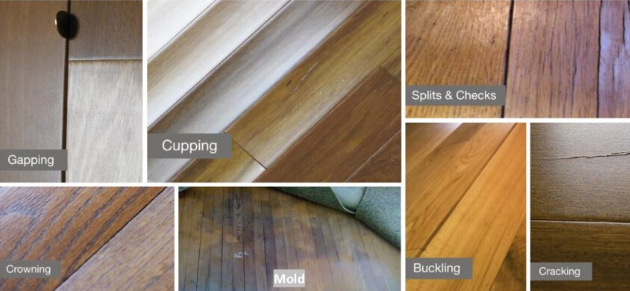
Hardwood and laminate flooring: Wood absorbs water through its grain, causing swelling, cupping, and buckling. Hardwood flooring that is addressed within the first few hours using professional injectidry floor mat systems can often be dried and saved. Hardwood that has been wet for 24 hours or longer has a much lower probability of being salvageable without warping. This is one area where calling for emergency water extraction services quickly has one of the most direct financial impacts.
Carpet and carpet padding: Carpet can sometimes be dried in place with proper professional equipment if the water was Category 1 and extraction happened promptly. Carpet padding, however, almost always needs to be replaced because it holds enormous amounts of water and provides the perfect environment for mold growth. Attempting to dry saturated padding in place is one of the most common causes of hidden mold problems after a water event.
Insulation: Once batt insulation or blown-in insulation becomes saturated, it must be removed. It cannot be dried in place effectively, and wet insulation is one of the fastest pathways to widespread mold growth inside a wall cavity.
Concrete and tile: While concrete and tile themselves do not absorb much water, the grout lines between tiles and the material beneath the tile absolutely do. Water sitting on a tile floor may look contained, but it is actively migrating beneath the tile into the adhesive layer, the underlayment, and potentially the subfloor below. A professional extraction team will assess what is beneath the surface before determining that the area is clear.
How quickly should I call after discovering water damage?
Immediately. Not after you have cleaned up a bit, not after you have called your insurance company, not after you have done some research. The moment you discover standing water or significant moisture, your first call should be to a certified emergency water extraction services provider. In Plantation and across Broward County, call PuroClean of Plantation at (954) 477-7007.
How long will the extraction process take?
The extraction phase itself ; removing standing and surface water ; typically takes between one and four hours depending on the volume of water and the size of the affected area. The complete drying process that follows takes 3 to 10 days for most residential situations, and up to two weeks or more for significant flooding events.
Will I need to leave my home during the process?
Not always. For Category 1 water damage, most homeowners can remain in the unaffected areas of their home during the restoration process. For Category 2 or 3 situations, especially those involving sewage or significant contamination, temporary relocation may be recommended for health and safety reasons. Your restoration team will advise you based on the specific assessment.
Does homeowner’s insurance cover emergency water extraction?
For sudden and accidental water damage from covered perils ; burst pipes, appliance overflows, storm intrusion ; yes, most standard homeowner’s policies include coverage for emergency water extraction services as part of the overall restoration claim. Gradual leaks and flood damage from rising water bodies typically require separate coverage. Your restoration company can help you understand your coverage and communicate with your insurer.
Who Needs Emergency Water Extraction Services in South Florida
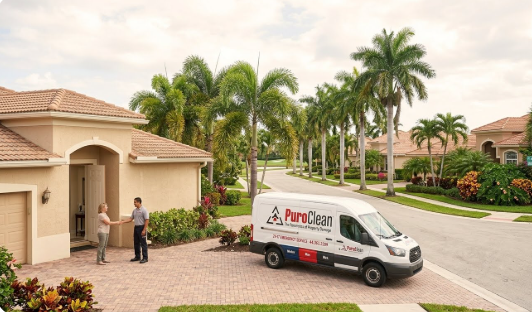
Emergency water extraction services are not exclusively for homeowners dealing with catastrophic flooding. The need is broader and more common than most people realize:
Homeowners dealing with burst pipes, roof leaks, appliance failures, storm-driven water entry, bathroom overflows, or any situation where water has entered an area it should not be.
Commercial property owners who cannot afford extended operational downtime and need a certified, documented restoration process that meets insurance and regulatory requirements.
Property managers overseeing multi-unit residential or commercial buildings where a single water event in one unit can affect multiple tenants. Fast, documented extraction limits liability and protects existing tenants.
Insurance agents and adjusters who need a restoration partner with certified protocols, comprehensive documentation, and pre-approved scope coordination. PuroClean’s CPR Program was built for this relationship.
Businesses of all sizes ; from small retail operations to large commercial facilities in Fort Lauderdale, Plantation, Davie, Dania Beach, and surrounding communities.
PuroClean of Plantation serves every one of these groups with the same standard: fast response, certified technicians, thorough documentation, and compassionate service. Follow them on Facebook, Instagram, LinkedIn, and X (Twitter) for storm preparedness content, restoration education, and community updates.
Conclusion
Here is the thing about water damage that nobody tells you until it is too late: the outcome is almost entirely determined in the first few hours. Not by the storm. Not by the pipe that burst. Not by the appliance that failed. The outcome is determined by how fast you called and who you called.
Every hour you wait, water wins. It spreads further, it goes deeper, and it costs more to undo.
You now have the knowledge. You understand what emergency water extraction services actually involve, why the equipment matters, why extraction alone is not the finish line, and why the company you choose changes everything that follows.
Do not let another minute pass. If you have any suspicion of water damage in your Plantation, FL home or commercial property ; whether it is a wet wall, a warped floor, a musty smell, or an active intrusion ; call PuroClean of Plantation right now at:
Because the only thing more expensive than calling a certified restoration team is wishing you had called one sooner.

 PuroClean of Plantation