Mold and mold growth are common occurrences in many homes and properties. So naturally, people have been trying to find new ways to keep mold at bay. In the past few decades, people have been using air purifiers to get rid of mold spores and allergens. So the question is, are all air purifiers efficient at removing mold from the air, can air purifiers truly get rid of mold in a home, or are air purifiers removing mold just an old wives’ tale? Keep reading and find out below with us as we tackle this question.
What Are Mold Spores?
Mold is an essential part of nature and can be found almost everywhere, from the forest and the lakes, to your neighborhoods and homes. Mold spores are airborne microscopic particles that act as the “seeds” which mold needs to spread. While mold spores are also present in homes, the visible mold grows only when it has the right conditions. Mold spores require a source of food (such as walls), moisture, and warm temperatures. Unfortunately, most homes, especially in New Jersey, meet those requirements, causing the potential for health risks.
How Does Mold Affect Our Health?
Some people are more sensitive to mold exposure than others. The most affected individuals are those who are allergic to mold, have asthma, or other predisposed respiratory issues. The symptoms of an allergic reaction to mold include sneezing; itchy eyes, nose, and throat; watery eyes; redness of the eyes; runny nose, coughs, and skin rashes. Even if you are not allergic to mold, long-term exposure may cause several problems, such as irritant reactions (headache, skin irritation, eye irritation, and coughs). It would help if you minimized the mold in your home to avoid such health hazards.
What Do Air Purifiers Do?
There are several air purifiers on the market, but those that are the most effective at removing mold spores from indoor air are high-efficiency particulate air (HEPA) air purifiers. HEPA filters capture 99.97% of 0.3-micron particles, including dust and other allergens, and an even higher percentage of larger particles. Since mold spores are usually about 1-20 microns, the HEPA filter is perfect for extracting mold spores from the air. However, you should not use air purifiers to treat the underlying cause of a mold problem.

What Air Purifiers Don’t Do
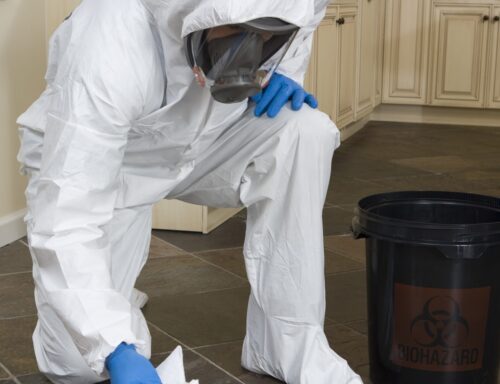
Although HEPA air purifiers can efficiently filter mold spores out of the air, you need to remove the mold source first if you have a mold problem in your home. Air purifiers can capture airborne mold spores, but they cannot remove the mold growth that releases those spores. It’s best to call a mold restoration company, like PuroClean of Princeton, to get rid of a mold problem. These companies use specialized equipment and techniques to detect and remove mold growth and dry and restore affected surfaces.
The Bottom Line
If you are allergic or sensitive to mold spores, air purifiers can be a great first step. Air Purifiers can filter out mold spores and other allergens from the air. Also, air purifiers can help prevent mold growth by stopping mold spores from spreading. However, air purifiers won’t kill the mold that is already growing on surfaces. Remove the mold and fix the moisture problem to get rid of the mold infestation.
Contact PuroClean of Princeton Today For Professional Mold Removal Services
It is not recommended that you treat large outbreaks of mold by yourself. Call PuroClean of Princeton, NJ at (609) 436-5959 as soon as you notice mold. Our IICRC-certified mold professionals can remediate your mold issue and help you avoid exposure to detrimental health issues associated with mold growth.