 PuroClean of San Clemente
Recovering from a fire is rarely straightforward. The moment the flames are extinguished, homeowners are left wondering how long it will take to return their space to normal again. The fire restoration timeline often varies more than people expect because every fire leaves behind a different combination of smoke, soot, water, and structural issues. In this blog, we walk through each phase clearly so you understand what happens at every stage and what influences the overall duration.
What Determines How Long Fire Restoration Takes?
Several factors influence how long professionals need to complete the full fire restoration timeline. Different types of fires leave behind different forms of damage; some leave dry soot that cleans quickly, while others create sticky residue that clings to every surface. The amount of water used during firefighting also plays a major role because soaked materials must dry fully before repair can begin.
In some cases, the home’s layout, age, and building materials impact how quickly each area can be cleaned, stabilized, or reconstructed. Together, these variables shape a timeline that can range from days to several months.
Breakdown of the Fire Restoration Timeline
Every restoration project moves through a set of stages, each with its own purpose and time requirements. Some steps progress quickly, while others depend on moisture levels, material stability, or insurance approvals before moving forward.
Emergency Response and Initial Inspection
The first step begins when restoration teams arrive to assess the condition of the home. They review safety risks, document visible damage, and determine which areas require immediate attention. If you’re unsure what steps matter most before professionals arrive, you can explore more about what to do immediately after a fire in our blog.
This initial inspection shapes the entire plan, helping specialists understand where smoke traveled, which surfaces absorbed residue, and whether structural concerns exist. Most assessments happen within hours of being contacted and typically take a few hours to complete.
Securing the Property and Preventing Further Damage
After inspection, the next priority is preventing additional harm. Crews may board up broken windows, reinforce weakened doors, or tarp exposed sections of the roof. These measures shield the home from weather, animals, and trespassers while stabilizing the environment for upcoming repairs.
Depending on the extent of the openings and necessary adjustments, this stage usually takes a day or less, though larger homes may require more time to fully secure. This step also creates a safer starting point for the fire damage repair process.
Water Extraction and Drying (After Firefighting Efforts)
Water used to extinguish the fire continues affecting the home long after the flames are out. Wet drywall, flooring, insulation, and belongings hold moisture that can cause further deterioration. At this stage, restoration teams begin water extraction using pumps, vacuums, and dehumidifiers.
The length of this step influences the entire fire restoration timeline, as drying must reach acceptable moisture levels before reconstruction starts. Light moisture may take a day or two to clear, while heavily saturated materials can require a week or more.
Soot and Smoke Removal
Once moisture stabilization is underway, professionals turn their attention to cleaning soot and smoke deposits. Different fire types create different residues; some powders wipe away easily, while others smear or seep into porous materials. Removing these layers involves specialized tools,
HEPA vacuums, sponges, and negative air systems that prevent particles from spreading. Because this step often dictates how fast the fire damage repair process can move forward, it may last anywhere from a couple of days to more than a week.
Odor Neutralization and Air Quality Treatment
Even after visible soot is cleared, odors may linger deep within fabrics, walls, and air pathways. This stage focuses on restoring breathable indoor air through deodorizing techniques such as ozone treatments, thermal fogging, and hydroxyl machines. Guidance from the EPA notes that smoke can continue affecting indoor air quality long after a fire, which is why proper ventilation and odor control are essential.
The process can continue for several days, depending on how deeply the smell has penetrated the home. Stabilizing air quality is crucial for comfort and for keeping the fire restoration timeline on track.
Structural Repairs and Material Replacement
This stage often varies the most. When the fire damage repair process reaches reconstruction, the work may involve framing, replacing drywall, rebuilding floors, repairing wiring, or restoring the roof.
The scale of this step ranges widely; some homes need minimal patchwork, while others require extensive rebuilding. Because this phase involves coordination with contractors, material availability, and inspection schedules, it can last from a few weeks to several months.
Final Inspection and Home Readiness
When repairs are complete, a final walkthrough ensures the home meets safety expectations. Inspectors verify that structural work is sound, repaired areas comply with codes, and no remaining hazards exist. This final review typically takes a few hours, though scheduling may add brief delays. Once cleared, the home is considered ready for reoccupation, marking the official end of the fire restoration timeline.
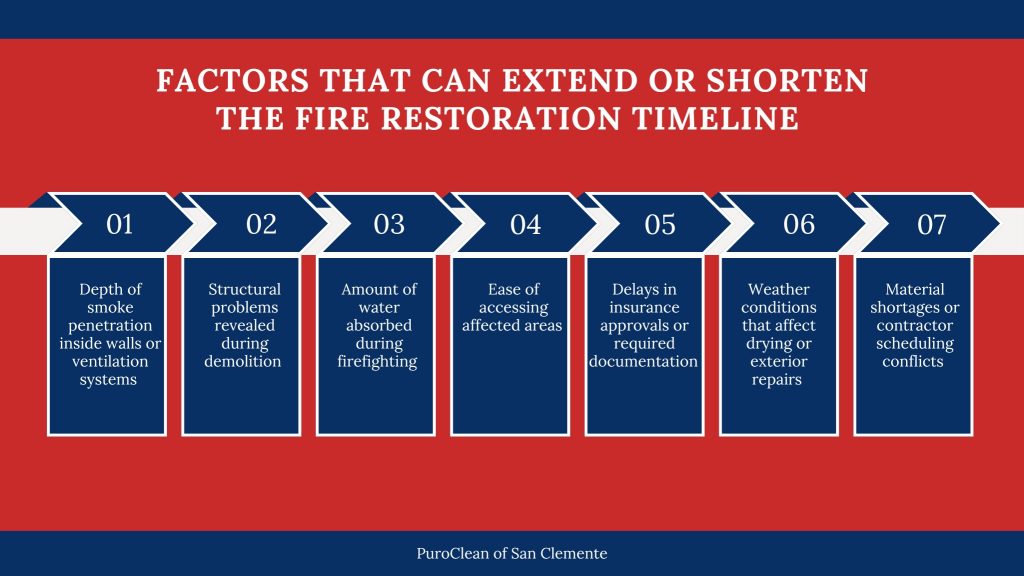
Factors That Can Extend or Shorten the Timeline
Restoration speed varies because every home responds differently to fire, smoke, and water exposure. Some issues appear immediately, while others only become visible once work begins. These variables can speed up or slow down the fire damage repair process, depending on their severity.
Key factors that influence the timeline:
- Depth of smoke penetration inside walls or ventilation systems
- Structural problems revealed during demolition
- Amount of water absorbed during firefighting
- Ease of accessing affected areas
- Delays in insurance approvals or required documentation
- Weather conditions that affect drying or exterior repairs
- Material shortages or contractor scheduling conflicts
These elements play a major role in how efficiently each stage progresses. When managed early, they help keep the overall restoration timeline on track.
Average Timeline Range for Different Levels of Fire Damage
Mild damage often includes light soot, limited smoke presence, and minimal water exposure. In these situations, the timeline can be as short as a few days to two weeks, as repairs focus mostly on cleaning and deodorization within a relatively simple fire restoration timeline.
Moderate damage may involve multiple rooms, deeper soot penetration, and noticeable odor. These cases typically need several weeks for cleaning, drying, and partial reconstruction. Additional tasks, such as HVAC cleaning, can extend the fire damage repair process.
Severe damage affects structural components, load-bearing walls, and large sections of the home. Here, the fire damage repair process requires full reconstruction, which may take several months from planning to completion. These projects involve collaboration with engineers, contractors, and inspectors to ensure safety and durability.
Conclusion
Every fire leaves behind a different mix of damage, which means no two timelines look exactly alike. Understanding the steps from inspection to final approval helps homeowners prepare for what comes next and gives them a clearer sense of how long the journey may take. With the right team guiding each phase of the fire restoration timeline, the home gradually moves toward safety, stability, and comfort again.
FAQs
Q1. What affects the length of a fire restoration timeline the most?
A: The severity of damage, water exposure, and how deeply smoke traveled through the home influence the duration more than anything else.
Q2. What parts of my home take the longest during the fire damage repair process?
A: Structural repairs, framing, and rebuilding areas affected by high heat or deep soot usually require the most time.
Q3. What should I do if restoration is taking longer than expected?
A: Ask your restoration team for an updated schedule; they can explain delays, next steps, and any adjustments needed to complete the work safely.
 PuroClean of San Clemente