 PuroClean of Lansdale
Table of Contents
How to dry wet carpet fast at home, use a wet-dry vacuum to extract as much water as possible, then set up fans for maximum airflow, run a dehumidifier, and pull back the carpet to inspect and remove wet padding. If the carpet has been wet for more than 24 to 48 hours, or if the water came from a contaminated source, stop DIY efforts and call a professional water damage restoration service immediately. Mold can begin growing in under 48 hours; speed is everything.
Why the First 24 Hours Are Everything
Here’s the reality that most people don’t hear until it’s too late: when carpet gets soaked, you are not just dealing with wet flooring. You are racing against mold.
OSHA guidelines suggest that porous materials left wet for more than 48 hours should be considered for removal and replacement. That window shrinks even further in warm weather or in homes with limited airflow.
Once mold takes hold beneath a carpet; in the padding, in the subfloor, or along the baseboards; what started as a straightforward drying job becomes a full remediation project. The costs go up. The timeline gets longer. And the health risks get very real.
Knowing how to dry wet carpet fast at home can save your flooring, protect your home’s structural materials, and keep your family safe. The steps below are the same approach professionals in the field use every day.
Step 1: Stop the Source First
Before you do anything else; before you grab a towel or turn on a fan; stop the water from coming in.
If the wet carpet is due to a burst pipe or an overflowing appliance, shut off the water supply to that fixture or your main shutoff valve. If the water is entering from outside after a storm or through a basement floor, that’s a separate challenge; but you still want to do everything you can to prevent more water from entering.
If water is still actively flowing onto the carpet while you’re trying to dry it, your efforts will accomplish nothing. Stopping the source is non-negotiable.
Not sure where your water is coming from? Our blog on dishwasher leak floor damage walks through how to assess appliance-related sources specifically.
Step 2: Extract Standing Water Immediately
Once the source is stopped, your next priority is volume removal. The goal is to get as much water out of that carpet as possible in the shortest amount of time.
The best tool for this job is a wet-dry vacuum. If you own one, now is its moment. If you don’t, most hardware stores; including ones in Lansdale, Horsham, and Blue Bell; rent them affordably.
Here’s how to use it effectively:
Empty the tank before you start. A full tank reduces suction and can damage the motor.
Work in slow, overlapping passes. Move the vacuum head slowly across the carpet so it has time to pull water up from the fibers and not just skim the surface.
Empty the tank frequently. You’ll be surprised how fast it fills. If the motor starts to whine, that’s your cue to empty and continue.
Overlap each pass by about 50%. This ensures you’re extracting from every part of the carpet, not just the areas you think look wetter.
Keep going until the vacuum is pulling up noticeably less water. This process may take 30 to 60 minutes depending on how large the affected area is.
Step 3: Blot the Remaining Moisture
After vacuuming, there will still be moisture embedded in the carpet fibers. This is where clean towels come in.
Lay thick, absorbent towels flat over the wet carpet. Step on them firmly to push them into the fibers and allow them to absorb moisture from below. As each towel becomes saturated, swap it for a dry one and repeat.
Microfiber towels work best because of their superior absorption rate. Standard bath towels work too; just use more of them.
This isn’t a glamorous step, but it matters. Every ounce of moisture you remove manually now is moisture that won’t have to evaporate later; and evaporation in a closed, damp room is slow.
Also remember to move furniture during this process. Water under furniture legs can stay trapped and become a hidden mold source.
Step 4: Pull Back the Carpet and Assess the Padding
This step is one most homeowners skip; and it’s exactly why so many drying attempts fail.
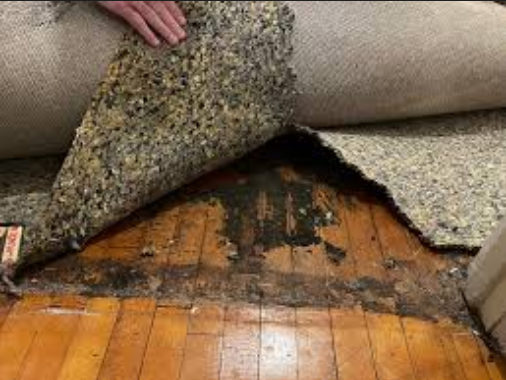
The carpet padding beneath your carpet absorbs water like a sponge; and once it’s saturated, it does not dry on its own within a safe timeframe. Left wet, it becomes the perfect breeding ground for mold and mildew. The carpet above it will stay damp, smell musty, and eventually begin breaking down from below.
Go to the corner or edge of the affected area and peel the carpet back. Feel the padding. If it is wet or even damp; it likely needs to come out.
In most cases, wet padding cannot be saved. It’s relatively inexpensive to replace, and doing so will protect both your carpet and your subfloor from further damage.
Once the padding is removed, check the subfloor underneath. If it feels soft, spongy, or is visibly stained with moisture, you’re dealing with a deeper problem that likely requires professional assessment. Our blog on water damage floor repair costs in Montgomery County covers what to expect if the subfloor is affected.
Step 5: Set Up Maximum Airflow
Airflow is your most powerful ally when drying wet carpet fast at home. Moving air pulls moisture off wet surfaces and out of the room; static air just lets moisture hang there and settle back in.
Here’s how to maximize airflow effectively:
Point box fans or pedestal fans directly at the wet carpet. The closer to floor level, the more effective. You want air moving across the surface of the carpet, not above it.
Open windows on opposite sides of the room to create cross-ventilation; but only if the outdoor air is drier than the indoor air. Avoid this during rain, high humidity, or foggy weather.
Turn on ceiling fans to keep the room’s overall air circulating.
Set your HVAC system to a moderate temperature. Warm, dry air speeds up evaporation significantly. However, avoid running heat so high that it damages carpet fibers.
Professionals use industrial-grade air movers that are far more powerful than household fans. If you want to approximate their effectiveness at home, more fans are better than bigger fans.
Step 6: Run a Dehumidifier
A fan moves moisture-laden air. A dehumidifier actually pulls the moisture out of that air entirely.
Running both simultaneously is the most effective approach for how to dry wet carpet fast at home.
Position the dehumidifier in the center of the affected room, or as close to the wet area as possible. Check the collection tank regularly and empty it to keep it working at full capacity. If you have a unit that allows continuous drainage through a hose, use that option during heavy moisture removal.
A single residential dehumidifier working in a closed room can remove multiple gallons of water from the air in a 24-hour period. That’s water that would otherwise settle back into your carpet, your walls, and your subfloor.
For larger affected areas; a flooded basement, multiple rooms; a single household dehumidifier won’t be sufficient. That’s where professional-grade equipment becomes important.
You can learn more about what full-service water damage restoration services near me look like in our resource on emergency water damage restoration.
Step 7: Apply Baking Soda for Residual Moisture
Once you’ve extracted the bulk of the water and your fans and dehumidifier are running, baking soda is a surprisingly effective tool for addressing residual moisture in carpet fibers.
Sprinkle a generous layer of baking soda across the entire damp area. Let it sit for at least 30 minutes; longer is better. The baking soda will absorb remaining moisture from the fibers and help neutralize the musty odor that begins to develop in wet carpet.
After it has sat, vacuum it up thoroughly.
A word of caution: this method works well for damp carpet where the majority of water has already been removed. If the carpet is still heavily saturated, baking soda alone will not make a meaningful difference. Use this as a finishing step, not a primary one.
Step 8: Disinfect After Drying
Getting the carpet dry is essential. But drying alone doesn’t kill bacteria or neutralize potential contaminants; especially if the water came from a source other than a clean pipe.
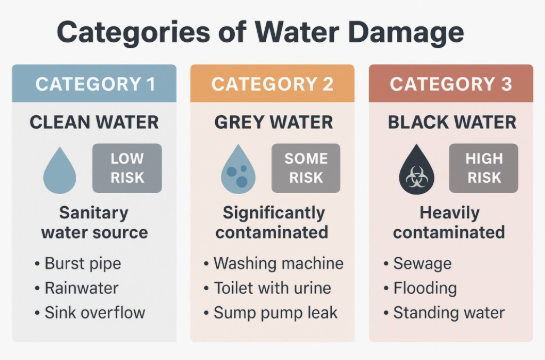
Water damage professionals categorize water into three types. Category 1 is clean water from a supply line. Category 2 (often called grey water) contains some contamination; dishwasher overflow, washing machine discharge. Category 3 (black water) is sewage or floodwater and is considered hazardous.
For Category 1 situations, once the carpet is dry, a diluted white vinegar solution or an antimicrobial carpet spray will help kill any residual bacteria and neutralize odors.
For Category 2 or Category 3 water; or if you’re not sure which type you’re dealing with; do not attempt to disinfect and keep the carpet yourself. Contact a professional immediately. The health risks are serious.
What If the Carpet Has Been Wet for More Than 48 Hours?
Let’s be direct about this: if your carpet has been wet for more than 24 to 48 hours, the odds that mold has already begun to develop are significant.
Mold grows where moisture, warmth, and darkness meet; and the space beneath a wet carpet is exactly that environment. You won’t necessarily see visible mold right away. But musty smells, dark discoloration on the padding or subfloor, or unexplained respiratory irritation in the home are all indicators that growth may have begun.
At this stage, home drying methods are no longer sufficient. The carpet and padding will likely need to be removed and the subfloor treated before any replacement happens.
This is also when your homeowner’s insurance policy becomes relevant. Document everything with photos and video before any materials are removed.
Our blog on signs of hidden water damage in Montgomery County can help you identify whether damage has already spread beyond what you can see.
When DIY Is Not Enough
The eight steps above work well for smaller, contained water events; a sink overflow, a minor appliance leak, a modest spill. But there are situations where no amount of towels, fans, or baking soda will be adequate.
Call a professional water damage restoration service when:
- The water covers more than one room or a large area
- The carpet has been wet for longer than 24 to 48 hours
- The water is from a contaminated source (sewage backup, floodwater)
- The subfloor feels soft, spongy, or is visibly damaged
- You can smell mold even after the carpet appears dry
- You notice buckling or warping in your flooring
- The damage affects a finished basement or multiple floors
Professionals bring industrial water extractors, commercial dehumidifiers, moisture meters, and drying documentation tools that simply cannot be replicated with household equipment. More importantly, they can confirm when the structure is genuinely dry; not just surface-dry.
Check out our guide on emergency water damage mitigation for what a professional response looks like in the critical first hours.
What Does a Water Damage Restoration Insurance Claim Cover?
Filing a water damage restoration insurance claim can feel overwhelming in the middle of a crisis. Here’s what most homeowners in Pennsylvania need to know.
Most standard homeowner’s insurance policies cover sudden and accidental water damage; meaning a burst pipe, an appliance failure, or storm-related damage that was not the result of neglect or gradual deterioration.
What’s typically not covered: flooding from outside the home (you’ll need separate flood insurance for that), and damage that occurred slowly over time because of deferred maintenance.
When you file a water damage restoration insurance claim, document everything before any cleanup begins. Take photos and video of the affected areas, the source of the water, and any damaged materials or belongings. Keep records of every service provider you contact.
PuroClean of Lansdale’s Certified Priority Response (CPR) Program is specifically designed to work alongside your insurance provider. The team handles direct communication with your adjuster, follows agreed-upon scope protocols, and provides documentation that streamlines the claims process.
For specific claim guidance in your area, these resources are helpful starting points:
- Best insurance claim restoration in Abington
- Best insurance claim restoration in Blue Bell
- Best insurance claim restoration in Ambler
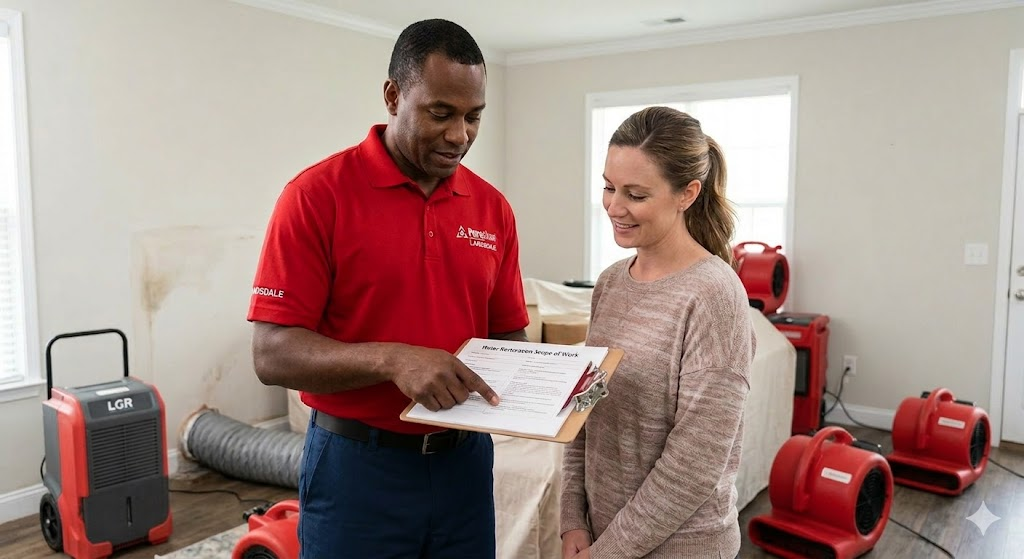
How PuroClean of Lansdale Helps Montgomery County Homeowners
When wet carpet becomes more than a home project, PuroClean of Lansdale is the team Montgomery County residents and property managers call first.
Serving Schwenksville, Lansdale, Horsham, Willow Grove, Blue Bell, Ambler, North Wales, Skippack, Harleysville, and surrounding communities, PuroClean brings industrial-grade equipment and IICRC-trained technicians to every job. Their water damage restoration services include full water extraction, structural drying, moisture monitoring, carpet and padding removal, subfloor treatment, and mold prevention protocols.
The 24/7 emergency line means you’re never waiting until business hours to get a response when something goes wrong at 2 AM.
They also serve commercial property managers, residential homeowners, and work directly with insurance agents; making the recovery process as smooth as possible from start to finish.
Connect with PuroClean of Lansdale on Facebook for community updates and tips, on Instagram for behind-the-scenes restoration work, and on LinkedIn for professional service updates.
Conclusion
A wet carpet is stressful. But it doesn’t have to become a disaster.
The 8 steps in this guide give you the best possible chance of saving your flooring, protecting your subfloor, and keeping mold out of your home. Start fast, work systematically, and don’t underestimate what’s happening below the surface.
And remember this: the most expensive water damage is the kind that was left too long. Don’t let pride in a DIY project delay the call that protects your home and your family. PuroClean of Lansdale is one phone call away; day or night.

 PuroClean of Lansdale