 PuroClean of Lansdale
Table of Contents
Water damage floor repair cost in Montgomery County, PA typically ranges from $500 to $10,000 or more depending on five key variables: the category of water involved, how long it sat before cleanup, the type of flooring affected, whether the subfloor was compromised, and whether mold developed. Minor water extraction and drying for a small area may cost under $1,500. Full hardwood replacement with subfloor repair and mold remediation can exceed $10,000. The single most effective way to reduce your total cost is to begin professional drying within the first 24 hours of water exposure.
Why “It Depends” Is Actually the Most Honest Starting Point
If you have tried searching for water damage floor repair cost online, you have probably encountered a frustrating range of numbers. Some sources say $500. Others say $8,000. A few suggest “costs vary widely.” And none of them tell you which category your situation falls into or why.
Here is the reality: water damage restoration pricing is not arbitrary. It is driven by a specific set of variables that compound on each other in predictable ways. Understanding those variables is not just useful for budgeting; it is the difference between knowing when to act fast and when you have a little more time. It is the difference between knowing what your insurance should cover and what it will not. And it is the difference between a $1,500 drying job and a $7,000 floor replacement.
This guide breaks down every major cost factor for floor restoration specifically in Montgomery County, Pennsylvania. These numbers are grounded in regional contractor data and reflect the types of properties; older homes, split-levels, and finished basements; that are common throughout Lansdale, Horsham, Blue Bell, and surrounding communities.
Average Water Damage Floor Repair Costs: Real Numbers
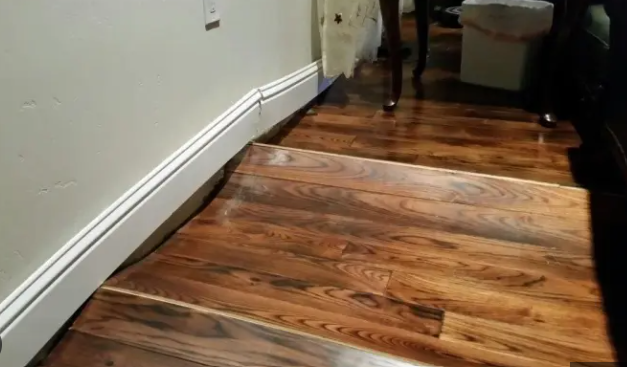
Before we get into the factors that move these numbers, here are realistic cost ranges for common restoration scenarios in the Pennsylvania region. These figures reflect labor, materials, and equipment; not one or the other.
Water extraction and drying only, no structural damage: $500 to $1,500 for a single room. This assumes clean water, minimal saturation, and quick response.
Hardwood floor refinishing after cupping: $1,200 to $3,000. Includes thorough drying, sanding to flatten, and full refinish with stain matching. Cost scales with room size and wood species.
Partial hardwood board replacement: $2,000 to $5,000. Individual boards are removed and replaced; new boards are stained and blended; the entire surface is refinished for visual continuity.
Full hardwood floor replacement: $6,000 to $12,000 for a standard living or dining room. Premium wood species and complex layouts push this higher.
Subfloor repair or replacement, separate from flooring: $1,500 to $4,000 per affected area. Often added on top of flooring costs when water penetrated through the surface layer.
Mold remediation beneath flooring: $2,000 to $7,000 depending on the extent of colonization and whether it has spread into joists or wall cavities.
These are not worst-case numbers. They are the realistic mid-range for professionally handled restoration in this region. Understanding where your situation falls requires knowing the five factors below.
For a real-world look at what restoration looks like in this county: Water Damage Restoration in Montgomery County
Factor 1: The Category of Water
Not all water damage is equal in the eyes of a restoration contractor; and the IICRC (Institute of Inspection, Cleaning and Restoration Certification); the governing body for professional water damage standards; classifies water damage into three distinct categories that directly influence cost.
Category 1: Clean Water This is water from a sanitary source: a supply line break, a roof leak from rain, a faucet overflow. There are no contaminants. Restoration focuses on extraction, drying, and monitoring. This is the most affordable category; assuming it is addressed quickly.
Category 2: Gray Water This includes water with contaminants that pose a risk of illness upon contact: overflow from a washing machine, dishwasher discharge, water that has sat on a contaminated surface. Restoration requires extraction, sanitizing, and controlled drying. Costs are moderately higher due to the added safety protocols and antimicrobial treatment required.
Category 3: Black Water Sewage backup, toilet overflow, or floodwater from outside sources. This is the most hazardous category; containing bacteria, viruses, and in some cases, raw sewage. Restoration is treated as a full hazmat event. Hardwood floors affected by Category 3 water almost always require full removal and replacement; not restoration; because the wood cannot be rendered safe through cleaning alone. This is the highest-cost scenario by a significant margin.
If your water damage involved a sewage backup, a toilet overflow from the floor above, or outdoor flooding: expect the cost conversation to be a different one entirely.
Factor 2: How Long the Water Sat Before Cleanup Began
This factor is the one homeowners most frequently underestimate; and the one that most dramatically separates a manageable bill from a devastating one.
Here is what happens inside a wood floor during a water event, hour by hour:
Within the first 1 to 2 hours, water is primarily on the surface and in the upper portion of the wood fiber. A strong drying response at this point has a high probability of preventing permanent deformation.
By hour 6 to 12, moisture has wicked into the tongue-and-groove joints. The subfloor beneath is beginning to absorb from below. Cupping is becoming visible or is on its way. The drying timeline just extended by several days.
By hour 24 to 48, the subfloor is wet. Fasteners are beginning to loosen. Mold spores have found the moisture they need to begin colonizing in the dark, warm space beneath your boards. What was potentially a $1,500 drying job is now a $4,000 to $6,000 replacement-and-mold-treatment job.
By 72 hours and beyond, the damage calculus has fundamentally shifted. The floor may be beyond saving. The subfloor likely needs partial or full replacement. Mold remediation is almost certainly part of the project now.

For a practical guide on navigating that critical early window: Emergency Water Damage Mitigation
Factor 3: The Type of Flooring Affected
Water damage cost is not uniform across flooring types. Each material responds differently; and those differences have real dollar consequences.
Solid Hardwood The most expensive to replace; but also the most recoverable if addressed early. Solid hardwood can be dried, sanded, and refinished multiple times over its lifetime. A floor that was cupping can sometimes be made completely indistinguishable from its pre-damage condition with the right restoration approach. Replacement cost is high; restoration cost is worth pursuing if timing allows.
Engineered Hardwood Somewhat more moisture-tolerant in the short term; but more limited in its restoration potential. The veneer layer is thin; typically 2 to 6 millimeters; which means sanding options are limited. Engineered hardwood damaged beyond mild cupping usually requires replacement.
Laminate Flooring Laminate is essentially a photographic image on top of a compressed fiberboard core. The fiberboard absorbs water rapidly and swells irreversibly. There is no restoration pathway for laminate; it must be replaced. However, replacement costs are generally lower than solid hardwood.
Tile and Stone Highly water-resistant on the surface; but grout lines absorb moisture and the thin-set adhesive beneath can fail. Water that gets under tile can damage the concrete board or subfloor without any visible surface indication. Costs here are often driven by subfloor repair rather than the tile itself.
Carpet Over Subfloor Carpet traps moisture and creates one of the most favorable environments for mold growth; warm, dark, and humid. Carpet exposed to significant water almost always requires removal; and the subfloor beneath must be fully dried and treated before new flooring can go down.
Factor 4: Whether the Subfloor Was Compromised
The subfloor is the unsung hero of every flooring project; and the most expensive surprise in water damage restoration.
When water sits long enough to penetrate through the surface flooring and into the subfloor; whether it is plywood, OSB, or concrete board; the entire restoration scope changes. A compromised subfloor cannot support new flooring with the structural integrity it requires. It must be repaired or replaced before anything goes down on top of it.
This is not a discretionary repair. Installing new flooring over a wet or degraded subfloor results in the new floor failing within months; sometimes within weeks.
Subfloor repair adds $1,500 to $4,000 to the typical project; on top of whatever the flooring work costs. In homes with finished basements or first-floor living spaces above crawlspaces; which are common throughout Montgomery County; subfloor moisture problems are especially prevalent because of limited airflow beneath the structure.
If you have had water damage to a first-floor space and noticed the floor feeling spongy or hearing a hollow sound when you walk on it; that is a subfloor signal that needs professional assessment immediately.
Related: Basement Flooding Cleanup Service
Factor 5: Mold Growth Beneath the Surface
This is the factor nobody wants to discover; and the one that consistently produces the largest unexpected costs.
Mold does not wait. Under the right conditions; warmth, moisture, and darkness; mold colonies can begin establishing within 24 to 48 hours of water exposure. Beneath a hardwood or laminate floor is an almost ideal mold habitat: dark, enclosed, and slow to dry.
The insidious part is that mold beneath flooring is almost always invisible until it is advanced enough to produce an odor; or until the floor comes up and reveals it directly.
By the time mold is visually obvious; black or green growth visible on the underside of boards or on the subfloor surface; it has typically been colonizing for days or weeks. At that point, remediation is not a minor add-on. It is a major project that involves removing the flooring, treating the subfloor and any structural wood, drying the space to below 16% moisture content, and preventing recontamination.
Mold remediation adds $2,000 to $7,000 to a restoration project; sometimes more if structural joists are involved.
For cost context specific to this region: Professional Mold Removal Cost in Montgomery County

What Does Homeowners Insurance Actually Cover?
This is the part of water damage floor repair cost that creates the most stress; and the most misunderstanding.
The coverage question almost always comes down to two things: the cause of the water and the timing of the damage.
Generally covered under standard homeowners insurance: Sudden, accidental events. A supply pipe that bursts unexpectedly. A roof that leaks during a storm. An appliance that malfunctions and floods a room without warning. These events are classified as sudden and accidental; which is the trigger for most coverage.
Generally not covered: Flooding from an external source; that requires a separate flood insurance policy through FEMA’s National Flood Insurance Program or a private carrier. Gradual leaks that went unaddressed. Damage caused by deferred maintenance; such as a roof that has been showing signs of failure for months. Seepage through foundations or basement walls.
The gray area is the battleground for most denied claims. A pipe that dripped slowly for three months before finally failing may be denied because the insurer argues the homeowner had time to address the issue. A pipe that froze and burst in a single night is almost always covered.
Documentation is everything. Before any cleanup begins: photograph every damaged surface, capture video walking through the space, note the date and time, and call your insurer before calling a contractor if at all possible.
Working with a certified water damage restoration service provider who understands insurance claim documentation can significantly affect the outcome of your claim.
For examples of what the claim process looks like in practice:
- Best Insurance Claim Restoration in Abington
- Best Insurance Claim Restoration in Blue Bell
- Best Insurance Claim Restoration in Ambler
How to Evaluate Insurance Claim Restoration Reviews
When you are choosing a water damage restoration service provider; especially one you need to trust with both your property and your insurance claim; reviews matter enormously. But most homeowners do not know how to read them critically.
Here is what separates a genuinely trustworthy restoration company from one with a polished online presence:
Specificity in reviews: Real reviews reference the actual situation. “They responded within an hour when our dishwasher flooded the kitchen, set up drying equipment the same day, and handled all the communication with our Nationwide adjuster” tells you far more than “amazing service, very professional.” Specific reviews are real reviews.
Response time patterns: Look across multiple reviews for how often quick response time is mentioned. For water damage; where every hour matters; a company that consistently shows up within two hours in reviews is a fundamentally different service than one that shows up the next morning.
Claim handling language: The best restoration reviews for insurance purposes mention documentation, adjuster communication, pre-approved scope, and final settlement. This tells you the company operates within insurance protocols; not around them.
How they respond to criticism: A one-star review is not disqualifying. How the company responds to it is far more revealing than any five-star review they have.
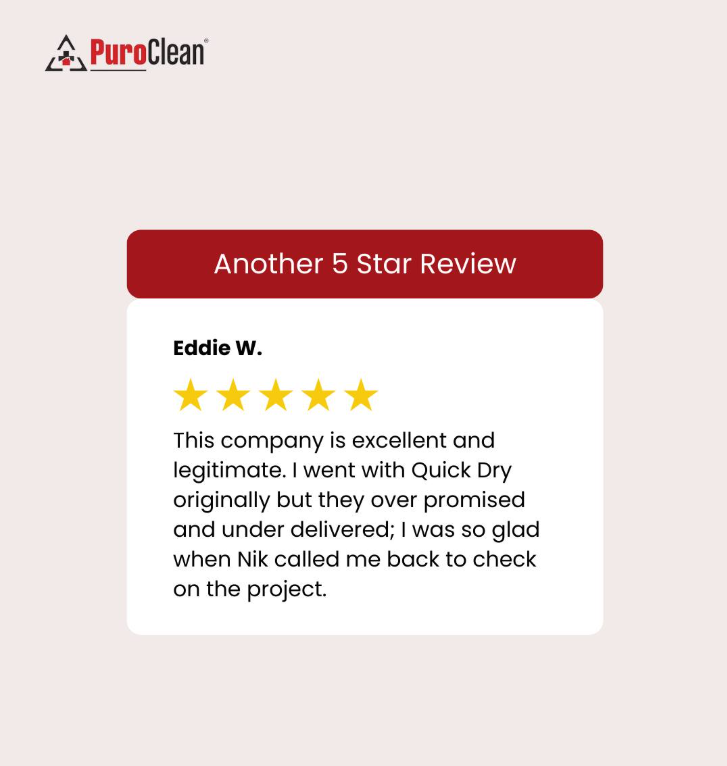
PuroClean of Lansdale has documented reviews from homeowners across Montgomery County who have navigated exactly this process. Read them directly here and look for the patterns described above.
📸 Image 4: A close-up of a smartphone screen showing a five-star Google review for a restoration company; with a water-damaged room slightly visible and out-of-focus in the background. Alt text: “insurance claim restoration reviews Montgomery County PA; reading restoration company Google reviews”
DIY vs Professional Restoration: The Real Cost Comparison
This conversation tends to focus on upfront cost; and that framing almost always leads homeowners to underestimate the total picture.
Yes, renting a residential dehumidifier and a couple of box fans costs less than hiring a professional team. If you caught a small spill on a recently sealed floor within an hour or two; that approach may genuinely be sufficient.
But here is what the real cost comparison looks like when DIY falls short:
A homeowner in Lansdale DIYs a floor drying after a pipe failure. Surface drying looks complete after five days. Floor still feels slightly uneven but they refinish it anyway. Three weeks later, the floor starts cupping again. They call a contractor. Moisture readings in the subfloor are at 28%. Mold is present. The total project cost: subfloor replacement, mold remediation, and full flooring reinstall; comes to $9,200. A professional dry-out at the start; with moisture mapping and industrial equipment; would have cost $1,800 to $2,500.
This is not an unusual scenario. It is what happens when water damage is dried to “looks good” rather than dried to “measured and confirmed safe.”
A certified water damage restoration service provider dries to a measurable standard; not an appearance standard. That difference is what protects your floor, your subfloor, your air quality, and ultimately your budget.
For preventive strategies to reduce future risk: 10 Ways to Prevent Water Damage
How PuroClean of Lansdale Helps Homeowners Control Costs
The counterintuitive truth about professional restoration is that it often costs less in the long run than delayed or incomplete DIY treatment. PuroClean of Lansdale is built around several systems that directly benefit homeowners facing this situation.
Certified Priority Response (CPR) Program: This is PuroClean’s formal protocol for working within insurance carrier systems. Pre-agreed scope approvals, clear documentation standards, and direct adjuster communication reduce the back-and-forth that delays claims and increases overall project costs. Carriers including Nationwide, Encompass, Alacrity Services, Vericlaim, and Crawford Contractor Connection operate within this framework.
Moisture Mapping Before and After: Industrial moisture meters and infrared cameras document the starting point and confirm when drying is complete. This protects homeowners from paying for drying that was not finished; and protects the restoration company from callbacks on incomplete work.
24/7 Emergency Response: PuroClean of Lansdale responds at any hour; because the cost difference between a 1-hour response and a 12-hour response is measured in thousands of dollars of additional damage.
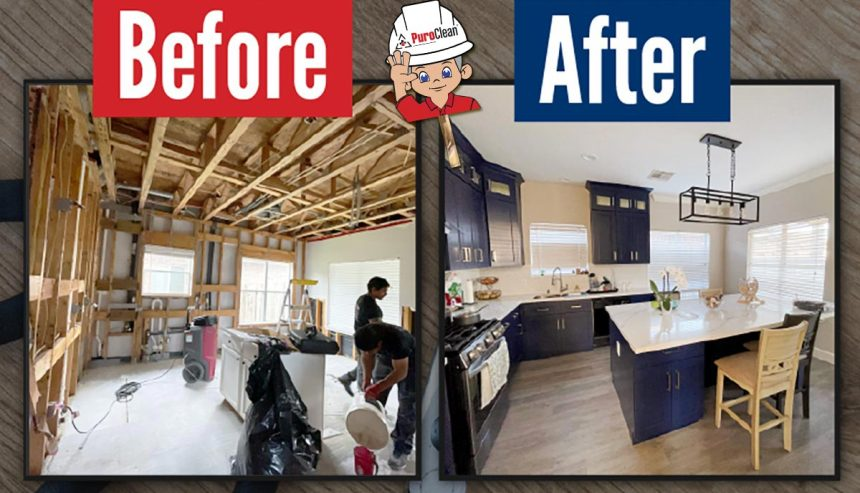
Reconstruction Services: For floors and structures that need replacement rather than restoration, PuroClean handles the full scope; from tear-out through rebuild. This eliminates the cost and coordination burden of managing multiple contractors.
Community-specific restoration resources:
- Water Damage Restoration in North Wales
- Water Damage Restoration in Fort Washington
- Water Damage Restoration in Spring Mount
PuroClean of Lansdale serves Abington, Ambler, Blue Bell, Center Square, Fort Washington, Harleysville, Horsham, Kulpsville, Lansdale, Maple Glen, Montgomeryville, North Wales, Prospectville, Roslyn, Schwenksville, Skippack, Spring House, Spring Mount, Willow Grove, and Woxall.
What is the average water damage floor repair cost in Montgomery County, PA?
For a standard single-room scenario with moderate hardwood damage, most homeowners pay between $2,000 and $5,000. That range shifts sharply upward if subfloor work or mold remediation is involved. Getting a professional moisture assessment before any repair work begins is the most reliable way to get an accurate estimate specific to your situation.
Will insurance cover all of my water damage floor repair costs?
Typically not all; but often a significant portion. Coverage depends on the cause of damage, your policy specifics, and how thoroughly the damage was documented. Working with a restoration company that provides adjuster-ready documentation is the most effective way to maximize your claim.
How long does water damage floor repair take from start to finish?
Drying typically takes 3 to 10 days depending on severity. Repair or replacement work happens after the structure reaches target moisture content; adding 1 to 3 weeks for flooring work, material ordering, and stain matching. A project that includes subfloor replacement and mold remediation can take 3 to 5 weeks total.
How do I know if a restoration company is actually qualified?
Look for IICRC certification (specifically the WRT designation for Water Damage Restoration Technician), local insurance claim restoration reviews that mention specific outcomes, verifiable response time history, and clear documentation processes. PuroClean of Lansdale carries IICRC certification and works within formal insurance carrier protocols.
What is the first call I should make when I discover water damage on my floors?
Stop the water source first. Then call a certified restoration company; not a general contractor. Water damage restoration requires specialized drying equipment and moisture monitoring that most general contractors do not carry.
Conclusion
Water damage floor repair cost in Montgomery County is not a mystery; it is a formula. The category of water, how long it sat, your flooring type, whether the subfloor got wet, and whether mold developed: those five factors will determine your bill more reliably than any online cost guide.
The most important number in that formula is not the one on the estimate. It is the one on the clock when you first discover the damage.
Every hour you wait is not neutral. It is active, compounding damage to your floor, your subfloor, your air quality, and your budget.
If you are dealing with water damage right now; or if you are simply trying to understand what you are facing before you make the first call; PuroClean of Lansdale is ready to help with a professional assessment and 24/7 emergency response throughout Montgomery County.
Contact PuroClean of Lansdale and get a certified team on-site before the damage writes its own estimate.
Follow PuroClean of Lansdale: Facebook | Instagram | LinkedIn | X (Twitter)Read what your neighbors say: Google Reviews & Directions

 PuroClean of Lansdale