 PuroClean of Lansdale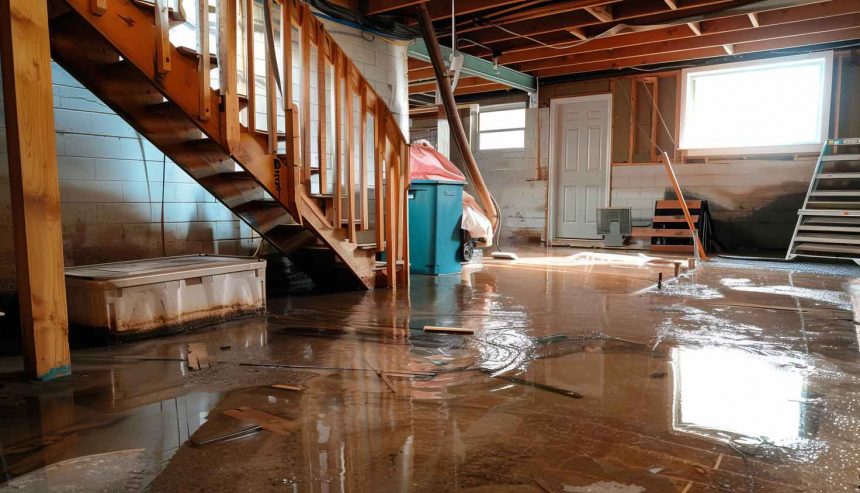
Table of Contents
If you find water in your basement after rain who to call, the very first call you need to make is to a certified water damage restoration company. In Montgomery County, PA, that means calling PuroClean of Lansdale at (267) 834-5900. They respond 24/7, arrive with industrial extraction equipment, and use precision drying technology to protect your structure and prevent mold from taking hold. Do not wait ; every hour water sits, the damage spreads deeper into materials that are expensive and difficult to replace.
Who to Call First
You are standing at the top of the basement stairs. You heard something earlier but brushed it off. Now you see it ; a dark, still sheet of water where your floor used to be.
Your first instinct might be to grab a mop or call a plumber. Neither is the right move here. A plumber handles broken pipes. A mop handles puddles. What you have is a water intrusion event, and it requires a completely different kind of professional.
The answer to water in basement after rain who to call is a certified water damage restoration company with IICRC credentials, industrial drying equipment, moisture detection technology, and local knowledge of the specific drainage conditions in your area.
In Montgomery County, PA, that company is PuroClean of Lansdale. Their emergency line ; (267) 834-5900) ; is staffed around the clock, every day of the year. No answering services, no waiting until Monday morning, no delays while water quietly destroys your foundation, your flooring, and the air quality of your home.
If you are unsure what the first 24 hours of a water event actually look like, this resource on water damage remediation steps in the first 24 hours breaks it down clearly and honestly.
Why Montgomery County Basements Are Especially Vulnerable
Not every region deals with basement flooding equally. Montgomery County, PA has a specific set of conditions that make basements particularly susceptible ; and understanding them helps you recognize both the risk and what you can do to reduce it long-term.
Clay-heavy soil. Much of Montgomery County sits on soil with a significant clay content. Clay absorbs water slowly and drains even more slowly. During a sustained rainstorm, the soil reaches saturation and essentially stops functioning as a drainage layer. At that point, water has nowhere to go except laterally ; and it follows the path of least resistance toward your foundation.
Aging housing stock. Many homes in Schwenksville, Lansdale, Ambler, Horsham, and surrounding communities were built in the mid-20th century. The foundation waterproofing methods of that era were far less reliable than modern standards. Concrete block foundations, which were common, are porous by nature and become increasingly permeable as mortar joints age and crack.
Seasonal weather patterns. Spring in Montgomery County brings extended periods of heavy rain following frozen ground. Frozen soil does not absorb water ; it sheds it. Early spring storms can saturate an area before the ground has thawed enough to absorb any of it, dramatically increasing runoff pressure against foundations.
Insufficient grading and drainage. As neighborhoods develop over decades, the slope of the ground around homes can shift. Settled soil, added landscaping, and paved surfaces all affect how water moves across a yard. What once drained efficiently can slowly develop into a pattern that directs water toward your home rather than away from it.
Understanding this context does not just satisfy curiosity ; it helps you make smarter decisions about prevention, and it helps you explain to your insurance adjuster why this event occurred.
The Most Common Causes of Basement Flooding After Rain
Once you know the environmental backdrop, the specific entry points become clearer. Here are the most frequent causes restoration teams find in Montgomery County basements:
Window well overflow. Window wells are designed to allow natural light into below-grade spaces. Each one has a drain at the bottom. When those drains clog with leaves, dirt, or debris, the well fills with rainwater like a bucket ; and that water presses directly against the glass and frame until it forces its way inside.
Foundation wall cracks. Even a hairline crack in a poured concrete or concrete block wall becomes an active water channel under hydrostatic pressure. During heavy rain, the ground surrounding your foundation becomes saturated and the resulting pressure pushes water through any weakness it can find.
Sump pump failure. Sump pumps are the last line of defense for many Montgomery County basements. They fail for several reasons ; a blown fuse, a tripped breaker, a stuck float switch, a power outage during the storm (which is exactly when you need the pump most), or simple age and mechanical wear. A sump pump with no battery backup is a liability the moment the power goes out.
Failed or collapsed perimeter drain tile. Homes built with clay perimeter drain tiles around the exterior footer often see those systems deteriorate over decades. When the tile collapses or becomes blocked, the groundwater management system that protects your basement essentially stops functioning.
Downspout discharge too close to the foundation. This one is easy to miss because it looks benign. If your gutters drain their water within two or three feet of your home, every significant rain event is depositing thousands of gallons of water right next to your foundation. Over time ; or during a particularly heavy storm ; that volume overwhelms the soil’s ability to absorb it and drives water toward your basement walls.
Knowing which cause is responsible for your flooding helps your restoration team and your insurance adjuster understand the full picture. It also tells you where to focus on prevention after the immediate crisis is resolved.
The Hidden Danger Nobody Talks About
Here is where most homeowners make the mistake that costs them the most.
They see the water. They rent a wet vac or borrow a pump. They work hard for several hours and get the visible water off the floor. The floor looks mostly dry the next morning. They feel like they handled it.
What they did not handle is what the water did while it was there.
Water does not simply sit on the surface. The moment it contacts porous materials, it begins migrating ; along floor joists, into subfloor plywood, up drywall, through the paper facing on insulation, into any wood framing it can reach. The visible flooding you extracted represents maybe 30 to 40 percent of the actual moisture that entered your structure. The rest is inside materials.
Mold colonizes in 24 to 48 hours. That is not a dramatic exaggeration ; it is the IICRC S520 standard benchmark. In a dark, warm, moist basement environment, mold spores find exactly the conditions they need to germinate and spread. By the time you can smell it, it has already established colonies inside materials, not just on surfaces.
Structural degradation is slower but equally serious. Prolonged moisture contact with wood framing, floor joists, and subfloor materials triggers rot. In a basement, the joists are the structural members supporting your entire first floor. When they are compromised, you are no longer dealing with a cleanup problem ; you are dealing with a structural repair.
Air quality deteriorates invisibly. Mold spores, volatile organic compounds from wet building materials, and elevated humidity all degrade indoor air quality in ways you cannot see but your respiratory system absolutely notices.
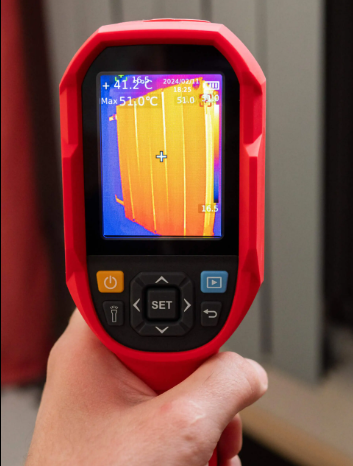
This is why the answer to water in basement after rain who to call is not a question of preference ; it is a question of protecting your home’s structure, your family’s health, and your financial investment. A professional restoration team brings thermal imaging cameras and calibrated moisture meters that detect hidden saturation your eyes will never find on their own.
7 Immediate Steps to Take Before Help Arrives
While you wait for your restoration team, these steps reduce how far the damage spreads.
Step 1: Confirm it is safe to enter. Before stepping into a flooded basement, verify that no electrical outlets, panels, appliances, or wiring are below the waterline. If there is any uncertainty, do not enter. Shut off the electrical circuit for that area at your breaker panel first.
Step 2: Identify the water source. Is the water coming through the walls, up through the floor drain, in through a window well, or from a failed appliance or pipe? If it is an active pipe or appliance leak, shut off the main water supply. If it is groundwater intrusion from rain, you cannot stop it ; but knowing the source is important for your restoration team and your insurer.
Step 3: Document everything before you touch it. Take video and photographs of all standing water, affected walls, damaged belongings, and any visible structural issues. Walk every corner of the basement. This documentation becomes your evidence for a water damage restoration insurance claim, and it protects you if any disputes arise later.
Step 4: Relocate important belongings. Move documents, electronics, furniture, and irreplaceable items out of the water’s reach. Place aluminum foil or blocks of wood under furniture legs that cannot be moved immediately to prevent the furniture from wicking water upward.
Step 5: Begin surface water extraction if you have the tools. A wet/dry vacuum can help remove surface water from the floor. Do not use a standard household vacuum. Work methodically from the far end of the basement toward the exit.
Step 6: Increase ventilation strategically. Open windows and run fans toward the outside only if outdoor humidity is lower than indoor humidity. On a rainy day, bringing humid outside air in makes the situation worse, not better. On a dry day, cross-ventilation helps slow moisture migration into walls.
Step 7: Call a certified restoration company immediately. Search water damage restoration services near me and prioritize providers with IICRC certification, local presence, and 24/7 availability. The longer water sits unaddressed in a structure, the more it costs to restore it.
In Montgomery County, that call is (267) 834-5900.
What Happens When You Call PuroClean of Lansdale
When you call PuroClean at (267) 834-5900, you are not leaving a voicemail or getting routed to a national call center. You reach a local team that knows Montgomery County ; its neighborhoods, its building styles, its soil conditions, and its weather patterns.
Here is what the response process actually looks like:
Rapid dispatch. PuroClean’s 24/7 emergency response means a team is deployed within hours of your call, any day of the week.
Comprehensive moisture assessment. Technicians use thermal imaging cameras to identify wet zones behind walls, under floors, and in ceiling assemblies that are invisible to the naked eye. Calibrated moisture meters quantify exactly how saturated each material is, allowing for precise drying plans rather than guesswork.
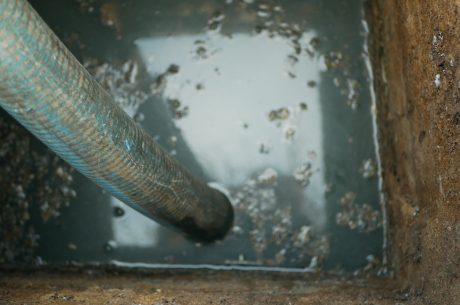
Water extraction. Industrial-grade submersible pumps and truck-mounted extraction units remove standing water dramatically faster than consumer equipment ; and more importantly, they get water from under floor coverings and in low spots that shop vacs simply cannot reach.
Structural drying with the QuickDry System™. PuroClean’s proprietary drying protocol applies psychrometric science ; managing the relationship between temperature, humidity, and air movement ; to dry your structure from the inside out. Daily moisture readings track progress and confirm when target drywall and wood moisture levels have been achieved. This is not drying by feel or by appearance ; it is drying by data.
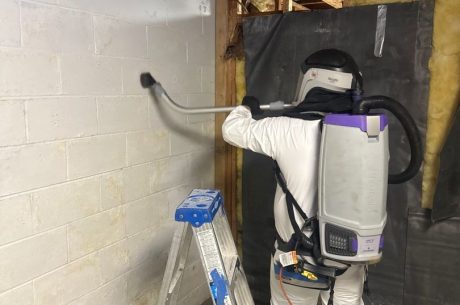
Mold prevention treatment. Antimicrobial agents are applied to all affected surfaces to interrupt mold colonization before it can establish itself.
Complete documentation. Every step, every moisture reading, every equipment placement, and every photograph is recorded. This documentation package is exactly what insurance adjusters need and dramatically reduces claim friction.
For more on how PuroClean approaches restoration throughout the county, visit the detailed guide on water damage restoration in Montgomery County.
How the Insurance Claim Process Works
The phrase water damage restoration insurance claim makes a lot of homeowners tense. It should not. With the right documentation and the right restoration partner, this process is far more manageable than people expect.
Most standard homeowner’s insurance policies cover sudden and accidental water damage. A sump pump failure during a storm, a burst pipe, and a failed appliance that causes flooding are all typically covered events ; though coverage varies by policy, and flooding from rising groundwater outside your home typically requires separate flood insurance.
Here is what helps your claim succeed:
Document before you clean. Photograph and video everything before removing a single item or starting any extraction. Show the water level, the affected materials, and the condition of your belongings.
Retain damaged materials. Do not throw anything away before an adjuster has had the opportunity to inspect it. This includes carpeting, drywall sections, damaged furniture, and any structural materials removed during the cleanup.
Keep all receipts. Any emergency purchases ; a hotel stay, temporary storage, an emergency pump rental ; should be documented and saved.
Work with a restoration company that communicates with insurers directly. PuroClean’s Certified Priority Response (CPR) Program is specifically designed for this. It establishes mutually pre-approved scope of work, clear documentation protocols, and direct communication with your adjuster ; reducing disputes, delays, and unnecessary stress for you.
PuroClean works with Nationwide, Encompass, Alacrity Services, Vericlaim Repair Solutions, Crawford Contractor Connection, Nexxus, and other major carriers. Their track record with local Montgomery County claims is documented in detail at insurance claim restoration in Abington and insurance claim restoration in Ambler.

Areas PuroClean Serves in Montgomery County
PuroClean of Lansdale serves a wide footprint across Montgomery County. Whether your basement flooded in Schwenksville, Horsham, Blue Bell, or North Wales, a local team is ready to respond.
Covered communities include: Abington, Ambler, Blue Bell, Center Square, Fort Washington, Harleysville, Horsham, Kulpsville, Lansdale, Maple Glen, Montgomeryville, North Wales, Prospectville, Roslyn, Schwenksville, Skippack, Spring House, Spring Mount, Willow Grove, and Woxall.
Detailed restoration guides are available for water damage restoration in Willow Grove, water damage restoration in Skippack, and water damage restoration in North Wales.
Also see the comprehensive basement flooding clean-up service guide for a step-by-step breakdown of what the process looks like from start to finish.
Office Address: 2033 Lucon Rd, Bldg. Rear, Schwenksville, PA 19473 Emergency Line: (267) 834-5900
Stay connected and get local tips, storm alerts, and community updates: Facebook ; Instagram ; LinkedIn ; X (Twitter)

Conclusion
A basement full of water after rain is not just an inconvenience you can sleep on. It is a structural threat, a mold risk, and a ticking clock. Every hour of delay allows moisture to migrate deeper into the materials that hold your home together ; materials that are expensive and disruptive to replace once they have been compromised.
The answer to water in basement after rain who to call is clear: a certified, local, 24/7 restoration team with the technology and training to address what you can see and ; more critically ; everything you cannot.
You now understand why Montgomery County basements are so susceptible. You understand what water is actually doing inside your walls while the floor looks dry. And you know the seven steps to take right now while help is on the way.
Have you ever dealt with a flooded basement? Did you know what steps to take first, or did you discover the hard way just how far the damage had spread? Share your experience in the comments below ; your story might be exactly what helps another Montgomery County homeowner make the right call next time.
Contact PuroClean of Lansdale here or call (267) 834-5900) any hour, any day.
Leave a review or find directions to our office on Google Maps.

 PuroClean of Lansdale