


The Devastating Reality of Wildfire Smoke Damage in a Home and How to Recover Fully
Table of Contents
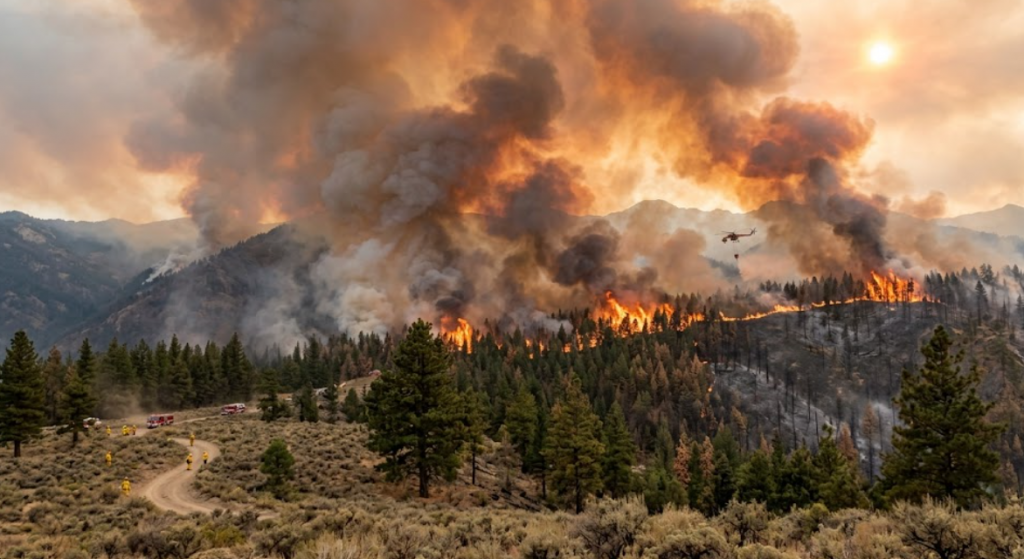
Wildfires have become one of the most destructive natural hazards facing homeowners across the western United States, with millions of acres burning every year and smoke events affecting communities hundreds of miles from the actual fire perimeter. For homeowners who survive a wildfire event with their structure intact, the immediate relief of a standing home can quickly give way to a deeper, more insidious problem: wildfire smoke damage in a home that has infiltrated every room, every surface, and every material in the building.
Wildfire smoke damage in a home is not simply a cosmetic issue. The smoke produced by wildfires is chemically complex and far more hazardous than ordinary household smoke. It carries fine particulate matter, volatile organic compounds, heavy metals, and toxic byproducts from the combustion of vegetation, synthetic building materials, vehicles, and chemical storage. These contaminants settle into insulation, penetrate drywall, saturate HVAC systems, and embed themselves in soft furnishings – and they do not go away on their own.
Understanding the full scope of wildfire smoke damage in a home, how to assess it correctly, and what professional remediation involves is essential knowledge for every homeowner in a fire-prone region.
Why Wildfire Smoke Damage in a Home Is Different From Ordinary Smoke Damage
Many homeowners who have dealt with kitchen fire or candle soot assume that wildfire smoke damage in a home is a similar problem with similar solutions. This assumption is dangerous. Wildfire smoke has several characteristics that make it distinctly more damaging and more difficult to remediate.
The Chemical Complexity of Wildfire Smoke
Wildfires burn at extremely high temperatures and consume a wide variety of materials – trees, brush, homes, vehicles, propane tanks, pesticide stores, and synthetic building products. The resulting smoke is a toxic mixture of fine particulates (PM2.5), carbon monoxide, formaldehyde, benzene, polycyclic aromatic hydrocarbons (PAHs), acrolein, and dozens of other volatile organic compounds. According to the U.S. Environmental Protection Agency, wildfire smoke contains significantly higher concentrations of carcinogens than common household smoke sources.
Wildfire smoke damage in a home deposits these compounds on every surface the smoke contacts. Because PM2.5 particles are smaller than 2.5 microns in diameter – roughly 30 times smaller than a human hair – they penetrate deeply into porous materials and cannot be removed by surface cleaning alone.
The Speed and Extent of Penetration
During an active wildfire event, ambient smoke concentrations outside can be hundreds of times higher than normal air quality levels. Even homes that appear tightly sealed allow substantial smoke infiltration through natural air exchange, HVAC systems, attic vents, fireplace dampers, electrical outlets, plumbing penetrations, and gaps around doors and windows. A home exposed to high-concentration wildfire smoke for 24 to 72 hours can accumulate levels of interior contamination that require comprehensive professional remediation.
Persistent Odor and Off-Gassing
Wildfire smoke odor is not a superficial issue. The volatile organic compounds that carry the smoke smell embed themselves in insulation, drywall paper, subflooring, carpet backing, upholstery, and wooden structural elements. These compounds off-gas continuously at room temperature, meaning the smell returns repeatedly even after surfaces appear clean. Addressing wildfire smoke damage in a home requires neutralizing these compounds chemically, not simply masking the odor.
Health Hazards Linked to Wildfire Smoke Damage in a Home
Occupying a home that has sustained wildfire smoke damage without proper remediation poses serious and well-documented health risks. The contaminants left behind by wildfire smoke affect multiple body systems.
Respiratory Effects
Fine particulate matter from wildfire smoke is a potent respiratory irritant. The California Air Resources Board and the Centers for Disease Control and Prevention have both documented increased emergency room visits for asthma attacks, bronchitis, and respiratory infections in communities affected by wildfire smoke events. In a home where wildfire smoke damage has not been remediated, these particles are continuously resuspended by foot traffic and air movement, creating a persistent inhalation hazard.
Cardiovascular Risk
PM2.5 particles are small enough to pass through lung tissue and enter the bloodstream. Research published in peer-reviewed medical journals has linked chronic PM2.5 exposure to increased risk of heart attack, stroke, and irregular heart rhythms. Occupying a home with unaddressed wildfire smoke damage creates ongoing low-level exposure that accumulates over time.
Toxic Chemical Exposure
The benzene, formaldehyde, and PAHs deposited by wildfire smoke are classified as known or probable human carcinogens by the International Agency for Research on Cancer. Children, elderly individuals, and people with pre-existing respiratory or cardiovascular conditions face the greatest risk from occupying a home with unresolved wildfire smoke damage, but no occupant is without risk from prolonged exposure to these compounds.
How Wildfire Smoke Damage Spreads Through a Home
To understand why professional remediation is necessary, it helps to understand how wildfire smoke damage travels through a home’s systems and materials.
HVAC Systems and Ductwork
HVAC systems are a primary pathway for wildfire smoke infiltration and distribution. During a smoke event, the system’s air handler draws smoky outdoor air or recirculates contaminated indoor air throughout the entire home. Smoke particles deposit in the air filter, the blower assembly, the evaporator coil, and the full length of supply and return ductwork. If the system runs during or after a smoke event without proper decontamination, it continues to distribute smoke particles to every room in the home. Addressing wildfire smoke damage in a home must include a thorough HVAC inspection and cleaning.
Insulation and Wall Cavities
Attic insulation is particularly vulnerable to wildfire smoke infiltration because attics exchange air with the exterior through ridge vents, soffit vents, and gable vents. Once smoke particles deposit in blown-in or batt insulation, they cannot be cleaned out – the insulation must be removed and replaced. Smoke that penetrates wall cavities through electrical outlets, plumbing penetrations, or exterior wall assemblies deposits on the paper facing of drywall and on wooden framing, where it is effectively sealed in unless the materials are removed.
Soft Furnishings and Contents
Upholstered furniture, mattresses, clothing, carpeting, curtains, and area rugs all absorb wildfire smoke compounds readily. These materials act as reservoirs for the volatile organic compounds that produce smoke odor, and they continue to off-gas for months after the smoke event if not properly cleaned or replaced. Contents remediation is an integral part of addressing wildfire smoke damage in a home.
Hard Surfaces and Finishes
Even surfaces that appear non-porous – painted walls, sealed concrete, tile grout, and cabinetry finishes – accumulate a fine oily film from wildfire smoke. This residue contains many of the toxic compounds listed above and requires specialized cleaning agents to remove fully. Standard household cleaning products are not formulated to neutralize the chemical composition of wildfire smoke residue.
Assessing the Extent of Wildfire Smoke Damage in a Home
Accurately assessing wildfire smoke damage requires professional evaluation. Visual inspection alone is insufficient because many of the most damaging aspects of smoke contamination are invisible. A professional restoration assessment includes:
- Air quality testing using specialized equipment to measure particulate concentration, VOC levels, and odor compounds throughout the home
- HVAC system inspection including filter analysis, blower housing inspection, and duct sampling
- Thermal imaging to identify areas of concentrated contamination in wall and ceiling assemblies
- Surface swab testing in multiple rooms to quantify soot and chemical residue deposition
- Attic inspection to assess insulation contamination levels
- Contents inventory to identify items that can be restored versus those that must be replaced
This assessment establishes a scope of work that is specific to the level of smoke exposure and the building’s construction. Not every home affected by wildfire smoke requires the same level of remediation, and a thorough assessment prevents both under-remediation and unnecessary remediation costs.
Professional Remediation of Wildfire Smoke Damage in a Home
Professional restoration following wildfire smoke damage in a home follows a structured process designed to address every contaminated system and material.
HVAC Decontamination and Duct Cleaning
The HVAC system is addressed first to prevent it from redistributing contamination during the remediation process. All filters are replaced. The blower assembly, evaporator coil, and air handler cabinet are cleaned and treated with EPA-registered antimicrobial solutions. Supply and return ducts are professionally cleaned using contact vacuum methods and, where necessary, encapsulant coatings are applied to seal residual deposits in older duct systems.
Structural Surface Cleaning
All interior surfaces – ceilings, walls, floors, cabinetry, and trim – are cleaned with chemical sponges, HEPA-vacuum equipment, and specially formulated alkaline or enzymatic cleaning agents designed to break down the acidic and oily residues left by wildfire smoke. Affected painted surfaces may require a sealer primer coat before repainting to prevent odor from migrating back through new paint.
Odor Neutralization
Odor neutralization goes beyond surface cleaning. Restoration professionals use ozone treatment, hydroxyl radical generation, or thermal fogging with specialized deodorants to penetrate porous materials and neutralize the volatile compounds embedded in insulation, drywall, subfloor assemblies, and framing. Each of these technologies has specific applications and limitations, and a qualified restoration team will select the appropriate method based on the materials present and the level of contamination.
Contents Cleaning and Pack-Out
Soft contents – clothing, bedding, upholstered furniture – are cleaned using ozone treatment or ultra-low volume fogging in a controlled environment. Hard contents such as dishes, cookware, and decorative items are cleaned with appropriate chemical agents. Items that cannot be satisfactorily cleaned – deeply saturated soft goods or items with significant damage from wildfire smoke damage – are documented for insurance claims and replaced.
Insulation Replacement and Structural Repairs
Contaminated attic insulation is removed, the attic deck is cleaned and treated, and new insulation is installed. Where wall cavities show evidence of smoke penetration, drywall may need to be removed to allow for cleaning of the framing and cavity. All structural repairs and finish work are completed to restore the home to its pre-damage condition.
What Homeowners Can Do Before the Restoration Team Arrives
While waiting for professional help, there are steps homeowners can take to limit exposure and prevent additional contamination:
- Do not run the HVAC system, as it will spread smoke particles further through the home
- Open windows only if outdoor air quality is significantly better than indoor air quality – in some cases, this makes contamination worse
- Wear an N95 mask and gloves when inside the home to limit personal exposure
- Do not wipe surfaces with damp cloths, as this can drive smoke residue deeper into porous materials
- Remove and bag heavily contaminated soft items such as curtains and throw pillows to reduce the odor load inside the home
- Document all visible smoke damage with photographs and video for your insurance claim
- Contact your homeowner’s insurance carrier to report the loss and request a claims adjuster
Insurance Coverage for Wildfire Smoke Damage in a Home
Most standard homeowner’s insurance policies cover wildfire smoke damage in a home as a covered peril under fire and smoke provisions. This coverage typically extends to structural cleaning, HVAC remediation, contents cleaning or replacement, and temporary relocation costs while the home is being remediated.
Working with a professional restoration company that provides detailed documentation of all damage, testing results, and remediation activities is essential for maximizing your insurance claim. Reputable restoration companies have experience working directly with insurance adjusters and can prepare scope-of-work documents and cost estimates in the format required by most carriers.
Take Wildfire Smoke Damage in a Home Seriously
Wildfire smoke damage in a home is not a problem that resolves on its own or responds adequately to consumer-grade cleaning products. The chemical complexity of wildfire smoke, the depth of penetration into building materials, and the serious health risks associated with prolonged exposure all make professional remediation not just advisable but necessary. The sooner a qualified restoration team assesses and addresses the damage, the lower the total cost of restoration and the sooner your home is safe to occupy again.
If your home has been affected by wildfire smoke – whether the fire burned nearby or dozens of miles away – do not assume the interior air quality is acceptable. Have it tested. Have it assessed. And have it properly restored.
Protect Your Home and Family – Call PuroClean Today
If your home has been affected by wildfire smoke damage, the certified restoration specialists at PuroClean are ready to help. Available 24 hours a day, 7 days a week, PuroClean provides comprehensive wildfire smoke damage assessment, HVAC decontamination, structural cleaning, odor neutralization, and full contents restoration.
Call PuroClean restoration specialists now at (480) 767-5588 for smoke damage restoration. Fast response. Proven results. Complete peace of mind.
Do not let wildfire smoke damage compromise your home or your health. We are here to restore both.