


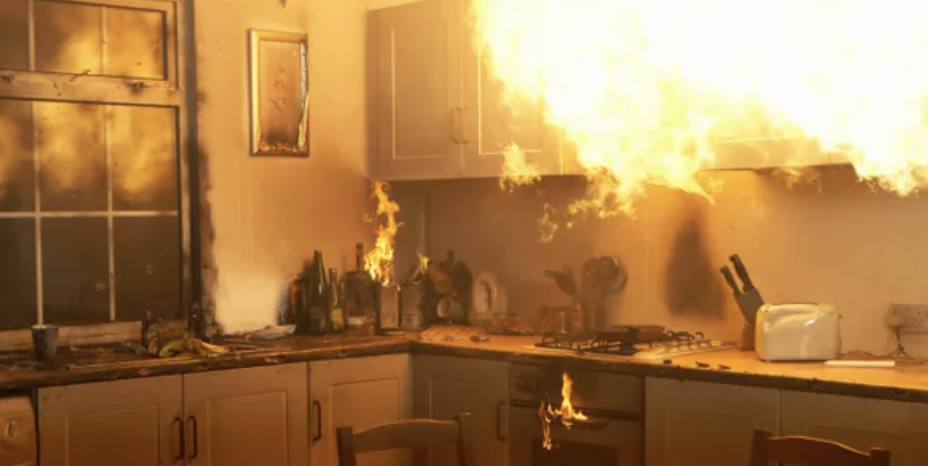
If you are wondering what to do after an oven fire, keep the oven door closed when the fire is contained inside, turn off the heat if it can be done safely, and call 911 if the fire does not go out or begins spreading beyond the appliance. After the fire is extinguished, do not immediately assume the oven, stove, cabinetry, or surrounding kitchen is safe to use. Heat, smoke, soot, grease residue, and fire suppression materials can create damage that is not always obvious from the surface.
The same principles apply to many stovetop fires. A small pan or burner fire may remain localized, while a grease fire or cooking fire can spread upward into a range hood, cabinetry, walls, or ceiling within a short period of time. Smoke can also travel well beyond the kitchen even when direct flame damage remains limited.
For Seattle homeowners, professional evaluation may be appropriate when an oven or stovetop fire leaves visible soot, persistent smoke odor, damaged cabinetry, heat-damaged appliances, or contamination in surrounding rooms. PuroClean provides kitchen fire restoration in Seattle for oven fires, stovetop fires, grease fires, appliance fires, smoke damage, and related cooking-fire losses.
Oven and Stovetop Fire Damage in Seattle Guide
- What to Do During an Oven Fire
- What to Do After an Oven Fire in Seattle
- What to Do After a Stovetop Fire
- What Damage Can an Oven Fire Cause?
- Stovetop and Grease Fire Damage
- Smoke and Soot Damage After a Cooking Fire
- Cabinet and Range Hood Damage
- Can You Use Your Oven or Stove After a Fire?
- Oven Fire Damage Restoration in Seattle
- How to Prevent Oven and Stovetop Fires
FAQs
- Can I use my oven after an oven fire?
- Why does my house smell like smoke after an oven fire?
- Can I clean an oven after a fire and keep using it?
- What should I do after a stovetop fire?
- Can an oven or stovetop fire damage kitchen cabinets?
- Does homeowners insurance cover oven fire damage?
What to Do During an Oven Fire
If a fire starts inside an oven, keep the oven door closed and turn off the heat if it is safe to do so. Opening the door can introduce additional oxygen and allow heat, flames, and smoke to escape into the kitchen.
Seattle Fire advises keeping the oven door closed and turning off the heat during an oven fire. If the fire does not go out, residents should leave the home and call 911 from a safe location.[1]
Do not put yourself at risk attempting to save the appliance or extinguish a fire that is growing. If flames spread outside the oven, enter surrounding cabinetry, or cannot be safely controlled, evacuate.
What to Do After an Oven Fire in Seattle
Once the fire is extinguished, allow the oven and surrounding materials to cool and follow any instructions provided by the fire department. Do not immediately turn the appliance back on to determine whether it still works.
After an oven fire, Seattle homeowners should evaluate more than the inside of the appliance. Smoke may have escaped into the kitchen, heat may have affected nearby cabinetry and finishes, and soot or odor may have spread into adjoining rooms.
Once the property is safe to access, useful next steps include:
- Document the fire damage. Photograph the oven, surrounding cabinets, walls, ceiling, flooring, and visible smoke or soot.
- Do not immediately reuse the oven. Significant heat, electrical damage, damaged controls, wiring, gas components, or suppression residue can require professional evaluation.
- Check surrounding materials. Look for discoloration, blistering, charring, warping, soot, or other signs of heat and smoke exposure.
- Look beyond the kitchen. Determine whether smoke or soot migrated into dining rooms, living spaces, hallways, or other areas.
- Contact your insurance carrier when appropriate. Document the loss before substantial cleanup or disposal of damaged property.
- Arrange professional restoration when needed. Visible soot, persistent odor, damaged materials, or widespread smoke contamination can require specialized cleaning and restoration.
For larger cooking-fire losses, professional kitchen fire restoration in Seattle can address the appliance area along with smoke, soot, cabinetry, contents, odors, and surrounding building materials.
What to Do After a Stovetop Fire
Stovetop fires can create a different damage pattern because flames are not contained inside an appliance. A pan fire, overheated cooking oil, burning food, or combustible material near a burner can expose the range hood, backsplash, cabinets, walls, and ceiling directly to heat and flame.
For a small pan fire, Seattle Fire advises sliding a lid over the pan when it can be done safely, turning off the burner, and leaving the pan covered until it has completely cooled. Water should never be poured onto a grease fire.[1]
After a stovetop fire has been extinguished and the area is safe, inspect the entire cooking area rather than only the pan or burner. Upper cabinets and range hoods are particularly vulnerable because flames and heated smoke rise directly toward them.
If cooking oil or grease was involved, the fire can also leave oily or sticky combustion residue on cabinets, walls, ceilings, appliances, and nearby contents. PuroClean’s grease fire cleanup in Seattle addresses these cooking-related residues along with smoke and odor contamination.
What Damage Can an Oven Fire Cause?
An oven fire does not necessarily remain an appliance-only problem. The amount of damage depends on what burned, the intensity and duration of the fire, whether the oven door remained closed, and whether flames or heat escaped the appliance.
Possible oven fire damage includes:
- Smoke and soot inside the oven
- Damage to heating elements, burners, wiring, controls, or gas components
- Heat damage to surrounding cabinetry
- Soot deposits on kitchen walls and ceilings
- Persistent burned-food, grease, plastic, or smoke odors
- Damage to nearby countertops and backsplashes
- Smoke contamination of furniture and household contents
- Fire extinguisher residue
- Smoke entering adjoining rooms or ventilation pathways
Smoke can become the larger restoration issue when an oven fire produces substantial combustion products without causing extensive direct flame damage. Professional smoke damage cleanup in Seattle can address soot and smoke contamination extending beyond the appliance and immediate kitchen area.
Stovetop and Grease Fire Damage in Seattle Homes
Stovetop fires have greater opportunity for direct flame spread because the fire originates in an open cooking area. Flames can reach cabinets and range hoods quickly, while hot smoke rises toward the ceiling and spreads horizontally through the kitchen.
A relatively brief stovetop fire can create several overlapping restoration problems:
- Direct heat damage above the cooking surface
- Charred or discolored cabinets
- Grease and soot residue
- Smoke contamination throughout the kitchen
- Persistent smoke or burned-grease odor
- Damage to range hood components and filters
- Fire extinguisher residue
- Smoke damage in adjoining rooms
These conditions are why kitchen fire restoration Seattle projects should consider the entire smoke path rather than only the visibly burned cooking surface.
Smoke and Soot Damage After an Oven or Stovetop Fire
Smoke does not need direct flame spread to contaminate a home. Heated smoke rises from the kitchen and can travel into dining areas, living rooms, hallways, stairways, and upper floors before soot particles settle onto surfaces and contents.
This can be particularly noticeable in open-concept Seattle homes where there are few physical barriers between the kitchen and surrounding living areas. Older homes can present different challenges when smoke reaches enclosed spaces, original woodwork, or porous building materials.
The residue itself can also vary. Burned food may create one type of contamination, while grease, plastics, appliance components, cabinetry, and other materials can produce different forms of soot and odor.
Avoid aggressively wiping significant soot with ordinary household cleaners. Incorrect cleaning can smear residue, damage finishes, or push contamination into porous surfaces.
When smoke odor remains after visible residue has been addressed, professional smoke odor removal in Seattle may be necessary to address contamination within affected materials and contents.
Cabinet and Range Hood Damage After a Seattle Cooking Fire
Cabinetry directly above a stove or beside an oven can receive significant heat even when flames do not visibly spread into the cabinets. Finished wood, veneers, laminates, paint, adhesives, hardware, and interior cabinet surfaces can respond differently to heat and smoke exposure.
This can be especially important in Queen Anne, Magnolia, West Seattle, and other Seattle neighborhoods where homes may contain original Craftsman built-ins, custom cabinetry, renovated kitchens, or architectural millwork that is expensive or difficult to reproduce.
Cabinets affected primarily by surface smoke or soot may sometimes be candidates for cleaning and deodorization. Cabinets that are charred, warped, blistered, delaminated, structurally weakened, or deeply heat-damaged may require replacement.
For homeowners weighing that decision, see our guide on whether kitchen cabinets can be saved after a fire.
Range hoods should also be evaluated after a stovetop or grease fire. Filters and internal surfaces can contain accumulated grease, while direct heat and smoke can affect components that are not immediately visible from the exterior.
Can You Use Your Oven or Stove After a Fire?
Do not automatically return an oven, range, or cooktop to service after a fire simply because the appliance still powers on. Direct flame, excessive heat, smoke residue, grease, water, or fire suppression chemicals can affect wiring, controls, insulation, gas components, seals, heating elements, and other internal parts.
After an oven or stovetop fire, the appliance may need to be evaluated by an appropriately qualified technician before reuse, particularly when there was visible fire damage, electrical involvement, melted components, heavy smoke contamination, or exposure to water or extinguisher residue.
This is especially important after a more significant cooking fire because the appliance itself can be only one part of the loss. Surrounding cabinetry, walls, ceilings, flooring, range hoods, and nearby contents may also need evaluation as part of broader kitchen fire restoration in Seattle.
Oven and Stovetop Fire Damage Restoration in Seattle
Professional oven fire damage restoration in Seattle should focus on the full area affected rather than only the appliance where the fire started. A contained oven fire may leave mainly smoke, soot, and odor contamination, while a stovetop or grease fire can spread direct heat and flames into cabinetry, walls, ceilings, range hoods, and adjacent rooms.
A restoration assessment may include:
- Evaluating direct fire and heat damage
- Determining how far smoke and soot traveled
- Cleaning affected walls, ceilings, cabinets, and fixtures
- Removing oily or sticky cooking-fire residue
- Evaluating damaged appliances
- Cleaning or restoring affected contents
- Using HEPA air filtration or air scrubbing when appropriate
- Evaluating HVAC components for smoke contamination
- Addressing persistent smoke and burned-grease odors
- Removing materials that cannot reasonably be restored
PuroClean provides kitchen fire damage restoration in Seattle for oven fires, stovetop fires, grease fires, appliance fires, smoke damage, soot contamination, and related cooking-fire losses.
Oven and Stovetop Fires in Queen Anne, Magnolia, and West Seattle Homes
Seattle homes vary considerably in age, layout, materials, and kitchen design. In neighborhoods such as Queen Anne, Magnolia, and West Seattle, a cooking fire may affect original Craftsman details, hardwood flooring, built-in cabinetry, custom millwork, or extensively renovated kitchens with custom cabinets and specialty finishes.
This can make the restore-versus-replace decision particularly important. Smoke-exposed cabinetry does not automatically require removal, but cabinets that are charred, warped, blistered, delaminated, or structurally weakened may not be good restoration candidates.
In a Craftsman home, preserving original woodwork or built-ins may be materially different from replacing standard modern cabinetry. In a remodeled Seattle kitchen, custom cabinetry, integrated appliances, stone countertops, and premium finishes can create a similarly important restoration decision.
A professional kitchen fire restoration Seattle assessment should therefore consider the actual material, degree of heat exposure, type of soot, odor penetration, and condition of the underlying assembly before determining whether cleaning, restoration, or replacement is appropriate.
Can Smoke From an Oven Fire Spread Through the House?
Yes. Smoke from an oven or stovetop fire can travel well beyond the kitchen, even when the direct flame damage remains contained. Heated smoke rises and can move through open floor plans, hallways, stairways, and ventilation pathways before particles settle onto walls, ceilings, furnishings, and contents.
This is particularly relevant in open-concept Seattle homes where kitchens flow directly into dining and living areas. Smoke can also migrate upward in multi-story homes and leave odor or soot in rooms that were never exposed to flames.
Professional smoke damage cleanup in Seattle can address contamination extending beyond the immediate cooking area.
If smoke traveled through the home and you are trying to understand the potential extent of contamination, see our guide on how far smoke damage can travel through a house.
Can Smoke Enter the HVAC System After an Oven or Stovetop Fire?
Smoke may enter air returns and other ventilation components, particularly if the heating or cooling system was operating while the fire was producing smoke. Whether duct or HVAC cleaning is appropriate depends on the individual loss and evidence of contamination.
Factors that may warrant evaluation include:
- Heavy smoke production
- An air return located near the kitchen
- The HVAC system operating during the fire
- Visible soot near registers or returns
- Persistent smoke odor associated with the system
Not every cooking fire requires duct cleaning. When appropriate, professional duct cleaning may be incorporated into the restoration plan.
How to Prevent Oven and Stovetop Fires
Cooking fires can develop quickly, which makes prevention especially important. The Seattle Fire Department advises residents to stay in the kitchen when frying, grilling, or broiling and to remain attentive while cooking.[1]
Basic prevention measures include:
- Stay nearby while using the stovetop.
- Keep paper towels, packaging, oven mitts, dish towels, and other combustible items away from burners.
- Clean accumulated grease from stovetops, ovens, broilers, range hoods, and filters.
- Avoid storing combustible items inside an oven.
- Turn pan handles inward so they are less likely to be bumped.
- Keep an appropriate fire extinguisher accessible.
- Never use water on a grease fire.
- Keep working smoke alarms throughout the home.
- Leave the property and call 911 if a cooking fire cannot be safely controlled.
Seattle Fire advises keeping the oven door closed during an oven fire and turning off the heat. For a small pan fire, sliding a lid over the pan can help smother the flames when it can be done safely.[1]
Related Seattle Oven, Stove, and Kitchen Fire Restoration Services
- Kitchen Fire Damage Restoration Seattle for oven, stovetop, appliance, grease, and other cooking-related fire losses.
- Grease Fire Cleanup Seattle for oily soot, cooking residue, smoke, and burned-grease odors.
- Smoke Damage Cleanup Seattle when smoke and soot have spread beyond the kitchen.
- Smoke Odor Removal in Seattle for persistent fire-related odors affecting materials and contents.
- Duct Cleaning when relevant HVAC components have been affected by smoke or soot.
- Fire Damage Restoration for larger losses involving structural fire, smoke, soot, contents, and firefighting damage.
Oven and Stovetop Fire FAQs
Can I use my oven after an oven fire?
Not automatically. If the oven was exposed to significant heat, direct flame, smoke contamination, water, or fire suppression materials, it may need to be evaluated before being returned to service. Electrical, gas, control, and internal components can be affected even when the appliance still appears functional.
Why does my house smell like smoke after an oven fire?
Smoke and odor-producing compounds can migrate beyond the oven and become absorbed by porous materials such as drywall, wood, cabinets, carpet, upholstery, curtains, and other contents. Persistent odor may indicate that contamination remains on or within affected materials. Professional smoke odor removal in Seattle may be appropriate when odors remain after cleaning.
Can I clean an oven after a fire and keep using it?
Possibly, but cleaning alone does not establish that an appliance is safe to operate. If the fire involved significant heat, damaged wiring, melted components, water, or extinguisher residue, the oven may require professional evaluation before reuse.
What should I do after a stovetop fire?
Once the fire is extinguished and the property is safe, document the damage, avoid disturbing soot unnecessarily, evaluate the range hood, cabinets, walls, ceilings, and nearby contents, and determine whether smoke spread beyond the kitchen. If grease or oil was involved, oily combustion residue may require specialized cleaning.
Can an oven or stovetop fire damage kitchen cabinets?
Yes. Cabinets above and beside cooking equipment can be exposed to intense heat, flame, smoke, and oily soot. Cabinets affected mainly by surface contamination may sometimes be restored, while charred, warped, delaminated, blistered, or structurally weakened cabinets may require replacement.
Does homeowners insurance cover oven fire damage?
Fire damage is generally covered under standard homeowners policies, subject to the specific policy’s terms, limits, exclusions, and deductible. Washington homeowners should review their policy and contact their insurer regarding the individual loss.[2]
Get Oven and Stovetop Fire Damage Restoration in Seattle
If you are wondering what to do after an oven fire, the immediate priorities are safety, keeping the appliance out of service until appropriate, documenting the loss, and determining whether smoke, soot, heat, or odor traveled beyond the oven itself.
Stovetop fires can create an even broader damage pattern because flames are exposed directly to surrounding cabinets, range hoods, walls, and ceilings. Grease and cooking-oil fires can also leave oily soot and persistent odors throughout the kitchen and surrounding rooms.
PuroClean provides professional oven fire damage restoration and kitchen fire restoration in Seattle for homeowners in Queen Anne, Magnolia, West Seattle, and nearby communities. Restoration can address direct fire damage, smoke and soot contamination, custom cabinetry, Craftsman woodwork, contents, odors, and related damage throughout the property.

PuroClean of West Seattle
(206) 929-0170
21231 66th Ave West, Lynwood, WA 98036

© 2026 PuroClean. All Rights Reserved.