


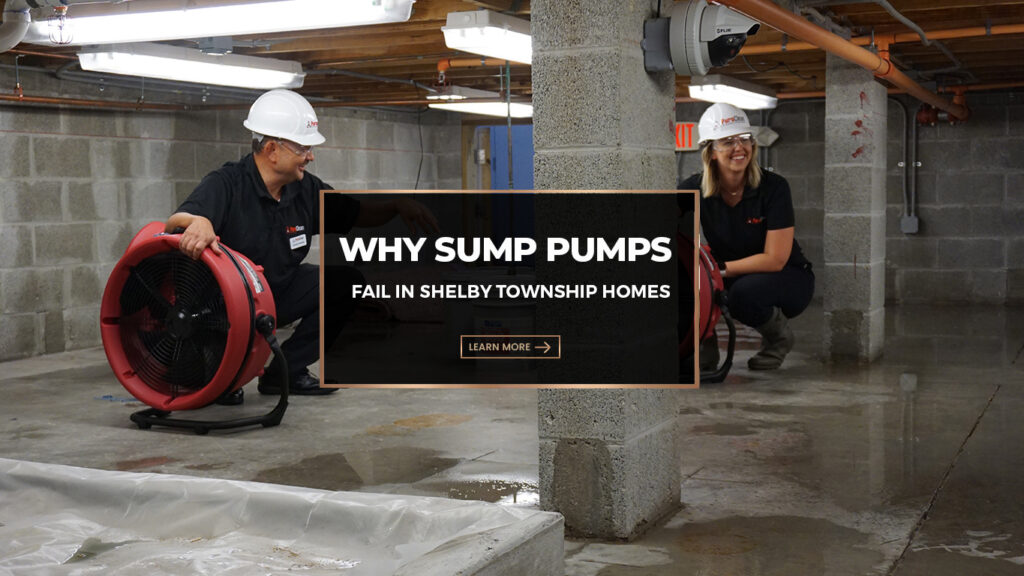
Sump pumps are one of the most important systems protecting basements from flooding. In Shelby Township and throughout Macomb County, many homes rely on sump pumps to remove groundwater and prevent water from entering the basement during heavy rainstorms and snowmelt.
When sump pumps work properly, they collect water from beneath the home and pump it safely away from the foundation. However, when these systems fail, basements can quickly fill with water and cause serious damage.
Understanding the most common reasons sump pumps fail can help homeowners prevent unexpected flooding and costly repairs.
Why Sump Pumps Are Important for Shelby Township Homes
Many homes in Shelby Township, Sterling Heights, Macomb Township, Utica, and Washington Township are built with basements that sit below the water table. During periods of heavy rain or spring snowmelt, groundwater levels can rise and place pressure on the foundation.
Sump pump systems are designed to collect this water in a sump pit and pump it away from the home before it enters the basement.
Without a functioning sump pump, homes may experience problems such as:
- Basement flooding
- Water damage to flooring and walls
- Mold growth from excess moisture
- Damage to stored belongings
- Structural damage to the foundation
Because of these risks, maintaining a sump pump system is essential for protecting homes in this region.
Power Outages During Storms
One of the most common reasons sump pumps fail is power loss during severe weather.
Heavy storms that bring large amounts of rain often cause power outages at the same time. Unfortunately, these are the exact conditions when sump pumps are needed most.
If the power goes out and the sump pump stops working, groundwater can quickly fill the sump pit and overflow into the basement.
Many homeowners reduce this risk by installing a battery backup sump pump. These systems automatically activate when the main pump loses power, allowing the pump to continue removing water during outages.
Clogged or Frozen Discharge Lines
The sump pump removes water through a discharge pipe that directs water away from the home. If this discharge line becomes blocked, water cannot properly leave the system.
Several issues can cause discharge line problems, including:
- Debris or dirt clogging the pipe
- Ice forming in the line during winter
- Improper pipe installation
- Crushed or damaged piping
When the discharge line becomes blocked, water may flow back into the sump pit or overflow into the basement.
Ensuring that the discharge line remains clear and properly positioned away from the home can help prevent this issue.
Aging or Worn Out Sump Pumps
Like any mechanical equipment, sump pumps have a limited lifespan.
Most sump pumps last between 7 and 10 years, depending on usage and maintenance. Homes that experience frequent groundwater activity may place more strain on their sump pumps, causing them to wear out faster.
Signs that a sump pump may be failing include:
- Strange noises during operation
- Excessive vibration
- The pump running constantly
- The pump failing to activate when water rises
- Visible rust or corrosion
If a sump pump shows these warning signs, replacing the unit before it fails can help prevent unexpected basement flooding.
Improper Sump Pump Installation
In some homes, sump pumps fail simply because they were not installed correctly.
Improper installation can lead to several problems that reduce the pump’s effectiveness.
Common installation issues include:
- Incorrect pump size for the home
- Poorly placed sump pits
- Improperly installed check valves
- Discharge pipes positioned too close to the foundation
If a sump pump is not correctly designed for the home’s drainage system, it may struggle to keep up with rising groundwater levels.
Professional installation helps ensure the sump pump system is properly sized and configured to protect the home.
Lack of Routine Maintenance
Many sump pump failures occur because the system has not been maintained.
Homeowners often forget about sump pumps until a major storm occurs. Unfortunately, if the system has not been tested or inspected, it may not function when it is needed most.
Regular maintenance should include:
- Testing the sump pump periodically
- Cleaning debris from the sump pit
- Checking that the float switch moves freely
- Inspecting the discharge pipe for blockages
- Confirming that water is being pumped away from the home
Performing these simple checks several times per year can greatly reduce the risk of sump pump failure.
How Shelby Township Homeowners Can Prevent Sump Pump Failure
Preventing sump pump failure starts with proper maintenance and preparation.
Homeowners can reduce their risk of basement flooding by taking several proactive steps:
- Test the sump pump before major storm seasons
- Install a battery backup pump
- Replace aging sump pumps before they fail
- Keep the sump pit clean and free of debris
- Ensure discharge pipes direct water far from the foundation
Many homeowners in Shelby Township and surrounding Macomb County communities schedule regular inspections to ensure their sump pump system is working properly.
Protecting Your Shelby Township Basement from Sump Pump Failure
Sump pump failure is one of the leading causes of basement flooding in Shelby Township homes. Because the region experiences heavy rainstorms, snowmelt, and high groundwater levels, sump pumps play a critical role in protecting basements from water damage.
When these systems fail, flooding can occur quickly and lead to mold growth, damaged flooring, and costly repairs.
By maintaining sump pump systems, installing backup protection, and addressing problems early, homeowners can significantly reduce the chances of basement flooding.
If sump pump failure leads to water entering the basement, quick water removal and proper drying are essential to prevent further damage and restore the home safely.