


The first cold morning of the season is when a lot of furnaces get switched on after months of rest. Most start without a hitch. Once in a while, though, a burner that’s out of adjustment lights late and pushes a burst of soot through the house. That’s called a puffback. Furnace puffback cleanup in Hendersonville homes can be a big job, but a pre-season tune-up makes one far less likely. Here’s what to look for and what to expect.
What Is a Furnace Puffback?
A puffback happens when fuel builds up in the combustion chamber before it lights. When it finally ignites, the small explosion forces soot and smoke out through the burner, the flue, or the ductwork instead of up the chimney.
Puffbacks are most often linked to oil-burning furnaces and boilers. A gas appliance that’s badly out of adjustment can also produce soot, though the pattern is usually different. Common causes include:
- A clogged or worn burner nozzle
- A dirty or faulty ignition system
- Air leaks in the fuel line
- A blocked chimney or flue that can’t vent properly
- A heat exchanger or combustion chamber that hasn’t been cleaned
Some puffbacks are loud and obvious. Others are quiet and leave only a fine film you notice days later.
Why the Start of the Heating Season Matters
The NFPA’s home heating safety page reports that heating equipment was involved in about 11 percent of reported home fires from 2020 to 2024. Nearly half of those heating fires (46 percent) took place in December, January, and February.
The same page gives clear advice: get chimneys and heating systems inspected and cleaned every year, before the first fire of the season. A puffback isn’t always a fire, but the same yearly service that lowers fire risk also catches the problems behind most puffbacks.
Signs Your Furnace Needs Attention
Call a heating technician before the cold sets in if you notice:
- Black streaks or smudges around supply vents or registers
- Soot around the furnace door, the burner, or the flue pipe
- A rumble, bang, or “whoomp” when the burner starts
- An oily or smoky smell when the heat comes on
- Yellow or flickering flames on a gas burner instead of steady blue
- A furnace that cycles on and off more than usual
If you smell smoke or see soot coming from vents, turn the system off at the thermostat and the service switch. Leave it off until a technician checks it.
A Pre-Season Heating Checklist
This takes an afternoon and a service call:
1. Schedule a yearly tune-up. A heating contractor can clean and adjust the burner, replace the nozzle and filters, and test combustion.
2. Have the chimney or flue checked. Blockages from debris or nests can keep exhaust from venting.
3. Change the air filter. A clean filter helps the blower move air and keeps dust out of the ducts.
4. Clear the area around the furnace. Keep boxes, paint cans, and laundry at least a few feet away.
5. Test your smoke and carbon monoxide alarms. Replace batteries as needed.
6. Know where the service switch is. It’s usually a light switch on or near the furnace, often with a red cover plate.
What About Heat Pumps and Gas Furnaces?
Many homes around Hendersonville heat with a heat pump, often with electric backup strips or a gas furnace for the coldest days. A heat pump doesn’t burn fuel, so it can’t puffback. But the backup heat may run for the first time in months on a cold night, and that’s worth planning for.
A faint burning-dust smell for a few minutes the first time electric strips come on is common. A smell that lingers, gets stronger, or comes with smoke isn’t. Turn the system off and call your HVAC contractor. A dual-fuel system with a gas furnace needs the same yearly check of the burner and venting as any other gas appliance.
Questions to Ask at Your Tune-Up
A good service visit is a chance to learn about your system. Consider asking:
- When was the burner nozzle or ignition last replaced?
- Did the combustion test look normal?
- Is the flue or chimney clear and properly connected?
- Are there signs of soot inside the cabinet or heat exchanger?
- Is the heat exchanger in good shape, with no cracks?
- How often should the filter be changed for this system?
Keep the service receipt with your home records. It’s useful later if you need to show the system was maintained. Steady upkeep is the single best way to avoid furnace puffback cleanup in Hendersonville homes.
Hendersonville’s Housing Mix
Hendersonville has plenty of homes that have been through many heating seasons. In the Census Bureau’s ACS 2020–2024 five-year data, table B25035 gives the city a median year built of 1987 (±4). Table B25034 shows roughly 43 percent of its housing units were built before 1980.
Older homes may still run on oil, or on equipment that’s been replaced in stages. Long duct runs and older registers can carry soot to rooms far from the furnace. That’s why furnace puffback cleanup in Hendersonville homes often reaches more of the house than people expect.
What Should You Do After a Puffback?
If it happens, a few calm steps help:
1. Turn off the furnace at the thermostat and the service switch.
2. Open windows if the weather allows, and step outside if the air is smoky.
3. Don’t wipe soot with a damp cloth or run a regular vacuum. Both can smear residue deeper into surfaces.
4. Keep foot traffic down so soot isn’t tracked onto carpet.
5. Change the furnace filter only after the system has been inspected.
6. Take photos of affected rooms and vents before cleaning.
7. Call your heating contractor to find the cause, then a restoration team for cleanup.
How Puffback Soot Is Cleaned
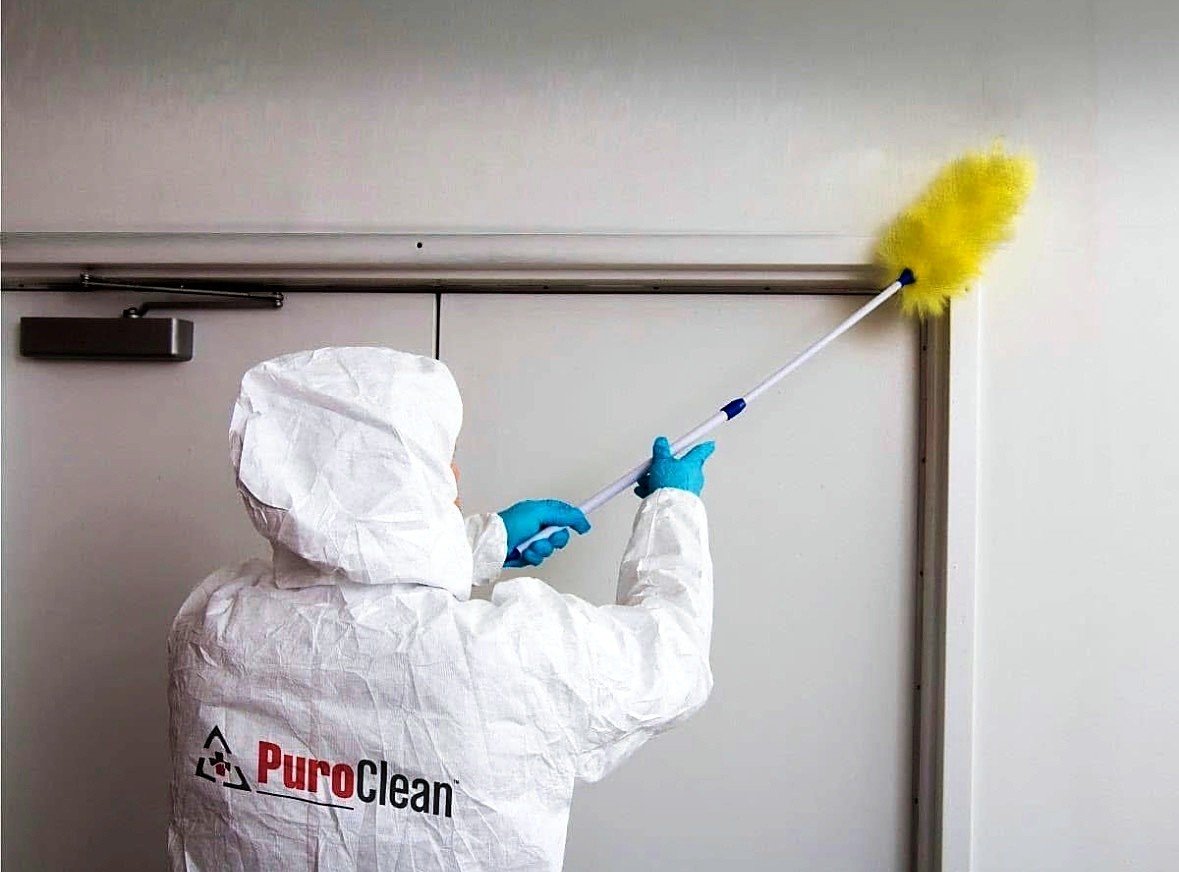
Puffback soot is fine and often oily. It clings to walls, ceilings, curtains, and anything with texture. Our fire and smoke damage restoration crew starts by walking each room to see how far the residue traveled.
From there, we usually:
- Dry-clean surfaces with chemical sponges, then follow with cleaners matched to the residue
- HEPA-vacuum ceilings, beams, and textured surfaces
- Clean soft goods like curtains and upholstery, or send them out for specialty cleaning
- Clean the ductwork and registers so soot doesn’t redistribute when the heat comes back on
- Use odor control such as thermal fogging, or ozone only in unoccupied spaces
We follow the ANSI/IICRC S700 standard, which covers fire and smoke damage restoration. How long cleanup takes depends on how far the soot spread and which materials it reached. An assessment gives you a realistic estimate.
Protecting Your Belongings While You Wait
If soot has spread, a few choices make the cleanup go better. Close doors to rooms the soot didn’t reach. Leave pictures, lampshades, and fabrics where they are rather than wiping them, since rubbing can push the residue into the fibers. Cover anything you must move with a clean sheet. Electronics are best left unplugged and untouched until they can be checked, because soot can work its way inside vents and fans.
Wash your hands after touching soot-covered items, and keep kids and pets out of the worst rooms. Those simple steps keep the job from growing while you line up help.
Is Puffback Damage Covered by Insurance?
It may be. The Insurance Information Institute’s guide to which disasters homeowners insurance covers lists smoke among the perils on standard homeowners forms. Damage tied to a lack of maintenance isn’t covered, so keeping service records can help. Ask your agent or adjuster how your policy treats a puffback.
Example: A Hendersonville homeowner turns on the heat for the first time in November and hears a muffled bang from the basement. Later that week, they spot gray streaks around two upstairs vents. That’s an invented scenario to illustrate the warning signs, not a real customer’s home.
Frequently Asked Questions
Is Furnace Puffback Cleanup in Hendersonville Something I Can Do Myself?
You can handle a small smudge near the furnace with a dry soot sponge. When soot has reached several rooms or the ducts, professional cleaning usually gives better results and avoids smearing.
Can a Gas Furnace Have a Puffback?
Puffbacks are mostly an oil-burner issue. A gas furnace that’s out of adjustment can still produce soot, so annual service matters for both.
Should I Run the Heat After a Puffback?
No. Leave it off until a heating technician has inspected and repaired it, and until the ducts have been checked for soot.
Why Does Soot Keep Showing Up After I Clean?
Soot can hide in ductwork and blow out every time the system runs. Cleaning the ducts is often part of the fix.
Talk to Us About Furnace Puffback Cleanup in Hendersonville
Reach PuroClean of South Asheville any time, day or night, at (828) 974-8408. Owner Donald Slagle leads our locally owned team. We hold IICRC certification and are EPA Lead-Safe Certified. Visit us at 309 Rockwood Road, Arden, NC 28704. We help homeowners in Hendersonville, Flat Rock, Etowah, Mills River, Fletcher, Arden, Skyland, Royal Pines, Asheville, Woodfin, and Weaverville.