


The winter holidays bring full kitchens, long cooking days, and a lot of pans on the stove at once. Most of those meals go fine. When one doesn’t, even a small stovetop flare-up can leave a sticky film and a smell that clings to everything. This guide covers how to lower the odds of a kitchen fire and what protein smoke removal in Asheville and Woodfin homes involves. It also shows what you can do ahead of time so a small scare stays small.
What Is Protein Smoke?
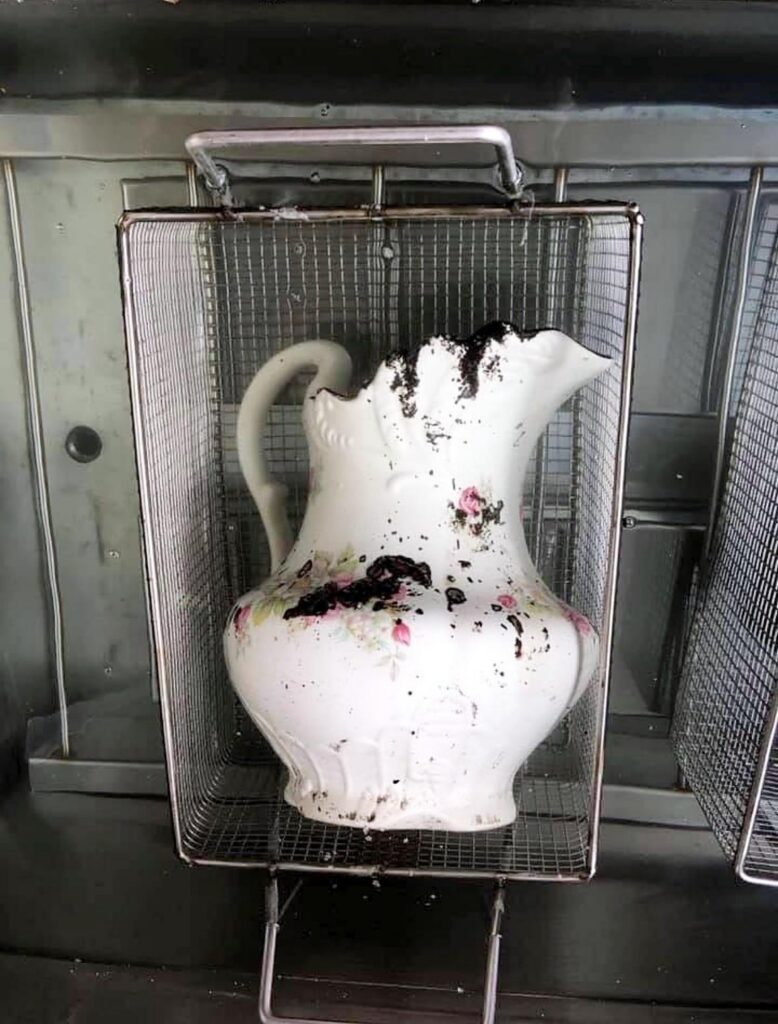
It’s the residue left when food burns, especially meat, beans, or anything with fat and protein. Unlike the black soot from a wood fire, protein residue is often pale yellow or nearly invisible. You may not see much on the walls at all.
What you will notice is the odor. It’s strong, a little sour, and it tends to linger in fabric, cabinets, and drywall long after the pan is cool. Industry guidance such as ANSI/IICRC S700 sorts smoke residue by what burned, and kitchen fires fall into the protein group for that reason.
How Common Are Kitchen Fires?
More common than most people expect. The NFPA’s cooking safety page looks at home fires from 2020 to 2024. It reports that kitchen and cooking equipment was involved in an estimated 48 percent of them. Two-thirds of home cooking fires started with food or other cooking materials catching fire.
The same NFPA figures show ranges and cooktops were involved in just over half of home cooking fires. Unattended cooking was a factor in about one in four. Those numbers point to where prevention matters most: the stovetop, and staying close to it.
A Simple Prevention Plan for the Holidays
A few habits do most of the work. Think of this as your pre-cooking checklist.
- Stay in the kitchen while you fry, sear, or boil. If you need to step away, turn the burner off.
- Keep a lid that fits each pan within reach while you cook.
- Clear the area around the stovetop of towels, oven mitts, paper packaging, and wooden spoons.
- Turn pot handles toward the back so they can’t be bumped.
- Test smoke alarms near the kitchen and replace dead batteries.
- Wipe grease off the range hood filter and the backsplash before the busy weeks begin.
- If you’re tired or distracted, save the frying for another day.
The NFPA also covers frying oil. If it starts to smoke or smell, turn off the burner or carefully move the pan off the heat. Smoke is the sign the oil is too hot.
If a Pan Catches Fire
Small grease fires can usually be smothered. The NFPA advises sliding a lid over the pan and turning off the burner, then leaving the lid on until the pan has fully cooled. Never throw water on a grease fire. For an oven fire, turn off the heat and keep the door shut.
If the fire doesn’t go out right away, don’t keep trying. Get everyone out, close the door behind you, and call 911 from outside. A house can be cleaned. People come first.
Why Protein Residue Is Hard to Clean
The film is thin, but it’s oily and sticky. It bonds to painted surfaces and works its way into porous materials. Wiping it with the wrong cleaner can smear it across a wider area and make the odor harder to remove.
It also travels. Smoke from a stovetop rises, drifts with the air from your heating system, and settles in rooms that weren’t near the fire. That’s why a small flare-up in the kitchen can leave a smell in a bedroom down the hall.
Where the Residue Tends to Settle
| Area | Why it holds residue | What to check |
|---|---|---|
| Cabinet faces and interiors | Wood and laminate absorb oily film | Sticky feel, faint yellow tint |
| Range hood and filter | Collects grease and smoke directly | Heavy buildup, odor |
| Ceiling above the stove | Smoke rises and spreads out | Discoloration near light fixtures |
| HVAC returns and ducts | Air pulls smoke through the house | Odor when the system runs |
| Fabrics and curtains | Fibers trap odor | Smell after the room airs out |
| Small appliances and dishes | Surfaces near the stove | Film on handles and lids |
What Happens During Professional Cleanup?
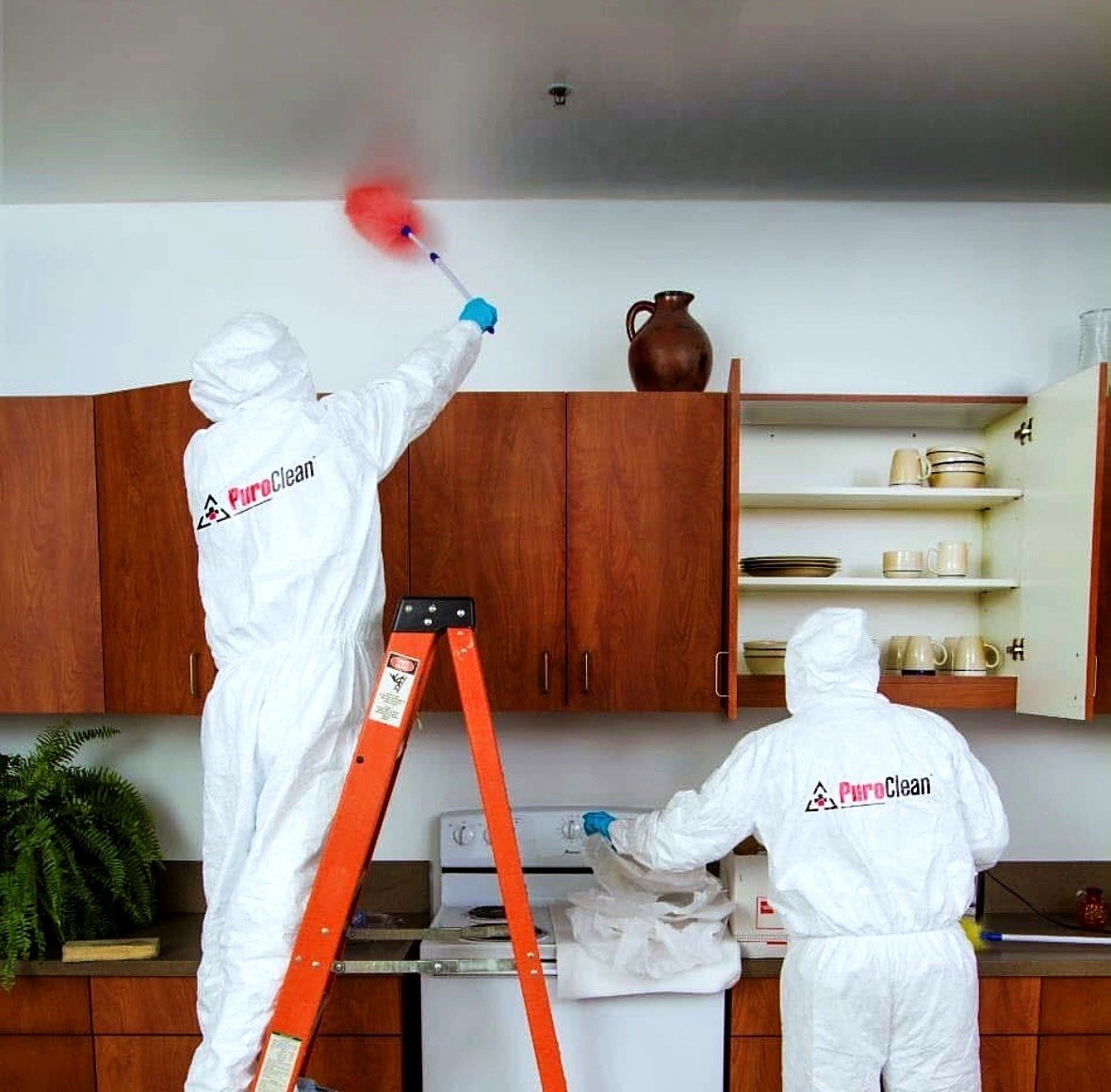
If a flare-up leaves more residue than a quick wipe can handle, it helps to know what the process looks like. Our fire and smoke damage restoration team follows the general approach industry standards describe.
1. Assess. We check which rooms and surfaces were affected, including places you can’t see, such as inside cabinets and ducts.
2. Test surfaces. Different finishes need different cleaners. A small test spot shows what will lift the film without harming the paint or wood.
3. Clean from the top down. Ceilings and upper cabinets come first so residue doesn’t drip onto surfaces that are already clean.
4. Clean contents. Dishes, small appliances, and decor can often be cleaned on-site or packed out for cleaning.
5. Treat the odor at its source. Once the residue is gone, deodorization methods such as thermal fogging or hydroxyl generators can help. Ozone, if used, is only for unoccupied spaces.
6. Check the result. We walk the rooms again to confirm the odor is gone before calling the job done.
How long this takes depends on how far the smoke traveled and what it settled on. A job limited to the kitchen is usually shorter than one where smoke reached several rooms. We’ll give you a realistic estimate after the assessment.
How to Get Your Kitchen Ready Before Guests Arrive
A little prep before the busy weeks makes any cleanup smaller if something does go wrong. It also makes protein smoke removal in Asheville kitchens faster, because there’s less grease for the smoke to bond with.
- Run the range hood fan every time you cook, and clean or replace its filter.
- Degrease the top of the cabinets above the stove, where film collects unseen.
- Swap the furnace or heat pump filter so the system isn’t pulling air through a clogged one.
- Put a lid rack or a spare lid next to the stove where anyone cooking can grab it.
- Agree on who’s watching the stove when several people are cooking at once.
What to Avoid Right After a Flare-Up
- Don’t scrub sticky residue with a wet sponge right away; it can spread the film.
- Don’t cover the smell with candles or sprays. Masking it doesn’t remove it.
- Don’t run the HVAC system for long periods if smoke reached the returns; ask about a filter change first.
- Don’t sand or scrape painted surfaces in an older home without testing for lead first.
When Should You Call for an Assessment?
Call if the smell is still there after a day of airing out, or if you can feel a sticky film on cabinets or walls. Call as well if smoke reached rooms beyond the kitchen. Professional protein smoke removal in Asheville homes starts with finding where the residue went, so an early look keeps the job smaller.
Why Home Age Matters Here
Older finishes and building materials can be more porous. Census Bureau ACS 2020–2024 five-year estimates (table B25035) show a median year built of 1982 (±2) for the city of Asheville. About 48 percent of the city’s roughly 50,000 housing units were built before 1980, per table B25034. In Woodfin, the median year built is 1999 (±4), so many kitchens there are newer.
Homes built before 1978 may have lead paint, which needs testing before any sanding. Some older materials can also contain asbestos and should be tested before cutting or removal.
Does Insurance Cover Smoke Cleanup?
The Insurance Information Institute has a guide to which disasters are covered by homeowners insurance. Smoke is one of the perils on the standard policy forms it compares. Whether your cleanup is covered depends on your policy and the cause of the fire. Talk with your agent or adjuster before you start any work, and take photos of the affected areas first.
Example: A Woodfin family is searing a roast when the pan oil smokes and flares. They slide a lid over it and turn off the burner, and the fire goes out. Two days later, the hallway still smells, so they call for an assessment. This is an invented example, not a real customer’s home.
Frequently Asked Questions
How Long Does Protein Smoke Odor Last If It Isn’t Cleaned?
It can linger for weeks or longer, because the residue keeps releasing odor until it’s removed. Airing out the house helps for a while, but the smell often comes back when the heat or humidity rises.
Can I Handle Protein Smoke Removal in Asheville Homes Myself?
For a very light film on one surface, a mild degreasing cleaner may be enough. If the odor reached other rooms, the cabinets feel sticky, or the HVAC system ran during the fire, a professional assessment is a good idea.
Is the Residue a Health Concern?
Smoke residue can irritate some people, especially anyone with asthma or breathing problems. If you have health questions, talk to your doctor.
Should I Throw Out Food That Was in the Kitchen?
Food that was open or near the smoke is usually best thrown away. Sealed cans and jars can often be wiped clean, but when in doubt, toss it.
Get Help With Protein Smoke Removal in Asheville and Woodfin
PuroClean of South Asheville is locally owned and operated by owner Donald Slagle, and we answer calls 24/7. Our credentials include IICRC certification, and we’re EPA Lead-Safe Certified. If a kitchen flare-up leaves residue or an odor behind, call (828) 974-8408. Our office is at 309 Rockwood Road, Arden, NC 28704. We serve Arden, Asheville, Woodfin, Weaverville, Skyland, Royal Pines, Fletcher, Mills River, Hendersonville, Flat Rock, and Etowah.