


Many mountain homes and cabins around Asheville and Mills River sit empty for part of the winter. Some are second homes. Others are rentals between guests, or a family place you only visit on long weekends. An empty house can’t tell you when the heat quits or a pipe starts to freeze. That’s why winterizing a vacant home near Asheville is worth doing before you lock the door. This checklist walks through the heat, the water, and the people who can check in while you’re gone.
How Cold Does It Get Around Asheville?
Cold enough that freezing nights are routine from late fall through early spring. NOAA’s 1991–2020 climate normals for Asheville Regional Airport (USW00003812) list an average of about 87 nights a year at or below 32°F. About 15 nights a year drop to 20°F or lower.
January is the coldest month there, with a normal low of 28.6°F and about 22 nights at or below freezing. November already averages around 13 freezing nights, and December about 19. Higher, more exposed homes on ridges and in hollows can run colder than the airport reading.
Why Vacant Homes Are More Exposed
An occupied house has people running water, noticing drafts, and hearing the furnace kick on. A vacant one has none of that. Small problems can grow quietly:
- A furnace or heat pump fails, and the indoor temperature slowly drops.
- A power outage shuts off heat, the well pump, and any heat tape.
- A propane tank runs low and the heater stops.
- Pipes in exterior walls, crawl spaces, or unheated porches freeze first.
- If a pipe splits, water can run for days before anyone notices.
The goal of winterizing is to remove as many of those weak points as you can.
Option One: Keep the Heat On
If you’d like to visit during the winter or rent the place out, keeping the house heated is usually the simplest approach.
1. Set a safe minimum temperature. Ask your plumber or HVAC contractor what minimum setting makes sense for the house, and check whether your insurer has a requirement.
2. Service the heating system before you leave. A tune-up lowers the odds of a midwinter failure.
3. Check your fuel supply. Top off propane or heating oil, and set up automatic delivery if it’s offered.
4. Open cabinet doors under sinks on exterior walls. That lets warm air reach the pipes.
5. Insulate exposed pipes. Foam sleeves on crawl space and basement lines help a lot.
6. Seal drafts. Close crawl space vents for the winter if your contractor agrees, and seal gaps where pipes pass through walls.
Option Two: Drain the System
If the home will sit unused for months and you don’t plan to visit, draining the water system is another approach. It’s a bigger job, and it’s best done by a plumber who knows the house. A typical professional winterization includes:
1. Shutting off the main water valve, or the well pump at its breaker.
2. Opening faucets on every level, starting at the top, to let the lines drain.
3. Draining the water heater and turning it off.
4. Blowing out lines with compressed air where needed.
5. Adding plumbing antifreeze to sink and tub traps and toilet bowls.
6. Draining the washing machine, ice maker, and dishwasher lines.
Leave a note by the main shutoff saying the house is winterized, so no one turns the water back on by mistake.
Special Notes for Well and Septic Homes
Many homes around Mills River and in the hills outside Asheville run on a private well. The pressure tank and pump lines need protection too. A well house or pump room should stay above freezing, or be drained along with the rest of the system.
If the house is on a septic system, ask your plumber which antifreeze is safe to use in the traps and toilets. Not all products are meant for septic systems.
Short-Term Rentals Between Guests
If you rent the house out, the gaps between bookings are when it’s most exposed. A guest may leave the thermostat low or a window cracked. Cleaners may not know where the shutoff is.
Build a few winter steps into your turnover routine:
- Reset the thermostat to your winter minimum after every checkout.
- Check that windows and exterior doors are fully closed and latched.
- Leave cabinet doors under sinks open on exterior walls.
- Post a short note for guests about keeping the heat on and reporting drips.
- Give your cleaning crew the shutoff location and your plumber’s number.
These steps make winterizing a vacant home near Asheville part of the normal rhythm of running a rental, rather than a once-a-year chore.
Set Up Check-Ins and Alerts
Even a well-prepared house benefits from a set of eyes.
- Ask a neighbor or caretaker to stop by on a set schedule, and after any hard freeze. Give them a key and the location of the main shutoff.
- Install a Wi-Fi thermostat or temperature sensor that sends an alert if the indoor temperature drops.
- Add water leak sensors near the water heater, washer, and under sinks.
- Keep the driveway passable. If a check-in person can’t get up the hill, they can’t help.
- Leave contact numbers for your plumber, HVAC contractor, and propane supplier where the caretaker can find them.
Homes Around Asheville and Mills River
The housing stock varies a lot between the two. The Census Bureau’s ACS 2020–2024 five-year figures (table B25035) show the gap. Asheville’s median year built is 1982 (±2), while Mills River’s is 1997 (±2). In Asheville, about 18 percent of homes date to 1939 or earlier, according to table B25034.
Older homes in Asheville may have pipes in exterior walls, unheated crawl spaces, and less insulation than modern construction. Newer homes and cabins in Mills River often sit on sloped lots with long runs of pipe through a crawl space. Either way, winterizing a vacant home near Asheville or Mills River starts with knowing where your pipes run.
Before You Lock the Door
Run through this short list on your last day:
- Thermostat set, or water system drained
- Main water valve and well pump location noted for the caretaker
- Cabinet doors under sinks open, if the heat stays on
- Hoses disconnected from outdoor spigots, and frost-free spigots checked
- Gutters cleared so melting snow can drain
- Valuables and boxes off basement floors
- Photos of each room, so you have a record of how you left it
What If Something Goes Wrong While You’re Away?
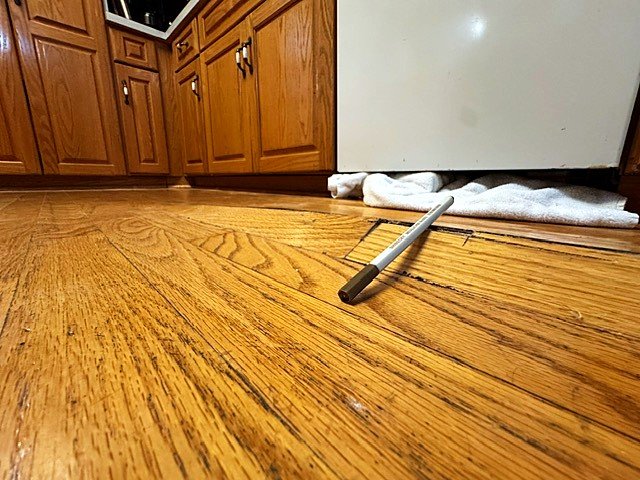
Even with good prep, a pipe can still fail. If your caretaker finds water, have them shut off the main valve, avoid wet areas near outlets, and take photos. Then call for help. Our water damage restoration team can extract water, measure moisture, and dry the structure. Residential drying usually takes several days, depending on how long the water ran and what it reached.
Will Insurance Cover a Freeze in a Vacant Home?
It depends on your policy. The Insurance Information Institute covers this in its article on surviving severe cold weather. It says standard homeowners policies cover most kinds of freeze damage, such as pipes that freeze and burst. Before you leave, ask your agent whether your policy has any requirements for a home that sits empty for long stretches.
Example: A Mills River family closes their cabin after a fall visit. They set the heat to the minimum their plumber suggested and ask a neighbor to check in weekly. A temperature alert pings their phone in January when the propane runs low, and the supplier refills it the next day. This is a made-up illustration, not a customer story.
Frequently Asked Questions
What Temperature Should I Leave a Vacant Home At?
There isn’t one number for every house. Your plumber or HVAC contractor can suggest a setting, and homes with pipes in exterior walls or crawl spaces may need it set higher.
Is Draining the Pipes Better Than Leaving the Heat On?
It depends on how long the house will be empty and whether you’ll visit. Draining removes most of the water that could freeze, while heat keeps the house ready to use.
Do I Need a Plumber for Winterizing a Vacant Home Near Asheville?
For a full drain-down, it’s a good idea. A plumber knows how to clear every line, protect the water heater, and treat the traps correctly.
How Often Should Someone Check the House?
A regular weekly visit is a common choice, plus a check after a hard freeze or power outage. Your insurance agent can tell you if your policy has any requirements.
Need Help With Winterizing a Vacant Home Near Asheville?
PuroClean of South Asheville is a locally owned company run by owner Donald Slagle. We’re IICRC certified and EPA Lead-Safe Certified, and we answer 24/7. Call (828) 974-8408 any time. Our office sits at 309 Rockwood Road, Arden, NC 28704. We’re here for homeowners in Asheville, Mills River, Arden, Fletcher, Skyland, Royal Pines, Woodfin, Weaverville, Hendersonville, Flat Rock, and Etowah.