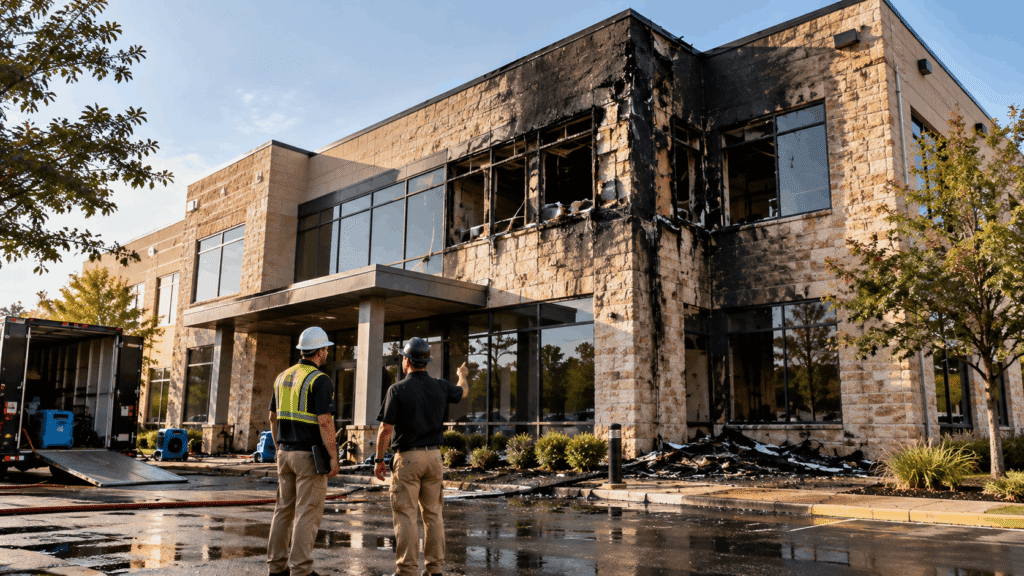
For business owners, the priority after a fire is not simply cleaning up what is visible. The property needs to be made safe, the damage needs to be documented, and affected building materials, equipment, inventory, and other assets need to be properly evaluated.
Understanding what to do after commercial fire damage can help business owners avoid common mistakes and begin the recovery process in a more organized way.
What Should a Business Owner Do Immediately After a Commercial Fire?
The first steps after a commercial fire should focus on safety and preventing additional damage.
Business owners should:
- Do not enter the building until authorities say it is safe.
- Keep employees, customers, and unauthorized people away from damaged areas.
- Contact the insurance company as soon as practical.
- Document visible damage when it is safe to do so.
- Protect undamaged property from additional exposure or damage.
- Avoid throwing away damaged items before they are properly documented.
- Contact a professional restoration company for an assessment.
- Begin planning how the business will continue operating during restoration.
A fire can leave behind hazards that are not immediately visible, including structural damage, electrical problems, unstable ceilings, smoke contamination, and contaminated water.
Commercial Restoration Services
Why Is Commercial Fire Damage More Complicated Than It Looks?
Fire damage is rarely limited to the area where flames were present.
A commercial property can experience several types of damage at the same time:
- Direct fire damage
- Smoke and soot damage
- Heat damage
- Water damage from firefighting
- Damage from firefighting agents
- Structural damage
- Electrical system damage
- HVAC contamination
- Inventory and equipment damage
- Odor problems
For example, a fire in a commercial kitchen may directly damage the kitchen while smoke travels into offices, hallways, storage rooms, and other areas.
Likewise, water used to extinguish the fire can create additional damage in areas that were never touched by flames.
This is why a professional assessment should consider the entire affected property rather than focusing only on the visibly burned area.
Do Not Re-Enter a Fire-Damaged Building Too Quickly
One of the most important rules after a commercial fire is to avoid entering the property until it has been cleared for safe access.
Fire can weaken:
- Roof structures
- Ceilings
- Walls
- Floors
- Stairways
- Electrical systems
- Supporting structural components
Smoke and fire can also leave hazardous residues throughout the property.
Even when the flames have been extinguished, the building may not immediately be safe for normal occupancy.
Business owners should follow instructions from the appropriate authorities and qualified professionals before allowing employees or customers to return.
Document the Commercial Fire Damage
Once the property can be safely accessed, documentation should begin.
Take photographs and videos of affected areas, including:
- Burned materials
- Smoke and soot deposits
- Water damage
- Damaged ceilings and walls
- Flooring
- Equipment
- Furniture
- Inventory
- Computers and electronics
- Documents and records
- Exterior damage
- Roofing or structural damage
Business owners should also create a written inventory of damaged property.
Useful information may include:
- Item description
- Quantity
- Approximate age
- Purchase information
- Estimated value
- Serial number, when available
- Location within the building
- Condition after the fire
Do not put yourself at risk to collect documentation. Safety should always come first.
What Happens to Business Inventory After a Fire?
Not everything affected by a fire should automatically be thrown away.
Some items may have direct fire damage. Others may have smoke, soot, heat, or water damage but may still be potentially salvageable depending on their condition and material.
This can include:
- Furniture
- Electronics
- Office equipment
- Merchandise
- Documents
- Machinery
- Fixtures
- Business records
A professional assessment can help determine which items may be recoverable and which may require disposal.
This is especially important for businesses carrying valuable inventory or specialized equipment.
What Happens to Belongings During Restoration?
Smoke and Soot Can Cause Extensive Damage
Smoke damage is one of the most important issues to address after a commercial fire.
Smoke can travel through:
- HVAC systems
- Doorways
- Hallways
- Ceiling spaces
- Wall cavities
- Ventilation systems
Soot can settle on walls, ceilings, furniture, equipment, and other surfaces.
Different types of smoke can also leave different residues and odors.
Simply wiping visible soot from a surface may not address the entire contamination problem.
Professional cleaning and restoration may involve evaluating affected surfaces, contents, ventilation systems, and concealed areas.
What About Water Damage After a Commercial Fire?
Water damage is a common secondary concern after firefighting efforts.
Large quantities of water may enter the building and affect:
- Flooring
- Drywall
- Insulation
- Ceilings
- Furniture
- Inventory
- Electrical components
- Equipment
Water that remains in the building can also contribute to additional deterioration and moisture-related problems.
The restoration process may therefore involve both fire and water damage assessment.
Commercial Water Damage Restoration
Why Fast Action Matters After a Fire
A business may be tempted to wait until the situation is fully assessed before taking action.
However, delays can make the restoration process more complicated.
Smoke residue can remain on affected surfaces, moisture can continue damaging materials, and exposed areas of the building may remain vulnerable to additional problems.
Early professional assessment can help establish:
- What areas were directly damaged
- Where smoke traveled
- Which materials were affected by water
- Which contents may be salvageable
- What requires cleaning
- What may need removal
- What repairs or reconstruction may be necessary
The restoration plan should be based on the actual condition of the property rather than assumptions based only on visible damage.
How Does Commercial Fire Damage Restoration Work?
Every fire restoration project is different, but a commercial property may go through several stages.
1. Initial Assessment
Professionals evaluate the property to determine the type and extent of damage.
This may include looking at fire, smoke, soot, water, structural, and contents-related damage.
2. Safety and Stabilization
The property may require measures to restrict access, protect exposed areas, or stabilize portions of the building.
3. Water Removal and Drying
If firefighting water has affected the property, standing water may need to be removed and affected areas dried.
Moisture can also be present inside materials that appear dry on the surface.
4. Smoke and Soot Cleaning
Affected surfaces and contents may require specialized cleaning based on the type and extent of smoke contamination.
5. Contents Assessment
Business equipment, inventory, furniture, records, and other belongings may be evaluated for cleaning, restoration, or disposal.
6. Odor Management
Smoke odors can remain after visible soot has been cleaned. Odor treatment should address the affected materials and spaces rather than simply masking the smell.
7. Repairs and Reconstruction
Depending on the severity of the damage, damaged building materials may need to be repaired or replaced.
Some properties may require more extensive reconstruction before normal business operations can resume.
How Can a Fire Affect HVAC Systems?
HVAC systems deserve special attention after a commercial fire.
Smoke and soot can travel through ventilation systems and distribute contaminants to other areas of a building.
If the HVAC system was affected, it should be evaluated before normal operation resumes.
Simply turning on the system without determining whether it has been contaminated could potentially distribute smoke residue throughout previously unaffected areas.
How Should Businesses Handle Electronics After a Fire?
Electronics can be affected by:
- Heat
- Smoke
- Soot
- Water
- Firefighting chemicals
- Corrosion
Computers, servers, networking equipment, machinery, and other electronic systems should be handled carefully.
Business owners should avoid assuming that equipment is safe to power on simply because it appears intact.
A qualified professional should determine the appropriate next step for valuable or sensitive equipment.
What Should a Business Do About Important Documents?
Important business records may include:
- Financial records
- Contracts
- Customer records
- Employee documents
- Tax records
- Legal documents
- Paper files
- Product information
Fire, smoke, soot, and water can affect these materials differently.
Businesses should identify critical documents early and determine whether they can be recovered or whether replacement copies are available.
Digital backups can also be extremely valuable during recovery.
How Can a Business Continue Operating During Restoration?
A commercial fire can affect revenue even when only part of the building is damaged.
Business owners should consider whether operations can continue from:
- An unaffected section of the property
- A temporary location
- A remote environment
- A backup facility
The answer will depend on the business type and the severity of the damage.
A restaurant, medical office, retail store, warehouse, and professional office may each require a different continuity strategy.
Communication is also important.
Employees, customers, vendors, and other stakeholders may need clear information about temporary closures, modified operating hours, alternate locations, or service interruptions.
What Should Businesses Avoid After a Fire?
Some actions can make the restoration process more difficult.
Do Not Start Major Cleanup Without Documentation
Cleaning before the damage is documented can make it harder to establish the full scope of the loss.
Do Not Throw Away Everything That Looks Damaged
Some items may be recoverable. Document and assess them before disposal whenever practical.
Do Not Use Electrical Equipment in Unsafe Areas
Water and electrical systems can create serious hazards.
Do Not Attempt Structural Repairs Yourself
Fire can compromise structural components that are not obvious to an untrained observer.
Do Not Ignore Smoke Damage
Smoke can affect areas that were never directly touched by flames.
Do Not Assume the Property Is Fine Because the Fire Was Small
A relatively contained fire can still create smoke, soot, water, odor, and hidden damage throughout a building.
How Can Businesses Prepare for Future Fire Emergencies?
Businesses can take several steps before a fire occurs.
Maintain an Emergency Contact List
Keep current contact information for:
- Emergency services
- Insurance representatives
- Restoration professionals
- Building management
- Electrical contractors
- Plumbing contractors
- HVAC professionals
Maintain Important Backups
Critical business documents and digital data should have appropriate backups.
Keep an Updated Inventory
Maintain records of valuable equipment, inventory, machinery, and other important assets.
Review Your Emergency Plan
Employees should know evacuation procedures and who is responsible for communicating with management during an emergency.
Know Where Critical Systems Are Located
Employees responsible for facility management should understand the location of important shutoffs and building systems where appropriate and safe.
Commercial Fire Damage in Southlake and Surrounding Areas
A commercial fire can affect businesses throughout Southlake and nearby communities, including Grapevine, Keller, Colleyville, Trophy Club, Roanoke, Bedford, and Euless.
The appropriate restoration response depends on the size of the fire, affected building materials, smoke movement, water exposure, contents, and the condition of the property after emergency services have completed their work.
For local businesses, getting the property assessed promptly can help identify both visible and less obvious damage.
Frequently Asked Questions About Commercial Fire Damage
What is commercial fire damage?
Commercial fire damage includes damage to a business property caused directly or indirectly by a fire. It can involve flames, heat, smoke, soot, firefighting water, chemicals, structural damage, equipment, inventory, and other affected contents.
How soon should a business call a restoration company after a fire?
A business should arrange a professional assessment as soon as it is safe to do so. Early assessment can help identify the scope of damage and determine what mitigation and restoration steps are appropriate.
Can smoke damage affect areas that were not burned?
Yes. Smoke can travel through open spaces and ventilation systems and may affect rooms and contents that were not directly exposed to flames.
Can business equipment be saved after a fire?
Some equipment may be recoverable depending on the extent and type of fire, smoke, heat, and water exposure. Equipment should be evaluated before business owners assume it needs to be discarded.
Does commercial fire damage include water damage?
It can. Water used during firefighting may affect parts of the property that were not directly damaged by the fire. A complete assessment should consider both fire-related and water-related damage.
Final Thoughts
A commercial fire does not end when the flames are extinguished. Smoke, soot, heat, water, structural damage, damaged equipment, and business interruption can continue affecting the property and operations.
Business owners should focus first on safety, then document the damage, contact their insurance provider, protect the property from additional damage where appropriate, and arrange a professional assessment.
A structured restoration process can help identify what can be cleaned or restored, what requires replacement, and what repairs are necessary before the business can return to normal operations.
Need Help With Commercial Fire Damage in Southlake?
If your business has experienced a fire, smoke damage, soot contamination, or water damage from firefighting, PuroClean of Southlake can help assess the property and determine the appropriate restoration steps.
Call (817) 809-8585 to discuss your commercial fire damage restoration needs.