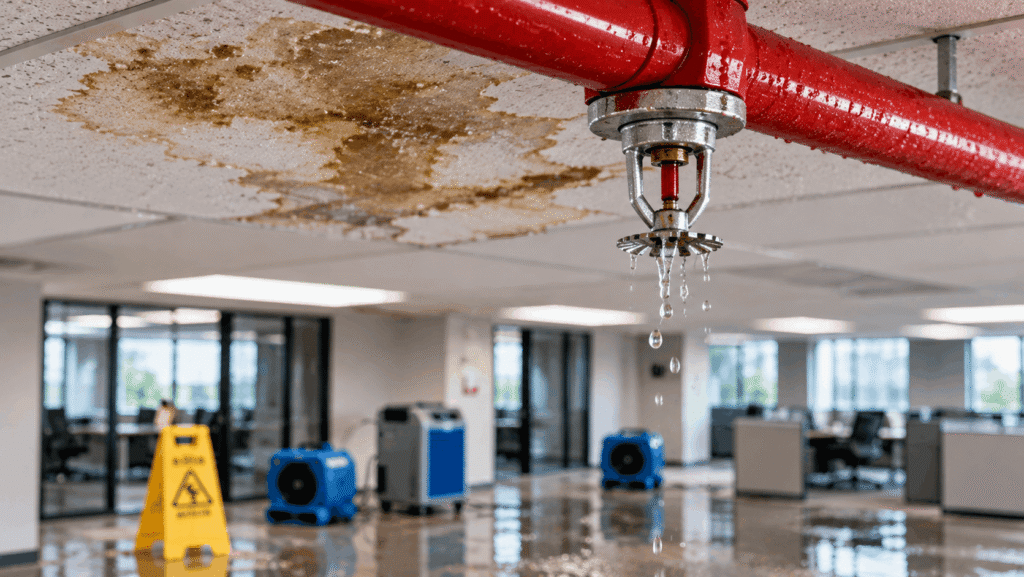
A fire sprinkler system is designed to protect a commercial building and the people inside it. However, when a sprinkler pipe leaks, a sprinkler head is damaged, or the system activates unexpectedly, the water released can create a serious property damage problem.
Commercial sprinkler system water damage can affect ceilings, walls, flooring, electrical equipment, inventory, office furniture, and other business assets. Even a leak that initially appears small can spread into concealed spaces and cause damage that is not immediately visible.
For commercial property owners and facility managers, the priority is to protect people, coordinate the safe handling of the fire protection system, document the damage, and arrange appropriate water damage assessment and cleanup.
This guide explains why commercial sprinkler systems leak, what to do after discovering water damage, and how professional restoration can help businesses recover.
What Happens When a Commercial Fire Sprinkler System Leaks?
A commercial fire sprinkler system contains a network of pipes, fittings, valves, and sprinkler heads designed to release water when the system detects the conditions specified by its design.
Water damage can occur when a component fails, a pipe develops a leak, or the system activates during an emergency or due to an unintended event.
The amount of damage depends on several factors:
- How much water was released.
- How long the leak continued.
- Which areas of the building were affected.
- Whether water entered ceilings, walls, floors, or other concealed spaces.
- What equipment, inventory, and materials were exposed.
- How quickly the water source was safely addressed and cleanup began.
A sprinkler leak in an office may affect ceiling tiles, carpet, computers, and documents. In a warehouse, water may reach stored inventory, packaging materials, machinery, and electrical systems. Retail stores, restaurants, medical offices, and other commercial properties can experience different types of disruption.
The visible water on the floor is only part of the problem. Moisture can travel beyond the area where the leak first appeared.
Common Causes of Commercial Fire Sprinkler Pipe Leaks
Understanding the possible cause of a leak can help property managers identify problems early and arrange the appropriate inspection.
1. Corrosion Inside Sprinkler Pipes
Over time, corrosion can affect sprinkler system components. Depending on the system design, materials, water conditions, and maintenance history, corrosion may contribute to pipe deterioration, leaks, or other system problems.
A qualified fire protection professional should inspect suspected corrosion and determine whether repair or replacement is necessary.
2. Damaged or Defective Pipe Connections
Connections, fittings, joints, and other components may develop leaks due to deterioration, installation issues, physical damage, or other mechanical problems.
A small leak around a connection can continue releasing water until the issue is identified and addressed.
3. Frozen Sprinkler Pipes
Sprinkler piping in inadequately heated or exposed areas may be vulnerable to freezing during cold weather.
When water freezes inside a pipe, expansion can damage the pipe or its connections. A leak may become noticeable when the ice thaws.
Commercial buildings should have their sprinkler systems inspected and maintained according to applicable requirements and manufacturer guidance. Winterization decisions must be handled by qualified professionals, not through unauthorized system shutdowns.
4. Accidental Damage to Sprinkler Heads
Sprinkler heads can be damaged by maintenance work, moving equipment, construction activity, or accidental impact.
For example, a forklift operating in a warehouse may strike a sprinkler component. A contractor working near a ceiling may accidentally damage a sprinkler head.
Even when the damage appears minor, the system should be evaluated by an authorized fire protection professional.
5. Unexpected Sprinkler System Activation
Sprinkler systems may discharge water because of a fire, physical damage, system malfunction, or other activation-related event.
An activated sprinkler head can release enough water to affect multiple areas, especially when the building contains open commercial spaces or multiple connected rooms.
The response should address both the fire protection system and the resulting property damage.
6. Valve or System Component Problems
Valves and other system components require appropriate inspection and maintenance. Mechanical problems, deterioration, or improper handling may contribute to leaks or system performance issues.
Property managers should not attempt to diagnose or repair these components without qualified assistance.
Warning Signs of a Fire Sprinkler System Leak
Not every sprinkler system leak creates an immediate flood. Some problems begin with small amounts of water that gradually affect surrounding materials.
Look for the following warning signs:
- Water dripping from sprinkler heads or nearby pipe connections.
- Damp or discolored ceiling tiles.
- Water stains around sprinkler piping.
- Peeling paint or bubbling drywall near pipes.
- Unusual moisture around ceilings or walls.
- Puddles or unexplained wet flooring.
- Musty odors in areas near sprinkler lines.
- Visible corrosion or moisture around exposed sprinkler components.
- Water damage appearing below a sprinkler pipe route.
If you notice these signs, report the issue to building management and arrange an inspection by a qualified fire protection professional.
Do not touch, cover, obstruct, or attempt to repair sprinkler heads or piping.
What Should Commercial Property Owners Do After a Sprinkler Leak?
The first response can influence the extent of property damage and how quickly normal operations can resume.
Follow these steps while prioritizing occupant safety.
Step 1: Protect Employees, Customers, and Visitors
Keep people away from areas affected by active water leakage, wet flooring, damaged ceilings, or possible electrical hazards.
If water is entering occupied spaces, use appropriate barriers and signs to restrict access. Relocate employees and visitors when necessary.
If the situation involves a fire or another immediate emergency, follow emergency procedures and contact emergency services.
Step 2: Contact the Fire Protection System Professional
A fire sprinkler system is a life-safety system. Do not independently shut off, drain, or disable it.
Contact the building’s authorized fire protection contractor or responsible facilities personnel. Any system impairment should follow approved procedures, including required notifications and fire safety precautions.
The cause of the leak should be investigated, and the system should be returned to service through the appropriate authorized process.
Step 3: Address Electrical and Structural Hazards
Water can reach lighting fixtures, electrical outlets, wiring, equipment, and other electrical components.
Do not enter standing water where electrical hazards may exist. Do not operate wet electrical equipment or attempt to restore power yourself.
Have qualified electrical professionals evaluate affected systems before they are used again.
Also watch for sagging ceiling materials, damaged drywall, or other signs of possible structural problems. Keep people away from unsafe areas until they have been assessed.
Step 4: Document the Visible Damage
Once it is safe, document the affected areas for property management and insurance purposes.
Record:
- Photographs and videos of the leak and affected spaces.
- The approximate time the problem was discovered.
- Areas where water is visible.
- Damaged furniture, equipment, inventory, and documents.
- Any actions taken to protect the property.
- Contact details and records from contractors involved.
Keep invoices, inspection reports, restoration estimates, and related communications.
Avoid discarding potentially relevant damaged materials before discussing documentation requirements with the insurer or appropriate claims representative, unless removal is necessary for safety or damage mitigation.
Step 5: Arrange a Professional Water Damage Assessment
Water may travel through ceiling cavities, wall assemblies, flooring, and other concealed areas.
A professional assessment can help identify affected materials and determine the appropriate water extraction, drying, cleaning, and repair requirements.
This is particularly important when water has reached multiple rooms, electrical equipment, insulation, inventory, or areas that cannot be inspected easily.
Step 6: Coordinate Restoration and Business Operations
Work with property management, the fire protection contractor, restoration professionals, and other relevant specialists to establish a recovery plan.
Depending on the extent of damage, some areas may need to remain closed while cleanup and repairs are completed.
Businesses should identify unaffected workspaces, protect important records, and communicate operational changes to employees, customers, and vendors.
Risks of Delaying Commercial Sprinkler System Water Damage Cleanup
A delayed response can allow water to affect more building materials and business assets.
Damage to Ceilings and Walls
Ceiling tiles and drywall can absorb water. They may become stained, swollen, weakened, or unsuitable for continued use.
Water may also move behind wall surfaces and into insulation or other concealed materials.
Flooring and Subfloor Damage
Carpet, carpet padding, hardwood flooring, laminate, and subfloor materials can be affected by prolonged moisture exposure.
Some materials may be salvageable, while others may require removal and replacement. The decision depends on the material, water exposure, condition, and drying results.
Damage to Equipment and Inventory
Water can affect computers, servers, office equipment, machinery, furniture, products, packaging, and stored inventory.
Electrical and electronic equipment should not be returned to service until appropriately evaluated by qualified professionals.
The Texas Department of Insurance provides guidance on evaluating water-damaged electrical equipment and emphasizes the need for qualified assessment before equipment is reused.
Mold Growth Concerns
When building materials remain damp, conditions may develop that support mold growth.
The U.S. Environmental Protection Agency recommends responding to water damage promptly. Its commercial building guidance identifies drying wet materials within approximately 24 to 48 hours as an important measure for reducing mold risk, although actual requirements depend on the material and conditions.
This is one reason why early moisture assessment and effective drying matter.
Business Interruption
A sprinkler leak can affect normal operations, especially when water reaches customer areas, workspaces, storage rooms, or critical equipment.
Depending on the damage, a business may need to restrict access, relocate operations, or temporarily close affected areas.
The longer restoration is delayed, the more difficult it may become to manage operational disruption.
How Professional Sprinkler System Water Damage Cleanup Works
Professional restoration focuses on identifying the extent of moisture damage, removing excess water, drying affected materials, and determining what needs cleaning, removal, or repair.
The exact process depends on the building, water exposure, affected materials, and safety conditions.
1. Initial Inspection and Moisture Assessment
Restoration professionals inspect the affected areas and identify visible and hidden moisture concerns.
Assessment may include:
- Identifying affected rooms and building materials.
- Checking ceilings, walls, and flooring.
- Evaluating moisture in accessible concealed areas.
- Identifying potentially affected contents and equipment.
- Determining whether additional specialist inspections are needed.
The goal is to understand the full extent of the damage rather than focusing only on visible water.
2. Commercial Water Extraction
When standing water is present and conditions are safe, commercial water extraction equipment can be used to remove excess water.
The equipment and extraction approach depend on the size of the affected area, water depth, flooring type, and other site conditions.
Prompt extraction can reduce the amount of water remaining in building materials and help prepare the area for drying.
3. Structural Drying and Dehumidification
After extraction, affected areas may require professional drying equipment.
Air movers and dehumidifiers help manage moisture in the environment and support the drying of suitable building materials.
Moisture measurements can help restoration professionals monitor conditions and determine whether additional drying is required.
Simply placing household fans in a wet commercial space is not a substitute for assessing concealed moisture or establishing an appropriate drying plan.
4. Cleaning and Protection of Contents
Furniture, documents, inventory, and equipment may require separate evaluation.
Some items can be cleaned and dried, while others may be damaged beyond practical recovery.
Contents should be assessed based on their material, exposure, condition, and manufacturer recommendations.
Electronic equipment and machinery require appropriate technical evaluation before being powered on or returned to operation.
5. Removal of Unsalvageable Materials
Materials that cannot be adequately dried or restored may need to be removed.
Examples may include damaged ceiling tiles, insulation, carpet padding, or sections of drywall.
Removal decisions should be based on the actual condition of the materials and the restoration plan. Unnecessary demolition should be avoided.
6. Repairs and Reconstruction
Once the affected areas have been appropriately dried and evaluated, repair work can begin.
Depending on the damage, this may include:
- Replacing damaged drywall.
- Repairing or replacing ceiling materials.
- Replacing affected flooring.
- Repainting repaired surfaces.
- Coordinating repairs to damaged building components.
- Reinstalling or replacing affected contents.
Fire sprinkler system repairs must remain under the responsibility of qualified fire protection professionals.
7. Final Assessment Before Reopening
Before employees and customers return to affected areas, the property manager should confirm that necessary safety inspections, repairs, and restoration work have been completed.
Electrical systems, fire protection systems, structural conditions, and other affected building components should be evaluated by the appropriate qualified professionals.
Reopening decisions should follow applicable safety requirements and the building’s operational procedures.
How to Protect Business Operations and Equipment During Restoration
Water damage does not only affect building materials. It can also interrupt essential business activities.
Commercial property owners can take practical steps to reduce disruption.
Prioritize Critical Equipment
Identify equipment that is essential for daily operations, including computers, servers, machinery, point-of-sale systems, and communication equipment.
Do not move or handle equipment in unsafe or wet areas. Have affected electrical and electronic equipment evaluated by qualified professionals.
Protect Important Documents and Records
If it is safe to do so, identify documents, contracts, financial records, employee files, and other important materials that may be affected.
Document their condition and consult a qualified document restoration specialist when valuable records have sustained water damage.
Identify Alternative Workspaces
If only part of the building is affected, determine whether employees can work safely in unaffected areas.
For more extensive damage, consider temporary office arrangements or alternative operating locations.
Maintain Communication
Keep employees, customers, vendors, and other relevant parties informed about access restrictions and operational changes.
A clear communication plan can help reduce confusion while restoration work is underway.
Keep Restoration and Repair Records
Maintain a record of inspections, damage photographs, invoices, equipment evaluations, restoration work, and repair documentation.
These records can support internal recovery planning and insurance discussions.
How to Prevent Future Commercial Fire Sprinkler System Leaks
Preventive maintenance and early reporting can help identify potential problems before they result in extensive water damage.
Commercial property owners should consider the following practices.
Schedule Qualified Sprinkler System Inspections
Have the fire sprinkler system inspected, tested, and maintained according to applicable requirements, system design, and qualified fire protection guidance.
Do not rely on visual checks alone.
Protect Exposed Sprinkler Components
Avoid storing materials or operating equipment in ways that could strike sprinkler heads or exposed pipes.
Warehouse operators should pay particular attention to forklifts, storage arrangements, and overhead clearance.
Monitor Temperature in Vulnerable Areas
Areas exposed to cold conditions may need additional attention.
Discuss appropriate temperature management and freeze protection with a qualified fire protection professional. Do not make unauthorized changes to sprinkler system settings or components.
Report Small Leaks Immediately
A minor drip should not be ignored. Report unusual moisture, corrosion, or suspected leaks as soon as they are identified.
Early reporting can help prevent a small maintenance problem from becoming a larger property damage incident.
Maintain a Commercial Water Damage Response Plan
Businesses should have a written response plan identifying:
- Who is responsible for contacting the fire protection contractor.
- Who manages occupant safety and restricted access.
- Who contacts the property owner or insurance representative.
- Who coordinates water damage restoration.
- How critical equipment and records are protected.
- How business operations will continue during repairs.
Having responsibilities established in advance can help teams respond more efficiently during an unexpected incident.
Commercial Water Damage Restoration in Southlake, TX
A commercial sprinkler system leak can affect more than the immediate area where water appears. Moisture may spread into ceilings, walls, flooring, equipment, and other parts of a building.
Commercial property owners in Southlake and nearby communities such as Grapevine, Keller, Colleyville, Trophy Club, and surrounding areas should take suspected water damage seriously and arrange an appropriate assessment.
PuroClean of Southlake helps property owners address restoration-related property damage. If your commercial property has experienced water damage, contact the team to discuss the situation and determine the appropriate next step.
Call PuroClean of Southlake at (817) 809-8585.
Frequently Asked Questions
1. What causes a commercial fire sprinkler system to leak?
Common causes include corrosion, damaged pipes or connections, freezing conditions, physical damage to sprinkler heads, and problems involving system components. A qualified fire protection professional should inspect the system to identify the actual cause.
2. What should I do if a fire sprinkler pipe leaks in my commercial building?
Prioritize occupant safety, restrict access to affected areas, and contact the authorized fire protection contractor. Do not independently shut off or disable the sprinkler system. Once conditions are safe, document visible damage and arrange a professional water damage assessment.
3. Can a small sprinkler leak cause significant commercial building water damage?
Yes. Even a small leak can affect ceilings, walls, flooring, insulation, and equipment if it continues over time. Water can also enter concealed spaces, making the damage more extensive than it first appears.
4. How does commercial sprinkler system water damage cleanup work?
The process generally includes inspection, moisture assessment, commercial water extraction, structural drying, cleaning, evaluation of damaged contents, removal of unsalvageable materials, and repairs when necessary. The exact process depends on the affected building materials and conditions.
5. Can water-damaged commercial electrical equipment be used again?
Not without appropriate evaluation. Water-damaged electrical equipment can present shock, electrocution, and fire risks. A qualified electrician or other appropriate technical professional should determine whether equipment can be safely reconditioned or must be replaced.
6. How can businesses prevent water damage from fire sprinkler systems?
Businesses should arrange qualified system inspections and maintenance, protect exposed sprinkler components from physical damage, monitor vulnerable areas for freezing conditions, and report leaks immediately. A documented emergency response plan can also help limit disruption.
Final Takeaway
A leaking commercial fire sprinkler system can create significant water damage, disrupt business operations, and affect building materials and equipment.
The right response starts with protecting occupants and ensuring the fire protection system is handled by authorized professionals. After immediate hazards are addressed, timely water extraction, moisture assessment, and structural drying can help limit further damage.
If your business property in Southlake or a nearby community has experienced sprinkler-related water damage, contact PuroClean of Southlake at (817) 809-8585 to discuss your restoration needs.