


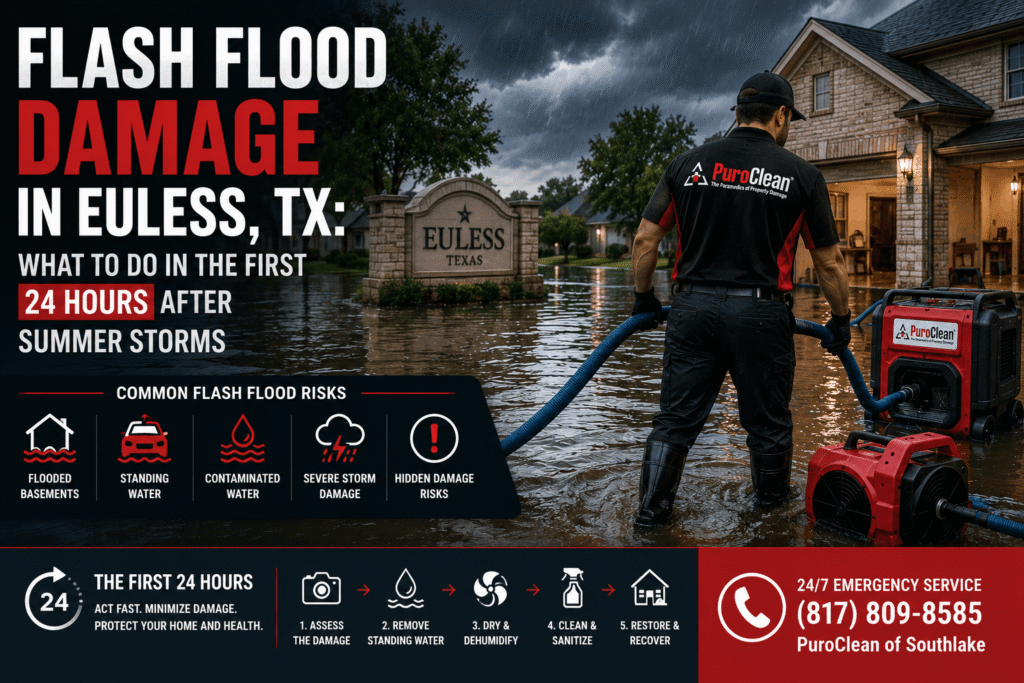
Summer storms in North Texas can develop quickly, bringing heavy rainfall that overwhelms streets, drainage systems, and residential neighborhoods. In Euless, flash flooding is a real concern during severe weather, and even a few inches of standing water can cause significant property damage. Floodwater can enter homes through doors, garages, foundation cracks, and damaged roofs, leaving homeowners with costly repairs if action isn’t taken immediately.
The first 24 hours after a flood are the most critical. Fast action helps reduce structural damage, prevents mold growth, and improves the chances of restoring your property instead of replacing damaged materials. Understanding what to do immediately after flooding can protect both your home and your family’s safety.
If you’re dealing with flash flood damage Euless TX, this guide explains the essential steps to take during the first 24 hours and why professional restoration is often the safest solution.
Why Flash Flood Damage Requires Immediate Action
Floodwater does far more than soak carpets and flooring.
It can affect:
- Drywall
- Electrical systems
- Insulation
- Wood framing
- Cabinets
- Furniture
- HVAC systems
- Personal belongings
As water sits, it continues spreading into hidden areas, increasing repair costs and creating conditions for mold growth.
Floodwater may also contain:
- Dirt
- Bacteria
- Sewage
- Chemicals
- Debris
Because of these contaminants, flood cleanup requires more than simply removing visible water.
Water Damage Restoration & Removal
Flash Flood Damage Euless TX Recovery Begins in the First 24 Hours
Taking the right steps immediately after flooding can make a major difference in the restoration process.
Step 1: Put Safety First
Never enter a flooded property until it’s safe.
Watch for hazards such as:
- Live electrical wires
- Gas leaks
- Structural instability
- Contaminated water
If you suspect electrical damage, wait until power has been safely disconnected before entering.
Your safety should always come before protecting belongings.
Step 2: Stop Additional Water from Entering
If weather conditions allow, try to prevent additional water intrusion.
This may include:
- Closing damaged windows
- Covering roof openings with temporary tarps
- Removing debris blocking drainage
- Redirecting water away from entry points
These temporary measures help reduce further damage while waiting for professional assistance.
Step 3: Document All Damage
Before beginning cleanup, document everything thoroughly.
Take photographs of:
- Flooded rooms
- Damaged furniture
- Flooring
- Walls
- Appliances
- Personal belongings
This documentation may help support your insurance claim later.
Step 4: Contact Your Insurance Company
Notify your insurance provider as soon as possible.
Provide:
- Photos
- Videos
- A list of damaged items
Early communication often helps speed up the claims process.
Professional restoration companies can also assist with documentation.
Step 5: Call a Professional Restoration Company
Floodwater can hide beneath flooring, behind walls, and inside insulation.
Professional restoration teams use specialized equipment to detect hidden moisture and prevent additional damage.
The sooner restoration begins, the greater the chance of saving building materials and personal property.
Professional Water Damage Inspection Guide
What Happens During Professional Flood Restoration?
A professional flood restoration project follows several important stages.
Emergency Inspection
The restoration team evaluates:
- Water source
- Flood category
- Structural damage
- Moisture levels
- Safety hazards
Advanced moisture detection equipment helps locate hidden water.
Water Extraction
Commercial extraction equipment removes standing water quickly.
Fast extraction reduces:
- Structural damage
- Mold risk
- Drying time
Industrial equipment removes water much more effectively than household vacuums or pumps.
Structural Drying
After extraction, technicians install:
- Industrial air movers
- Commercial dehumidifiers
- Drying systems
Moisture readings are monitored daily until the structure is completely dry.
Cleaning and Sanitization
Floodwater often contains harmful contaminants.
Professional cleaning includes:
- Surface disinfection
- Antimicrobial treatments
- Odor removal
- Air quality improvement
This step helps create a safe indoor environment.
Mold Removal Services
Restoration and Repairs
Depending on the severity of flooding, restoration may include:
- Drywall replacement
- Flooring repairs
- Cabinet restoration
- Painting
- Reconstruction
The goal is to return your property to its pre-loss condition.
Property Reconstruction Services
Common Mistakes Homeowners Make After Flooding
Many property owners unintentionally increase damage after a flood.
Avoid these common mistakes.
Waiting Too Long
Water damage becomes more severe every hour.
Delaying restoration increases repair costs.
Using Household Fans Alone
Consumer-grade fans cannot remove moisture trapped inside structural materials.
Professional drying equipment is far more effective.
Removing Materials Too Early
Some materials may be salvageable with professional drying.
Removing them immediately may increase restoration costs unnecessarily.
Ignoring Hidden Moisture
Visible water represents only part of the damage.
Hidden moisture often remains behind:
- Walls
- Flooring
- Cabinets
- Baseboards
Professional moisture detection is essential.
How Summer Storms Affect Homes in Euless
North Texas weather presents several challenges during summer.
Heavy rainfall combined with saturated soil can lead to:
- Flash flooding
- Foundation moisture
- Roof leaks
- Sewer backups
- Drainage problems
Homes in Euless, Bedford, Grapevine, Southlake, Colleyville, Keller, Trophy Club, and Roanoke can all experience similar storm-related property damage.
Routine maintenance helps reduce risk, but severe weather can still overwhelm even well-maintained homes.
Preventing Future Flood Damage
While storms cannot be prevented, homeowners can reduce future risks.
Helpful prevention measures include:
- Clean gutters regularly.
- Inspect roof shingles annually.
- Maintain sump pumps.
- Improve yard drainage.
- Seal foundation cracks.
- Install backflow prevention devices.
- Keep storm drains clear.
These steps can significantly reduce the likelihood of water entering your home.
Why Choose PuroClean of Southlake
Flood emergencies require experience, specialized equipment, and fast response.
PuroClean of Southlake provides professional flood damage restoration using advanced moisture detection technology, industrial drying equipment, and proven restoration methods.
Our team understands the unique weather challenges faced by homeowners throughout North Texas and responds quickly to help minimize damage.
Whether your property is located in Euless, Southlake, Grapevine, Bedford, Colleyville, Keller, Trophy Club, or Roanoke, PuroClean of Southlake is committed to helping restore your home safely and efficiently.
Emergency Restoration Services
Conclusion
Flash flooding can cause extensive property damage within a matter of hours, but your response during the first 24 hours can significantly influence the outcome. Prioritizing safety, documenting damage, contacting your insurance company, and scheduling professional restoration immediately can help minimize structural damage and reduce long-term repair costs.
If you’re experiencing flash flood damage Euless TX, don’t wait for hidden moisture to create additional problems. Professional restoration helps ensure your property is thoroughly dried, sanitized, and restored to a safe condition.
Contact PuroClean of Southlake
When flash flooding affects your home or business, every minute counts.
PuroClean of Southlake provides 24/7 emergency flood damage restoration, water extraction, structural drying, mold prevention, and reconstruction services throughout Euless, Southlake, Grapevine, Bedford, Colleyville, Keller, Trophy Club, and Roanoke.
If your property has been damaged by flooding, call (817) 809-8585 today for fast, professional assistance.
Frequently Asked Questions
How soon should flood damage restoration begin?
Restoration should begin as quickly as possible, ideally within the first 24 hours. Fast action helps reduce structural damage and minimizes the risk of mold growth.
Is floodwater dangerous?
Yes. Flash floodwater may contain bacteria, sewage, chemicals, and other contaminants. Always treat floodwater as potentially hazardous.
Can my flooring be saved after flooding?
It depends on the type of flooring, the amount of water exposure, and how quickly restoration begins. A professional inspection can determine whether materials can be restored.
Does homeowners insurance cover flash flood damage?
Coverage varies depending on your insurance policy. Standard homeowners insurance may not cover flooding, so it’s important to review your policy or speak with your insurance provider.
Why is professional drying important after flooding?
Hidden moisture often remains inside walls, flooring, and insulation even after visible water is removed. Professional drying equipment ensures the property is thoroughly dried to help prevent mold growth and structural damage.