


Fire damage is not just about what burns. It’s about what remains.
Smoke, soot, water from firefighting, and structural instability all combine into a complex restoration process. Most homeowners assume cleanup will take a few days. In reality, the timeline depends on damage severity, safety concerns, and how quickly restoration begins.
If you’re trying to understand what is the fire damage restoration process or looking for clear fire damage restoration steps, you need a realistic breakdown of how long recovery actually takes.
For homeowners in Southlake, Grapevine, Trophy Club, Roanoke, Colleyville, Bedford, and Euless, acting quickly can significantly reduce both damage and restoration time.
Why Fire Damage Restoration Takes Time
Fire damage is layered.
It doesn’t just affect visible areas. It impacts:
- Structural integrity
- Air quality
- Electrical systems
- Hidden materials behind walls
Even small fires can cause widespread damage through smoke and soot.
That’s why restoration is not a single task. It’s a multi-step process that must be done correctly to prevent long-term issues.
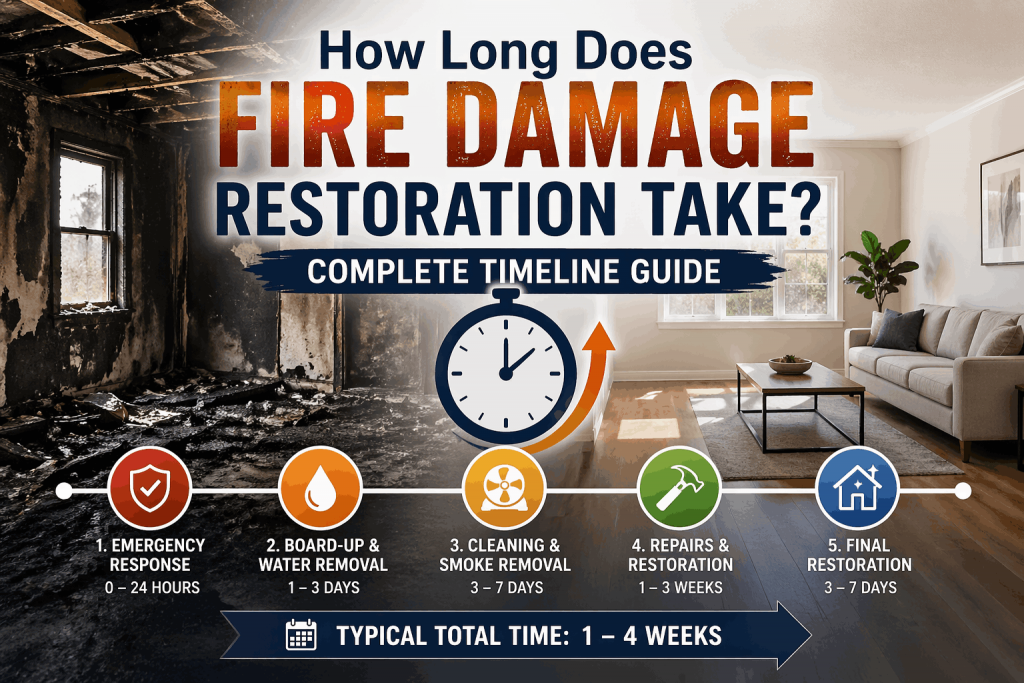
Overview: Fire Damage Restoration Timeline
Let’s break it down simply:
- Minor fire damage: 1–2 weeks
- Moderate damage: 2–4 weeks
- Severe damage: 1–3+ months
The timeline depends on how much of the property is affected and how complex repairs are.
Step-by-Step Fire Damage Restoration Process
Understanding what is the fire damage restoration process helps you set realistic expectations.
Step 1: Emergency Response and Inspection (1–2 Days)
The process begins immediately after the fire is extinguished.
Professionals will:
- Assess structural safety
- Inspect damage levels
- Identify affected areas
- Create a restoration plan
Quick response prevents further damage from soot, smoke, and water.
Companies like PuroClean of Southlake prioritize rapid assessment to stabilize the situation early.
Step 2: Securing the Property (1–3 Days)
After inspection, the property must be secured.
This includes:
- Boarding up windows and doors
- Tarping damaged roofs
- Preventing further exposure
This step protects your property from weather, theft, and additional damage.
Step 3: Water Removal and Drying (2–5 Days)
Most fires involve water damage from firefighting efforts.
Restoration teams will:
- Remove standing water
- Dry affected areas
- Use dehumidifiers and air movers
Skipping proper drying leads to mold growth and extended restoration timelines.
Step 4: Soot and Smoke Removal (3–7 Days)
Soot and smoke spread far beyond the fire source.
This step includes:
- Cleaning walls, ceilings, and surfaces
- Removing smoke residue
- Using specialized equipment for deep cleaning
Soot is acidic and can permanently damage materials if not removed quickly.Step 5: Cleaning and Sanitization (2–5 Days)
After soot removal, the focus shifts to cleaning.
This includes:
- Deep cleaning surfaces
- Sanitizing affected areas
- Removing harmful residues
This step ensures your home is safe for occupancy.
Step 6: Odor Removal (1–3 Days)
Smoke odors can linger if not treated properly.
Professionals use:
- Air scrubbers
- Thermal fogging
- Ozone treatments
This removes odor particles embedded in materials.
Step 7: Repairs and Reconstruction (1–8 Weeks)
This is the longest phase.
It may involve:
- Replacing drywall and insulation
- Repairing structural components
- Installing flooring and fixtures
- Repainting and finishing
The timeline depends on the extent of damage.
Total Fire Damage Restoration Timeline
So how long does it actually take?
- Small fires: 1–2 weeks
- Medium damage: 2–4 weeks
- Major fires: 1–3+ months
There is no fixed timeline because every situation is different.
Factors That Affect Restoration Time
Several factors influence how long restoration takes:
1. Severity of Fire Damage
More damage means more repairs and longer timelines.
2. Size of Affected Area
Entire homes take longer than single rooms.
3. Water Damage Involvement
More water means longer drying time.
4. Smoke and Soot Spread
Smoke travels beyond visible damage, increasing cleanup work.
5. Insurance Approval
Delays in claims processing can slow reconstruction.
Why Fire Damage Restoration Cannot Be Rushed
Trying to speed up the process often creates bigger problems.
If restoration is rushed:
- Hidden damage remains
- Odors return
- Structural issues worsen
Proper restoration ensures safety, not just appearance.
Common Mistakes That Delay Restoration
Most homeowners unknowingly extend timelines by:
- Delaying professional help
- Attempting DIY cleanup
- Ignoring water damage
- Not addressing smoke damage fully
Each mistake adds days or weeks to the process.
Why Professional Restoration Matters
Fire damage restoration is not a DIY job.
Professionals bring:
- Specialized equipment
- Technical expertise
- Structured processes
Companies like PuroClean of Southlake handle every stage efficiently, reducing delays and preventing recurring issues.
Fire Damage Restoration Steps You Should Expect
To recap, the main fire damage restoration steps include:
- Inspection and assessment
- Securing the property
- Water removal and drying
- Smoke and soot cleanup
- Cleaning and sanitization
- Odor removal
- Repairs and reconstruction
Understanding these steps helps you track progress and avoid unrealistic expectations.
Local Insight: Why Quick Action Matters
In areas like Southlake, Grapevine, Trophy Club, Roanoke, Colleyville, Bedford, and Euless, environmental factors like humidity can worsen damage if restoration is delayed.
Fast action reduces:
- Mold risk
- Structural weakening
- Long-term repair costs
That’s why immediate response is critical.
Frequently Asked Questions (FAQs)
1. What is the fire damage restoration process?
It includes inspection, cleanup, drying, odor removal, and reconstruction.
2. How long does fire damage restoration take
It can take anywhere from a few weeks to several months depending on severity.
3. Can I clean fire damage myself?
Small cleanup may be possible, but full restoration requires professional tools and expertise.
4. Why does restoration take so long?
Multiple steps like drying, cleaning, and repairs must be completed properly.
5. Does insurance affect the timeline?
Yes, approval delays can extend restoration time.
6. What are the main fire damage restoration steps?
Inspection, securing property, cleanup, drying, odor removal, and reconstruction.
7. Is smoke damage as serious as fire damage?
Yes, smoke can spread throughout the property and cause extensive damage.
8. Can odors come back after restoration?
If not treated properly, smoke odors can return.
9. When should I start restoration after a fire?
Immediately after the fire is controlled and the property is safe.
10. Can fire damage affect structural safety?
Yes, fires can weaken structures, making inspection essential.
Conclusion
Fire damage restoration is not a quick cleanup. It’s a structured, multi-step process that requires time, expertise, and proper execution.
Most homeowners underestimate the impact of smoke, soot, and water damage, which leads to unrealistic expectations. The key to faster recovery is acting quickly and ensuring every step is handled correctly.
If you want to avoid delays, hidden damage, and long-term issues, you need a professional approach from the start.
Homeowners in Southlake and nearby areas can rely on PuroClean of Southlake for comprehensive fire damage restoration that brings your home back safely and efficiently.
Delaying action only increases the damage and cost. Contact PuroClean of Southlake today for a fast response and trusted fire restoration expertise.