

Mold on your roof is not just a cosmetic problem. It’s a warning sign.
Most homeowners ignore it at first. Dark streaks, green patches, or black stains seem harmless. But what looks like surface growth is often a deeper issue involving moisture, algae, and organic buildup that can damage your roofing materials over time.
If you’re searching for how to remove mold from roof, you need to understand one thing clearly:
Cleaning it the wrong way can cause more damage than leaving it alone.
This guide will walk you through safe, effective roof mold removal methods, what to avoid, and when it’s time to call professionals.
Why Mold Grows on Roofs
Mold doesn’t appear randomly. It needs the right environment.
Common causes include:
- High humidity and moisture retention
- Poor roof drainage
- Shaded areas with little sunlight
- Organic debris like leaves and dirt
These conditions are common in residential areas, especially where weather fluctuations and moisture buildup are frequent.
Once mold starts growing, it feeds on organic material and spreads across shingles, weakening them over time.
Why You Should Not Ignore Roof Mold
Ignoring roof mold leads to bigger problems:
- Shingle deterioration
- Reduced roof lifespan
- Water retention and leaks
- Structural damage over time
What starts as a visual issue can turn into a costly repair or even roof replacement.
That’s why understanding proper roof mold removal methods is essential.
Common Mistakes That Make Roof Mold Worse
Before you start cleaning, avoid these critical mistakes:
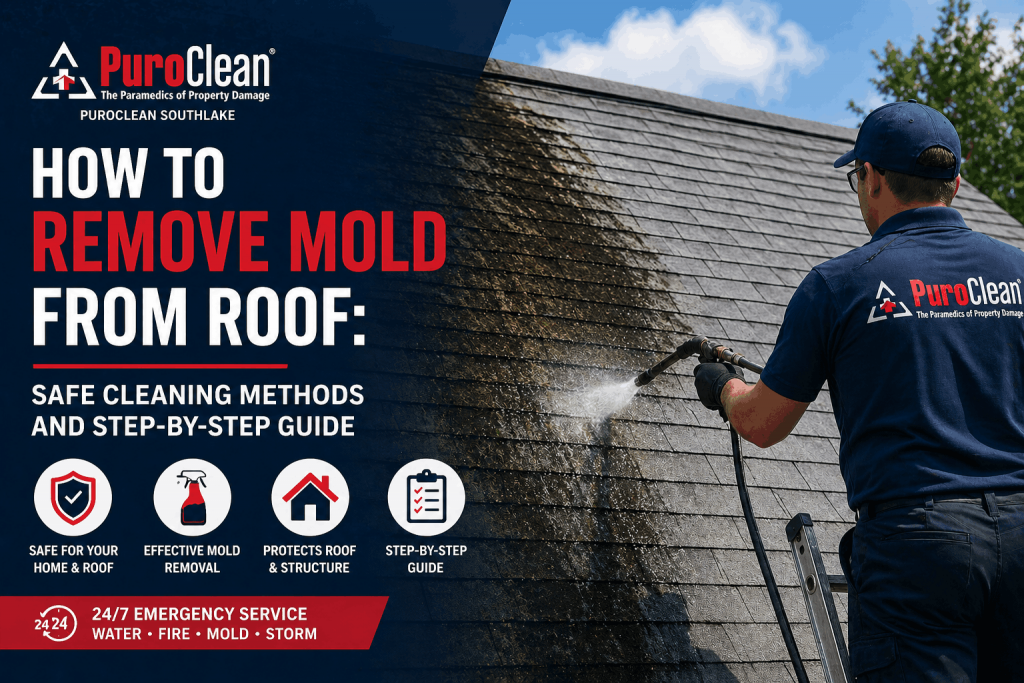
1. Using High-Pressure Washing
Pressure washing may seem effective, but it can:
- Strip protective granules from shingles
- Force water underneath roofing materials
- Cause long-term structural damage
2. Using Harsh Chemicals Incorrectly
Strong chemicals can damage roofing materials and surrounding plants if not used properly.
3. Ignoring Safety Precautions
Roof work is dangerous. Slips, falls, and improper handling of tools increase risk significantly.
4. Cleaning Without Fixing the Cause
If moisture or debris buildup is not addressed, mold will return quickly.
Safe Roof Mold Removal Methods
Let’s get practical.
If you want to learn how to remove mold from roof safely, follow controlled and proven methods.
Step-by-Step Guide to Remove Mold from Roof
Step 1: Safety First
Before anything:
- Use a stable ladder
- Wear non-slip shoes
- Use gloves and eye protection
- Avoid working during wet or windy conditions
Safety is not optional.
Step 2: Remove Loose Debris
Clear leaves, dirt, and organic buildup from the roof.
This reduces mold growth and improves cleaning effectiveness.
Step 3: Apply a Cleaning Solution
Use a roof-safe cleaning solution designed to kill mold and algae.
Apply evenly across affected areas. Let it sit for the recommended time so it can break down mold at the root level.
Step 4: Gentle Cleaning
Use a soft brush or low-pressure rinse.
Avoid aggressive scrubbing or high-pressure washing, as this damages shingles.
Step 5: Rinse Thoroughly
Rinse the area carefully to remove residue and loosened mold.
Ensure water flows downward to prevent it from entering under shingles.
Step 6: Allow Proper Drying
Drying is critical.
- Ensure proper airflow
- Avoid leaving moisture behind
- Check shaded areas carefully
Incomplete drying leads to mold returning quickly.
When DIY Roof Cleaning Is Not Enough
Not all mold problems can be handled safely on your own.
You should call professionals if:
- Mold covers a large portion of the roof
- There is visible roof damage
- Mold keeps returning
- You are not comfortable working at heights
At this stage, you’re dealing with more than surface cleaning.
Why Professional Roof Mold Removal Is More Effective
Professional services go beyond basic cleaning.
They include:
- Detailed roof inspection
- Safe and controlled cleaning methods
- Identification of moisture issues
- Preventive treatments
Homeowners often turn to PuroClean of Southlake when DIY attempts fail or when mold returns repeatedly.
How to Prevent Mold from Returning
Cleaning mold once is not enough. Prevention is the real solution.
Focus on:
- Keeping gutters clean
- Removing debris regularly
- Improving roof drainage
- Trimming overhanging branches
- Increasing sunlight exposure where possible
Prevention reduces the chances of mold growth and extends the life of your roof.
Cost vs Risk: What Homeowners Get Wrong
Many homeowners delay cleaning to save money.
This is a mistake.
Ignoring mold leads to:
- Faster roof deterioration
- Higher repair costs
- Possible replacement
Spending a little now prevents spending a lot later.
Why Experience Matters in Roof Mold Removal
Roof cleaning is not just about tools. It’s about technique.
Professionals understand:
- Different roofing materials
- Safe cleaning methods
- Moisture control
Companies like PuroClean of Southlake combine experience with proper equipment to ensure safe and long-lasting results.
Frequently Asked Questions (FAQs)
1. How to remove mold from roof safely?
Use a roof-safe cleaning solution, avoid pressure washing, and ensure proper safety measures.
2. Can I use a pressure washer to clean roof mold?
No. It can damage shingles and force water underneath the roof.
3. What are the best roof mold removal methods?
Soft washing and low-pressure cleaning with proper solutions are the safest methods.
4. How often should I clean my roof?
It depends on environmental conditions, but regular inspection and cleaning are recommended.
5. Is roof mold dangerous?
Yes, it can damage roofing materials and lead to leaks.
6. Can mold come back after cleaning?
Yes, if moisture and debris issues are not addressed.
7. When should I hire professionals?
When mold is widespread, persistent, or difficult to access safely.
8. Does roof mold affect home value?
Yes, it reduces curb appeal and can indicate underlying issues.
9. What causes roof mold growth?
Moisture, shade, and organic debris are the main causes.
10. Is DIY roof cleaning effective?
It works for minor cases, but larger problems require professional help.
Conclusion
Roof mold is not something you can afford to ignore or handle carelessly. What looks like a simple cleaning task can quickly turn into a structural issue if done incorrectly.
Most homeowners make the mistake of focusing on appearance instead of addressing the underlying cause. That’s why mold keeps coming back and damage continues to grow.
The right approach is simple: use safe methods, avoid shortcuts, and take preventive measures seriously.
For reliable, long-term results, PuroClean of Southlake provides professional roof mold removal that protects your home and extends the life of your roof.Don’t wait until the damage gets worse. Contact PuroClean of Southlake today for expert service and peace of mind.