


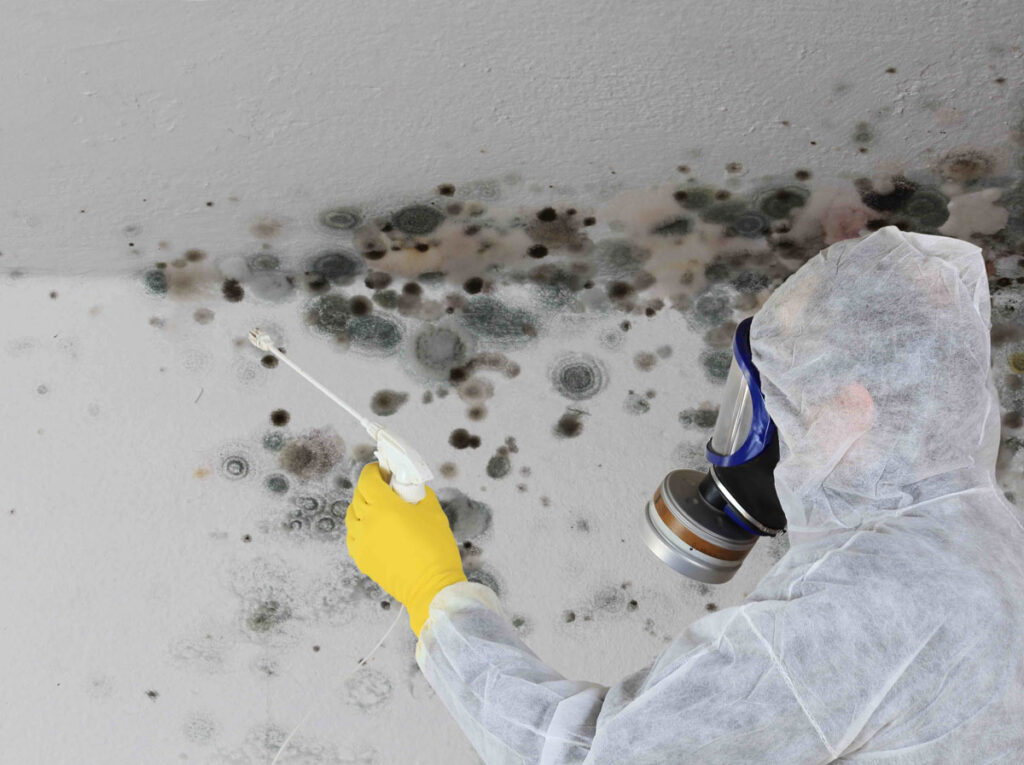
So you’ve just experienced water damage to your property? While the lone can lead to major losses and anguish, it’s important to take steps to prevent further damage from mold growth.
Mold can have negative effects on both your and your home, cursing illnesses like allergies, asthma, and even cancer. It can also damage the structure of a building. This is why it is important to act quickly to prevent mold propagation after a water damage event.
In this guide on mold prevention, we will cover the importance of proper cleaning and drying, the use of dehumidifiers and fans, and the use of mold-resistant products. We will also discuss how to identify mold and what to do if you find it in your home.
By following the tips and advice in this guide, you can help prevent mold growth and protect yourself and your property from the negative effects of water damage.

First Things First — What Qualifies As Water Damage?
Water damage refers to any damage caused by water intrusion in a residential or commercial building. The first signs of water damage may include leaks, stains, or a musty smell.
It is important that you take action to treat water damage as soon as it is discovered to prevent further damage, such as mold growth. This can be done by drying out the affected area and making any necessary repairs. Prevention measures, such as regular maintenance and timely repairs, can also help to reduce the likelihood of water damage.
In the event of severe water damage, professional restoration services may be needed to fully restore the affected area.
Meaning of Mold Prevention
Mold prevention refers to the measures taken to prevent the growth and spread of mold in a house or building. Since mold is a microorganism that thrives in moist and humid environments, prevention of mold growth also includes prevention of leaks, water damage, and flooding.
Other measures for mold prevention include keeping humidity levels in the house low, using air conditioning, and ensuring proper ventilation. This can be done by opening windows, using dehumidifiers, and repairing any leaks or water damage immediately. You also need to keep an eye out for signs of potential mold growth, such as discoloration on walls, ceilings or roof. Chemical control measures can also be taken to prevent mold growth.
Mold removal can be expensive and time-consuming, so it’s best to take preventative measures to avoid mold growth altogether. There is no single precaution that will prevent mold by itself – mold prevention is a holistic activity that starts before a building is constructed, and lasts throughout the life of the structure.
To learn more about mold prevention, check out this ebook by the Environmental Protection Agency – A Brief Guide to Mold, Moisture, and Your Home
How Water Damage Can Lead To Mold Growth
Water damage can occur from a number of causes, including burst pipes, floods, storms, etc. However no matter the cause, the end result is the same – a damp environment that mold spores love.
How water damage leads to mold growth:
- Leaks: A leak in a pipe or a roof can allow water to seep into the walls, floors, or ceilings of a building. The wet environment is ideal for mold formation.
- Flooding: When a building is flooded, large amounts of water get into every nook and cranny. It’s a nightmare for the homeowner but a dream come true for mold. If surfaces are not dried fast enough you are sure to have a new microscopic house guest.
- High Humidity: High humidity levels in a building can cause condensation on surfaces, which can lead to mold growth.
- Poor Ventilation: Poor ventilation in a building can cause moisture to accumulate, promoting formation of moldy spots.
- Improper Clean-up: If water damage is not cleaned up properly, mold can begin to grow within 24-48 hours.
Types of mold that can grow after water damage include black mold, green mold, white mold, and brown mold. Black mold is one of the most toxic and dangerous types of mold and should be handled by a professional. Green mold is often found in damp, humid areas and can cause health problems. White mold can grow on surfaces such as wood, paper, and insulation. Brown mold is a common type of mold that can grow on many surfaces.

Dangers Of Mold (Why You Need To Prevent It Growing)
Mold is essential in the natural outdoor ecosystem. However, when it starts to grow indoors, it poses danger to the building and its inhabitants. There are many types of mold that can grow indoors, and all of them have the potential to cause health problems.
One of the biggest dangers of mold is the potential for respiratory problems. Mold spores can cause allergic reactions, asthma attacks, and other respiratory issues. Some people may experience symptoms such as coughing, sneezing, runny nose, and itchy eyes. In severe cases, mold exposure can cause lung infections among other serious health issues.
Another danger of mold is the potential for structural damage to a building. Mold can cause damage to walls, ceilings, floors, and other building materials. In addition, mold can also damage personal property, such as clothing, furniture, and books.
How Can You Protect Yourself From Mold Spores
- Keep your home or workplace well-ventilated to reduce humidity levels and prevent mold growth.
- Inspect your home or workplace regularly for signs of water damage or leaks, and address them promptly to prevent mold growth.
- Clean and maintain any air conditioning or ventilation systems to prevent mold growth.
- Use a high-efficiency air filter or air purifier to remove mold spores from the air.
- Wear a mask and gloves when cleaning or handling mold-contaminated materials.
- Avoid touching or disturbing moldy areas, as this can release mold spores into the air.
- If you suspect mold growth in your home or workplace, have it inspected and tested by a professional, and take steps to remove it safely.
- Lastly, Keep an eye on your health, if you have any symptoms of mold exposure such as coughing, sneezing, runny nose, and itchy eyes, seek medical attention immediately.
What Can You Do To Prevent Mold In Your House After Water Damage?
During our research for this guide, we found the NIH (National Institutes of Health) Mold Prevention and Remediation Policy, which specifies actions to be taken to curb mold growth in the event of water infiltration in any NIH facilities.
These procedures are based on the Environmental Protection Agency (EPA) “Mold Remediation in Schools and Commercial Buildings,” Document EPA 402-K-01-001 March 2001.
We will use these guidelines as the basis of the mold prevention steps highlighted below, adding in a few tips from our own experience.
From NIH: The goal is to eliminate moisture in less than 48 hours to prevent mold growth or destroy it if the duration of moisture infiltration is unknown or greater than 48 hours.
General Prevention Strategy
The saying ‘Prevention is Better than cure’ applies very well in the matter of mold control. Take these steps to prevent mold formation after warmer damage to your property
- Fix leaks and clean spills as soon as possible..
- Check for condensation and wet spots and fix their root cause.
- Maintain a mold prevention temperature. For example during the summer you should lower your indoor temperature to avoid creating a warm environment that will foster mold growth.
- After water damage, remove any water-damaged materials that cannot be dried and restored. This may include drywall, carpeting, or other porous materials that have been affected by water.
- Monitor the humidity level in your house and maintain it at between 30-50%. Humidity levels above 60% can lead to mold growth, so use a dehumidifier if necessary to keep humidity levels in check.
- Performing regular building/HVAC inspections and maintenance as scheduled.
- If you suspect mold growth in your house, have it inspected and tested by a professional. A professional can determine the type of mold present and recommend the appropriate course of action.
- Keep drip pans of HVAC equipment clean, flowing well and unobstructed.
- Venting moisture-generating equipment to the outside, where possible.
- During construction, create proper drainage channels and slope the ground away from the foundation so it does not retain moisture for a long period.
- Lastly, If you are experiencing any symptoms of mold exposure such as coughing, sneezing, runny nose, and itchy eyes, seek medical attention immediately.
What To Do In The First 48 Hours After Water Damage To Prevent Mold Growth
If water is removed completely within the first 48 hours after water damage, then mold growth is prevented and mold remediation is usually not necessary.
Step 1: Identify the source of moisture
Whether on your own or using a water damage restoration company, this is the very first step.
Step 2: Stop the water infiltration
The next step is to repair the defect in order to stop further moisture intrusion. After that, take an inventory of the water damaged areas and items. If it is unknown how long the water infiltration has been going on, it should be handled as if it has existed for more than 48 hours.
Sometimes determining whether materials are “dry” can be tricky and will call for your judgment. When in doubt, you should use a moisture meter to check moisture level of drywall in an affected area and compare the reading to a control reading in a non-affected area. Moisture readings should be identical if the suspected area is dry.
Specific Instructions
Below are material-specific guidelines for curbing mold formation:
- Ceiling Tiles: Remove and replace. If the tiles are glued onto the ceiling or wall, professionals may need to analyze samples to determine whether the material(s) contain asbestos.
- Carpets and Backing: Remove all furnishings sitting on the wet carpet. Use an extraction vacuum to suck out the water. Then use fans to speed up drying. You can also lower ambient humidity levels with the use of dehumidifiers.
- Cellulose Insulation: Remove and replace.
- Fiberglass Insulation: Remove and replace.
- Electrical: All wet light fixtures, outlets and wiring are considered and should be treated as shock hazards. Power supply should be turned off until inspection is performed by a building inspector or electrician.
All circuit breakers, GFI’s, and fuses that became wet should be replaced.All electric motors, light fixtures, and so on that were wet must be opened, cleaned, and air-dried by qualified personnel. Before they are put back in service, inspection must be performed to ensure there is no viable moisture inside them.
- Books and Papers: Items that are not precious should be discarded. Non-valuable materials should be discarded. If you can, reproduce / photocopy important items and discard originals. For items with high monetary or sentimental value, seek advice from a restoration/water damage specialist.
- Concrete or Cinder Block Surfaces: Use an extraction vacuum to pull out moisture. Then use heaters or fans to speed up drying.
- Hard Surfaces, Porous Flooring (Linoleum, Ceramic Tile, Vinyl): Vacuum or mop with mild cleaning agent and allow them to dry. Make sure to inspect under-floor to ensure it is dry
- Non-Porous, Hard Surfaces (Plastics, Metals): Vacuum or mop with mild cleaning agent and allow them to dry.
- Upholstered Furniture: Use an extraction vacuum to pull out moisture. Then use heaters, dehumidifiers or fans to speed up drying. Due to the thickness of furniture padding, complete drying of furniture may be hard to do within 48 hours. Seek advice from a restoration/water damage specialist for especially valuable items.
- Wallboard (Drywall and Gypsum Board): Remove base molding to inspect the wallboard. If there is no outright swelling or water stains, and the seams are intact, it may be dried in place. If the wallboard cannot be dried within 48 hours, measure twelve (12) inches above the water mark/damage and remove and discard the wallboard below that point. Remove and discard damp insulation, and air out the wall cavity. In some cases it may be difficult to tell if the wallboard has been sufficiently dried. Use a moisture meter for such cases.
- Wood Surfaces: Dry the moisture immediately and use dehumidifiers, gentle heat, and fans for drying. Caution: Be careful when applying heat to hardwood floors. Treated or finished wood surfaces may be cleaned with mild detergent and clean water and allowed to dry. Wet paneling should be pried away from the wall for drying.
Puroclean – Mold Prevention Company In Southlake, TX
Don’t wait until it’s too late. Protect your home and health by contacting Puroclean today for professional mold prevention services. Our experienced technicians will help you identify potential mold hazards and implement effective preventative measures to keep your home safe and healthy.
Puroclean, ‘’The Paramedics of Property Damage’’ is available for your needs 24/7. Call 817.809.8585 today and enjoy the peace of mind of a mold-free home.