


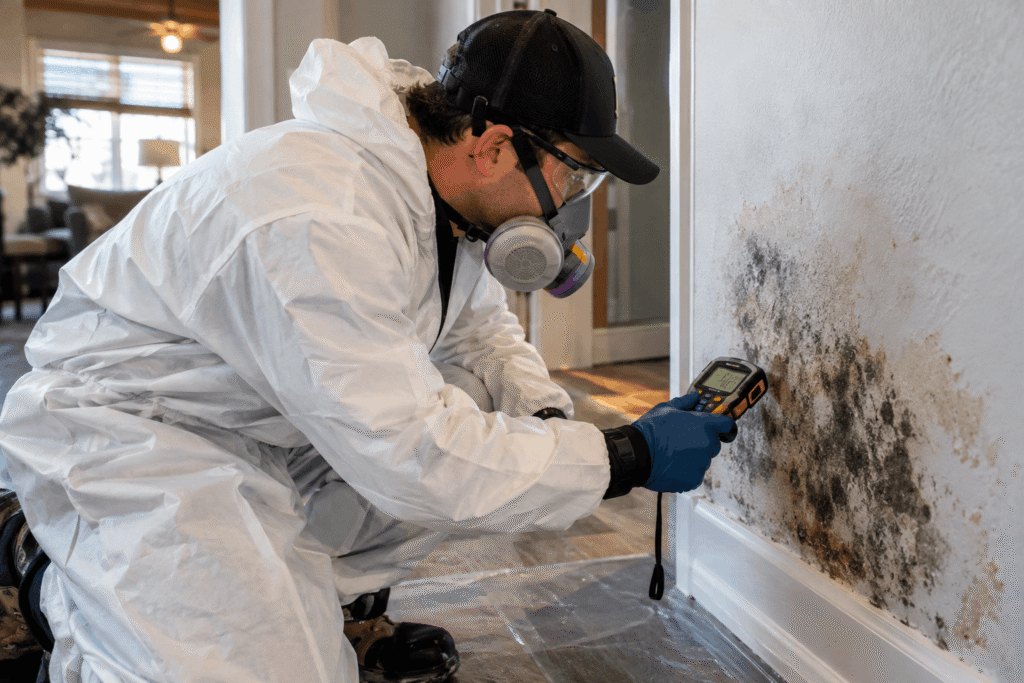
Mold problems can start with something as simple as a plumbing leak, roof leak, condensation, or another source of excess moisture. Once mold is discovered, homeowners often search for mold removal and mold remediation and assume the two terms mean the same thing.
They are related, but they are not necessarily interchangeable.
Mold removal generally refers to physically cleaning, removing, or disposing of mold-affected materials. Mold remediation is a broader process that focuses on identifying the moisture problem, containing the affected area, addressing contaminated materials, and taking steps to prevent the problem from continuing.
The distinction matters because simply cleaning visible mold does not necessarily address why it developed in the first place.
For homeowners in Southlake and surrounding communities, understanding the difference can help you choose the right response instead of treating mold as nothing more than a surface-cleaning problem.
Quick Answer: Mold Removal vs. Mold Remediation
Mold removal focuses primarily on removing visible or contaminated mold and affected materials.
Mold remediation is a more comprehensive process that can include:
- Finding the moisture source
- Assessing the affected area
- Containing the work area when appropriate
- Removing or cleaning affected materials
- Addressing moisture
- Cleaning the surrounding area
- Drying affected materials
- Taking steps to reduce the chance of recurrence
In other words:
Removal addresses the mold that is present. Remediation addresses the mold problem and the conditions that allowed it to develop.
The appropriate approach depends on the size, location, source, and extent of the mold problem.
What Is Mold Removal?
Mold removal generally means physically removing mold from affected surfaces or materials.
Depending on the situation, this might involve:
- Cleaning affected surfaces
- Removing contaminated porous materials
- Disposing of materials that cannot be effectively restored
- Cleaning surrounding areas
- Addressing visible growth
For example, if a small amount of mold is found on a hard, cleanable surface, the response may involve appropriate cleaning and addressing the moisture source.
But mold can be more complicated when it has affected drywall, insulation, flooring, cabinetry, or other porous materials.
Why Visible Cleaning Isn’t Always Enough
Mold growth is often a symptom of excess moisture.
If the moisture source remains, simply removing visible growth may not solve the underlying problem.
For example:
A bathroom wall develops mold because a plumbing connection inside the wall has been leaking.
Cleaning the visible mold without fixing the leak leaves the conditions that contributed to the problem.
That is where remediation becomes more important.
What Is Mold Remediation?
Mold remediation is a broader process focused on controlling and addressing a mold problem.
A remediation project may involve:
- Identifying the moisture source
- Assessing the affected area
- Determining the extent of contamination
- Establishing appropriate containment
- Removing or cleaning affected materials
- Drying affected areas
- Cleaning the work area
- Addressing the source of moisture
- Monitoring conditions as appropriate
The exact process depends on the property.
There is no single procedure that should be applied to every mold situation.
Why Does Moisture Matter So Much?
Mold problems are closely associated with moisture.
Potential moisture sources include:
- Plumbing leaks
- Roof leaks
- Flooding
- Condensation
- HVAC problems
- Poor ventilation
- Bathroom humidity
- Appliance leaks
- Foundation or exterior water intrusion
If the source isn’t identified, mold can potentially return even after visible growth has been cleaned.
This is why an effective response starts with understanding why the area became damp.
Learn more about how to prevent mold after a small plumbing leak.
Mold Removal vs. Mold Remediation: What’s the Difference?
Mold Removal
The primary focus is the physical removal or cleaning of mold-affected materials.
It may be appropriate for limited situations where the source of moisture has already been corrected and the affected material can be safely cleaned.
Mold Remediation
The focus is broader.
It considers:
- Source of moisture
- Extent of affected areas
- Containment
- Material condition
- Cleaning or removal
- Drying
- Prevention of continued moisture problems
This makes remediation particularly relevant when mold is extensive, recurring, hidden, or associated with a significant moisture problem.
Does Mold Remediation Mean Every Piece of Mold Is Removed?
No.
This is an important distinction.
Mold spores are naturally present in the environment. The goal of professional remediation is not necessarily to make a building completely free of every mold spore.
Instead, the objective is to address the mold problem, remove or clean affected materials appropriately, correct moisture conditions, and return the affected area to a suitable condition.
This is one reason claims such as “100% mold-free” should be treated cautiously.
When Is Mold Removal Enough?
A limited mold problem may sometimes be manageable when:
- The affected area is small.
- The moisture source is known and has been corrected.
- The affected material can be safely cleaned.
- Mold has not spread into hidden or inaccessible areas.
- There is no significant water damage.
- The homeowner can safely perform the cleanup.
However, the appropriate response depends on the circumstances.
If you aren’t sure how extensive the problem is, professional assessment can provide a clearer picture.
When Do You Need Professional Mold Remediation?
Professional help becomes more important when mold:
- Covers a larger area
- Keeps returning
- Is associated with ongoing water damage
- Appears inside walls or ceilings
- Has affected insulation
- Is associated with significant flooding
- Has affected HVAC-related areas
- Is present in difficult-to-access locations
- Cannot be safely cleaned by the homeowner
The goal is not to make every mold problem sound like an emergency.
The goal is to recognize when a simple surface cleanup may not address the actual source or extent of the problem.
How Does Professional Mold Remediation Work?
A professional remediation project can involve several stages.
1. Initial Assessment
The affected property is inspected to understand:
- Where mold is visible
- Where moisture may be present
- Which materials are affected
- Whether additional areas require investigation
Moisture detection equipment may be used when appropriate.
2. Identify the Moisture Source
This is one of the most important steps.
Potential sources may include:
- Plumbing
- Roofing
- HVAC
- Condensation
- Exterior water intrusion
- Previous flooding
If the moisture source remains active, cleaning mold without correcting the underlying issue may not provide a lasting solution.
3. Establish Appropriate Containment
When necessary, the affected work area may be separated from unaffected portions of the property.
The purpose is to reduce unnecessary spread of contaminated dust or materials during remediation work.
The appropriate containment strategy depends on the project.
4. Remove or Clean Affected Materials
Some materials can be cleaned.
Others may need to be removed when they cannot be effectively restored.
Porous materials can present particular challenges because mold may penetrate beyond the surface.
Examples include:
- Drywall
- Insulation
- Carpet padding
- Certain wood products
- Upholstery
The decision depends on the material and extent of contamination.
5. Dry the Affected Area
Moisture control is critical.
Depending on the situation, restoration professionals may use:
- Air movement equipment
- Dehumidification
- Moisture monitoring equipment
The objective is to reduce remaining moisture and help return the affected area to appropriate conditions.
6. Clean the Area
After affected materials have been addressed, the remaining area can be cleaned according to the condition and materials involved.
The cleaning approach should be appropriate for the surfaces being treated.
Can Mold Come Back After Remediation?
Mold can return if moisture problems return.
For example, suppose mold developed because of a recurring plumbing leak.
A restoration team may address the affected materials, but if the plumbing problem remains unresolved, moisture can continue entering the area.
That is why moisture control is such an important part of a lasting solution.
Learn how long it can take for mold to grow after moisture exposure.
If mold appears again after remediation, investigate the possibility of an unresolved moisture source rather than simply cleaning the visible growth again.
What Causes Mold to Return?
Several conditions can contribute to recurring mold problems.
Ongoing Plumbing Leaks
A hidden leak can keep wall cavities or cabinets damp.
Roof Leaks
Rainwater entering through a damaged roof can create recurring moisture problems.
High Indoor Humidity
Poor humidity control can contribute to moisture accumulation, particularly in areas with limited ventilation.
Condensation
Cold surfaces can develop condensation when warm, humid air contacts them.
Poor Ventilation
Bathrooms, kitchens, and other moisture-producing areas need appropriate ventilation.
Previous Water Damage
Materials that were not completely dried after an earlier water event may continue to present problems.
What Homeowners Should Do If They Find Mold
Don’t panic, but don’t ignore it either.
Start by asking:
- Where is the mold?
- How large does the affected area appear to be?
- Is there an active moisture source?
- Has there recently been a leak or flooding event?
- Does the affected material feel damp?
- Is mold appearing repeatedly?
- Is the affected area difficult to access?
If you can identify a small, surface-level problem and safely address the moisture source, the situation may be manageable.
If the cause or extent is unclear, professional assessment can help.
Common Mold Cleanup Mistakes
Cleaning Mold Without Fixing the Leak
This addresses the symptom rather than the source.
Painting Over Mold
Paint can hide discoloration temporarily but does not solve an underlying moisture problem.
Ignoring Damp Materials
A wall may look relatively normal while moisture remains inside.
Using Excessive Cleaning Chemicals
More chemical does not automatically mean better remediation.
Use products according to their labels and avoid mixing chemicals.
Disturbing Mold Without Considering Containment
Aggressive scraping or demolition can disturb contaminated material and spread particles.
Assuming All Mold Problems Are the Same
A small surface issue and widespread mold associated with water intrusion require different approaches.
What About Mold Testing?
Mold testing is not automatically necessary for every visible mold situation.
Whether testing is useful depends on the circumstances and the question that needs to be answered.
For example, homeowners may be more concerned with identifying the moisture source and addressing visible contamination than obtaining a specific mold species identification.
Testing decisions should be based on the individual property and the purpose of the test.
Avoid assuming that a test is always required before remediation.
Can You Prevent Mold After Water Damage?
Yes, reducing moisture quickly can help reduce the conditions that allow mold to develop.
After water damage:
- Stop the source.
- Remove standing water.
- Dry affected materials.
- Reduce indoor humidity.
- Improve appropriate airflow.
- Inspect hidden areas.
- Monitor moisture levels.
- Address damaged porous materials appropriately.
Learn more about water damage restoration and removal.
If water has entered walls, ceilings, flooring, or insulation, professional moisture assessment may be appropriate.
Mold Problems in Southlake and Nearby Communities
Mold and moisture problems can affect homes throughout Southlake and nearby communities, including Grapevine, Keller, Colleyville, Trophy Club, Roanoke, Bedford, and Euless.
The local climate and individual property conditions can create different moisture challenges, but the fundamental principle remains the same:
Find the moisture source and address the affected materials appropriately.
PuroClean of Southlake provides property restoration services for homeowners dealing with water damage, mold-related problems, and other property emergencies.
Explore mold removal and remediation services.
How to Choose Between Mold Removal and Mold Remediation
If you’re unsure which service you need, consider these questions:
Is the Affected Area Small and Clearly Visible?
A limited issue may require a simpler response.
Is There an Active Moisture Source?
If yes, the moisture problem needs to be addressed.
Is the Mold Recurring?
Recurring growth suggests that the underlying conditions may not have been resolved.
Has Mold Entered Porous Materials?
If mold has affected drywall, insulation, flooring, or other porous materials, professional assessment may be appropriate.
Is the Affected Area Difficult to Access?
Hidden or inaccessible mold can be harder to evaluate and address safely.
Has the Property Experienced Significant Water Damage?
If mold developed following flooding or major water damage, restoration may need to address both the moisture damage and mold problem.
The Bottom Line
The difference between mold removal and mold remediation is largely about scope.
Mold removal focuses on physically cleaning or removing mold-affected materials.
Mold remediation takes a broader approach by addressing the moisture source, evaluating the extent of the problem, managing affected materials, cleaning the area, and reducing conditions that could allow the problem to continue.
Neither term should be treated as a guarantee that mold will never return.
The most important factor is controlling moisture.
If you find mold in your home, don’t simply focus on what you can see. Look for the reason it developed in the first place.
Need Help With a Mold Problem?
If you have discovered recurring mold, moisture damage, or mold inside difficult-to-access areas, PuroClean of Southlake can help assess the affected property and determine an appropriate restoration approach.
Call (817) 809-8585 for assistance with mold and property restoration services in Southlake and surrounding communities.
Frequently Asked Questions
What is the difference between mold removal and mold remediation?
Mold removal generally refers to physically cleaning or removing mold and affected materials. Mold remediation is a broader process that can include identifying the moisture source, containment, removal or cleaning, drying, and addressing conditions that contributed to the mold problem.
Is mold remediation better than mold removal?
They are not necessarily competing services. The appropriate approach depends on the size, location, cause, and extent of the mold problem. A limited surface issue may require a simpler response, while extensive or recurring mold may require a more comprehensive remediation process.
Can mold come back after remediation?
Yes, particularly if the underlying moisture problem returns or was not corrected. Controlling moisture is an important part of reducing the likelihood of recurring mold.
Can I remove mold myself?
Small, limited surface-level mold problems may sometimes be manageable by homeowners who can safely address the moisture source and clean the affected area appropriately. Larger, recurring, hidden, or extensive problems may require professional assessment.
Does mold remediation remove every mold spore?
No. Mold spores are naturally present in the environment. The goal of remediation is to address the mold problem, remove or clean affected materials appropriately, control moisture, and return the affected area to a suitable condition.