


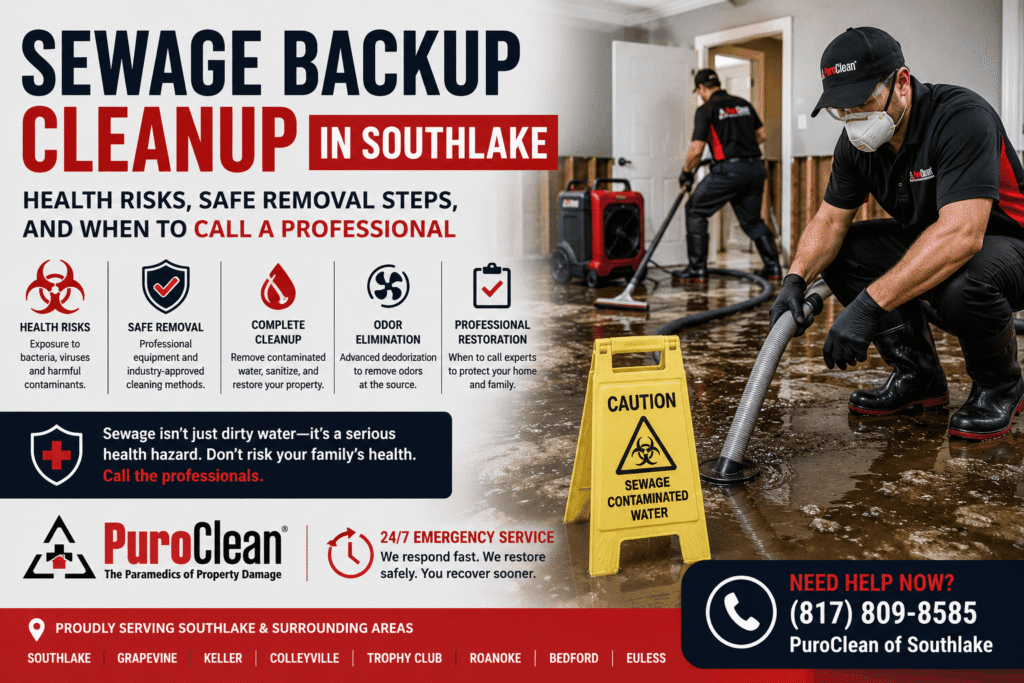
A sewage backup is not a bigger version of a normal water leak. The moment sewage touches your floors, walls, or belongings, you’re no longer dealing with a water damage problem — you’re dealing with a biohazard.
Quick answer: Sewage is automatically classified as Category 3 “black water,” the most contaminated water category recognized by the restoration industry, regardless of how the backup happened. Professional cleanup is strongly recommended in virtually every case, since household cleaners can’t achieve the disinfection level required for safe occupancy. Typical cleanup costs run $2,000–$10,000 for a contained residential event, with finished basements or multi-room backups often running $8,000–$20,000+. Standard homeowners insurance usually does not cover sewage backups unless you carry a separate sewer backup endorsement.
Here’s what’s actually happening when sewage backs up into your home, why it’s more dangerous than it looks, and what a proper cleanup involves.
Why Sewage Is Always “Category 3” — No Exceptions
Restoration professionals classify water damage into three categories based on contamination level:
- Category 1 (Clean water): From a sanitary source, like a supply line — low risk.
- Category 2 (Gray water): Contains some contaminants, like washing machine overflow — moderate risk.
- Category 3 (Black water): Grossly contaminated water containing sewage, pathogens, and waste — the highest risk classification.
Any water that has contacted sewage is automatically Category 3, no matter how diluted it looks or how quickly it’s cleaned up. That single classification changes everything about how the cleanup has to be handled — porous materials that touched it can’t simply be dried and reused; in almost every case, they have to be removed.
The Real Health Risks
Raw sewage carries bacteria, viruses, and parasites that pose a genuine health threat, not just an unpleasant smell. Recognized concerns include:
- E. coli and other bacteria, which can cause gastrointestinal illness on contact or through contaminated dust
- Viruses such as Hepatitis A and norovirus
- Parasites, including Cryptosporidium
- Airborne bioaerosols released during cleanup, which can be inhaled if proper containment isn’t used
Because these pathogens can also become airborne once disturbed, even a “quick cleanup” without the right protective equipment and containment can expose you or your family to more risk than the original spill.
Why DIY Cleanup Is a Real Mistake, Not Just a Precaution
It’s tempting to grab a mop, bleach, and gloves and handle a small sewage spill yourself. Two things make that a bad idea:
- Household cleaners don’t work on sewage-level contamination. Standard disinfectants are formulated for everyday grime, not the organic load and pathogen concentration in raw sewage. Achieving a documented, safe level of decontamination requires professional-grade biocides applied at the correct concentration.
- You can’t tell what’s safe to keep by looking at it. Porous materials — carpet, carpet padding, drywall, insulation, upholstered furniture — absorb contamination in ways that aren’t visible. Once sewage touches them, industry standards call for removal and replacement, not cleaning, because they cannot be reliably disinfected.
There’s also a practical insurance angle: many carriers require documented professional decontamination — moisture logs, disposal records, and clearance results — before they’ll pay out a claim. A DIY cleanup can leave you without that documentation if a health or structural issue surfaces later.
The Professional Sewage Cleanup Process
- Containment and safety setup. Technicians establish containment barriers and wear Level 3 PPE (full suits, respiratory protection, gloves) before entering the affected area.
- Extraction. Standing sewage water is removed using truck-mounted or portable extraction equipment.
- Removal of contaminated porous materials. Drywall (typically cut at least 12–24 inches above the water line), carpet, padding, and any other porous materials that contacted the sewage are removed and disposed of as biohazard waste.
- Disinfection. Non-porous and semi-porous surfaces — tile, concrete, solid wood, metal — are cleaned and treated with hospital-grade antimicrobial biocides.
- Structural drying. Industrial air movers and dehumidifiers dry the space to verified “dry standard,” typically over 3–7 days depending on how deeply the sewage penetrated subflooring or framing.
- Antimicrobial mold-prevention treatment. Because sewage introduces both moisture and organic material, mold risk is elevated. A preventive antimicrobial treatment is applied before reconstruction begins.
- Clearance and documentation. A final inspection confirms the space is safe for reconstruction and occupancy, with full documentation for your insurance file.
What It Costs
| Scope of sewage backup | Typical cost range |
| Contained event (single bathroom, hard surfaces only) | $1,500 – $4,000 |
| Moderate backup affecting porous materials in 1–2 rooms | $4,000 – $10,000 |
| Full finished basement or multi-room black water event | $8,000 – $20,000+ |
| Extensive, multi-area backup requiring major reconstruction | $20,000 – $50,000+ |
Sewage cleanup typically runs $3–$15 per square foot for extraction and disinfection alone, before material removal and reconstruction are factored in — roughly 40–60% more than clean water extraction of the same size, due to the required PPE, containment, and disposal protocols.
The Insurance Detail Most Homeowners Don’t Know
Standard homeowners insurance policies generally do not cover sewage backup damage by default. Coverage typically requires a separate sewer backup endorsement, which is inexpensive (often $40–$150 per year) but has to be added proactively — not after a backup has already happened. If a municipal sewer main failure caused your backup rather than an issue with your own plumbing, you may also have grounds for a claim against the responsible utility; documentation from a professional restoration company supports either path.
Preventing the Next One
- Install a backwater valve, which prevents sewage from being forced back into your home through drains during a municipal line surcharge.
- Have plumbing inspected annually, especially older cast iron or clay sewer lines common in older North Texas homes.
- Avoid flushing wipes, grease, or paper towels, which are leading causes of residential line clogs and backups.
- Know your main shutoff and cleanout locations before an emergency happens, so you can act quickly if a backup starts.
When to Call a Professional Immediately
Call right away if you notice sewage odor combined with slow drains throughout the house (a sign of a mainline blockage rather than a single fixture issue), standing water with visible waste, or any backup affecting a finished basement or living space. The first hour after discovery matters — contamination spreads deeper into materials with every hour that passes, and mold risk begins within 24–48 hours if moisture is left untreated.
Frequently Asked Questions
Is all sewage backup water automatically hazardous?
Yes. Any water that has contacted sewage is classified as Category 3 black water regardless of appearance, dilution, or how quickly it’s addressed.
Can I clean up a small sewage spill myself?
It’s strongly discouraged, even for small spills. Household cleaners aren’t formulated to neutralize sewage-level pathogens, and porous materials that look fine may still be contaminated beneath the surface.
Does homeowners insurance cover sewage backup cleanup?
Usually not without a separate sewer backup endorsement, which most standard policies don’t include by default. Check your declarations page or call your agent to confirm what you’re covered for.
How long does professional sewage cleanup take?
Extraction and initial disinfection typically happen the same day; material removal takes 1–2 days; structural drying takes another 3–7 days, depending on how much the sewage penetrated subflooring or framing.
What’s the difference between sewage cleanup and standard water damage restoration?
Sewage cleanup requires Level 3 PPE, biohazard-compliant disposal, and antimicrobial disinfection that standard clean-water extraction doesn’t — which is why it costs more and takes longer, even for a similarly sized area.
PuroClean Southlake provides 24/7 sewage backup cleanup and biohazard remediation for homes and businesses throughout Southlake, Grapevine, and Euless. Learn about our biohazard cleanup services or contact us for emergency response.