


If your water damage insurance claim was denied, start by requesting the denial letter in writing with the specific policy language cited, then have a restoration company document the actual cause and extent of damage — many denials are overturned or reconsidered once additional documentation clarifies whether the damage was sudden and accidental versus gradual or pre-existing. This isn’t legal advice, but understanding the common denial reasons below will help you know what to ask for and what to push back on.
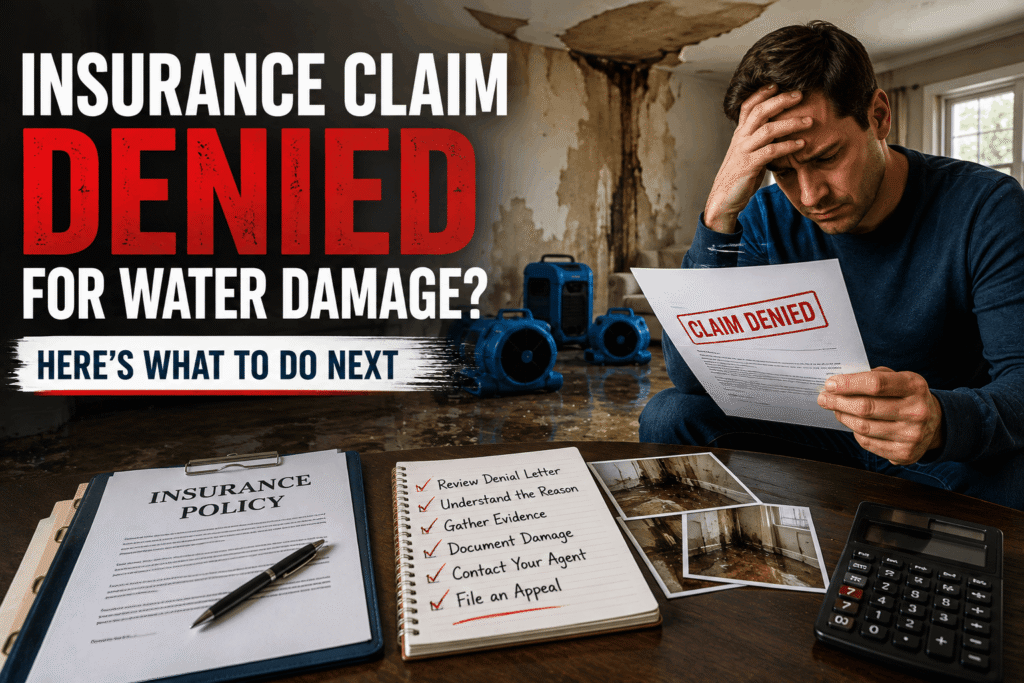
Why Water Damage Claims Get Denied
Insurance policies generally cover water damage that’s sudden and accidental — a burst pipe, a water heater failure, a supply line break — but exclude damage from gradual leaks, long-term seepage, or lack of maintenance. The distinction between those two categories is where most denials happen, and it isn’t always obvious to a homeowner why an adjuster classified their claim one way versus the other.
A denial doesn’t necessarily mean the claim was wrong to file. It often means the initial documentation didn’t clearly establish the timeline and cause the way the adjuster needed to see it.
Common Reasons Water Damage Claims Are Denied
- “Gradual damage” classification. If an adjuster determines water was leaking slowly over weeks or months rather than failing suddenly, many policies exclude that damage as a maintenance issue rather than a covered loss.
- Pre-existing damage disputes. If there’s any indication the area had prior water damage — even unrelated — an adjuster may attribute some or all current damage to that prior event rather than the new incident.
- Lack of maintenance findings. Corroded pipes, an aging water heater past its typical service life, or visible prior staining can lead an adjuster to conclude the homeowner should have addressed a known issue before it caused a loss.
- Flood exclusion. Standard homeowners policies typically exclude damage from external flooding (rising groundwater, overflowing creeks) — a common point of confusion, since “flood” in an insurance context means something specific and separate from a pipe or appliance failure.
- Insufficient documentation at time of loss. Photos, moisture readings, and professional damage assessments submitted late, incomplete, or inconsistent with the reported timeline can weaken an otherwise valid claim.
- Mold exclusions tied to delayed reporting. If mold is found and the claim wasn’t filed promptly after the original water event, insurers may argue the mold resulted from delayed remediation rather than the covered water damage itself.
What to Do Immediately After a Denial
- Request the denial in writing, if you haven’t already received it that way, including the specific policy provision cited as the basis for denial. Verbal explanations from an adjuster are not enough to build a response around.
- Read the cited policy language carefully. Compare what the denial says to your actual policy — sometimes the cited exclusion doesn’t clearly apply to the specific facts of your loss.
- Get a professional damage assessment if you haven’t already. A restoration company’s moisture readings, photos, and cause-of-loss documentation can directly counter a “gradual damage” or “pre-existing” denial with objective, time-stamped evidence.
- Request a re-inspection. If new documentation supports a different conclusion than the initial adjuster reached, you can formally request the insurer send someone to re-examine the property.
- File a formal appeal or complaint if the denial stands. Most insurers have an internal appeals process; if that’s exhausted, Texas homeowners can file a complaint with the Texas Department of Insurance.
- Consider a public adjuster or attorney for large or contested claims. For significant losses where the insurer isn’t moving on additional documentation, a public adjuster (who works for you, not the insurer) or an attorney experienced in property claims can be worth the cost.
How to Tell If Your Denial Might Be Worth Appealing
| Situation | Appeal Likely Worth Pursuing | Appeal Less Likely to Succeed |
| Denial cites “gradual damage” but you have a clear sudden failure (burst pipe, appliance line break) | Yes — strong grounds with proper documentation | — |
| Denial cites pre-existing damage but the area had no prior claims or issues | Yes — request re-inspection with new documentation | — |
| Denial is based on a genuine flood exclusion (rising water from outside source) | — | Likely accurate; separate flood insurance would be needed |
| Denial cites lack of maintenance, and there’s a documented history of known issues left unaddressed | — | Difficult to overturn without new facts |
| Initial claim lacked photos/professional documentation, but the underlying cause was clearly sudden | Yes — resubmission with better documentation often helps | — |
The Documentation That Actually Moves a Denial
Here’s something that isn’t obvious until you’ve been through a contested claim: adjusters weigh moisture readings and cause-of-loss evidence much more heavily than a homeowner’s written account of what happened. A restoration company’s assessment — including moisture meter readings taken at the time of the loss, thermal imaging showing the path water traveled, and a professional determination of whether damage patterns are consistent with a sudden event or long-term seepage — carries more weight in a re-inspection or appeal than additional narrative explanation from the homeowner.
This is why getting a professional assessment done at the time of the original loss matters so much, and why claims that were self-documented with just phone photos are more vulnerable to a “gradual damage” denial than ones with contemporaneous moisture data and a clear cause-of-loss report. If your original claim didn’t include this level of documentation, it’s not too late — a current assessment can still speak to visible damage patterns, even after the fact, though the closer to the original event it happens, the stronger the evidence.
Working With Your Restoration Company on an Appeal
A restoration company that regularly works with insurance claims can be a genuine asset during a denial or appeal, not just for the repair work itself. That typically looks like:
- Providing itemized damage assessments and moisture documentation formatted the way adjusters expect to see it
- Communicating directly with your adjuster to clarify technical findings (moisture readings, drying logs, cause-of-loss determinations)
- Supplying photo and thermal imaging documentation that supports — or challenges — the insurer’s stated basis for denial
This is different from a public adjuster or attorney, who work specifically on your behalf in a dispute. A restoration company’s role is providing accurate, professional documentation of the physical damage; whether that documentation supports an appeal is ultimately determined by the insurer or, if it goes that far, a public adjuster or legal review.
Why Southlake Homeowners Work With PuroClean of Southlake on Contested Claims
PuroClean of Southlake, owned by Jiri and Hayley Smetana, works directly with major carriers throughout the Southlake, Colleyville, Grapevine, Keller, and Trophy Club areas — including State Farm, Allstate, USAA, Farmers, and Travelers — providing the kind of itemized moisture documentation and cause-of-loss assessment that adjusters rely on to process or reconsider claims. In 2025, the franchise was recognized with PuroClean’s President’s Circle award, given to less than 10% of North American franchises based on operational performance and customer satisfaction.
Every technician is IICRC certified and trained to S500 water damage restoration standards, meaning documentation follows an industry-recognized framework rather than an informal account of what was observed. For homeowners navigating a denial, having that level of documentation — whether for the original claim or a re-inspection — can make a meaningful difference in how the claim is reconsidered.
Frequently Asked Questions
Can I appeal a denied water damage insurance claim?
Yes — most insurers have a formal internal appeals process, and if that doesn’t resolve the issue, Texas homeowners can file a complaint with the Texas Department of Insurance. New documentation, particularly a professional damage assessment, often strengthens an appeal significantly.
What’s the difference between “sudden” and “gradual” water damage for insurance purposes?
Sudden damage refers to an unexpected event like a burst pipe or appliance failure, which is typically covered, while gradual damage refers to slow leaks or seepage occurring over an extended period, which most policies exclude as a maintenance issue. The distinction often comes down to documentation of how and when the damage occurred.
Should I hire a public adjuster if my claim was denied?
For significant losses where the insurer isn’t responsive to additional documentation, a public adjuster — who represents you rather than the insurance company — can be worth the cost, though they typically work on a percentage of the claim settlement. Smaller or clearer-cut denials may be resolvable through a straightforward appeal with better documentation first.
Does homeowners insurance cover mold caused by water damage?
Many policies cover mold that results directly from a covered water damage event, but often only if the claim was filed and remediation began promptly — delayed reporting can lead an insurer to argue the mold resulted from neglect rather than the original covered event. This is one reason fast professional response after any water damage matters for claims, not just for the physical repair.
How long do I have to appeal a denied insurance claim in Texas?
Timelines vary by insurer and policy, so checking your specific denial letter and policy documents for stated appeal deadlines is essential — missing an internal appeal window can limit your options. The Texas Department of Insurance can also provide guidance on your rights and timelines if you’re unsure.
Will a professional restoration assessment help if my claim was already denied?
Often, yes — even after a denial, a current professional assessment can document visible damage patterns and, in many cases, speak to whether they’re consistent with a sudden event, which can support a request for re-inspection. The earlier this is done relative to the original loss, the stronger the evidence tends to be.