


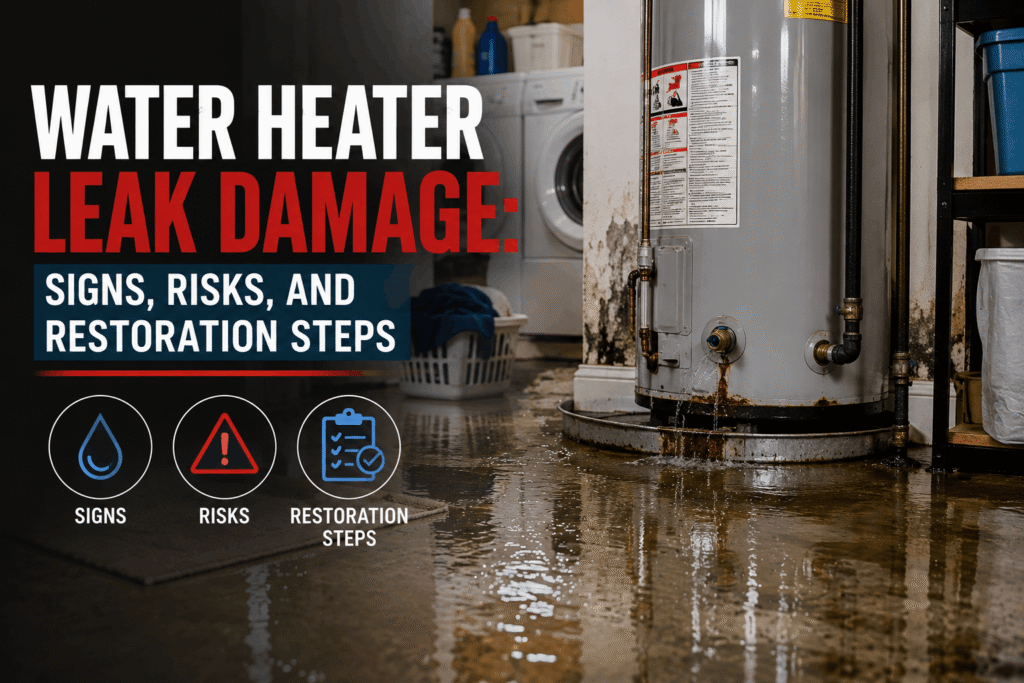
A leaking water heater can release 30-50 gallons of water quickly and cause hidden damage to flooring, drywall, and subflooring long before most homeowners notice a problem. If you spot moisture around your water heater, shut off the unit’s water supply and power source immediately, then contact a water damage restoration company — the sooner extraction and drying begin, the less likely the damage spreads into surrounding structural materials.
Why Water Heater Leaks Often Go Unnoticed Until It’s Serious
Water heaters usually sit in garages, closets, or utility rooms — places homeowners walk past daily without really looking. A slow leak from a corroded tank or a failing valve can drip for weeks before it’s noticed, especially if it’s draining into a floor drain or soaking into a concrete slab where standing water isn’t obvious. By the time a homeowner notices warped flooring near the unit, a musty smell, or staining on an adjacent wall, water has often been present long enough to reach subflooring, baseboards, and in some cases framing.
This matters more in North Texas than in some other regions. Homes here commonly place water heaters in garages or interior closets adjacent to living space, meaning a leak doesn’t stay contained to a utility area — it can travel under a shared wall into a bedroom or hallway. Slab foundations, common throughout Southlake, Colleyville, and Keller, also mean a leak sitting on concrete can wick sideways into adjoining flooring before it ever pools visibly.
Signs of a Water Heater Leak You Shouldn’t Ignore
- Puddling or dampness at the base of the unit, even if it seems minor or intermittent
- Rust or corrosion on the tank exterior, particularly near fittings and the bottom seam
- A popping or rumbling sound from the tank, which can indicate sediment buildup that stresses the tank and accelerates failure
- Discoloration or warping on flooring near the unit, especially noticeable on wood-look flooring or laminate
- A musty odor in the utility closet or garage without an obvious visible source
- Rising water bills without an explanation, which can indicate a slow leak that hasn’t produced visible pooling yet
- Water stains on the ceiling below, if the water heater is located in an attic or second-floor closet — a layout more common in newer construction
What to Do the Moment You Discover a Water Heater Leak
- Shut off the water supply to the heater using the shutoff valve on the cold water line feeding the tank — this stops new water from entering even if the tank itself continues to drain.
- Turn off power to the unit. For electric water heaters, switch off the breaker; for gas units, turn the gas control valve to “off” or “pilot” per the manufacturer’s instructions. Never handle electrical components in standing water.
- Contain what you can safely. Towels or a shop-vac can manage minor surface water, but don’t attempt to move a full tank or force a stuck shutoff valve.
- Photograph the unit, the surrounding area, and any visible damage before cleanup begins — this documentation matters for both your restoration company and your insurance claim.
- Call for a professional assessment promptly, even if visible water seems limited. Given how often these leaks travel under flooring or into adjacent walls before being noticed, a moisture inspection is the only reliable way to know the actual extent.
- Avoid running the unit again until it’s inspected, even if the leak appears to have stopped — a leak that pauses temporarily often indicates a failing component that will fail again, sometimes worse.
How Severe Is My Water Heater Leak? A Quick Reference
| Severity | What You’re Seeing | Likely Response Needed |
| Minor / early | Slight dampness, no standing water, caught quickly | Moisture inspection recommended even if damage isn’t visible yet |
| Moderate | Visible pooling, some flooring or wall contact | Extraction and structural drying, moisture mapping of adjacent areas |
| Severe | Tank failure with significant water release, multiple areas affected | Full extraction, moisture mapping, possible reconstruction planning |
| Long-term / undetected | Leak has been active for days or weeks (common with slow leaks) | Elevated mold risk; antimicrobial treatment likely needed alongside drying |
Water Heater Replacement vs. Repair: What Determines the Difference
A leaking water heater isn’t always a full replacement, but certain signs make repair unlikely to hold:
- Tank age. Most tank water heaters last 8-12 years; a leaking unit near or past that range is rarely worth repairing.
- Leak location. A leak from a fitting or valve is often repairable; a leak from the tank body itself (corrosion through the steel) means the tank is failing and needs replacement.
- Sediment buildup history. Units with a history of popping/rumbling sounds have often built up sediment that accelerates corrosion, making failure more likely to recur even after a repair.
This decision is typically made by a plumber, but it directly affects the scope of restoration — a repaired unit means containing and drying the existing damage, while a full replacement may mean planning restoration alongside a plumbing appointment.
The Professional Restoration Process for Water Heater Leaks
Moisture mapping. Technicians use moisture meters and thermal imaging to trace how far water traveled from the unit — this is often further than it appears, especially on concrete slabs where water can wick sideways under adjoining flooring.
Water extraction. Standing water is removed with commercial extraction equipment, with priority given to areas where water has been present longest.
Structural drying. Air movers and dehumidifiers are placed based on the moisture map rather than visible wetness alone, with drying monitored through follow-up moisture readings until materials return to normal levels, consistent with IICRC S500 standards.
Antimicrobial treatment. Particularly relevant for leaks that went undetected for an extended period, given Texas humidity’s effect on how quickly conditions become conducive to mold growth.
Documentation. Moisture readings, photos, and an itemized damage assessment are compiled for your insurance claim — important given that water heater failures are frequently covered, but only with adequate documentation of the sudden nature of the failure.
Why Concrete Slab Leaks Are Trickier Than They Look
Here’s a detail that catches a lot of homeowners off guard: water sitting on a concrete slab doesn’t stay where it lands. Concrete is porous enough that water can migrate laterally underneath adjoining flooring — engineered wood, laminate, even tile in some cases — well beyond the visible wet area, especially over the days or weeks a slow leak often goes unnoticed. This is exactly why a proper assessment includes moisture meter readings taken well beyond the immediate leak zone, not just at the water heater itself. A restoration job that only addresses the visibly wet area, without mapping how far moisture actually traveled under the slab, is one of the most common reasons homeowners deal with warped flooring or mold in an adjacent room weeks after the “leak was fixed.”
DIY Cleanup vs. Professional Restoration
| DIY Cleanup | Professional Restoration | |
| Best for | Minor dampness caught same-day, no flooring contact | Any standing water, flooring contact, or leak duration unknown |
| Equipment | Towels, shop-vac, fan | Commercial extraction, moisture meters, thermal imaging |
| Detects moisture under flooring/slab | No | Yes — standard part of assessment |
| Mold risk | Elevated, especially with slow leaks | Minimized through moisture mapping and monitored drying |
| Insurance documentation | Homeowner-generated, often incomplete | Professional itemized report adjusters can process directly |
Why Southlake Homeowners Trust PuroClean of Southlake for Water Heater Damage
PuroClean of Southlake, owned by Jiri and Hayley Smetana, built water damage restoration into a core focus of the business following the widespread pipe failures of the February 2021 Texas winter freeze — an event that underscored how quickly water damage can escalate without a fast, reliable response. In 2025, the franchise earned the President’s Circle award, recognizing performance among the top 10% of PuroClean’s North American locations.
Technicians responding to water heater leaks throughout Southlake, Colleyville, Grapevine, Keller, and Trophy Club are IICRC certified and trained to S500 water damage restoration standards, with EPA Lead-Safe certification for older homes. The team operates 24/7/365 and coordinates directly with major insurance carriers — including State Farm, Allstate, USAA, Farmers, and Travelers — handling moisture documentation so homeowners have what they need for a claim without managing that process alone.
Frequently Asked Questions
Is water heater leak damage covered by homeowners insurance?
Sudden water heater failures are typically covered under most homeowners policies, since they qualify as sudden and accidental damage, though coverage can be affected if the leak is found to be the result of long-term neglect or a known unaddressed issue. Confirming details with your carrier alongside professional damage documentation is the safest approach.
How do I know if my water heater leak has caused mold?
A musty odor, discoloration on nearby walls or flooring, or visible growth are common indicators, but mold can also develop inside wall cavities or under flooring where it isn’t visible. Leaks that went undetected for more than a couple of days warrant a moisture inspection even without obvious signs.
Can a leaking water heater be repaired, or does it need replacement?
It depends on the leak’s location and the tank’s age — leaks from fittings or valves are often repairable, while corrosion through the tank body itself typically means replacement, especially in units near or past their typical 8-12 year lifespan. A plumber can make this determination alongside your restoration assessment.
How much does water heater leak damage restoration cost?
Cost depends on how long the leak went undetected, how far water traveled, and whether flooring or drywall replacement is needed beyond drying — a caught-early leak costs significantly less than one that sat for days or weeks. Most restoration companies offer a free on-site assessment before quoting.
Should I turn my water heater back on after a leak stops?
Not until it’s been inspected — a leak that appears to stop on its own often indicates a failing component that will fail again, sometimes with more water released than the first time. It’s worth having both a plumber and a restoration company evaluate the situation before restarting the unit.
How long does restoration take after a water heater leak?
Most projects take 3 to 5 days for extraction and structural drying, though this extends if the leak went undetected for an extended period or if flooring/drywall replacement is needed. Slab-related leaks that traveled under adjoining flooring can also add time to the moisture mapping and drying phase.