


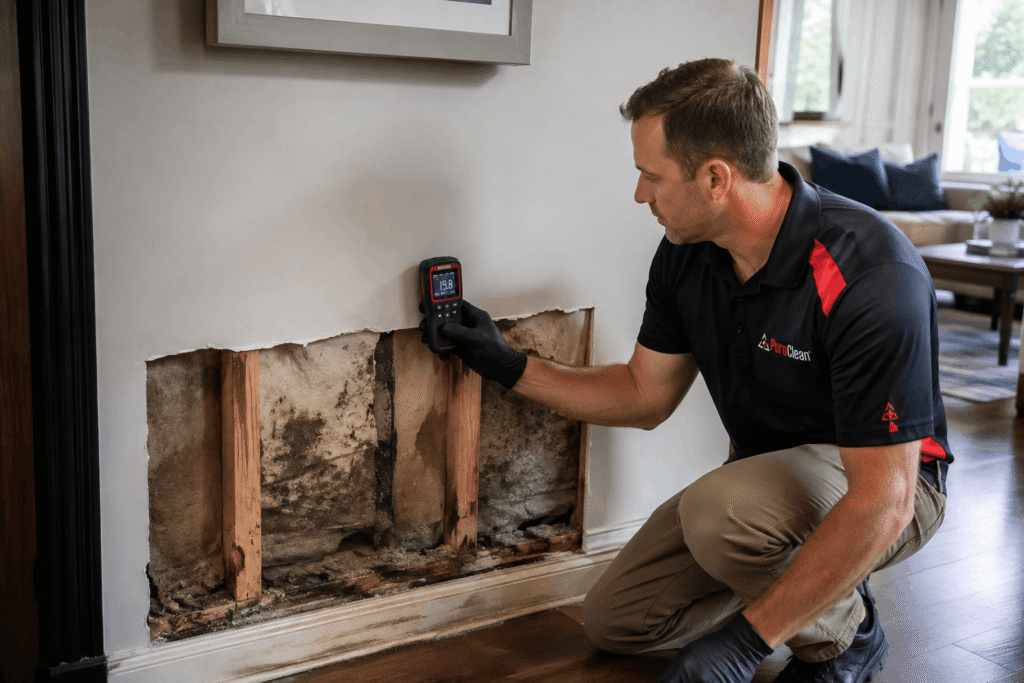
Water damage does not always announce itself with a puddle on the floor or water dripping from the ceiling. In many homes, a leak can continue behind drywall, cabinets, or wall insulation long before a homeowner realizes there is a problem. Water damage behind walls can remain hidden for days or even longer, allowing materials to deteriorate and creating conditions where mold can develop.
A small plumbing leak, roof problem, overflowing appliance, or failed seal can introduce moisture into areas that are difficult to see. By the time stains, odors, or bubbling paint become noticeable, the affected area may be larger than expected.
Understanding what causes hidden moisture, knowing the warning signs, and responding quickly can help limit property damage and reduce the possibility of more extensive restoration work.
For homeowners in Southlake and surrounding communities, recognizing these early warning signs is especially important when a property has experienced a plumbing leak, storm, appliance failure, or other source of unwanted water.
What Causes Water Damage Behind Walls?
Water can enter wall cavities through several different pathways. Some causes are obvious, while others can develop slowly and remain unnoticed.
1. Leaking Plumbing Pipes
Plumbing problems are one of the most common causes of hidden water damage.
A damaged supply line, drainpipe, or pipe connection can release water inside a wall instead of directly into the living space.
Common plumbing-related causes include:
- Cracked or damaged pipes
- Loose pipe connections
- Corroded plumbing
- Failed fittings
- Leaking bathroom plumbing
- Damaged washing machine connections
- Refrigerator water-line leaks
Because pipes often run inside walls, a leak may continue before there is visible evidence on the surface.
2. Roof and Exterior Leaks
Water can also enter walls from outside the home.
Roof damage, deteriorated flashing, damaged siding, and failed window seals can allow rainwater to migrate into wall assemblies.
A roof leak may not appear directly beneath the damaged area. Water can travel along framing materials before eventually reaching a ceiling or wall.
This is why a small discoloration on an interior wall does not always mean the source is located directly behind that spot.
3. Bathroom and Kitchen Leaks
Bathrooms and kitchens contain multiple potential water sources.
Leaks around:
- Sinks
- Toilets
- Showers
- Bathtubs
- Dishwashers
- Cabinets
- Faucets
can allow moisture to reach drywall and surrounding structural materials.
A slow leak underneath a sink may go unnoticed because cabinets can hide the affected area.
4. Appliance Failures
Household appliances can also introduce significant amounts of water into a property.
Potential sources include:
- Water heaters
- Washing machines
- Dishwashers
- Refrigerators
- HVAC equipment
A failed water heater, for example, can release water into nearby walls, flooring, and other building materials.
Water Heater Leak Damage → Water Heater Leak Damage Blog
5. Storm and Flooding Events
Heavy rainfall and flooding can introduce water through doors, windows, roofs, foundations, and other vulnerable areas.
Even when standing water is removed quickly, moisture can remain inside walls.
This is one reason professional drying involves more than simply removing visible water from the floor.
Flood Damage Restoration → Water Damage Restoration Service
10 Warning Signs of Water Damage Behind Walls
Hidden moisture can be difficult to identify, but your home may provide several clues.
1. Water Stains or Discoloration
Brown, yellow, or dark marks on walls or ceilings can indicate previous or ongoing moisture.
Do not assume that an old-looking stain means the problem has been resolved.
A stain can remain after a leak stops, but it can also indicate an active or recurring moisture problem.
2. Bubbling or Peeling Paint
Paint and wallpaper can react to moisture trapped underneath.
You may notice:
- Bubbling
- Blistering
- Peeling
- Cracking
- Warping
These changes can indicate that moisture has entered the wall assembly.
3. Soft or Swollen Drywall
Healthy drywall should feel firm and maintain its normal shape.
If part of a wall feels unusually soft, swollen, or distorted, moisture may be affecting the material behind the surface.
Avoid repeatedly pressing damaged drywall because weakened materials can deteriorate further.
4. Musty or Damp Odors
A persistent musty smell can be another warning sign.
If there is an unexplained damp odor in a room, particularly after a leak, investigate the possibility of hidden moisture.
Odor alone cannot identify the source, but it is a reason to look more closely.
5. Warped Baseboards
Baseboards can absorb moisture from nearby drywall and flooring.
Signs of moisture exposure can include:
- Swelling
- Separation
- Warping
- Discoloration
Pay particular attention to baseboards near bathrooms, kitchens, exterior walls, and known plumbing lines.
6. Unexpectedly High Water Bills
A sudden increase in water usage without a corresponding change in household activity can sometimes indicate a plumbing leak.
This does not automatically mean there is water damage behind a wall, but it is a useful clue worth investigating.
7. Peeling Wallpaper
Wallpaper can loosen when moisture becomes trapped underneath.
Bubbles, wrinkles, or sections pulling away from the wall may indicate moisture problems.
8. Mold Growth
Mold can develop when moisture remains available for an extended period.
Visible mold around a wall, ceiling, cabinet, or baseboard may indicate a moisture source that needs to be addressed.
[Internal Link Opportunity: Mold Removal Services → Mold Removal Service Page]
9. Unusual Wall or Ceiling Texture
A wall may develop subtle changes in texture as materials absorb water.
You may notice:
- Sagging
- Swelling
- Uneven surfaces
- Cracks
- Soft spots
These changes should not be ignored, particularly if they appeared after a leak or storm.
10. Repeated Damage in the Same Area
If the same wall repeatedly develops stains or discoloration, there may be an unresolved source of moisture.
Repeated repairs without identifying the underlying cause can allow the problem to return.
How Can You Find Water Damage Behind Walls?
Finding hidden moisture requires more than looking at the surface.
Start With a Visual Inspection
Look carefully around:
- Plumbing fixtures
- Cabinets
- Windows
- Doors
- Exterior walls
- Ceilings
- Baseboards
- Appliances
Look for changes in color, texture, odor, or condition.
Check for Active Leaks
If you suspect a plumbing leak, shut off the appropriate water supply when possible and contact a qualified professional if the source cannot be identified safely.
Do not cut into walls simply to search for moisture unless you understand the potential electrical, plumbing, and structural risks.
Use Moisture Detection Equipment
Professional restoration technicians can use specialized moisture meters and other detection equipment to identify elevated moisture levels that may not be visible.
This is particularly useful when water has traveled into:
- Wall cavities
- Flooring
- Cabinets
- Crawl spaces
- Insulation
Thermal imaging may also help identify temperature differences associated with moisture, although thermal images alone do not prove that an area contains water.
[Internal Link Opportunity: Professional Water Damage Inspection → Water Damage Inspection Blog]
Determine the Source
Finding moisture is only part of the process.
The next question is:
Where did the water come from?
A restoration professional may need to investigate plumbing, roofing, appliances, exterior openings, or other potential sources before determining the appropriate restoration approach.
Why Water Damage Behind Walls Should Not Be Ignored
Leaving hidden moisture untreated can turn a relatively contained problem into a much larger restoration project.
Structural Materials Can Deteriorate
Drywall, insulation, wood framing, flooring materials, and other components can be affected by prolonged moisture exposure.
The longer materials remain wet, the greater the possibility of deterioration.
Mold Can Become a Concern
Moisture and organic building materials can create conditions favorable to mold growth.
The solution is not simply to clean visible mold. The underlying moisture source needs to be identified and addressed.
[Internal Link Opportunity: How Long Does Mold Grow After Water Damage? → Mold Growth After Water Damage Blog]
Odors Can Develop
Persistent moisture can contribute to unpleasant musty odors.
If moisture has entered insulation, wall cavities, or other enclosed areas, ordinary household cleaning may not resolve the source.
Restoration Costs Can Increase
Early action can help limit the amount of material requiring removal or repair.
Ignoring a small warning sign because the wall “doesn’t look that bad” can be a costly mistake if moisture continues spreading.
What Should Homeowners Do When They Suspect Hidden Water Damage?
If you suspect moisture behind a wall, take a practical approach.
1. Identify the Possible Source
Think about what happened immediately before the problem appeared.
Was there:
- A plumbing leak?
- A storm?
- An appliance failure?
- A roof issue?
- An overflowing fixture?
This information can help professionals determine where to investigate.
2. Stop the Water Source if Safe
If you know a fixture or appliance is leaking, stop using it.
For plumbing emergencies, shut off the appropriate water supply if you can do so safely.
3. Avoid Electrical Hazards
Water and electricity can create dangerous conditions.
Do not enter areas where electrical systems may have been exposed to water. Contact a qualified professional when electrical hazards are possible.
4. Document the Damage
Take photographs and videos of visible damage.
Documentation can help with:
- Insurance communication
- Restoration planning
- Tracking changes
- Property records
5. Get the Area Inspected
If the source is unclear or moisture may have entered a wall cavity, professional inspection can help determine the extent of the problem.
[Internal Link Opportunity: Water Damage Restoration Process → Water Damage Restoration Blog]
Can You Dry Water Damage Behind a Wall Yourself?
Minor surface moisture may sometimes be addressed by homeowners, but hidden moisture is more complicated.
The biggest problem is that you cannot reliably determine how much moisture is inside a wall simply by looking at the drywall.
A wall cavity may contain insulation, framing, electrical components, plumbing, and other materials.
If water has penetrated these areas, professional assessment may be appropriate.
A restoration team can determine where moisture is present and develop a drying strategy based on the affected materials and conditions.
How Professional Water Damage Restoration Addresses Hidden Moisture
Professional restoration is focused on removing moisture and preventing further damage.
Depending on the situation, the process may involve:
- Inspecting the affected property
- Identifying the water source
- Measuring moisture levels
- Removing standing water when present
- Setting up air movement and dehumidification
- Drying affected building materials
- Removing materials that cannot be restored
- Cleaning and sanitizing affected areas
- Checking moisture levels during drying
- Completing necessary repairs or reconstruction
The exact process depends on the source, amount of water, affected materials, and extent of damage.
Water Damage Behind Walls in Southlake and Nearby Communities
Homes throughout Southlake and surrounding communities can experience hidden water damage from plumbing problems, storms, appliance failures, and other sources.
Homeowners in Grapevine, Keller, Colleyville, Trophy Club, Roanoke, Bedford, and Euless may face similar restoration challenges.
The important point is not to assume that visible damage represents the full extent of the problem. Water can travel into areas that are not immediately visible, which is why proper inspection and moisture detection are important parts of the restoration process.
Conclusion
Water damage behind walls can remain hidden while gradually affecting drywall, insulation, framing, flooring, and other parts of a property. Plumbing leaks, roof problems, appliance failures, bathroom leaks, and storms are among the potential causes.
Watch for warning signs such as stains, bubbling paint, soft drywall, musty odors, warped baseboards, mold growth, and recurring damage. If you suspect moisture inside a wall, do not rely solely on what you can see. Professional moisture detection can help determine whether water has moved beyond the visible surface.
For homeowners dealing with unexpected moisture, acting quickly can help prevent a manageable problem from becoming a much larger restoration project.
Need Help With Hidden Water Damage?
If you suspect a leak has introduced moisture behind your walls, PuroClean of Southlake can assess the affected area and help determine the appropriate restoration approach.
Professional water damage restoration may include moisture detection, water extraction, structural drying, cleaning, and restoration of affected areas.
Call (817) 809-8585 for assistance with water damage in Southlake and surrounding communities.
Frequently Asked Questions
How do I know if there is water damage behind my wall?
Common warning signs include water stains, bubbling paint, soft or swollen drywall, peeling wallpaper, musty odors, warped baseboards, and unexplained mold growth. Professional moisture detection equipment can help identify moisture that cannot be seen.
Can water damage behind a wall cause mold?
Yes. When moisture remains inside a wall cavity, it can create conditions that support mold growth. Addressing the moisture source and properly drying affected materials are important steps.
Can a moisture meter find water behind drywall?
A moisture meter can help identify elevated moisture levels in or around building materials. However, readings need to be interpreted correctly and may need to be combined with visual inspection and other diagnostic methods.
Should I cut open my wall to find a hidden leak?
Not necessarily. Cutting into a wall without knowing where plumbing, electrical components, or structural elements are located can create additional risks. Professional inspection may be a safer approach when the source is unclear.
How quickly should hidden water damage be addressed?
As soon as possible. Prompt action can help limit the spread of moisture and reduce the risk of secondary damage, including material deterioration and mold growth.