


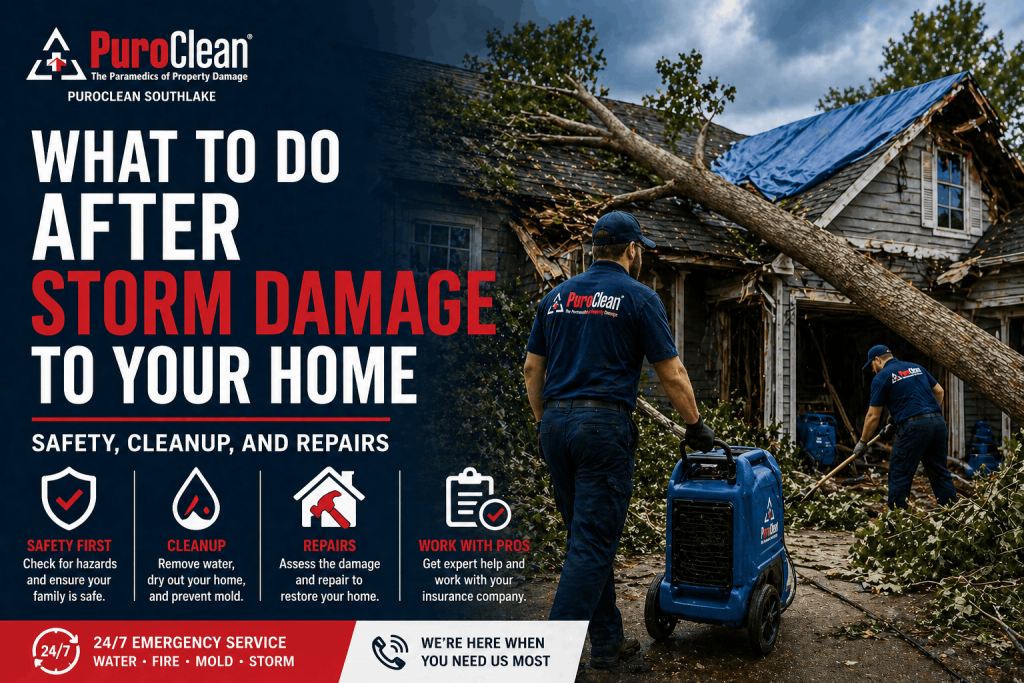
Storms don’t just pass. They leave damage behind.
From heavy rain and strong winds to hail and flooding, storm damage can impact your home in ways that aren’t always immediately visible. What most homeowners get wrong is assuming the situation is stable once the storm ends.
It’s not.
If you’re searching what to do after storm damage, you need to act quickly and strategically. The first few hours and days determine how much damage spreads and how expensive repairs become.
For homeowners in Southlake, Grapevine, Trophy Club, Roanoke, Colleyville, Bedford, and Euless, storms can bring unpredictable conditions, making proper response even more critical.

Step 1: Prioritize Safety First
Before you think about cleanup, focus on safety.
Storm damage can create hidden hazards:
- Downed power lines
- Structural instability
- Flooded electrical systems
- Broken glass and debris
Do not re-enter your home if:
- You smell gas
- There are exposed wires
- The structure appears unsafe
Your safety is more important than property.
Step 2: Assess the Damage Carefully
Once it’s safe, begin a visual inspection.
Look for:
- Roof damage after storm events like missing shingles or leaks
- Broken windows or doors
- Water intrusion inside the home
- Damage to siding and exterior structures
Do not climb onto the roof immediately. Use binoculars or inspect from the ground first.
Step 3: Document Everything for Insurance
This step is often rushed or ignored, and that’s a mistake.
Take:
- Photos of all visible damage
- Videos showing affected areas
- Notes on what was damaged and when
Proper documentation helps:
- Speed up insurance claims
- Prevent disputes
- Ensure accurate compensation
Step 4: Prevent Further Damage
Storm damage doesn’t stop once the storm ends.
You need to stabilize the situation.
Temporary measures include:
- Covering roof openings with tarps
- Boarding up broken windows
- Removing standing water
These steps reduce additional damage and protect your home until repairs begin.
Companies like PuroClean of Southlake often provide emergency services to secure properties quickly after storms.
Step 5: Address Water Damage Immediately
Water is one of the biggest threats after a storm.
If ignored, it leads to:
- Mold growth within 24–48 hours
- Structural weakening
- Long-term damage
Actions to take:
- Remove standing water
- Dry affected areas
- Use fans and dehumidifiers
Delaying this step increases both cost and restoration time.
Step 6: Inspect Roof Damage Thoroughly
Your roof takes the most impact during storms.
Common signs of roof damage after storm include:
- Missing or cracked shingles
- Leaks or water stains inside
- Debris buildup
- Sagging areas
Even minor roof damage can lead to major issues if not repaired quickly.
Professional inspection is recommended to identify hidden damage.
Step 7: Clean Up Debris Safely
Storm debris can be hazardous.
During cleanup:
- Wear gloves and protective gear
- Remove sharp objects carefully
- Dispose of damaged materials properly
Avoid handling heavy debris alone, especially if it affects structural areas.
Step 8: Check for Hidden Damage
Not all damage is visible.
Inspect:
- Attic spaces for leaks
- Walls for moisture or discoloration
- Flooring for warping
Hidden damage often becomes bigger problems later if ignored.
This is where many homeowners fail when deciding what to do after storm damage. They focus only on visible issues.
Step 9: Contact Professional Restoration Services
Storm damage is rarely a simple fix.
Professional services provide:
- Full property assessment
- Water damage restoration
- Structural repairs
- Mold prevention
Homeowners in Southlake and nearby areas rely on PuroClean of Southlake for fast, professional storm damage restoration that prevents long-term issues.
Step 10: Start Permanent Repairs
Once the property is stabilized, repairs begin.
This may include:
- Roof repair or replacement
- Drywall and insulation replacement
- Flooring repairs
- Structural restoration
Timelines vary depending on severity, but starting early prevents delays.
Common Mistakes Homeowners Make After Storm Damage
Avoid these costly errors:
1. Waiting Too Long to Act
Delays increase damage and repair costs.
2. Ignoring Small Roof Issues
Minor roof damage quickly turns into leaks and structural problems.
3. Skipping Professional Inspection
Hidden damage often goes unnoticed without expert evaluation.
4. Attempting Major Repairs Yourself
DIY repairs can make the situation worse and void insurance claims.
Why Professional Help Makes a Difference
Storm damage restoration requires more than basic cleanup.
Professionals use:
- Advanced equipment
- Moisture detection tools
- Structured restoration processes
Companies like PuroClean of Southlake ensure every step is handled properly, from emergency response to full restoration.
How to Prevent Future Storm Damage
You can’t stop storms, but you can reduce risk.
Take preventive steps:
- Inspect your roof regularly
- Clean gutters and drainage systems
- Trim nearby trees
- Seal windows and doors
- Maintain proper insulation
Preparation reduces damage and recovery time.
Local Insight: Why Fast Action Matters
In areas like Southlake, Grapevine, Trophy Club, Roanoke, Colleyville, Bedford, and Euless, weather conditions can worsen damage quickly.
Humidity and temperature changes increase:
- Mold risk
- Structural weakening
- Water damage spread
Fast response minimizes these risks.
Frequently Asked Questions (FAQs)
1. What to do after storm damage to your home?
Ensure safety, assess damage, document everything, and start cleanup immediately.
2. How serious is roof damage after storm events?
Even minor roof damage can lead to leaks and structural issues if not repaired quickly.
3. Should I call insurance immediately?
Yes, report damage as soon as possible with proper documentation.
4. Can I clean up storm damage myself?
Small cleanup is possible, but major damage requires professional help.
5. How fast should I remove water after a storm?
Immediately. Delays increase mold risk and structural damage.
6. What are the signs of hidden storm damage?
Water stains, musty odors, and structural changes are common signs.
7. How long does storm damage restoration take?
It depends on severity, but can range from a few days to several weeks.
8. Can storm damage lead to mold?
Yes, moisture from storms can cause mold growth within 24–48 hours.
9. Do I need a professional inspection after a storm?
Yes, especially for roof and structural damage.
10. How can I prevent storm damage in the future?
Maintain your home, inspect regularly, and address weak points before storms occur.
Conclusion
Storm damage isn’t just a short-term problem. It demands immediate action and the right handling from the start.
Many homeowners overlook water intrusion, structural risks, and hidden damage, which leads to more expensive repairs later. Acting quickly with a clear plan is what limits loss and prevents long-term issues.
If you want to avoid delays, escalating damage, and unnecessary costs, a professional response is essential.
PuroClean of Southlake delivers expert storm damage restoration for homeowners in Southlake and nearby areas, helping you recover safely and efficiently.Waiting only makes things worse. Contact PuroClean of Southlake today for a rapid response and dependable storm damage restoration you can rely on.