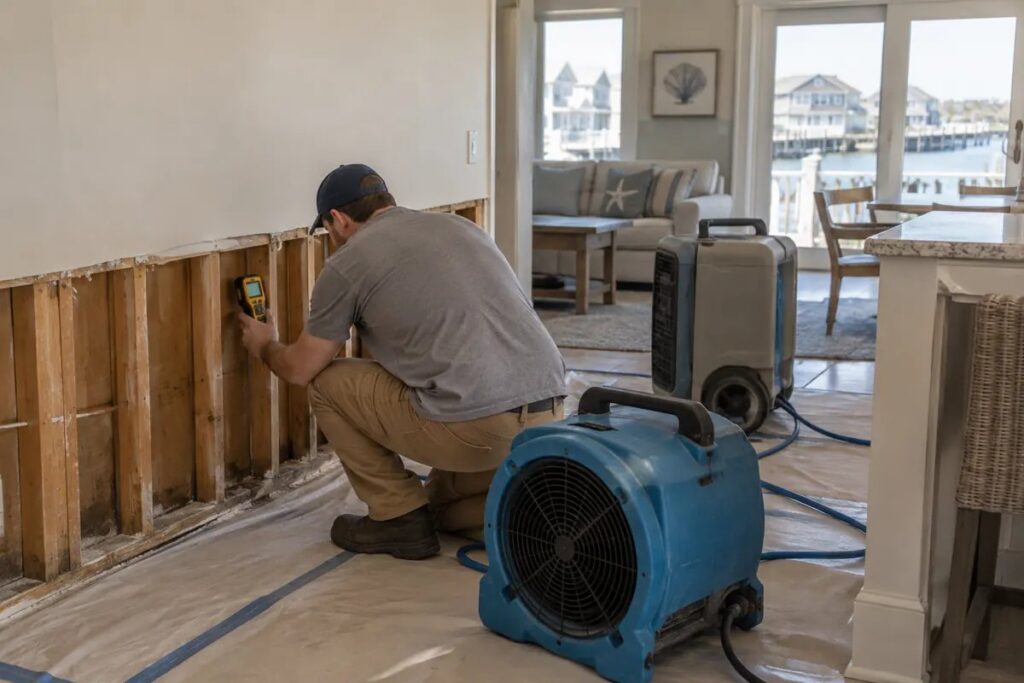
Quick answer: DIY restoration can make sense for small, clean, fully visible damage, but professional restoration is safer when moisture is hidden, contamination is possible, or fire and structural damage are involved. Toms River property owners should compare not only the upfront price, but also drying verification, safety, time, documentation, and the cost of redoing incomplete work.
Key takeaways
- DIY is best limited to small, clean, accessible damage with no electrical, structural, mold, sewage, or smoke concerns.
- Professional restoration costs more upfront but adds specialized detection, controlled drying, safety procedures, and documented progress.
- The cheapest initial option can become expensive if hidden moisture, contamination, or damaged materials are missed.
- Coastal storms, flooding, and Jersey Shore humidity can make drying less predictable in Toms River and surrounding Ocean County.
- Insurance coverage depends on the policy and cause of loss; photos, receipts, moisture records, and prompt notice can matter.
What is the real difference between DIY and professional restoration?
The DIY versus professional restoration decision is not simply about who removes wet carpet or wipes soot from a wall. Restoration involves finding the full extent of damage, controlling hazards, drying or cleaning affected materials, deciding what can be saved, and verifying that the property is ready for repair.
A homeowner may be able to handle a minor spill on a hard, accessible surface. The risk rises when water enters wall cavities, insulation, subflooring, cabinets, or HVAC components. Fire residues can also travel well beyond the visibly burned area, while sewage, bodily fluids, and extensive mold require controls that ordinary household cleaning does not provide.
Professional work generally brings trained assessment, moisture mapping, containment, extraction, air movement, dehumidification, cleaning procedures, and records. PuroClean of Toms River uses equipment identified on its site, including professional dehumidifiers, high-velocity air movers, thermal imaging cameras, moisture meters, and EPA-registered disinfectants. Those tools do not replace judgment, but they help technicians locate and track conditions that are difficult to evaluate by sight or touch.
For a broader explanation of the mitigation and repair process, see this comprehensive guide to water damage restoration. The central question here is narrower: whether the scope, hazards, and consequences of the loss fit a realistic DIY project.
When does DIY restoration make sense?
DIY work is most reasonable when the affected area is small, the source has stopped, the material is accessible, and the water or residue is known to be nonhazardous. You should also be able to complete the work without opening electrical assemblies, disturbing questionable building materials, or working in an unstable area.
Examples may include promptly drying a small amount of clean water from a sealed floor, laundering washable items after a minor incident, or removing an undamaged loose rug to dry separately. Even then, check nearby baseboards, cabinet edges, seams, and the room below. A dry surface does not prove that layers underneath are dry.
A practical DIY suitability test
- Identify the source. Confirm that the leak or spill has stopped and is not sewage, storm floodwater, or water that has passed through contaminated materials.
- Trace the boundaries. Determine whether moisture stayed on an exposed surface or entered porous assemblies such as drywall, insulation, wood flooring, or subflooring.
- Screen for hazards. Stop if there are electrical risks, sagging ceilings, weakened floors, sharp debris, heavy smoke residue, visible mold, or unknown contaminants.
- Confirm you have capacity. Make sure you can remove water, manage humidity, protect unaffected rooms, and monitor progress rather than merely running a fan.
- Keep records. Photograph the source and damage before moving items, retain receipts, and note what was removed or cleaned.
DIY is less suitable after a coastal storm or prolonged power outage. In Toms River, Bayville, Brick, Seaside Park, and other Jersey Shore communities, humid outdoor air can reduce the effectiveness of simple ventilation. Opening windows is not automatically helpful when outdoor humidity is high.
How do costs compare when hidden damage is included?
DIY usually has the lower initial cash cost because the owner supplies the labor. Expenses can still include extraction equipment, fans, a dehumidifier, protective gear, disposal, cleaning products, replacement materials, electricity, and time away from work. Consumer machines may also run longer or fail to create the drying conditions needed across several rooms or inside assemblies.
Professional restoration has a higher upfront price because it includes labor, assessment, commercial equipment, monitoring, disposal, cleaning, and sometimes specialized containment. Professional water-damage restoration costs vary widely based on the extent and type of damage. PuroClean of Toms River does not publish prices here; actual costs depend on the affected area, water category, material saturation, access, demolition, and reconstruction.
| Cost factor | DIY | Professional |
|---|---|---|
| Upfront cost | Lower for a small, simple loss; you supply labor and basic tools. | Higher because trained labor, assessment, commercial equipment, and documentation are included. |
| Equipment | Household fans and consumer dehumidifiers may be too small or poorly placed. | Air movers, commercial dehumidifiers, and moisture meters are selected and monitored for the space. |
| Time | Often slower, especially around work schedules and learning procedures. | Crews can work in parallel and adjust equipment as readings change. |
| Risk of missed damage | Higher when water or residue is hidden behind walls, under floors, or inside assemblies. | Lower because assessment, moisture mapping, and verification are part of the process. |
| Redo cost | Can be high if damp materials must later be removed or finishes replaced twice. | Generally lower, though no process can guarantee every hidden condition will be found. |
The financially sensible choice is the one that controls the full loss, not merely the visible symptom. A modest professional assessment can be more economical than replacing flooring, cabinets, or drywall later because moisture was left beneath them. Conversely, paying for a full restoration response is difficult to justify for a truly minor, clean spill that was contained and dried immediately.
What risks are easy to miss during DIY cleanup?
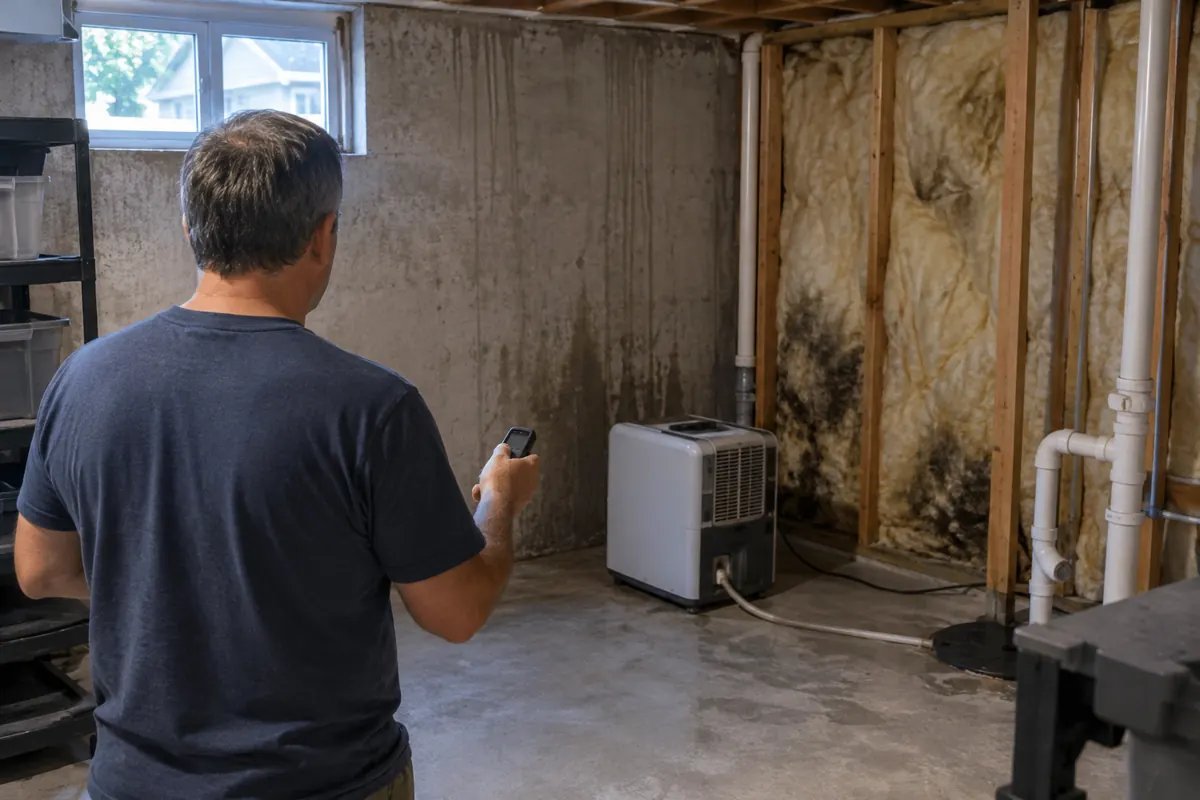
Hidden moisture is the most common blind spot. Water follows seams, fastener holes, gravity, and absorbent materials. It can move behind baseboards, under floating floors, through ceiling cavities, and into insulation while the exposed surface begins to look normal.
Contamination changes the job. Water from sewage backups and outdoor flooding should not be treated like water from a clean supply line. Porous contents may not be salvageable, and spreading contaminated water through footwear, shop vacuums, or uncontrolled airflow can enlarge the affected area.
Electrical and structural hazards may not be obvious. Do not enter standing water near energized equipment, use household appliances in wet areas, or work beneath a sagging ceiling. A licensed electrician, plumber, structural professional, or restoration contractor may be needed depending on the source and damage.
Fire residue is another poor candidate for trial-and-error cleaning. The wrong product can smear soot, set staining, damage finishes, or expose occupants to irritating residues. Fire losses may also involve compromised wiring, structural damage, and water used during suppression. Property owners weighing that type of loss can review guidance on choosing a fire restoration company.
Lead-safe practices and permits can matter when restoration becomes demolition or reconstruction. New Jersey’s Department of Community Affairs publishes the state’s current construction codes, while local officials determine permit and inspection requirements for a particular project. Disturbing painted surfaces in older buildings may also require lead-safe procedures. Do not assume emergency cleanup exempts later repair work from applicable rules.
Is professional restoration faster than doing it yourself?
Professional restoration is often faster because several tasks happen in sequence or at the same time: source control, extraction, contents handling, demolition where necessary, equipment placement, cleaning, and moisture monitoring. A homeowner working nights or weekends may complete the same physical tasks more slowly, and delays allow moisture or residue to affect additional materials.
Minor water damage may be addressed relatively quickly, while major flooding involving structural issues or mold can take much longer. DIY work often takes longer when the owner has limited time, equipment, or experience. Those are broad national estimates, not promises; access, weather, contamination, insurance approvals, material availability, and reconstruction all affect the schedule.
Drying time and total restoration time are different. A room may reach drying goals before replacement flooring arrives, or demolition may expose plumbing or structural repairs that require another trade. Professional equipment does not make every wet assembly dry instantly. Its advantage is that capacity and placement can be adjusted from measurements rather than guesswork.
Jersey Shore conditions add another variable. Storms can affect many properties at once, and humid coastal air can slow evaporation. Commercial dehumidification and air movement can create a more controlled indoor drying environment, but equipment must be selected, placed, and monitored for the actual space. PuroClean of Toms River provides residential restoration services for water, flood, sewage, fire, smoke, mold, and biohazard losses.
How does the choice affect an insurance claim?
Insurance coverage is determined by the policy, cause of loss, exclusions, deductibles, endorsements, and the insurer’s investigation. Hiring a restoration company does not guarantee coverage, and doing some cleanup yourself does not automatically void a claim. The safest approach is to notify the insurer promptly, follow reasonable instructions, and preserve evidence before discarding damaged materials when conditions allow.
Useful documentation includes wide and close-up photos, video, dates, the suspected source, a room-by-room inventory, receipts, contractor estimates, and communications with the carrier. Professional moisture readings, equipment logs, photographs, and scope notes may help show why work was performed. PuroClean of Toms River works with homeowners and insurance providers throughout the claims process, but the insurer makes the coverage decision.
Reasonable emergency steps to prevent additional damage may be expected, yet safety comes first. Do not enter a contaminated, electrically unsafe, or structurally questionable area just to take pictures. If items must be moved to prevent further loss, photograph their original location when practical and avoid permanently altering evidence of the source before it is assessed.
For commercial owners and managers, the documentation burden may be broader because business interruption, tenant areas, equipment, inventory, and regulatory obligations can overlap. The company’s commercial property damage restoration page outlines the types of commercial losses it handles.
How should you decide between DIY and a restoration company?
Use a risk-based decision rather than an emotion-based one. The visible size of the stain matters less than the source, affected materials, contamination level, access, and consequence of being wrong. A small sewage release can require more control than a larger amount of clean water on a sealed surface.
| Decision question | DIY may be reasonable when | Professional help is the safer choice when |
|---|---|---|
| Source | Clean, stopped, and fully identified. | Sewage, floodwater, fire, smoke, mold, or an unknown source is involved. |
| Extent | Small, visible, and confined to a nonporous surface. | Moisture or residue may be hidden in walls, floors, ceilings, or HVAC systems. |
| Hazards | No electrical, structural, respiratory, or contamination risk. | Any hazard is present or uncertain. |
| Time | The job can be completed and monitored without delay. | Delays would increase damage or disrupt a home or business. |
| Documentation | No insurer, tenant, buyer, or regulator needs a formal record. | Insurance, resale, tenancy, or compliance may require documented scope and verification. |
You can also use a hybrid approach. An owner might document the loss, move unaffected contents from a safe area, and arrange professional assessment and drying. Later cosmetic work may be suitable for DIY after the damaged area is clean, dry, safe, and any required permits or specialty trades have been addressed.
When comparing providers, verify the proposed scope, credentials relevant to the job, documentation practices, equipment plan, exclusions, and responsibility for reconstruction. New Jersey law generally requires home improvement contractors performing covered residential repair work to be registered, and applicable home improvement contracts must meet state requirements. This is separate from judging mitigation skill, so check both restoration qualifications and legal requirements. Our guide to what to look for in a water mitigation company provides additional selection criteria.
For properties in Toms River and nearby Ocean County communities, the balanced answer is straightforward: handle only what you can safely identify, contain, complete, and verify. When the source, boundaries, or hazards are uncertain, professional assessment reduces guesswork and creates a clearer basis for cleanup, repair, and insurance communication.
Frequently Asked Questions
Can I rent restoration equipment and get the same results as a professional crew?
Rental equipment can help with a small, straightforward clean-water loss, but equipment alone does not establish the correct drying plan. Results depend on finding all wet materials, calculating capacity, controlling humidity, placing equipment correctly, and tracking moisture until goals are met. Rental units also do not resolve contamination, electrical hazards, structural concerns, or difficult-to-access cavities.
Will homeowners insurance pay for professional restoration but not DIY work?
Coverage is determined by the policy, not by who held the equipment. A professional estimate, photographs, moisture readings, and invoices can make documentation stronger, but the insurer will still examine the cause of loss, exclusions, and policy terms. Prompt notice and a complete record are useful for either route.
Should drywall always be removed after water damage?
No. The decision depends on the water source, duration, saturation, condition of insulation, presence of contamination, and whether the wall cavity can be dried and verified. Clean water affecting limited drywall may sometimes be dried, while sewage-contaminated, deteriorated, or mold-affected material often requires removal. Cutting walls without checking for wiring, plumbing, and regulated materials creates additional risk.
Can I clean smoke damage with household cleaners?
Household cleaners may remove light surface residue, but smoke damage often extends into porous materials and may require specialized cleaning, deodorization, and disposal methods. The wrong product can smear soot, damage finishes, or set odor. Fire-related losses should also be checked for structural and electrical damage before cosmetic work begins.
What should a restoration estimate or work authorization include?
Look for the affected areas, planned services, equipment, anticipated material removal, cleaning methods, monitoring, pricing method, exclusions, payment terms, and responsibility for reconstruction. Ask how changes in scope will be approved and documented. For covered home improvement work in New Jersey, also verify contractor registration and applicable written-contract requirements with the Division of Consumer Affairs.
Sources
- Hiring Home Improvement Contractors — New Jersey Division of Consumer Affairs
- Current Construction Codes — New Jersey Department of Community Affairs
Reach PuroClean of Toms River Any Time
If water, fire, mold, or biohazard damage has affected your home or business, the team at PuroClean of Toms River is available 24/7 at (732) 930-2330. You can also visit our contact page to reach our local team serving Toms River and the surrounding Ocean County communities.
Written by the team at PuroClean of Toms River, an IICRC Certified and EPA Lead-Safe Certified property restoration company at 798 Fischer Blvd., Toms River, NJ, locally owned and operated by Alex Gonzalez.