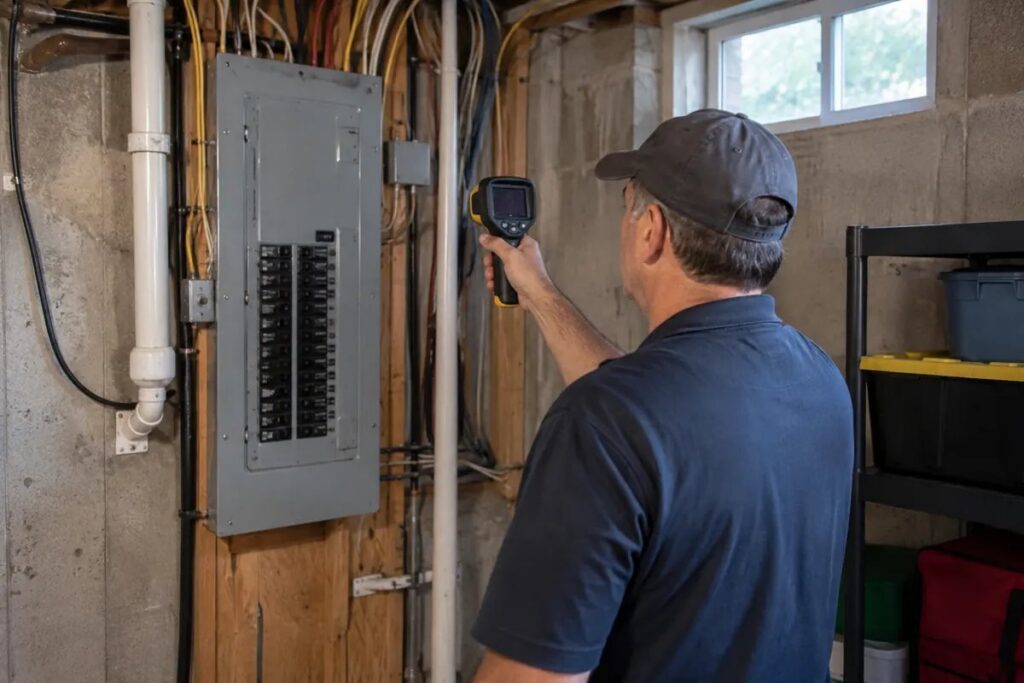
Quick answer: A practical infrared camera for home inspections should provide enough thermal resolution and sensitivity for the intended task, along with software for saving images, but consumer cameras only flag suspected problems; they cannot confirm moisture content or replace a licensed inspector’s judgment.
Key takeaways
- Infrared cameras detect temperature differences, not moisture directly, so suspected moisture should be checked with direct measurement at representative locations
- Compare thermal resolution and thermal sensitivity carefully, because clearer images and the ability to distinguish smaller temperature differences can improve home-inspection scans
- Standards like ASTM E3216 and ISO 6781-1 outline how professionals perform and document infrared building surveys
- HomeAdvisor estimates professional thermal imaging inspections typically cost $200 to $500
- A camera can point you to a suspicious spot on a wall, but a qualified professional can investigate the cause and recommend an appropriate response
What Is an Infrared Camera and How Does It Help With Home Inspections?
An infrared camera, also called a thermal imaging camera, converts surface temperature differences into a visible color map. It does not see through walls and it does not measure moisture directly. Instead, it shows you where a surface is warmer or cooler than its surroundings, which can hint at problems like a wet wall cavity, a missing patch of insulation, or an overheating electrical connection.
Homeowners in Toms River and along the Jersey Shore often reach for these tools after a storm, a slow leak, or a suspicious damp patch, hoping to find the source before calling a professional. Used correctly, a camera is a helpful screening tool. Used alone, it can also give a false sense of confidence, because cold spots can come from drafts, poor insulation, or even sunlight angle rather than water.
The comprehensive guide to water damage restoration covers thermal imaging as one of several tools restoration technicians use on the job, alongside moisture meters and air movers. This guide goes deeper into picking a camera for personal or light professional use.
How Does Infrared Thermography Actually Detect Moisture and Heat Loss?
Thermal cameras rely on emitted infrared radiation, which every surface gives off based on its temperature. Wet building materials tend to hold and release heat differently than dry ones, which can create a visible temperature contrast on camera, especially right after a rain event or when there is a meaningful indoor-outdoor temperature gap.
According to the thermal imaging inspection checklist published by Fluke, Fluke recommends confirming an interior-to-exterior temperature difference of about 18°F (10°C) for conduction inspections, preferably stable for at least four hours, while noting that effective inspections may sometimes be possible with a smaller difference. Humidity, direct sunlight, recent HVAC cycling, and wind can all distort results if you scan under the wrong conditions.
This is why professional guidance, including ASTM’s E3216 Standard Guide for Use of Infrared Thermography in Evaluation of Buildings and ISO 6781-1:2023, stresses correlating thermal images with direct measurement, such as a moisture meter reading, rather than relying on color patterns alone. A camera flags where to look; a meter or a trained eye confirms what you are actually looking at.
What Features Should You Look for When Buying a Thermal Camera?
Consumer infrared cameras range from inexpensive smartphone attachments to professional-grade handheld units. The right choice depends on how often you will use it and how precise you need the readings to be.
- Thermal resolution: Higher thermal resolution provides more detail and can make building anomalies easier to interpret, so compare image quality at your expected viewing distance.
- Thermal sensitivity (NETD): A lower NETD indicates that a camera can distinguish smaller temperature differences, which may help reveal subtle thermal anomalies.
- Temperature range: Bob Vila’s testing of consumer thermal cameras notes that handheld units can span roughly -13°F to 716°F, which is more range than most home inspections need, but useful if you also check electrical panels or HVAC equipment.
- Image fusion: Cameras that blend a visible-light photo with the thermal overlay make it much easier to pinpoint exactly where on the wall or ceiling an anomaly sits.
- Reporting software: If you plan to document findings for an insurance claim or a contractor, choose a camera with companion software that lets you save, annotate, and export images.
- Battery life and ruggedness: Attic and crawlspace inspections are hard on equipment; compare housing durability and battery runtime with the conditions and duration of your expected inspections.
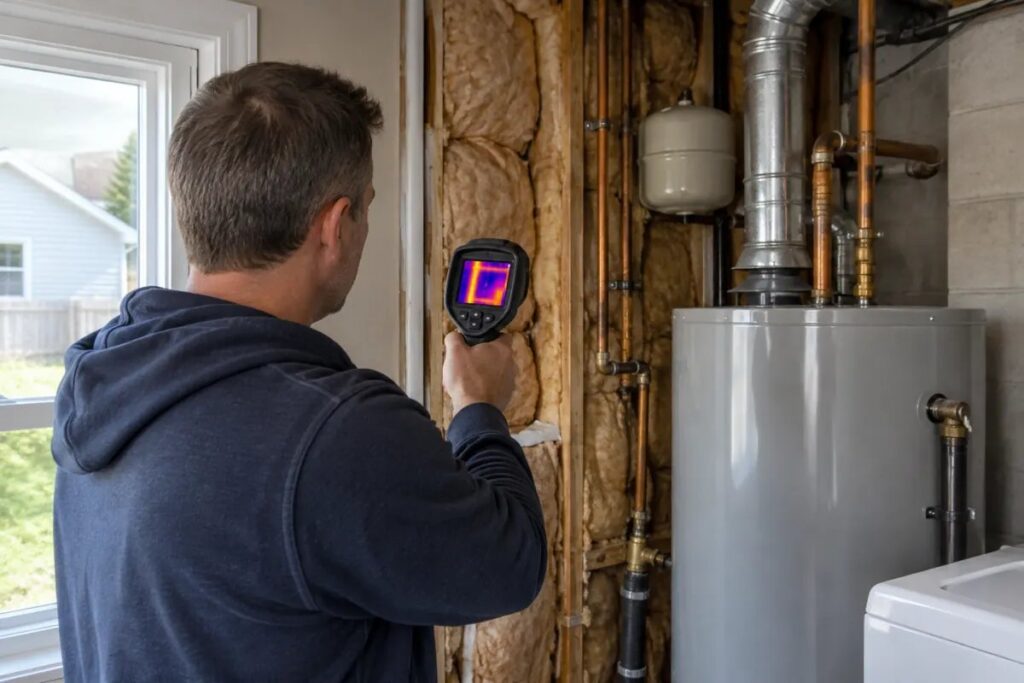
Smartphone Attachments vs. Handheld Thermal Cameras: Which Is Right for You?
Smartphone-clip thermal cameras are the most affordable entry point and work fine for a quick walk-through to spot obvious hot or cold spots. Their resolution and sensitivity are usually lower than dedicated handheld units, so faint anomalies can be missed or misread.
| Type | Typical Use | Strengths | Limitations |
|---|---|---|---|
| Smartphone attachment | Quick DIY checks for drafts or obvious hot spots | Low cost, easy to carry, works with a phone you already own | Lower resolution, shorter battery drain on phone, less accurate on subtle temperature gaps |
| Entry-level handheld | Homeowners doing periodic insulation or leak checks | Dedicated battery, better resolution than phone add-ons, simple interface | Still limited sensitivity compared to professional units |
| Professional-grade handheld | Home inspectors and restoration technicians | High resolution, strong sensitivity, built-in reporting software | Higher cost, steeper learning curve, usually overkill for occasional DIY use |
If you are only trying to confirm a draft near a window before winter, a smartphone attachment may be enough. If you are chasing a possible leak after a nor’easter or trying to document damage for an insurance claim, a more capable handheld unit, or a licensed professional, will give you far more reliable information.
What Can a Thermal Camera Miss or Get Wrong?
Infrared cameras are a screening tool, not a diagnostic instrument on their own. A cold patch on a wall could mean a water leak, but it could just as easily mean a missing stud bay of insulation, an air leak around an outlet, or simply a shaded exterior wall. Without a moisture meter or further investigation, it is easy to misread the image.
Cameras also cannot see inside a wall cavity. They only read surface temperature, so moisture trapped deep behind drywall, under flooring, or inside a slab may not show up at all until it has already caused significant damage. This is one reason our guide to water-damaged concrete explains why multiple detection methods matter for slab and foundation moisture.
Finally, interpreting thermal patterns correctly takes training. The American Society of Home Inspectors notes that fees and practices around infrared use vary widely among inspectors, partly because reading a thermal image accurately depends heavily on operator experience and the conditions at the time of the scan.
DIY Thermal Scanning vs. Hiring a Professional: Where Is the Line?
A homeowner with a decent consumer camera can reasonably use it to spot-check for drafts, confirm insulation gaps before an energy upgrade, or get a first look after noticing a damp ceiling stain. That is a fair and useful DIY application.
Consider professional help when findings may affect an insurance claim or real estate transaction, or when you suspect hidden moisture or mold. New Jersey’s Home Inspection Advisory Committee, which licenses home inspectors under the State Board of Professional Engineers and Land Surveyors, requires licensed professionals to meet education and renewal standards specifically to protect consumers from unqualified inspections. A New Jersey-licensed home inspector or a qualified restoration professional can combine thermal images with direct moisture measurements, building knowledge, and careful documentation.
Inspection pricing varies by home size, scope, location, and whether thermal imaging is bundled with a standard home inspection. Ask local inspectors what their fee includes before booking. If a scan suggests active water damage, our article on what to look for in a water mitigation company explains questions to ask before hiring.
How Do Professionals Use Thermal Imaging During Water and Mold Restoration?
PuroClean of Toms River technicians use thermal imaging cameras alongside professional moisture meters, high-velocity air movers, and dehumidifiers as part of water damage restoration and mitigation work across Toms River and Ocean County communities including Berkeley Township, Bayville, Seaside Heights, Point Pleasant Beach, and Brick. The camera helps identify suspect areas quickly across a large wall or ceiling, and the moisture meter then confirms actual moisture content at those spots.
This two-tool approach matters because a camera alone cannot tell the difference between a cosmetic temperature variation and genuine water intrusion. Following recognized guides such as ASTM E3216 and the Infraspection Institute’s Standard for Infrared Inspection of Building Envelopes helps keep readings consistent and defensible, and supports clearer documentation of observed conditions.
For storm-prone properties along the Jersey Shore, this kind of layered inspection is especially useful after wind-driven rain, flooding, or sewage backups where moisture can travel well beyond the visible wet spot. Our guide on preparing your home for summer storms covers how to reduce that risk before the next weather event.
When Should You Call a Restoration Professional Instead of Scanning It Yourself?
A thermal camera reading is a starting point, not a conclusion. Certain situations call for a licensed restoration professional rather than a DIY scan, regardless of how good your camera is.
- Standing water, sewage backup, or flooding from a storm surge or heavy rain event.
- A musty odor or visible mold growth, since mold assessment requires visual and moisture investigation and may sometimes include sampling.
- Any fire or smoke damage; if you detect active heat, smoke, or fire, leave the property and call emergency services.
- Biohazard situations involving blood or bodily fluids, which require EPA-registered disinfectants and specific handling protocols.
- Insurance claims, where documentation needs to meet a standard that holds up during the claims process.
PuroClean of Toms River, owned and operated locally by Alex Gonzalez, works with homeowners and insurance providers throughout the claims process and holds IICRC certification, with many technicians individually IICRC certified as well. If a thermal scan turns up something concerning, or if you are dealing with any of the situations above, our restoration team is available 24/7 for emergencies at (732) 930-2330. You can also review our full list of residential restoration services or the commercial property damage restoration options we offer for business owners.
Frequently Asked Questions
Can an infrared camera see mold inside a wall?
No. An infrared camera only detects surface temperature differences, not mold spores or organic growth directly. A cold or damp-looking patch may suggest a moisture problem that could support mold, but confirming mold requires an appropriate assessment of the area; visual inspection and moisture investigation are often central, while sampling or laboratory testing may be useful in some cases.
Do thermal cameras work through drywall or siding?
Thermal cameras cannot see through solid materials. They read the surface temperature of whatever they are pointed at, so a thermal pattern on drywall reflects what is happening at or near that surface, not a literal picture of pipes, insulation, or moisture deep inside the wall cavity.
How much does a decent home-use infrared camera cost?
Consumer-grade smartphone thermal attachments start at a low price point, while standalone handheld units with better resolution and sensitivity cost more. Pricing varies by brand and features, so compare resolution, sensitivity, and included software rather than price alone when choosing a camera for home use.
Is a thermal imaging inspection worth it before buying a house?
Many buyers add it to a standard home inspection to screen for hidden moisture, insulation gaps, or electrical hot spots. HomeAdvisor notes it is often bundled with a general inspection for an added fee, which can be a reasonable way to catch issues a visual-only inspection might miss.
What weather conditions are best for a DIY thermal scan?
A meaningful temperature difference between inside and outside, which Fluke generally puts at around 18°F, produces clearer readings. Avoid sun-heated surfaces and record recent rain, wind, humidity, and HVAC operation when interpreting a scan, because these conditions can affect thermal patterns.
Sources
- Bob Vila: The Best Thermal Cameras For Your Home
- Fluke: Thermal Imaging Inspection Checklist
- ASTM E3216 Standard Guide for Use of Infrared Thermography in Evaluation of Buildings
- New Jersey Home Inspection Advisory Committee
Reach PuroClean of Toms River Any Time
If water, fire, mold, or biohazard damage has affected your home or business, the team at PuroClean of Toms River is available 24/7 at (732) 930-2330. You can also visit our contact page to reach our local team serving Toms River and the surrounding Ocean County communities.
Written by the team at PuroClean of Toms River, an IICRC Certified and EPA Lead-Safe Certified property restoration company at 798 Fischer Blvd., Toms River, NJ, locally owned and operated by Alex Gonzalez.