


Quick answer: Portable dehumidifiers suit single rooms or mild dampness, while ducted whole-home units control humidity across multiple rooms and commercial restoration dehumidifiers are designed for demanding structural-drying work after water damage. The right choice depends on square footage, moisture source, and how severe the problem is.
Key takeaways
- Small-capacity portable dehumidifiers work best in rooms under 600 square feet with mild dampness, according to Consumer Reports.
- Whole-house units cost significantly more upfront and may serve up to 5,000 square feet, according to manufacturer claims cited by Consumer Reports; commercial restoration units are selected by drying capacity and job conditions rather than home square footage alone.
- Angi reports portable dehumidifiers can cost as little as $50 to $350, while whole-house installation typically runs $1,300 to $2,800.
- Active flooding, sewage backup, or visible mold growth usually exceed what any consumer dehumidifier can safely or effectively handle.
- Energy Star efficiency ratings help compare running costs between portable and whole-home models before you buy.
What Is the Difference Between a Portable and Commercial Dehumidifier?
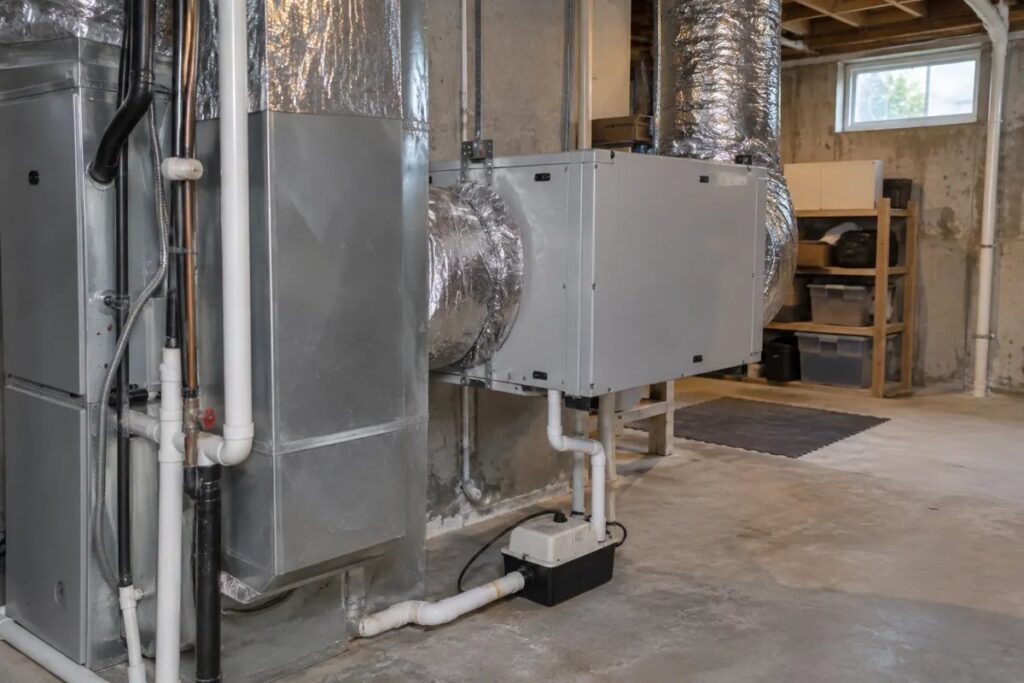
A portable dehumidifier is a self-contained unit you plug in and move from room to room, pulling moisture from the air in a limited space. A whole-home dehumidifier is generally connected to ductwork to control humidity across multiple rooms, while a commercial restoration dehumidifier is rugged, portable equipment used for intensive drying in water-damaged spaces. According to the U.S. Department of Energy, both types share the same basic components: a refrigerated coil that condenses moisture, a fan, and a means of collecting the water. The real differences come down to capacity, installation, and how much moisture they can remove in a 24-hour period.
If you are weighing whether this is even a DIY project, it helps to first understand what to look for in a water mitigation company so you know when a consumer unit will not cut it.
How Do Capacity and Coverage Area Compare?
Capacity is measured in pints of moisture removed per 24 hours, and it is the single most important spec when sizing a dehumidifier. Consumer Reports breaks portable units into three tiers based on capacity and the square footage they can realistically handle.
| Type | Typical Capacity | Best Suited For |
|---|---|---|
| Small-capacity portable | Under 30 pints/day | Rooms under 600 sq ft with mild dampness or musty odor |
| Medium-capacity portable | 30-40 pints/day | Spaces 600-800 sq ft, slightly damp conditions |
| Large-capacity portable | 40+ pints/day | 600-1,200 sq ft or smaller areas with standing puddles or mold |
| Whole-house/commercial | Capacity varies by equipment type; whole-home models may be ducted, while restoration units are typically portable | Whole homes for ducted systems; water-damaged areas for commercial restoration units |
These figures, reported by Consumer Reports, are manufacturer-rated and assume typical indoor conditions. Actual performance can vary with room temperature, relative humidity, airflow, and ongoing moisture intrusion, so manufacturer-rated capacity may not match results in a damp basement or crawl space.
What Does Each Type Cost?
Portable dehumidifiers are the more budget-friendly option for everyday humidity control. Angi estimates portable units run from about $50 to $350, depending on capacity and features like a built-in pump or humidistat.
Whole-house systems cost considerably more. Forbes Home puts the average whole-house dehumidifier installation around $2,000, with a typical range of $1,000 to $2,900 depending on unit type, home size, and labor. Angi similarly estimates installed whole-house systems at $1,300 to $2,800, noting that portable whole-home units (large, non-ducted models) run closer to $300 to $500 according to Forbes Home.
These are industry-wide estimates, not quotes from any single company, and your actual cost will depend on your home’s layout, existing ductwork, and local contractor rates. None of these figures reflect pricing from PuroClean of Toms River, which does not sell or rent consumer dehumidifiers.
When Should You Use a Portable Dehumidifier?
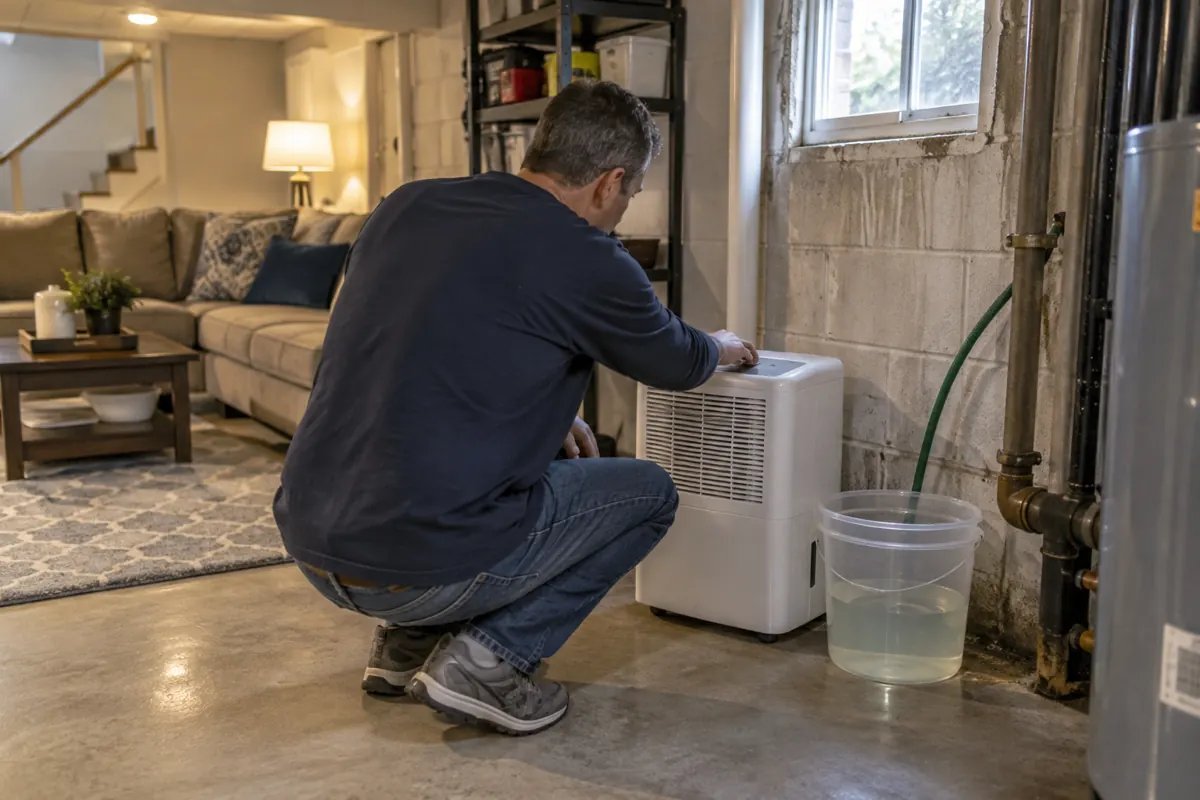
A portable unit makes sense for ongoing, low-level humidity control rather than emergency moisture removal. Good candidates include:
- A basement that feels damp or smells musty but has no standing water
- A single bathroom, laundry room, or crawl space with condensation issues
- Seasonal humidity control during Jersey Shore summers when outdoor moisture seeps indoors
- Supplementing central air conditioning in a specific room that stays humid
Portable units are easy to buy, require no installation, and can be moved between rooms as needs change. Their downside is limited capacity and a water tank that needs regular emptying unless you add a continuous drain hose.
When Do You Need a Commercial or Whole-Home Dehumidifier?
Whole-home and commercial-grade dehumidifiers are built for larger coverage areas, heavier moisture loads, and continuous operation. They are the better fit when:
- Humidity problems affect multiple rooms or an entire floor, not just one space
- You live in an older coastal home with chronic moisture intrusion from grade or foundation issues
- You are managing a commercial property where consistent humidity control protects inventory, equipment, or finishes
- A properly sized portable unit cannot maintain the target humidity even with continuous drainage and the moisture source addressed
Whole-home systems generally cost more than room-size portable units and often require professional HVAC installation; commercial restoration dehumidifiers are a separate class intended for demanding drying projects. Installation usually requires an HVAC technician, and Angi points out that these systems are not practical if you plan to move, since they are permanently installed.
When Consumer Dehumidifiers Are Not Enough
Neither portable nor whole-home consumer dehumidifiers are designed to handle active water damage, sewage backup, or significant mold colonization. Those situations call for professional-grade drying equipment and trained technicians, not a store-bought unit.
PuroClean of Toms River uses professional dehumidifiers alongside high-velocity air movers, thermal imaging cameras, and moisture meters to dry structures after flooding, storm damage, or plumbing failures throughout Toms River, Berkeley Township, Bayville, Seaside Heights, Brick, and the rest of Ocean County. This equipment moves far more air and extracts moisture at a scale that residential units cannot match, which is why we do not sell or rent consumer dehumidifiers ourselves.
If you are dealing with saturated drywall, flooring, or a crawl space after a storm, our comprehensive guide to water damage restoration walks through the full mitigation process, including how drying equipment fits into each stage.
How Do Energy Efficiency Ratings Compare?
Running costs matter, especially if you plan to use a dehumidifier for months at a time during humid Jersey Shore summers. ENERGY STAR certifies both portable and whole-home dehumidifiers based on Integrated Energy Factor, a measure of liters of water removed per kilowatt-hour of electricity.
Under ENERGY STAR Version 6.0 criteria, effective October 1, 2025, certified portable dehumidifiers rated at 50 pints per day or more must achieve an Integrated Energy Factor of at least 3.30 L/kWh, while lower-capacity units have different thresholds. Whole-home dehumidifiers have their own, generally higher efficiency benchmarks because they run more continuously. Checking the ENERGY STAR label and comparing Integrated Energy Factor ratings can help you evaluate energy use before buying.
The U.S. Department of Energy also sets minimum energy conservation standards for all consumer dehumidifiers sold in the United States, so even non-certified models must meet a baseline efficiency level.
Quick Checklist for Choosing the Right Dehumidifier
Use this checklist to narrow down which type fits your situation before you shop:
- Measure the square footage of the space you need to dehumidify
- Check if humidity is isolated to one room or spread across the home
- Decide if you need portability or if a permanent, ducted solution makes more sense
- Compare ENERGY STAR Integrated Energy Factor ratings for the capacity you need
- Factor in installation cost and complexity for whole-home systems
- Call a licensed restoration professional if you see standing water, sewage backup, active leaks, or visible mold growth beyond a small surface patch
If you are still unsure whether your situation calls for a consumer appliance or professional help, our team can walk through residential restoration services or commercial property damage restoration options with you.
Frequently Asked Questions
Can a portable dehumidifier dry out a flooded basement?
No. Portable dehumidifiers are designed for ongoing humidity control, not active water removal. A flooded or saturated basement needs water extraction equipment and high-velocity air movers first, followed by commercial-grade dehumidification, which is why significant flooding typically requires a professional restoration team.
How many pints per day do I need for my basement?
Consumer Reports suggests small-capacity units (under 30 pints/day) for rooms under 600 square feet with mild dampness, while larger or more humid basements often need 40 pints/day or more. If the unit cannot maintain the target humidity even with proper placement, continuous drainage, and the moisture source addressed, you may need more capacity or professional evaluation.
Is a whole-house dehumidifier worth the extra cost?
It depends on your home. Angi notes whole-house systems make sense for larger homes or chronic multi-room humidity problems, but are not cost-effective for small homes or apartments where a portable unit performs just as well for far less money.
Do commercial dehumidifiers run on regular household power?
Many portable commercial restoration dehumidifiers operate on standard 115-volt household circuits, but power requirements vary by model and larger equipment may require dedicated or higher-voltage service. This is one more reason large-scale drying after storm or flood damage is often handled by trained technicians with the right power setup and equipment.
How do I know if my humidity problem needs a professional instead of a bigger dehumidifier?
If you notice persistent musty odors, visible mold, warped flooring, or a dehumidifier tank that fills multiple times a day, the moisture source is likely larger than a consumer appliance can manage. At that point, a qualified restoration company can assess the moisture damage and help determine what additional trade professionals may be needed to correct the underlying cause.
Sources
- Consumer Dehumidifiers – Department of Energy
- Dehumidifiers Key Efficiency Criteria – ENERGY STAR
- Dehumidifier Buying Guide – Consumer Reports
- Whole-House Dehumidifier Pros and Cons – Angi
- Average Whole-House Dehumidifier Cost – Forbes Home
Reach PuroClean of Toms River Any Time
If water, fire, mold, or biohazard damage has affected your home or business, the team at PuroClean of Toms River is available 24/7 at (732) 930-2330. You can also visit our contact page to reach our local team serving Toms River and the surrounding Ocean County communities.
Written by the team at PuroClean of Toms River, an IICRC Certified and EPA Lead-Safe Certified property restoration company at 798 Fischer Blvd., Toms River, NJ, locally owned and operated by Alex Gonzalez.